REVIEW · PRIENE
Priene, Miletos and Didyma Tour with Lunch
Book on GetYourGuide →Operated by APS TRAVEL AGENCY · Bookable on GetYourGuide
Three ruins, one seriously good day.
This tour strings together Priene’s theatre and Didyma’s Temple of Apollo in a way that feels efficient, not rushed. I like that the route is guided and story-driven, with enough time at each stop to understand what you’re looking at, plus lunch included. One catch: the walk up to key areas in Priene can be a bit steep, so comfy shoes matter.
You’ll also appreciate the pace. The pickup is punctual, the group stays small (up to 15), and the guide keeps explaining as you go, so the ancient stones don’t turn into scenery. Lunch is built into the day, and you can expect a real restaurant meal rather than something thrown together.
If you’re planning around entrance fees, budget a little extra. The tour includes guiding, lunch, and pickup/drop-off, but entrance fees are not included.
In This Review
- Key things I’d focus on
- The value question: what you’re really paying for
- Getting there smoothly: pickup, van time, and pacing
- Priene: a perfectly sized ruin with a steep side
- The Temple of Athina on the hill
- The theatre: the sound is the star
- Rich by ancient standards
- Miletos: ports, power, and a theatre that scales up fast
- Four ports, golden age, and big-picture context
- The theatre: from 5,300 to 15,000
- Mosque and museum: what still lives here
- Didyma: the Temple of Apollo that never finished
- The dipteros plan: two rows of columns
- Time on site: short but concentrated
- Lunch break: why it matters on an archaeological day
- Guide quality: the difference between seeing and understanding
- Who this tour is best for
- What to watch for: entrance fees and comfort
- Should you book Priene, Miletos and Didyma with Lunch?
- FAQ
- Is lunch included on the Priene, Miletos and Didyma tour?
- How long is the tour?
- Do I need to pay entrance fees separately?
- Is pickup and drop-off included?
- What group size should I expect?
- What language is the guide speaking?
- What should I bring?
- Is free cancellation available?
Key things I’d focus on
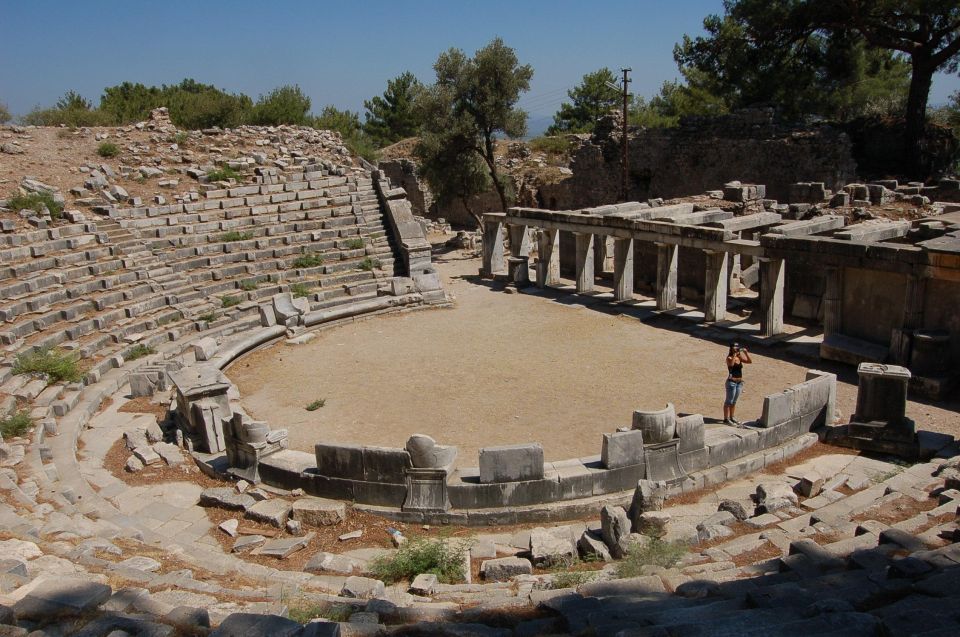
- Priene’s Hellenistic theatre still feels special, including the famous front-row “king chairs” and great acoustics.
- Miletos as a coastal power, with four ports, major theatre scale, and a museum that helps you connect ruins to finds.
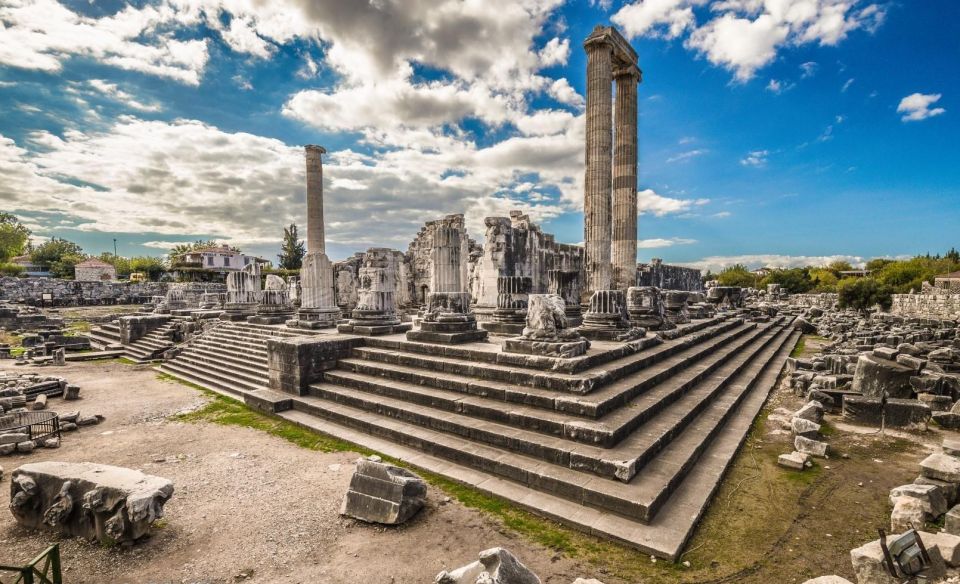
- Didyma’s Temple of Apollo: planned as a dipteros (two rows of columns) but never finished, which makes it different from other temples.
- Lunch included, with vegetarian options available at a local-style restaurant.
- Small-group energy (max 15) with time to ask questions and walk freely at each site.
- Guides like Vedat or Mehmet have led this itinerary, with English interpretation and strong site explanations.
The value question: what you’re really paying for
At $142 per person for an 8-hour outing, this isn’t a “drive-by ruins” trip. You’re paying for three things that add up fast in Turkey: a professional English guide, planned time at major archaeological stops, and lunch. You’re also paying for less friction—pickup from your hotel or port and the benefit of skipping the ticket line.
But it’s not a fully all-in ticket. Entrance fees are separate, so I recommend you check those costs before you commit. If you’re traveling with more people and want to DIY, you can. Still, three sites plus a guide plus lunch is a sensible way to maximize a single day in Ionia.
Getting there smoothly: pickup, van time, and pacing
The day starts with hotel or port pickup and return. That matters because Priene, Miletos, and Didyma are spread out, and the tour is designed to keep travel time manageable.
The ride itself is usually in a van, and the best part is what happens during the drive. The guide uses that transit time to frame what you’ll see next, then continues at each location. That’s how you stop feeling like you’re just following a map and start understanding the city layout, the eras, and why these ruins still feel coherent.
Pacing is also a selling point here. You get a full 8 hours as advertised, and you’re not pushed into a rushed loop. The tradeoff is practical: some stops are naturally brief because the site itself is concentrated. For instance, Didyma’s main feature is the temple area, so your time there may feel tighter than you’d expect if you’re used to larger sites.
Priene: a perfectly sized ruin with a steep side
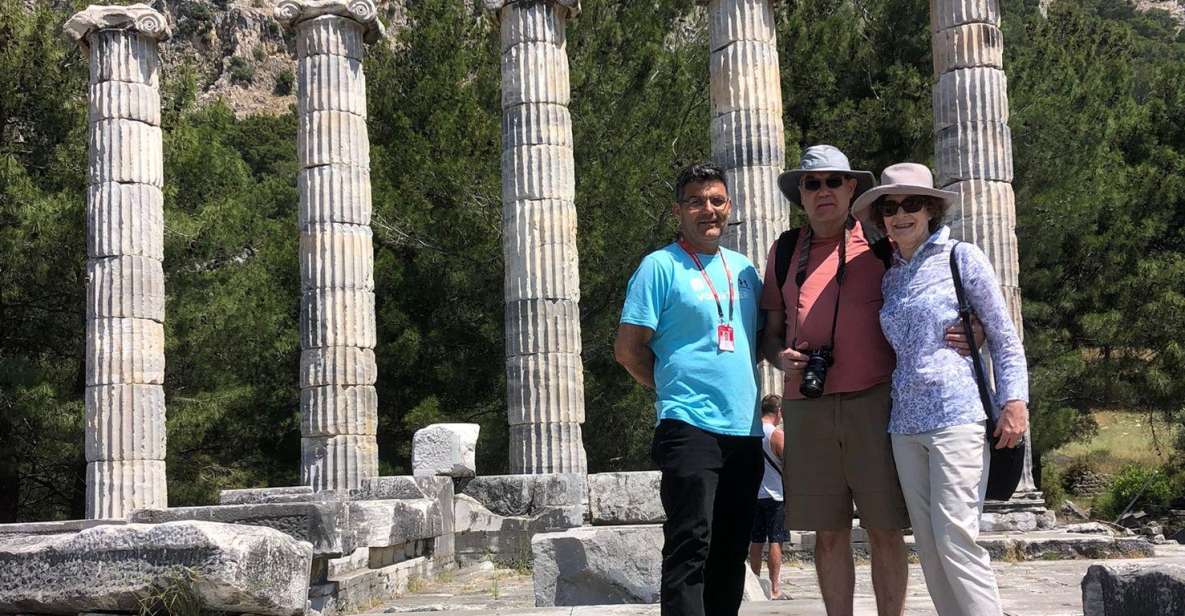
Priene sits north of Miletos and south of Ephesus, and it shows off a lot more than most people expect. When you arrive, you’re not just looking at scattered columns—you’re stepping into a town with structure: a hilltop temple, a theatre, and the evidence of a city that mattered.
The Temple of Athina on the hill
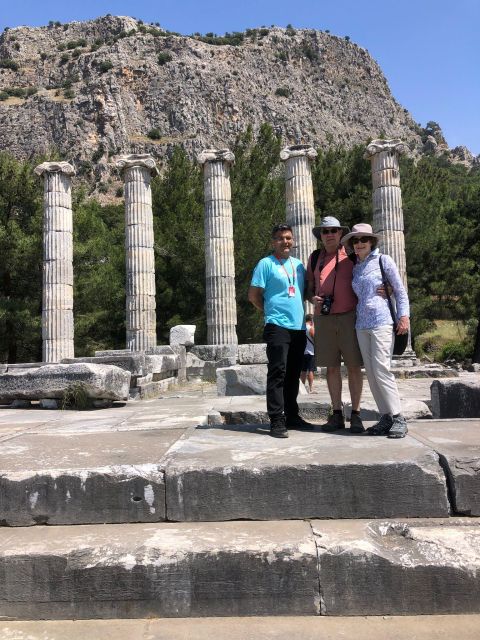
Priene’s most important building is the temple of Athina on top of the hill. Even if you only see foundations and partial remains, the location tells you the story: this was a civic and religious centerpiece, positioned where you’d feel the city’s reach.
This hilltop stop is also where the “consideration” becomes real. The walk can be steep, so plan on taking it slow. If you have mobility issues or you’re not used to uneven archaeological ground, wear shoes with grip and expect some uphill effort.
The theatre: the sound is the star
Theatre lovers will notice the details right away. Priene’s theatre dates to the Hellenistic era and is one of the few theatres that was not renewed by the Romans. It could hold about 6,500 people, which is impressive given how carefully the site remains.
Don’t skip the front row. There are five “king chairs” there, and that small feature makes the space feel human. The acoustics are also a standout. Standing in the right spots, you can understand why ancient audiences valued this kind of design.
Rich by ancient standards
Priene was built around its sea connections, with a harbour and strong maritime ties. It was one of the twelve Ionian cities bonded together in the Ionian era, which helps explain why it grew into a rich city.
One especially interesting claim you’ll hear on the route: about 33% of the citizens had their own bathroom with a toilet. That’s a big deal in an era when many cities didn’t offer that kind of personal comfort. It changes how you picture everyday life here—from hardship-only to a more mixed, practical reality.
Miletos: ports, power, and a theatre that scales up fast
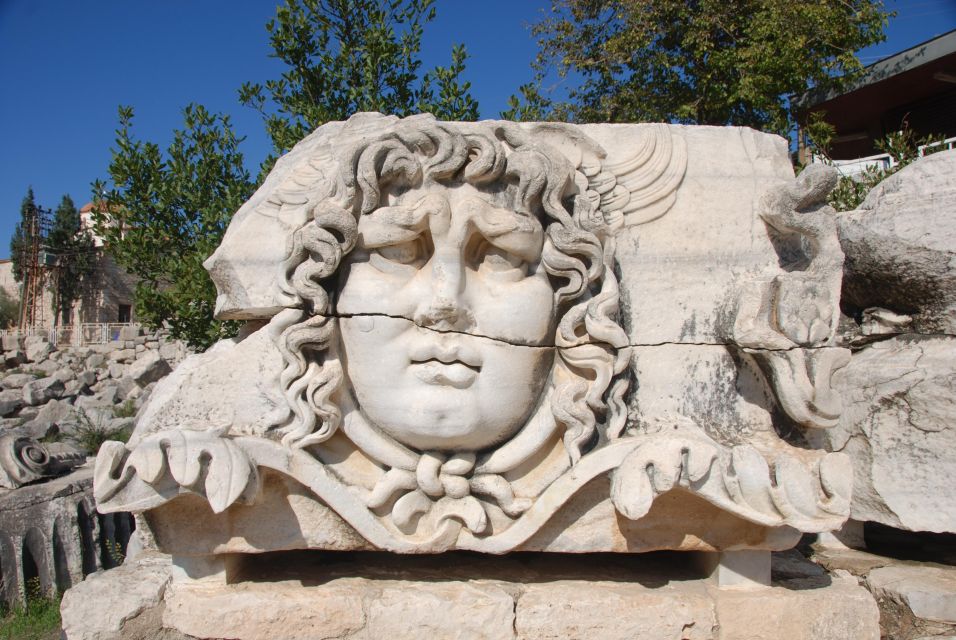
Miletos lies north of Didyma and south of Priene, and it feels like the “business hub” of the day. It was a coastal city with four ports, which is why it became one of the major settlements of the Ionian era.
Four ports, golden age, and big-picture context
Miletos’ golden age is usually placed in the 6th and 7th centuries BC. If you want a quick way to understand why this matters, look at the city’s location and then consider how trade and shipping shaped politics and culture.
Your guide will likely connect the dots while you walk the remnants. That’s one of the most useful parts of this tour: it gives you a mental map for what “coastal power” meant—more than just geography.
The theatre: from 5,300 to 15,000
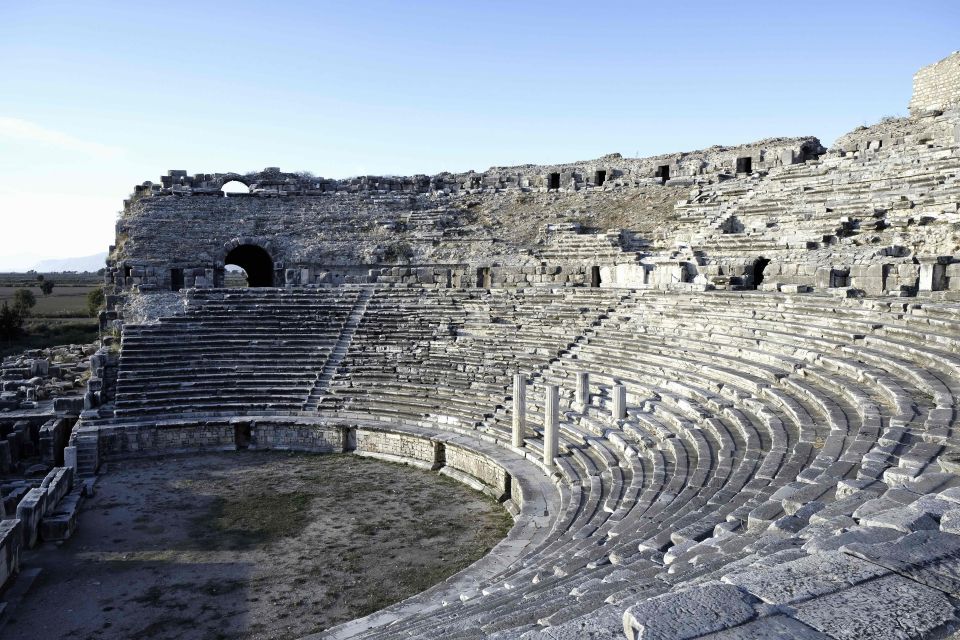
Miletos has a theatre built in the Hellenistic era for about 5,300 people. Later, the Romans enlarged it to a capacity of around 15,000. That scale shift is worth paying attention to because it shows how one place stayed important as empires changed.
This is where the tour works well for most people: the theatre is big enough to impress, but you aren’t trapped in endless walking corridors. You get to look, compare eras, and absorb the design without feeling like you’re touring a warehouse.
Mosque and museum: what still lives here
Near the Miletos area is the Ilyas Bey Mosque from 1404. It has served as a prayer space and also as a school, which is a reminder that these sites aren’t locked in ancient time.
The Miletos museum is included, and it’s one of the best value additions in the day. Ruins can be hard to interpret when you’re only staring at stones. A museum gives you the missing link—jewelry and other finds that help you picture what was once used and valued here.
Even if your museum time is limited, it’s often enough to make the ruins make more sense. And since it’s included, you’re not left hunting for tickets and opening hours between stops.
Didyma: the Temple of Apollo that never finished
Didyma is smaller than you might imagine, but it has a serious identity. It was a centre of prophetic oracles, and that spiritual reputation is part of why the Temple of Apollo was such a grand project.
The dipteros plan: two rows of columns
The Temple of Apollo at Didyma was planned as a dipteros, meaning two rows of columns. The big twist is that it was never finished. That unfinished status is exactly what makes it feel different from more complete temples.
Instead of a finished “wow,” you get a construction story. You can sense the ambition, the scale, and the reasons your view includes blanks where something grand was supposed to be.
Time on site: short but concentrated
Didyma is often the kind of stop where the highlight is the main temple area. That means you might only have about half an hour there, and that’s not automatically a bad thing. If you’re focused on understanding the architecture and the oracle connection, you can use that time well.
The bigger win is that after seeing Priene and Miletos, Didyma doesn’t feel like random extra ruins. It completes the “Ionia pattern” of city power, religious influence, and civic planning.
Lunch break: why it matters on an archaeological day
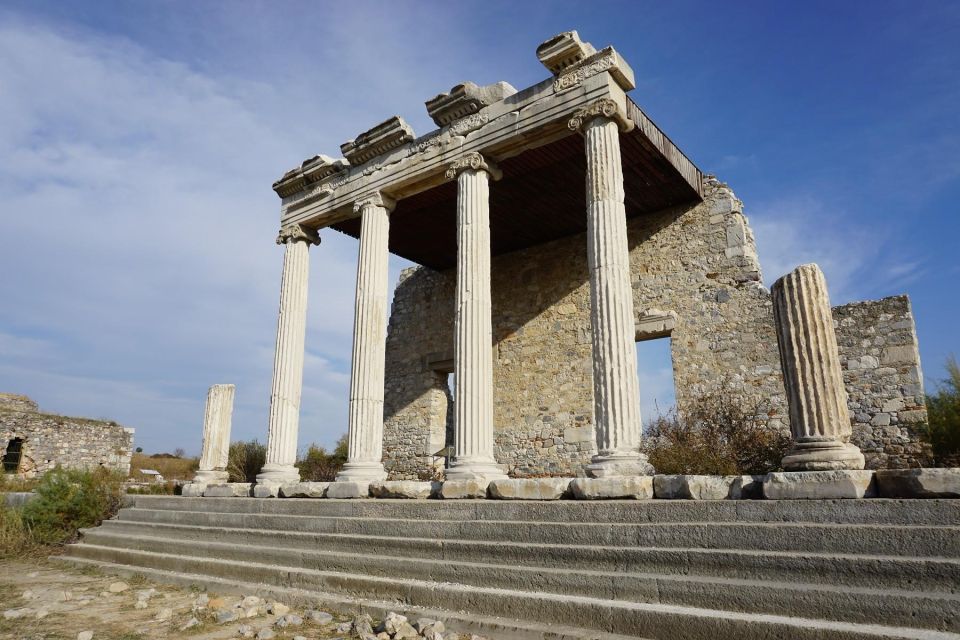
Lunch is included, and that’s more important than it sounds. Ruins tours can easily turn into a day where you’re hungry, thirsty, and irritated—then the archaeology becomes background noise. Here, lunch is built into the schedule so your brain can reset between cities.
The meal is described as wonderful, and vegetarian options are available. More than that, the lunch tends to be at a restaurant that feels more local than tourist-only. That helps you keep the day authentic while still being comfortable.
Practical tip: since the afternoon includes walking between sites and up-and-down terrain (especially at Priene), treat lunch like part of your stamina plan, not just a break.
Guide quality: the difference between seeing and understanding
A guide can either read facts off a signboard or help you see the “why” behind the stones. This itinerary is strong because the explanations are detailed and practical: how each site worked, how the city lived, and how different eras changed what you’re looking at now.
On this route, English guides like Vedat or Mehmet have been highlighted for being friendly, flexible, and quick to answer questions. The best guides also do something subtle: they help you visualize ancient daily life, so the space stops being abstract.
You’ll feel that in two moments:
- When the guide sets up what to look for before you reach the main attraction.
- When you ask something mid-walk and get a clear answer instead of a shrug.
Who this tour is best for
This works especially well if you want an Ionia highlights day without the stress of juggling tickets and logistics yourself.
You’ll probably enjoy it most if you:
- love archaeology and want more than one site in a single day,
- like history explained in plain language,
- prefer a small group setting (max 15),
- want lunch handled for you.
It’s also a good fit if you’re the kind of traveler who reads ruins better after hearing context. If you’re just chasing photos, you might still enjoy it—but you’ll get more out of it by asking questions.
If you’re sensitive to walking uphill or uneven ground, take the Priene climb seriously. The payoff is real, but comfort should come first.
What to watch for: entrance fees and comfort
Two practical items can affect your experience more than you’d think.
First, entrance fees aren’t included. This tour skips the ticket line, which saves time, but it doesn’t remove the need to pay at the gate. Budget for it so you’re not surprised later.
Second, wear comfortable shoes. Priene’s hill and uneven paths can be tough. Sunglasses are also worth it since daylight can be intense around open archaeological areas.
Should you book Priene, Miletos and Didyma with Lunch?
I’d book it if you have only one day to cover Priene, Miletos, and Didyma and you want the day to run with minimal hassle. The best reason is value: you get a professional English guide, lunch included, hotel or port pickup, and access help with ticket lines—then you spend that time on three major stops instead of road time.
Skip this only if you’re avoiding any uphill walking (Priene can be steep) or you’d rather build your day independently to control the pace completely. If you can handle the walk and you like context, this is one of the more sensible ways to experience Ionia’s big names in a single day.
FAQ
Is lunch included on the Priene, Miletos and Didyma tour?
Yes. Lunch is included in the tour price. Vegetarian options have been available, and the meal is handled as part of the scheduled day.
How long is the tour?
The tour lasts 8 hours.
Do I need to pay entrance fees separately?
Yes. Entrance fees are not included. The tour includes a skip-the-ticket-line benefit, but you’ll still want to budget for site admission.
Is pickup and drop-off included?
Yes. The tour includes pickup and return to your hotel or port.
What group size should I expect?
This is a small group with a maximum of 15 participants.
What language is the guide speaking?
The live tour guide provides English.
What should I bring?
Bring comfortable shoes and sunglasses.
Is free cancellation available?
Yes. You can cancel up to 24 hours in advance for a full refund.