REVIEW · EPHESUS
From Izmir, Kusadasi, & Selcuk: Day Trip to Explore Ephesus
Book on GetYourGuide →Operated by Crowded House Tours · Bookable on GetYourGuide
Ephesus in one long day takes planning, not guesswork. This tour packs the big names: UNESCO Ephesus, the House of the Virgin Mary, and the stops that explain how this ancient city really worked.
I especially like how the route strings together the monument-to-monument story, not just random ruins. And the Library of Celsus plus the Great Theater are the kind of sights that instantly make ancient scale feel real.
One thing to consider: the day can include time for traditional handcraft or retail stops, and if those run long, your free time and lunch timing can suffer.
In This Review
- Key points before you go
- How the day trip runs from Izmir, Kusadasi, or Selcuk
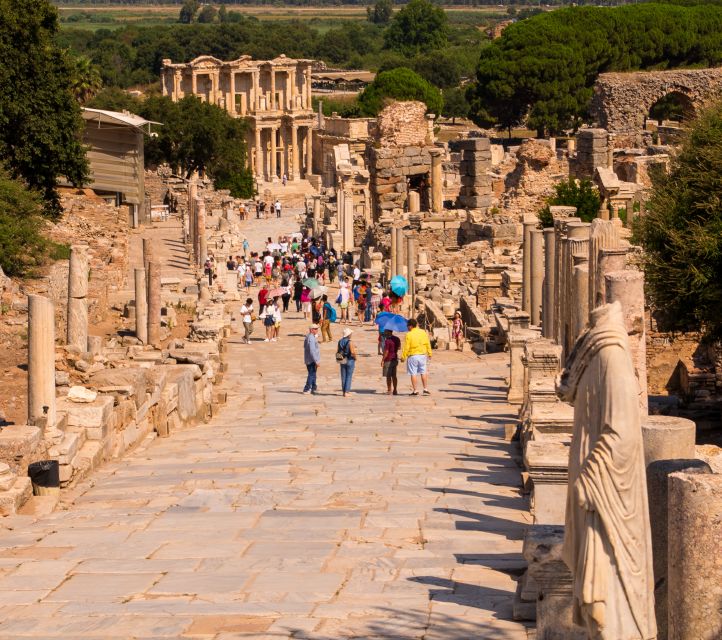
- Ephesus with a guide: the marble streets you’ll remember
- Practical tip
- House of the Virgin Mary, plus the “religion meets ruins” stops
- Roman baths, latrines, markets, and the everyday Ephesus
- Library of Celsus and the Great Theater: the day’s two anchor moments
- Library of Celsus
- Great Theater
- Temple of Artemis: chasing a seven-wonders echo
- The schedule reality: shop stops can change your day
- Smart move
- What you’re actually paying for: $128 and the value math
- Which kind of visitor this tour fits best
- Should you book this Ephesus day trip?
- FAQ
- How long is the Ephesus day trip?
- Where does the tour start?
- What language is the live guide?
- Which entrance fees are included?
- Is the Terrace Houses entrance included?
- Are drinks included in the tour price?
- Do you get skip-the-line access?
- What should I bring for the tour?
- Is free cancellation available?
- Is it possible to reserve and pay later?
Key points before you go
- Skip-the-line setup with entrance fees covered for Ephesus, the Virgin Mary House, and the Temple of Artemis
- A guided circuit through Ephesus that covers civic power, theaters, baths, and markets—not just the postcard spots
- The big three icons: Library of Celsus, Great Theater, and the Temple of Artemis (a seven-wonders site)
- Hotel pickup and drop-off from Izmir, Kusadasi, or Selcuk for a smoother start
- Watch the time: shop-style stops can crowd the schedule on a day that’s already 8–10 hours
How the day trip runs from Izmir, Kusadasi, or Selcuk
This is built as a full-day program, usually clocking in around 8 to 10 hours. You get picked up from your accommodation, then you ride to Ephesus with a guide waiting to run the day’s sequence.
That pickup-and-drive format matters more than it sounds. Ephesus is spread out, and buses or cars usually mean you skip the stress of figuring out routes, parking, and how to get everyone back to the van on time. If you’re staying in Izmir, Kusadasi, or Selcuk, that convenience is a big part of why this tour can feel worth it even before you even see a stone.
You’ll also want to plan your morning smart. Bring your passport or ID card (a copy is accepted), and have your daypack ready. Also, since drinks aren’t included, you’ll be happier if you buy water before you get too deep into the walk.
You can also read our reviews of more tours and experiences in Ephesus
Ephesus with a guide: the marble streets you’ll remember
Once you’re in Ephesus, the tour makes a key choice: you don’t just wander. You follow a local guide through the main zones that show how the city moved—politics, public entertainment, religion, and everyday trade.
You’ll start getting oriented with stops tied to civic power and “public life.” The Upper Agora is one of those locations. Think of it as a political nerve center—this is where leaders and officials would have handled matters that affected the city. Nearby, you’ll see how the layout supports constant movement between power, commerce, and public gathering spaces.
From there, you move toward entertainment and spectacle with a stop at the 2nd-century A.D. Odeon theater. Even if you’ve never taken an ancient history class, you’ll get the point fast: people met here, and sound and seating were part of the design. A good guide helps you picture the scale—what crowds likely sounded like and how the building shaped behavior.
Then the tour continues through the big ceremonial and monumental crossroads, where the city’s leaders tried to leave their mark with squares, temples, arches, and fountains. That connection between power and architecture is what makes Ephesus feel more than ruins.
Practical tip
Ephesus is an outdoor walk with ancient steps and uneven ground. Wear comfortable shoes and plan on taking breaks when the guide pauses for regrouping. When you’re moving from point to point, it’s easy to underestimate how much walking 8–10 hours adds up to.
House of the Virgin Mary, plus the “religion meets ruins” stops
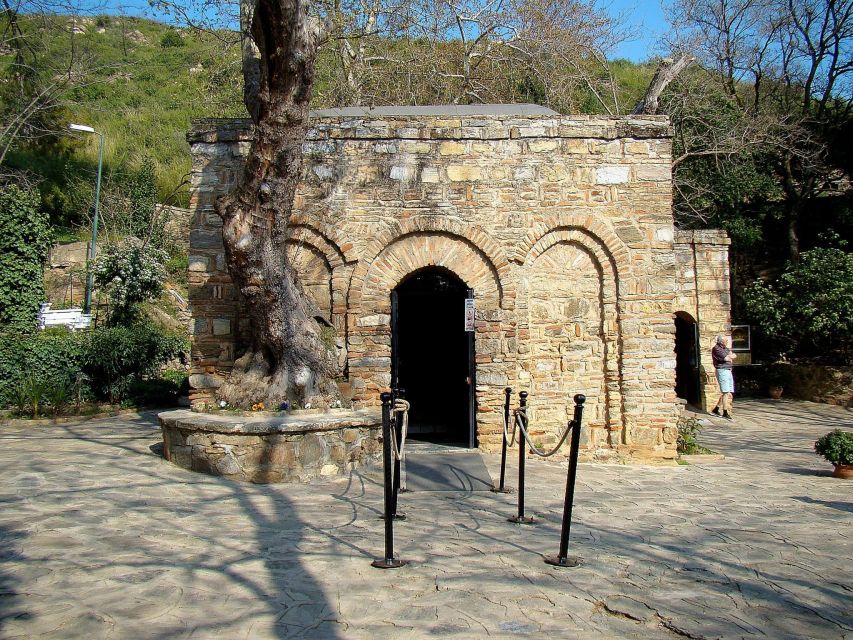
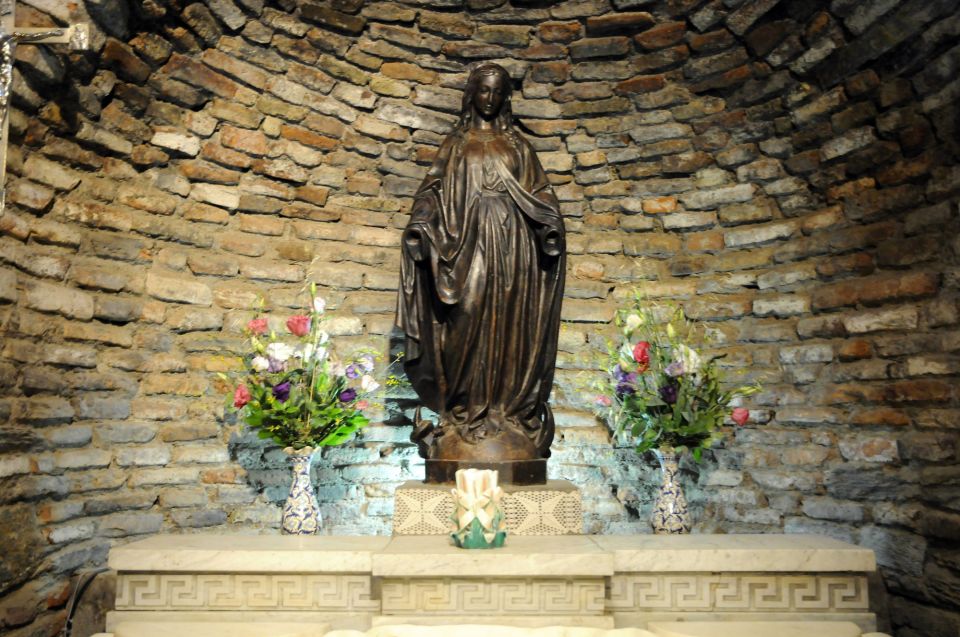
The tour includes the House of the Virgin Mary, a site believed to be where Mary spent her last days. Whether you approach it as faith, archaeology, or cultural tradition, it adds a different tone to the day. It’s quieter than the city streets and helps balance the heavy density of monumental Ephesus with a more reflective stop.
After that, the route threads back into Ephesus proper with additional landmarks that help explain what you’re seeing. For example:
- Domitian Square and the Temple of Domitian show how emperors and authority were displayed through public architecture.
- The Fountain of Pollio is one of those details that can feel small until a guide points out its role in daily life and urban design.
- Stops like Hercules Gate and the reliefs there make the city feel less like a museum and more like a living place covered in messages.
You’ll also pass by landmarks connected to imperial presence, including the temple and fountain of Emperor Trajan and the Temple of Hadrian area, where an elaborately carved arch adds that “wow” factor.
This part of the tour is where a guide’s pacing matters most. If the day starts to feel rushed, the religious and ceremonial stops can blur. Try to keep an eye on what your guide highlights—those are often the moments that transform stone into meaning.
Roman baths, latrines, markets, and the everyday Ephesus
One of the more interesting choices on this itinerary is that you don’t skip the practical parts of the city. You’ll pass by the Roman baths, public latrine, and the marketplace area, along with the remains associated with a brothel.
That sounds a little awkward on paper, but it’s exactly why Ephesus feels real. Ancient cities weren’t only temples and theaters. People worked, socialized, shopped, and used public services. Seeing those spaces helps you understand how the city served daily needs—especially when you pair them with the more ceremonial stops.
A well-led walk through these areas can also help you avoid the most common mistake: treating every ruin as a standalone photo spot. Instead, you start noticing how the city’s functions were linked by street layout and foot traffic.
Library of Celsus and the Great Theater: the day’s two anchor moments
If you care about the classic Ephesus icons, this is where the tour tends to deliver.
Library of Celsus
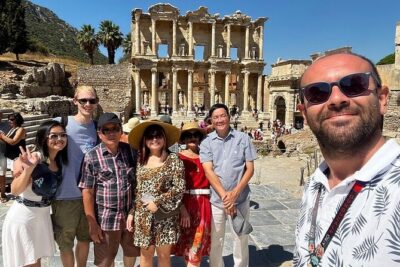
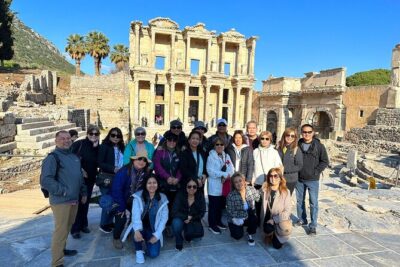
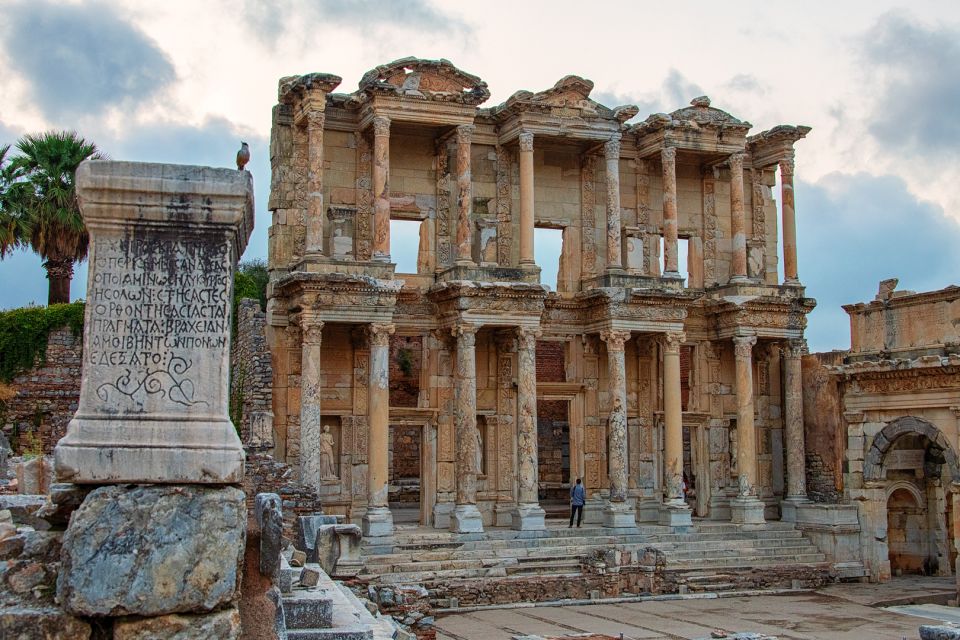
You’ll visit the Library of Celsus, described as the third-largest library in the Roman world. Even if you’ve seen pictures, the scale hits differently in person. The facade and remains give you a sense of performance and prestige. It’s not just a building for books; it’s a monument meant to impress visitors and signal cultural status.
A good guide helps you notice architectural choices—how the building communicates importance and how it fits into the wider street-and-monument grid.
Great Theater
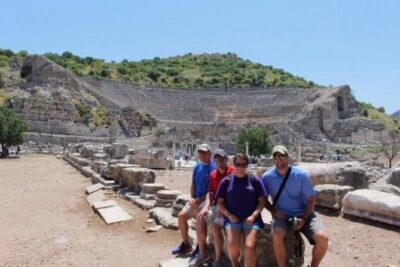
Later, you’ll see the Great Theater, a massive Hellenistic structure. This is another stop where a guide’s explanation can make you relax and enjoy the view. Instead of only looking at seats, you start thinking about timing: where crowds would have entered, how events were staged, and why the shape mattered for sound and sightlines.
This is one of those moments when Ephesus stops being “old stuff” and becomes a place where thousands once gathered for entertainment and civic life.
Temple of Artemis: chasing a seven-wonders echo
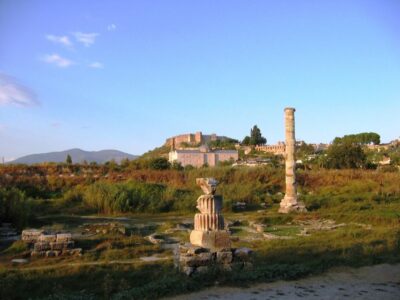
The tour includes the Temple of Artemis, one of the seven wonders of the ancient world. You won’t see it standing exactly as it once did, but you’ll still get the point: this was a site meant to outshine everything around it, in scale, power, and belief.
Your entry fee for this stop is included, and the guide helps keep it from turning into a quick photo-and-walk-through. It’s worth paying attention to how Artemis fits into the rest of the city you just toured. The wonder here isn’t only the temple itself—it’s how the city managed to build something that symbolized identity on a grand scale.
The schedule reality: shop stops can change your day
Here’s the part I think you should plan for, even if your tour runs perfectly.
This day includes time for traditional Turkish handcrafts. That sounds pleasant—and it can be. But on tours with scheduled retail-style stops, the day can get “compressed” in places that matter to you: lunch timing, restrooms, and how long you can linger at the ruins.
At least one real-world experience attached to this type of format went sideways: extra store time pushed lunch much later and made it short. Another experience described heavy pressure in a retail stop and a layout that felt unsafe during that visit.
I’m not saying this is guaranteed. I am saying you should treat shop stops as a variable. If Artemis, Celsus, and the Theater are your top priorities, ask your provider in advance what the handcraft or shop portion looks like and how long it’s planned for. If you’d rather keep the day strictly archaeological, choose a tour option that keeps shopping minimal—or at least gives you control over timing.
Smart move
Bring a snack if you’re the type who gets hangry. Since drinks aren’t included and lunch can be affected by how the schedule unfolds, having a backup helps you enjoy Ephesus instead of managing your energy.
What you’re actually paying for: $128 and the value math
At about $128 per person, this tour isn’t the cheapest way to see Ephesus, but it can be good value if you use what’s included.
Here’s what’s covered:
- Hotel pickup and drop-off
- A live guide (English and Spanish)
- Entrance fees to Ephesus, the Virgin Mary House, and the Temple of Artemis
- Skip-the-ticket-line style access
What’s not included:
- Drinks
- Entrance fee to the Terrace Houses in Ephesus (so if that’s on your must-do list, you’ll need to plan for it separately)
When you do the math, the included entrances and guided access matter most if you’d otherwise pay on your own while also trying to manage transportation and route timing. The big question for you is whether the day’s format matches your priorities. If you’re happy with a guided circuit and don’t mind a little time for local craft stops, this price can feel fair.
If you want total control, a lot of free time, and zero retail interruptions, then the value depends on how you feel about the schedule.
Which kind of visitor this tour fits best
This tour makes sense if you:
- Want a guided walkthrough that connects the dots between monuments
- Like big landmarks—Celsus, the Theater, and Artemis—and want them handled in one organized day
- Appreciate pickup from your hotel, especially if you’re basing yourself in Izmir, Kusadasi, or Selcuk
It’s less ideal if you:
- Hate retail interruptions and prefer to roam at your own pace
- Get impatient with rushed meals
- Specifically care about the Terrace Houses, since entrance is not included
For couples, families with older teens, and first-time visitors, this is often a solid way to hit the essentials without turning your day into logistics work.
Should you book this Ephesus day trip?
If your dream day is seeing UNESCO Ephesus with a guide and checking off the star attractions, I’d say it’s a good booking choice—especially because entrances for key sites are included and you get help organizing a long, walk-heavy day.
But book with eyes open. Ask how much time is set aside for handcraft or retail stops, and set your expectations for lunch timing. If you know you’ll struggle with that tradeoff, consider a more flexible option that gives you more control.
If you want the simplest path to Ephesus highlights—marble streets, Celsus, the Great Theater, and the Temple of Artemis—this day trip delivers.
FAQ
How long is the Ephesus day trip?
It runs about 8 to 10 hours.
Where does the tour start?
You can choose departures with hotel pickup from Izmir, Kusadasi, or Selcuk.
What language is the live guide?
The live tour guide speaks English and Spanish.
Which entrance fees are included?
Entrance fees are included for Ephesus, the House of the Virgin Mary, and the Temple of Artemis.
Is the Terrace Houses entrance included?
No. The entrance fee to the Terrace Houses in Ephesus is not included.
Are drinks included in the tour price?
No. Drinks are not included.
Do you get skip-the-line access?
Yes, the tour includes skip the ticket line.
What should I bring for the tour?
Bring a passport or ID card. A copy is accepted.
Is free cancellation available?
Yes. You can cancel up to 24 hours in advance for a full refund.
Is it possible to reserve and pay later?
Yes. The option to reserve now and pay later is offered.