REVIEW · EPHESUS TERRACE HOUSES TOURS
3-Hour Private Ephesus, Terrace Houses, Cruiser Only
Book on Viator →Operated by Guide of Ephesus · Bookable on Viator
Ephesus is huge, but this day stays manageable. With a private van from Kuşadası Port and a licensed local guide, you get the big ancient sights without feeling like you’re stuck in a human queue. I also like that the plan is built around cruise timing, so you’re not guessing when you’ll get back.
My second favorite part is Terrace Houses. The mosaics, frescoes, and even the Roman-style central heating details make this stop feel like time travel to the lives of the city’s elite. The one drawback to plan for: Ephesus can be extremely crowded on port days, and you should expect some organized stops where shopping is part of the day’s flow.
In This Review
- Key highlights to look for
- Private time in Ephesus: what makes this tour work
- Price and what you actually get for $30.25
- Cruise timing: how to meet your guide without losing your morning
- Kuşadası breaks: Pigeon Island castle and the Öküz Mehmet Paşa Caravanserai
- Kuşadası Castle on Pigeon Island
- Öküz Mehmet Paşa Caravanserai (1618)
- Ephesus Ancient City: Marble Street through the Celsus Library
- Terrace Houses: Roman luxury, mosaics, and central heating
- Temple of Artemis ruins: a Seven Wonder stop that’s short but meaningful
- Shopping stops and the lunch rhythm: how to keep control
- Countryside lunch: included, hearty, and not just filler
- Tickets, lines, and money: your quick checklist
- Should you book this private Ephesus and Terrace Houses tour?
- FAQ
- How long is the tour?
- Is this a private tour?
- Where do cruise passengers meet the guide?
- Does pickup and drop-off include the cruise port?
- Are entrance fees included in the tour price?
- Which stops are free?
- Is lunch included?
- Can the guide help you skip ticket lines?
- Does the tour guarantee a return on time?
- What is the cancellation policy?
- What language is the tour offered in?
Key highlights to look for
- Private experience for your group only, not shared with strangers
- Cruise-ready timing, with a guaranteed on-time return to Kuşadası Port
- Terrace Houses are a separate add-on, and the site is genuinely worth the extra ticket
- Skip-the-line help, where the guide can arrange entry so you spend less time standing around
- Kuşadası Ottoman stops like the 1618 caravanserai and Pigeon Island castle ruins
- Air-conditioned, non-smoking transport with a separate driver
Private time in Ephesus: what makes this tour work
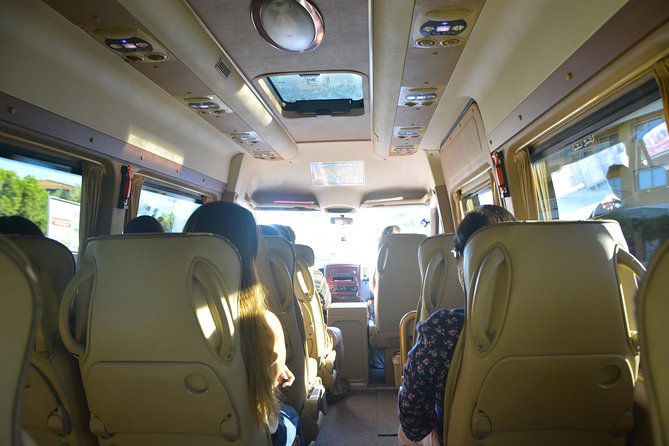
This is the kind of Ephesus day that makes sense for a cruise stop. You’re not touring at the speed of the slowest bus group. Instead, you ride in your own air-conditioned van, meet your guide at the port, and then walk the ruins with a plan that tries to keep you moving when the crowd thickens.
I like that it’s explicitly private, which matters at Ephesus. The site is open-air and large, so small delays get amplified. A private setup also makes it easier to keep the group together when everyone’s stopping for photos at the same landmark.
One more practical thing: you get a licensed local guide. In this region, that’s the difference between someone reciting facts and someone who can explain how the city worked, what you’re looking at, and how to manage your time when the clock is ticking for a ship departure.
You can also read our reviews of more private tours in Kusadasi

Price and what you actually get for $30.25
At $30.25 per person, the base tour price is quite reasonable for a private cruise day. But the value equation changes when you factor in entrance fees.
Here’s what’s important to know:
- The tour price includes transport, guide service, parking, pickup/drop-off, and lunch.
- Entrance fees for the major sites are not included. Ephesus is listed at €40 per person, and the Terrace Houses are €15 per person.
- The Temple of Artemis stop is marked free (you’re visiting the ruins/columns area).
If you’re deciding whether this is “worth it,” think of the $30.25 as paying for:
1) a private guide who helps you see the right things fast,
2) logistics that get you back on time, and
3) a lunch experience, not just walking and hoping.
The Terrace Houses ticket is the add-on that most people debate. If you’re going to Ephesus once, I’d rather pay the extra €15 than leave that section out.
Cruise timing: how to meet your guide without losing your morning
Cruise days can be chaotic at the dock exit. The tour’s approach is simple: meet your guide at the cruise terminal, then don’t waste time.
A helpful rule is to meet about 30 minutes after your ship docks to avoid the first wave of crowds and the worst heat. If your arrival is early (before 7:00 AM), you’ll be advised to meet later (around 7:45 AM). If your ship docks later, aim for 30–45 minutes after docking.
One more timing detail I respect: the tour promises a guaranteed on-time return to Kuşadası Cruise Port. That’s not a small promise. It means your schedule is managed to fit real sailing times, not tourist-day fantasy.
Kuşadası breaks: Pigeon Island castle and the Öküz Mehmet Paşa Caravanserai
Before you hit the big archaeological zone, the tour gives you a quick taste of Kuşadası’s past.
Kuşadası Castle on Pigeon Island
This Ottoman-era fortress sits on Pigeon Island and was built for coastal defense. It’s a short stop, but it’s worth it because you get context for the region as more than just ruins. You also get sea views that can refresh your brain before you jump into a long day of stone.
You can also read our reviews of more tours and experiences in Kusadasi
Öküz Mehmet Paşa Caravanserai (1618)
Next comes the 1618 caravanserai, an Ottoman trade hub for merchants moving between East and West. Architecturally, it’s the kind of place that helps you understand why cities like Ephesus mattered. Trade brought people, wealth, ideas, and art.
This stop also functions as a mental reset. By the time you return to the van and drive toward Ephesus, you’ve already shifted gears from “beach town” to “history with layers.”
Ephesus Ancient City: Marble Street through the Celsus Library
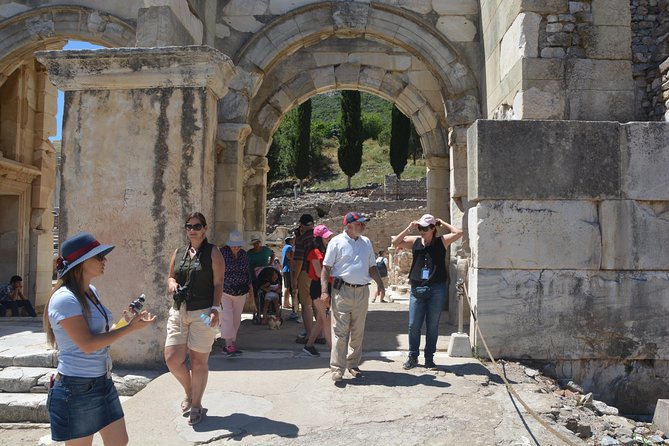
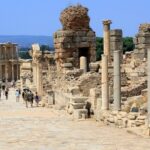
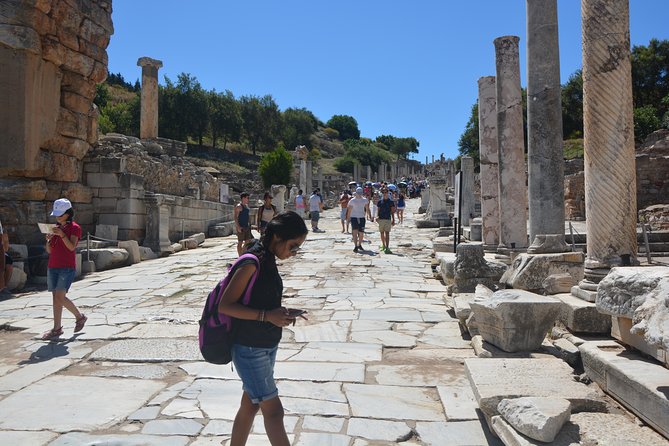
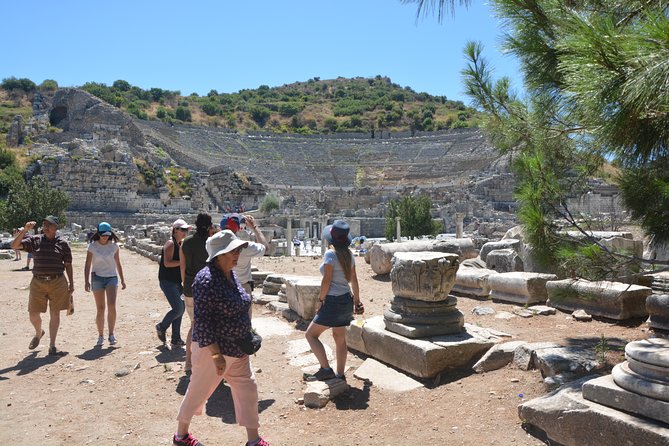
Ephesus is one of those places where you need a guide to turn scattered ruins into a readable story. On this tour, you walk major highlights in a logical sequence, which is what keeps the time pressure from turning into stress.
Here’s what you should expect to see:
- Marble Street, lined with the kinds of buildings and street life that once made the city feel alive
- Roman Bath and other public structures tied to daily life
- Harbour Street and the historical sense of where commerce fed into the city
- Odeon, a music venue that reminds you Ephesus wasn’t only political—it was cultural
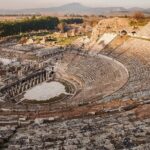
- Great Theater, built for about 20,000 spectators and known for gladiatorial-style spectacles
- Public Agora, closely associated with St. Paul and the trade of local goods
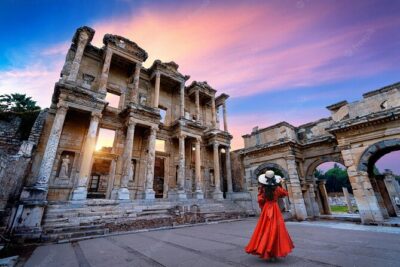
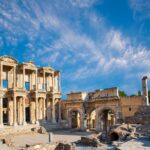
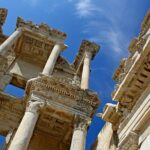
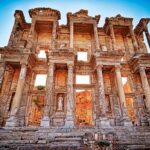
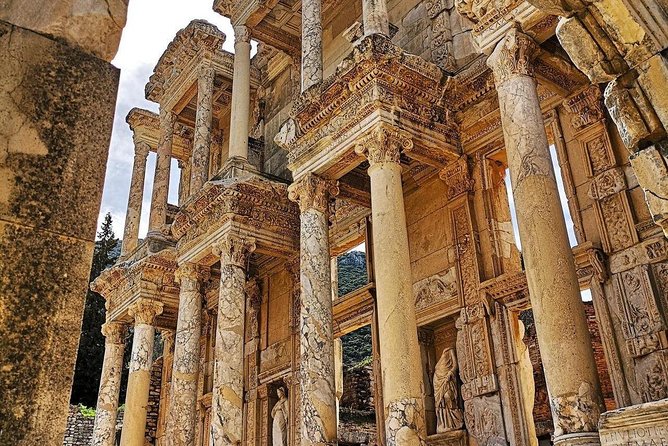
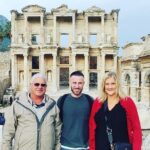
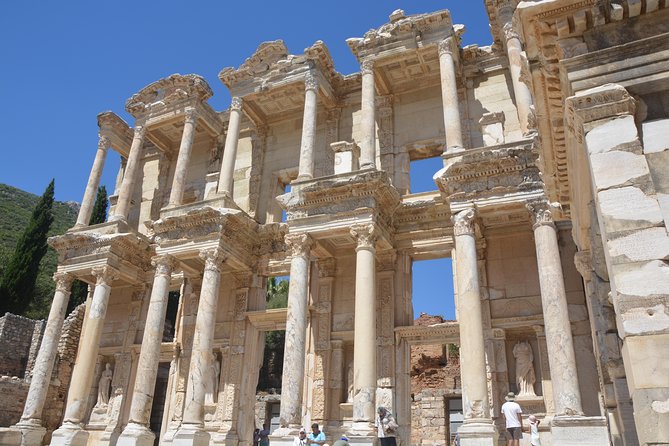
- Celsus Library, presented as a major “wow” moment thanks to its restored façade
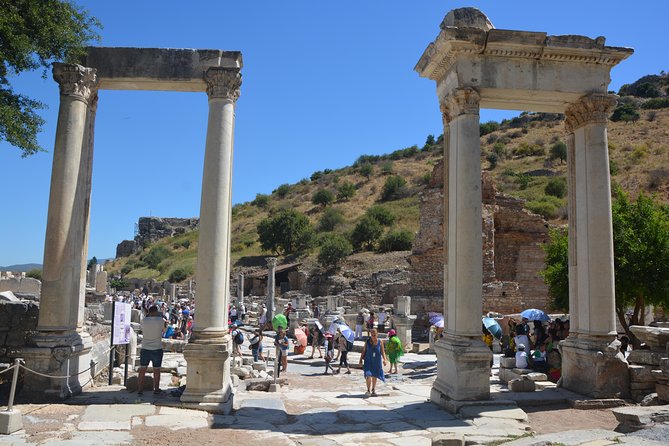
- Temple of Hadrian, Trajan Fountain, and more imperial-era landmarks
Two crowd realities to plan for:
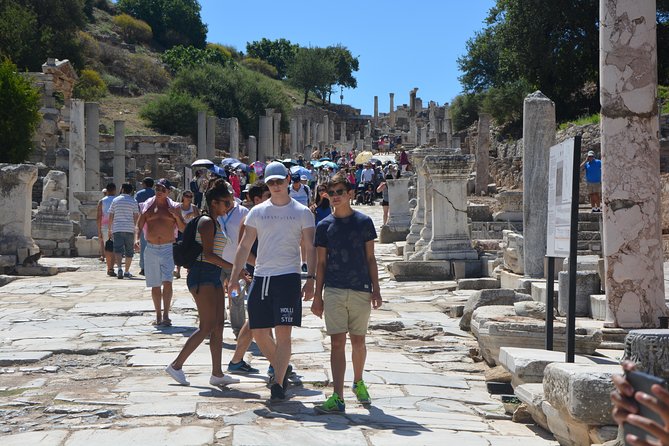
1) Ephesus can feel packed when multiple cruise ships are in port.
2) You’ll want to follow your guide’s pacing, because standing still to read every inscription can eat your schedule.
When the crowd gets thick, a good guide becomes your traffic control. You’ll feel it most around the theater and the library area, where tourists naturally cluster.
Terrace Houses: Roman luxury, mosaics, and central heating
The Terrace Houses stop is the add-on you should treat as a “must-do,” not a maybe.
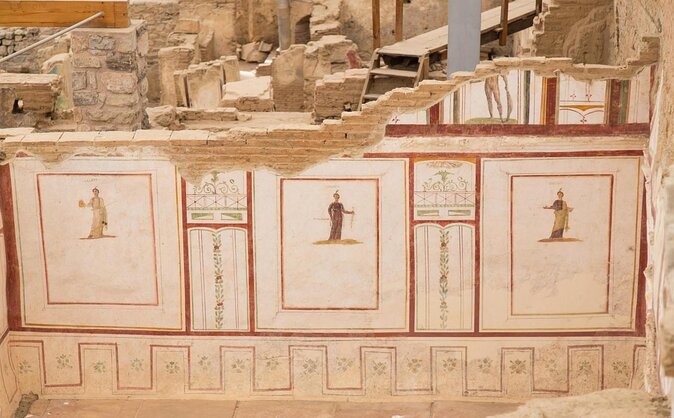
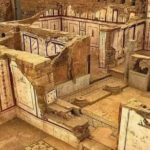
These are the residences of the rich. What makes them special is that they weren’t just decorated—they were built with advanced design for their time. You’ll see:
- intricate mosaics
- vibrant frescoes
- architectural details, including one of the earliest examples of central heating
In practical terms, this is where Ephesus shifts from public monuments to private life. You stop thinking only about temples and theaters and start picturing how elites lived day-to-day.
Time-wise, the tour allocates about 45 minutes at the Terrace Houses. That’s a reasonable window if you want the highlights without getting stuck in the slowest moments of crowd movement.
Also note: the Terrace Houses require a separate ticket fee (€15 per person). If you’re budgeting, I’d rather prioritize this than spend extra time elsewhere inside the complex.
Temple of Artemis ruins: a Seven Wonder stop that’s short but meaningful
The Temple of Artemis stop is brief—about 10 minutes—but it’s still memorable if you connect it to what it used to be.
You’re visiting the remains tied to one of the Seven Wonders of the Ancient World. The temple was dedicated to Artemis, and it was constructed around 650 BC. What’s striking is how it was engineered to resist earthquakes by being built on marshy ground.
Today, only columns and ruins remain. That sounds like a “low payoff” on paper, but it works in person because the scale and story land faster when you’ve already walked through Ephesus’s other grandeur.
Shopping stops and the lunch rhythm: how to keep control
This tour includes time at two kind of “work-with-a-guide” stops often linked to Turkish crafts:
- a ceramics/pottery demonstration and shop
- a Turkish rug-carpet demo and shop (often connected with a co-op)
I’m not going to pretend these are pure sightseeing. They exist for commerce. That’s not automatically bad—some of the demonstrations are genuinely interesting, and you can learn how items are made and how custom orders work.
But here’s how to handle it:
- If you want to minimize sales pressure, tell your guide upfront.
- If you know what you want to buy (or you want nothing), you can still enjoy the process part without getting dragged into long negotiations.
- Bring a realistic budget if you see something you love. Rugs and ceramics can escalate quickly depending on size and customization.
I also appreciate that lunch is part of the schedule, so you’re not stuck turning demonstrations into a hungry, impatient situation. Which brings me to the meal.
Countryside lunch: included, hearty, and not just filler
Lunch is included and is described as a meal in the countryside in a rural setting. In the experience reports I saw, the lunch tends to feel like a proper break: covered yard atmosphere, traditional dishes, and time to sit down.
One example of what people recall includes salads, olive oil, eggplant, kebabs, and dessert, with a “cozy family backyard” vibe at the kind of restaurant you’d never find on your own from the port. Beverages during lunch are not included, so plan on paying for drinks separately.
Also keep in mind a practical bathroom reality from the field: one downside that comes up is that there aren’t bathrooms available in Ephesus until later in the walk. If you’re sensitive to that, aim to use facilities before you enter the main ruin sections.
Tickets, lines, and money: your quick checklist
This tour mentions a helpful option: you can ask your guide to arrange tickets so you can skip ticket lines. You pay the ticket fee in cash to your guide.
From a practical standpoint, I’d do three things before you go:
- Bring some cash and plan to have Turkish lira available, especially if the guide is collecting ticket payments in person.
- Also have a card ready in case payment is handled differently at the entrance.
- Wear comfortable shoes. Ephesus is uneven and you’ll be walking for real.
One more useful planning detail: entrance fees are listed separately, so don’t assume the base price covers everything. If you want Terrace Houses, budget that extra €15.
Should you book this private Ephesus and Terrace Houses tour?
Book it if:
- You’re on a cruise and you want guaranteed on-time return.
- You care about seeing the best parts of Ephesus without spending your day herding yourself through crowds.
- You want the private feel of a dedicated guide and transport, not a bus-group scramble.
- You’re even remotely curious about how the wealthy lived—Terrace Houses is the payoff.
Think twice if:
- You’re allergic to any shopping stops. Even when demonstrations are interesting, there will be time in craft-related stores.
- You dislike crowded ancient sites. Ephesus can be overwhelming on port days, and that’s not something any tour can fully control.
My bottom line: this is strong value for a cruise day when you price in private logistics, guide time, included lunch, and the fact that the route includes Terrace Houses. If you go in expecting a timed, guide-led “greatest hits plus crafts,” you’ll come away feeling like your ship stop actually mattered.
FAQ
How long is the tour?
The duration is listed as approximately 3 to 5 hours.
Is this a private tour?
Yes. It’s an exclusive private tour for your party only, with no sharing with other groups.
Where do cruise passengers meet the guide?
You meet at the Kusadası Cruise Terminal. The meeting point is listed as Ege Ports Camikebir, Liman Cd. No:10, Kuşadası.
Does pickup and drop-off include the cruise port?
Yes. Cruise port / hotel pick-up and drop-off are included as described in the itinerary.
Are entrance fees included in the tour price?
No. Museum and site entrance fees are not included. Ephesus is listed at €40 per person and Terrace Houses at €15 per person.
Which stops are free?
The Temple of Artemis stop is listed as free, and some additional quick stops are also listed as free.
Is lunch included?
Yes. Lunch in the countryside is included, but beverages during lunch are not included.
Can the guide help you skip ticket lines?
Yes. The tour notes that you can ask the guide to arrange tickets to skip ticket lines, paying the fee in cash to the guide.
Does the tour guarantee a return on time?
Yes. There is a guaranteed on-time return to Kuşadası Cruise Port.
What is the cancellation policy?
Free cancellation is offered up to 24 hours in advance for a full refund.
What language is the tour offered in?
The tour is offered in English.