REVIEW · BIBLICAL EPHESUS & ST. JOHN TOURS
Biblical Jewels of Ephesus
Book on Viator →Operated by HERACLES TRAVEL · Bookable on Viator
Ephesus packs a lot into one day. What makes Biblical Jewels of Ephesus so appealing is the pairing of famous Ephesus ruins with the pilgrimage sites tied to the Virgin Mary and St. John, plus an a la carte lunch to keep you fueled. I like that your tour runs on a cruise-friendly schedule with a fixed morning start and quick, organized port pickup.
The second thing I like is the on-site focus: you’re guided through major landmarks like the Celsus Library and the Temple of Hadrian, then continued into Meryemana and the Basilica of St. John. The main consideration: entrance fees are listed as not included, so you should confirm what you’ll pay on the ground for the ruins and the Marian house area.
In This Review
- Key things you’ll notice right away
- How the day works from Kusadasi port
- Ephesus ruins: what you’ll actually see and why it matters
- The main practical tradeoff: entrance costs and walking pace
- Getting your bearings fast at the Odeon, Agora, and Theatre
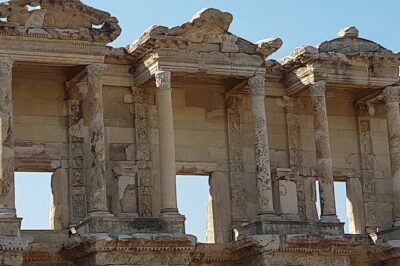
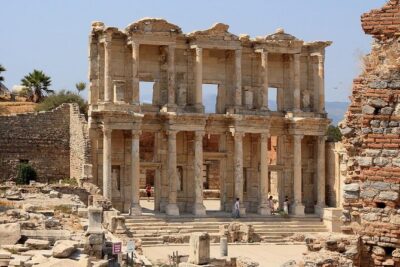
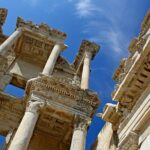
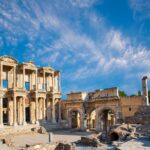
- Temple of Hadrian and Celsus Library: two photo stops with real context
- Meryemana (House of the Virgin Mary): the pilgrimage side of Ephesus
- Entrance fee note
- St. John’s Basilica (Kilisesi): the end stop with a strong emotional finish
- Lunch that keeps you on your feet
- Value and price: does $69.60 make sense?
- Timing tips for a smoother day
- Who this tour fits best (and who should think twice)
- Should you book Biblical Jewels of Ephesus?
- FAQ
- Where is the tour located?
- What is the tour price?
- How long is the experience?
- What time does the tour start?
- What’s included in the price?
- Are entrance fees included?
- Does the tour return to the port?
- Is this tour private or group-based?
- Can I cancel for free?
Key things you’ll notice right away
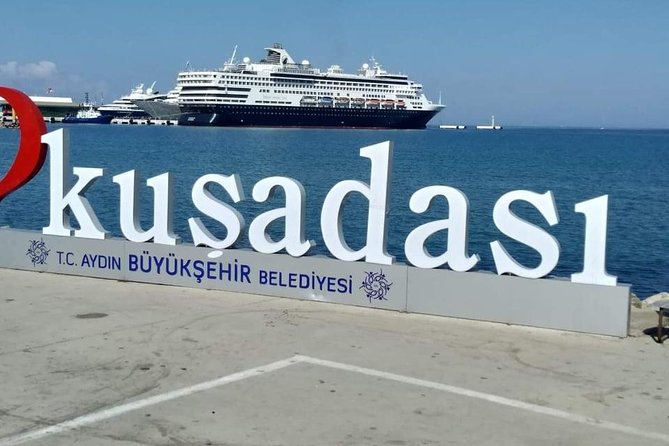
- Cruise port meetup at Kusadasi with your name at the arrival gate, then an air-conditioned minivan to Selçuk
- Ephesus at guide-speed, covering big visual hits like the Odeon, Grand Theatre, and Domitian Square
- Meryemana (House of the Virgin Mary), tied to the tradition that St. John brought Mary to Ephesus
- St. John’s Basilica (Kilisesi), where tradition places his burial
- Papal connection: Pope Paul VI visited Meryemana on July 26, 1967 and recognized it as a pilgrimage center
- 7 hours approx. with morning departure timing and an included lunch to pace the day
How the day works from Kusadasi port
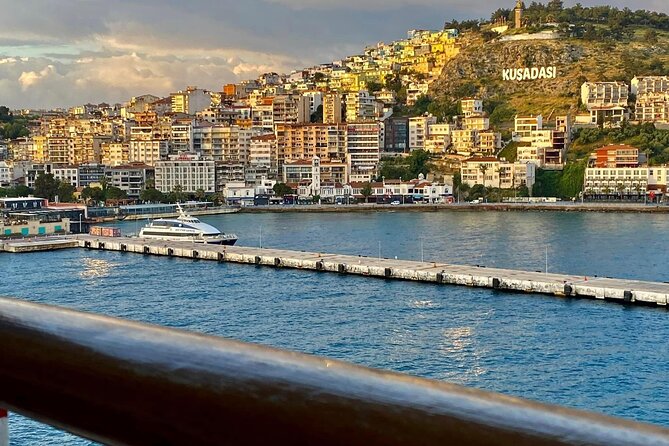
This is built for cruise stops. When your ship docks, a professional local guide meets you at the port arrival gate with a board showing your name. From there, you transfer to an air-conditioned minivan, which matters because the Ephesus area can feel long and hot once you’re walking.
You’re scheduled to start at 8:00 am (with departures throughout the morning), and the total time is listed at about 7 hours. That’s a smart length for a first-ever Ephesus visit: long enough to see the anchors, not so long that you feel wrecked before you’re back at the ship.
You can also read our reviews of more tours and experiences in Kusadasi.
Ephesus ruins: what you’ll actually see and why it matters
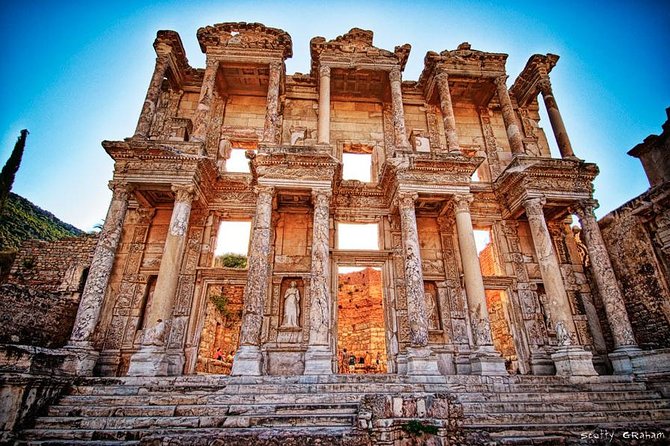
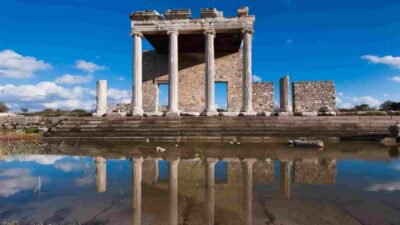
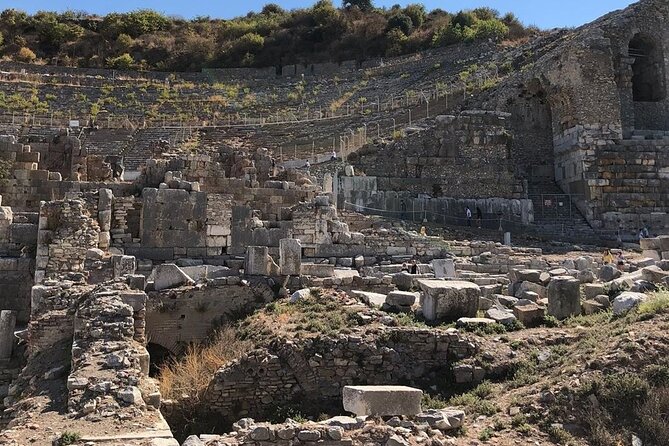
Your longest stop is the Ancient City of Ephesus in the Selçuk area, with about 2 hours on site. This is where you should go into the day with realistic expectations: you’ll cover a lot of named monuments, but you won’t have the luxury of lingering at every single corner. The payoff is that a good guide helps you connect what you’re looking at to the bigger story of why this place was so important.
Here are the major highlights you’ll be pointed toward:
- Odeon
- State Agora
- Temples of Dea Roma
- Prytaneion
- Domitian Square
- Hercules Gate
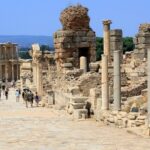
- Curetes Street
- Fountain of Trajan
- Baths of Scholastica
- Temple of Hadrian
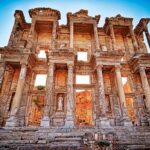
- Celsus Library
- Gymnasium
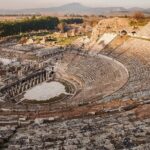
- Grand Theatre
What I find helpful about seeing Ephesus this way is that it gives you a “map in your head.” You’re not just snapping photos of old stones—you’re watching how civic life, religion, and public entertainment worked together. Ephesus started as a trade center, later became a major religious center for early Christianity, and today it’s one of Turkey’s most visited archaeological areas. Even if you don’t consider yourself a ruins person, the scale and layout are the kind of thing that makes you rethink how advanced the ancient world was.
The main practical tradeoff: entrance costs and walking pace
Ephesus ruins are listed as admission not included, so plan for the possibility of paying an entry fee on the day (and if you want total certainty, confirm the amount at booking). Also, two hours inside the archaeological area means you’ll spend time moving between landmarks. Wear shoes you trust on uneven ground, and bring sun protection.
Getting your bearings fast at the Odeon, Agora, and Theatre
If you want to enjoy Ephesus without feeling lost, anchor your attention on the big public buildings first. The tour’s sequence naturally helps you do that, starting with major spaces like the Odeon and State Agora, then moving through the civic and ceremonial areas like Domitian Square and Curetes Street.
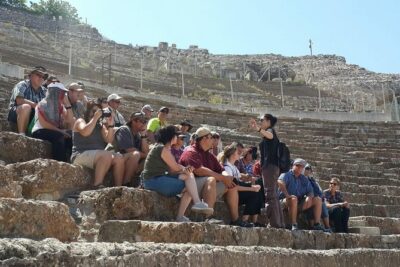
From there, it’s worth keeping an eye on how the Grand Theatre fits into the city. Even when you’re just looking from one spot, the theatre setting helps you imagine how performances and crowds worked. The guide focus here matters: when someone explains what you’re seeing, those ruins become more than a list of names.
Temple of Hadrian and Celsus Library: two photo stops with real context
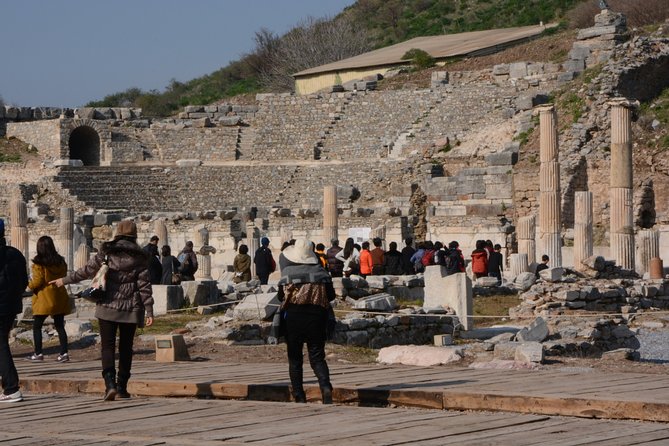
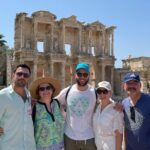
Some Ephesus sights are famous for a reason, and two of the most recognizable are the Temple of Hadrian and the Celsus Library.
- Temple of Hadrian helps connect the site to the broader Greco-Roman world. It’s a reminder that Ephesus wasn’t only religious; it was also a statement of power and culture under the empire.
- Celsus Library is one of those places where even brief viewing gives you something valuable: scale, symmetry, and that feeling that this city planned for learning and public prestige.
If you’re the kind of traveler who likes one or two “must-see” landmarks to land before moving on, this is a good structure. You’ll hit the attention magnets and get just enough context to make them stick.


Meryemana (House of the Virgin Mary): the pilgrimage side of Ephesus
After Ephesus, you head to Meryemana, also known as the House of the Virgin Mary. This stop is about 45 minutes, and it’s a very different mood from the ruins. Instead of civic spectacle, you get a quieter, more devotional setting tied to tradition.
The tour explains the belief that St. John brought Virgin Mary to Ephesus after Jesus’ death, and that a small house was built for her on Bulbul Mountain. The modern pilgrimage connection is also part of the story: on July 26, 1967, Pope Paul VI visited and declared it a pilgrimage center.
Even if you’re not religious in the strict sense, I think you’ll appreciate the historical layer here. This place shows how sacred memory travels through time—ancient tradition, later Christian identity, and then modern pilgrimage. It’s also one of the stops where timing matters: 45 minutes is enough to slow down, absorb the setting, and take in the atmosphere without feeling rushed back to the bus.
Entrance fee note
Like the other major sites, Meryemana is listed as admission not included, so again, treat the day as pay-as-you-go for entry unless your booking confirmation states otherwise.
St. John’s Basilica (Kilisesi): the end stop with a strong emotional finish
The tour wraps with Saint John Kilisesi, the Basilica of St. John. You’ll have about 45 minutes here, and the focus is tradition: it’s considered the place where St. John was most probably buried.
This is the kind of stop that often lands well after Ephesus because you’ve already been shown how early Christianity shaped and repurposed major cities. Ending with St. John gives the day a sense of closure: you move from ancient city life to named early Christian figures.
Lunch that keeps you on your feet
An included lunch is part of why this works as a cruise excursion. You’re given an authentic à la carte lunch, which is a practical choice: you’re more likely to get a meal that actually sits well during a day of walking and sun, rather than something rushed or barely edible.
The exact restaurant details aren’t listed, but the inclusion of lunch matters at your price point. It also affects your pacing. With food covered, you’re not hunting for a place near the ruins while the day slips by.
Value and price: does $69.60 make sense?
At $69.60 per person, this is positioned as a budget-friendly day that still covers the headline stops. For me, the value comes from three areas:
- Transport included via air-conditioned minivan, which is a big deal on a port stop day.
- Professional local guide included, meaning you get interpretation of what you’re seeing across multiple sites.
- Lunch included, so you’re not paying extra to eat between ruins and pilgrimage stops.
Where value can wobble is the entrance-fee part. The overview language suggests a worry-free day, but the pricing list also says entrance fees are not included. My advice: look at your booking confirmation carefully so you know whether you’ll pay entry fees for Ephesus, Meryemana, or both.
If you’re trying to do a first-time Ephesus day without piecing things together yourself, this price looks reasonable. If you already know you want to buy tickets for multiple sites, the guide + transport + lunch combo can still be worth it.
Timing tips for a smoother day
Your tour starts at 8:00 am and runs about 7 hours. That morning start helps you catch cooler temperatures and avoids the most crowded mid-day hours in some areas.
To make the most of the limited time at each stop:
- Use the first part of Ephesus to orient yourself at the major civic and theatre areas.
- Don’t plan on perfect photos of every monument. Plan on understanding a few best examples well.
- Bring sunglasses and sun protection for the Ephesus walk segments; you’ll spend time outdoors.
- Keep your water bottle handy, since you’re not shown other breaks besides scheduled stops.
Who this tour fits best (and who should think twice)
This is a strong choice if you want:
- A guided first visit to Ephesus without losing time figuring out logistics
- A day that links archaeology with biblical/early Christian sites
- A cruise-friendly schedule with organized pickup and a return to the meeting point
You might think twice if:
- You hate walking on uneven ground. Ephesus is outdoors and active.
- You’re expecting a fully “no-pay-on-site” experience. Entrance fees are listed as not included, so confirm what you’ll pay.
- You prefer long, unhurried museum-style time. This is more of a highlights-with-context day.
Should you book Biblical Jewels of Ephesus?
I’d book it if you want a well-structured day that hits the essential Ephesus landmarks, then finishes with Meryemana and St. John in a way that ties together the religious narrative and the ancient-city story. The inclusion of transport and lunch makes it easier on a cruise day, and the tour length is realistic for first-timers.
Just do one homework step: double-check entrance-fee expectations in your confirmation. If the on-site fees match what you’re prepared to pay, this is a smart value day with a clear focus and a guide-led route that keeps you moving in the right direction.
FAQ
Where is the tour located?
It runs from Kusadasi, on Turkey’s Aegean coast.
What is the tour price?
The price is $69.60 per person.
How long is the experience?
The duration is listed as approximately 7 hours.
What time does the tour start?
The start time is 8:00 am, and the tour departs throughout the morning.
What’s included in the price?
Transport by air-conditioned minivan, a professional local tour guide, and lunch are included.
Are entrance fees included?
Entrance fees are listed as not included, so you should confirm what you’ll need to pay on-site.
Does the tour return to the port?
Yes, the tour ends with a transfer back to the port/meeting point.
Is this tour private or group-based?
This is private in the sense that only your group participates.
Can I cancel for free?
Yes. Free cancellation is offered up to 24 hours in advance for a full refund.