REVIEW · EPHESUS TOURS
Kusadasi Port Private Ephesus Tour with LUNCH
Book on Viator →Operated by Guided Ephesus Tours · Bookable on Viator
Ephesus is one of those days that feels too big. This private tour from Kuşadası Port uses a guide to help you find the right spots fast, then gives you time to stroll the ancient streets without feeling rushed. I like the small-group, up-to-12 setup and the fact that you can choose morning or afternoon so it fits your day at port. One thing to plan for: entrance fees are not included, so you’ll budget extra for tickets at the gate.
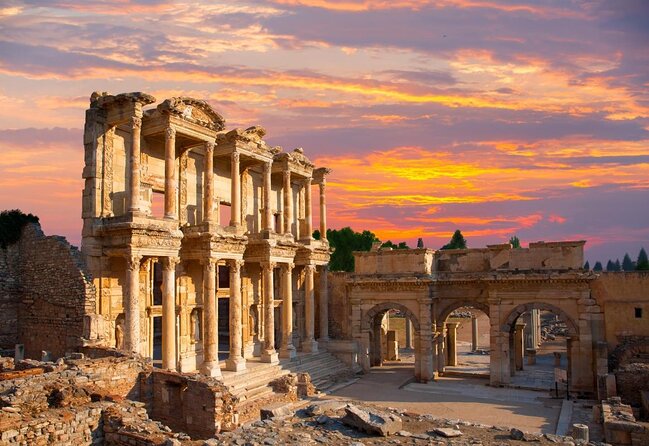
I also love how the guide turns scattered ruins into a walkable story—Mark Antony and Cleopatra’s route on the Arcadian Way, the role of the Agora, and the meaning behind major monuments like the Library of Celsus and the Great Theater. If you want a smooth, structured day with lunch included and round-trip transfer handled, this tour is built for that.
Keep in mind the clock is real at a port stop. The main walking time is limited, so it’s not the best choice if you’re hoping to linger for hours in just one area.
In This Review
- Key things to love about this Kusadası to Ephesus tour
- From Kusadasi Port to Ephesus: AC transfer and an efficient start
- The value of a private guide: turning ruins into a readable route
- Ephesus at walking speed: Odeon, Agora, and the city’s everyday power
- A practical way to enjoy the Agora and baths
- Library of Celsus and the Great Theater: two stops that feel like a show
- Arcadian Way and the stories behind the marble
- Temple of Artemis: fragments, meaning, and a quick reality check
- Lunch included: fueling a walking day without overpaying
- Timing and cruise-day logistics: why morning vs afternoon matters
- Price and what you’re really paying for at $80
- Practical tips before you go (so the day runs smooth)
- Who this tour suits best
- Should you book the Kusadası Port Private Ephesus Tour with Lunch?
- FAQ
- How long is the Kusadası Port private Ephesus tour?
- What’s the group size for this private tour?
- Is pickup and drop-off included?
- Does the tour include a private guide?
- Is lunch included?
- Are entrance fees included?
- Are drinks included with lunch?
- Is transportation provided?
- Can I choose between morning and afternoon?
- What is the cancellation policy?
- Do I get a ticket on my phone?
- Where is the meeting point?
Key things to love about this Kusadası to Ephesus tour
- Private guide for up to 12 people, so you get direction without losing freedom
- Round-trip pickup and drop-off at Kusadasi Port in an air-conditioned vehicle
- A guided route through Upper Gate to Lower Gate with major sites grouped together
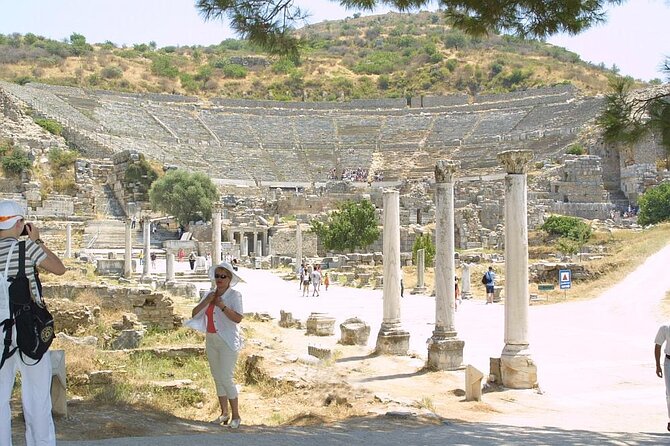
- Time to see the Great Theater (25,000-seat capacity) and it is still used for concerts
- A stop at the Temple of Artemis, explained for context even though only fragments remain
- Lunch included, with drinks not included (so plan for water or soft drinks)
From Kusadasi Port to Ephesus: AC transfer and an efficient start
Your day begins right at Kuşadası Port, with pickup and return drop-off back at the port when the tour ends. You ride in an air-conditioned vehicle, which matters more than you think once you’re outside the port area and the sun is doing its thing.
The tour is designed around cruise-day reality. That means you don’t waste time with long, confusing transfers or trying to figure out bus routes while everyone else is watching the clock. If you’ve ever tried to “DIY Ephesus” after a ship docked, you know it can quickly turn into a sprint. This keeps it calmer.
You’ll also appreciate the optional timing flexibility. You can pick a morning or afternoon departure, which helps if your ship arrival timing or your energy level is better at one end of the day.
You can also read our reviews of more private tours in Kusadasi

The value of a private guide: turning ruins into a readable route
Ephesus can feel like a big open-air maze. The ruins are impressive, but finding the key landmarks in the right order can be overwhelming. That’s where the guide earns their keep.
On this tour, you travel with a private guide (for your group only), and the plan includes flexibility to customize. Translation: if you care more about theaters and public buildings than religious sites, you’re not stuck with a rigid checklist. You can adjust at the pace of your group.
The route is set up for walking through the major zones. You move through the open-air museum from the Upper Gate to the Lower Gate, so you’re not zigzagging across the site. Along the way, the guide helps you connect what you’re looking at to how the city worked—streets, civic buildings, entertainment spaces, and religious landmarks.
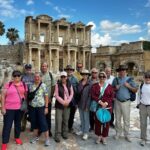
In one past experience, the guide was Mr. Umut, and the key advantage was simple: he met the group exactly where promised and explained Ephesus in a way that made it feel like a place, not just a pile of stones.
Ephesus at walking speed: Odeon, Agora, and the city’s everyday power
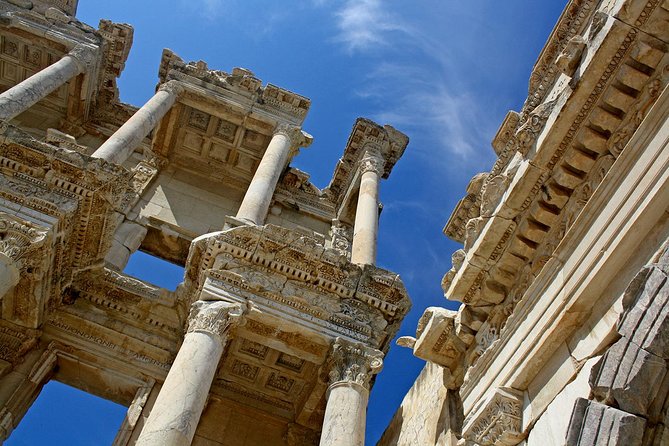
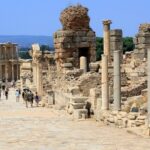
The core of your tour is the Ancient City of Ephesus, where you’ll spend about 2 hours walking through the major highlights. This is enough time to see the signature sights without feeling like you’re constantly rushing.
As you walk, you pass through major public areas and landmarks, including:
- Odeon (an entertainment space)
- Agora (the civic center where public life happened)
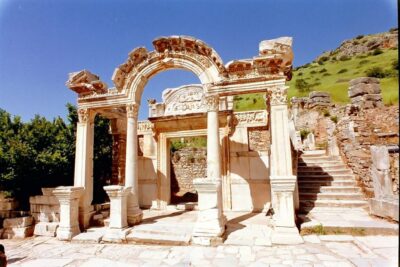
- Temple of Hadrian and Domition (imperial-era religious and political presence)
- Fountains of Trajan
- Scholastic Baths
Here’s what I think is most valuable: these aren’t random stops. The route lines up the kind of places a Roman city would revolve around. You’re essentially seeing the entertainment, government, and daily-life bones of the city in one guided loop.
A practical way to enjoy the Agora and baths
When you’re standing in Roman ruins, it’s easy to think, cool building. A good guide changes it to: this is what people used this space for. Ask your guide to explain how the Agora functioned as a social center, and how baths fit into daily routines. You’ll also get more from the Scholastic Baths when the guide gives context, rather than you trying to guess from architecture alone.
Library of Celsus and the Great Theater: two stops that feel like a show
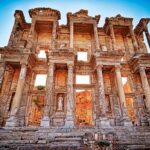
Two of the most striking moments are the Library of Celsus and the Great Theater.
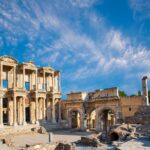
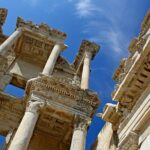
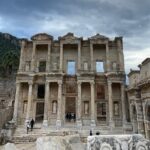
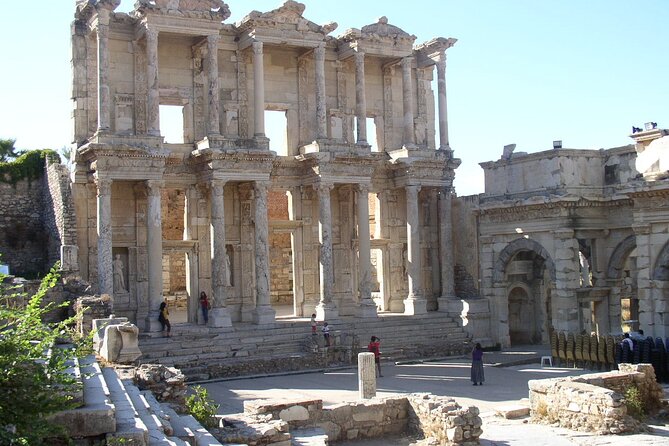
The Library of Celsus is a standout for a reason: it’s visually bold, and it helps you picture Ephesus as a major cultural center, not just a stop on the map. Standing there, you can see why ancient visitors cared about scholarship and public prestige.
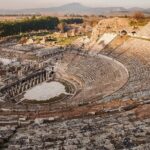
Then you hit the Great Theater, where the tour description calls out that it is still used for concerts. The theater’s capacity—25,000 spectators—is the kind of number that snaps your brain into scale. You can imagine crowds gathering for plays, speeches, and even gladiatorial combat, not as legend, but as something that actually shaped public life.
If you like photos, this is where you’ll likely want your camera breaks. If you dislike crowd-control lines, this is also where a private guide helps: you’re not competing with tour herds to understand where to stand for the best views.
One note: because you’re walking through an active archaeological site, you’ll be on uneven ground and stairs. Wear shoes you trust. You’ll thank yourself.
You can also read our reviews of more tours and experiences in Kusadasi
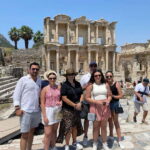
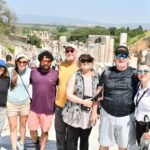
Arcadian Way and the stories behind the marble
A big part of the experience is the guided storytelling as you walk along the Arcadian Way. This is the street route where stories place Mark Antony and Cleopatra in procession. Even if you’ve heard names like that before, you’ll likely find it more meaningful when someone points out how a ceremonial route moved through the city.
The guide also shares stories tied to visitors believed to have walked these streets at their height, including figures such as Alexander the Great and the Virgin Mary. Whether you treat those stories as legend or historical tradition, they add a human layer to the architecture. Ruins stop being abstract when someone connects them to people and moments.
This is also why I like the “private guide + your pace” approach. If you want the facts, the guide can focus on monuments and dates. If you want the atmosphere, you can lean into the stories. You control the balance.
Temple of Artemis: fragments, meaning, and a quick reality check
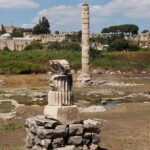
After the main Ephesus walk, you make a final stop at the Temple of Artemis for about 30 minutes. This is one of the Seven Wonders of the Ancient World, and the guide explains what it meant and why it mattered.
Here’s the honest expectation: what you see today is mostly foundations and worn marble columns. That’s not a failure—it’s the point. You’re looking at surviving traces of something enormous, and the guide helps you understand the scale and significance you’re not fully seeing.
This stop is short on purpose. The tour prioritizes the most concentrated cluster of major Ephesus sights first, then gives you the Artemis context at the end.
Lunch included: fueling a walking day without overpaying
Lunch is included, which is a real value add on a port day. You’re not hunting for a meal right after pickup or worrying whether the nearest restaurant will be worth your time.
Still, keep your expectations practical. Drinks are not included, so if you know you’ll want bottled water or soda, plan for it. Also, since it’s a walking-heavy visit, try not to go full foodie with a heavy meal that slows your legs later. A steady, simple lunch is your friend.
Timing and cruise-day logistics: why morning vs afternoon matters
You’ve got an easy choice: morning or afternoon departure. That’s more than convenience. Timing impacts:
- How hot and bright it feels while you’re walking
- How your group energy matches the walking pace
- How much buffer you want before re-boarding
The tour duration is listed as about 4 hours (with the guided time focused on the Ephesus portion). That’s a reasonable window for a major highlight day without exhausting everyone.
One tip if you’re on a tight cruise schedule: choose the departure that gives you the most calm time before and after your ship’s required re-boarding.
Price and what you’re really paying for at $80
At $80 per person, the headline number is straightforward. The smart part is what’s included: private guide, air-conditioned vehicle, round-trip port transfer, and lunch.
That combination is where the value comes from. A private guide alone can cost more than this in many places. Adding transport and lunch turns the price into something closer to a full-service day rather than a “we’ll show you the entrance gate” experience.
The main extra cost to expect: entrance fees are not included. Parking fees and drinks aren’t included either, and personal expenses are on you. So your true day cost will be the $80 plus the tickets you buy at the gate (and whatever you spend on drinks).
When is this a great deal? If you’re traveling as a family, a small group of friends, or anyone who wants their day planned but not boxed in.
Practical tips before you go (so the day runs smooth)
Here’s how to make your Ephesus day feel effortless.
- Budget for entrance tickets. The tour notes admission isn’t included, and tickets are purchased at the gate.
- Wear grippy shoes. You’ll walk through an archaeological site with uneven paths and stone steps.
- Use the guide to help you prioritize. There are a lot of major stops. Ask for what matters most to your group.
- Plan for a short Artemis stop. If Artemis is your top priority, you might want to spend more time on it on your own after the tour ends (if time allows).
- Bring something for water. Drinks aren’t included, so stay ahead of thirst.
Who this tour suits best
This is a strong fit if you want:
- A private guided Ephesus experience without the stress of organizing transport
- A clear route through the most important landmarks, without losing time to confusion
- Lunch included, with the day paced for a port stop
- A group of up to 12 people, making it ideal for family clusters or a tight group of friends
If you’re the kind of traveler who loves solo discovery and wants zero structure, you might prefer a full self-guided day. But if you want the major sites covered in a sensible order with context, this tour hits the sweet spot.
Should you book the Kusadası Port Private Ephesus Tour with Lunch?
I’d book it if you’re visiting Ephesus from Kuşadası Port and you want your day to run smoothly: pickup handled, AC transport ready, a private guide to keep things readable, and lunch included so you don’t lose time hunting food.
Skip it (or at least think twice) if:
- Your group insists on spending half a day in one narrow area
- You’d rather pay less and do everything yourself
- You hate the idea of paying entrance fees separately and managing tickets on-site
If you want an efficient, high-comfort way to see the big Ephesus hits—Library of Celsus, the Great Theater, the Agora spaces, plus the Temple of Artemis—this is the kind of tour that makes your port day feel like a real win.
FAQ
How long is the Kusadası Port private Ephesus tour?
The tour lasts about 4 hours (approximately), including the main guided walking time and the Temple of Artemis stop.
What’s the group size for this private tour?
It’s a private tour for your group of up to 12 people.
Is pickup and drop-off included?
Yes. The tour includes pickup and drop-off at Kusadası Port.
Does the tour include a private guide?
Yes. You’ll have a private guide for your group.
Is lunch included?
Yes. Lunch is included in the tour.
Are entrance fees included?
No. Entrance fees are not included, and you’ll purchase admissions tickets at the gate.
Are drinks included with lunch?
No. Drinks are not included.
Is transportation provided?
Yes. You travel by air-conditioned vehicle for round-trip transfer from Kusadası Port.
Can I choose between morning and afternoon?
Yes. You can choose either a morning or afternoon departure.
What is the cancellation policy?
This experience is non-refundable and cannot be changed for any reason.
Do I get a ticket on my phone?
A mobile ticket is listed as part of the experience.
Where is the meeting point?
The start point is Ege Ports Parking Camikebir, Liman Cd., 09400 Kuşadası/Aydın, Türkiye.