REVIEW · EPHESUS TOURS
Ephesus: 3-Hours Private Tour
Book on GetYourGuide →Operated by Ephesus Tour Company · Bookable on GetYourGuide
Ephesus can feel like a time machine if you have the right plan, and this private tour is built for exactly that. I love the skip-the-line fast entry setup and the fact you get a licensed guide telling the story behind the Celsus Library and the other big-ticket sights. The one thing to think about: you’ll be walking on uneven ancient surfaces, and the tour is not set up for mobility impairments.
You’re picked up in Kuşadası (including the cruise port area) and whisked to the site in private air-conditioned transport. Then you get about three hours on the ruins, plus a short Temple of Artemis stop before you’re driven back to your hotel or port—tight, efficient, and usually a lot less stressful than trying to manage timing solo.
In This Review
- Key highlights at a glance
- Kuşadası pickup and the comfort that changes everything
- Skip-the-line at Ephesus: what it really buys you
- The main event: your 3-hour walkthrough through Ephesus
- Temple of Hadrian: the “big public” feel
- Fountain of Trajan: a stop that shows daily life
- Great Theater: the perfect “stand back and look” moment
- Celsus Library: why it’s the star attraction
- Temple of Artemis: a quick stop that still makes sense
- Private guide impact: names you might meet and how they help
- Timing: 3.5 to 4 hours total, built for real life
- What’s included (and what you’ll need to budget for)
- Who this tour is best for
- What to bring so you enjoy the day instead of surviving it
- Is $108 per person good value for this Ephesus plan?
- Should you book this private 3-hour Ephesus tour?
- FAQ
- FAQ
- How long is the Ephesus 3-Hours Private Tour?
- Where does the tour start in Kuşadası?
- Are there different pickup and drop-off locations?
- What sites are included during the guided Ephesus time?
- Is Temple of Artemis included?
- Is this tour private?
- Does it include skip-the-line entry?
- What’s included in the price?
- What’s not included?
- Is it suitable for people with mobility impairments?
- What should I bring?
Key highlights at a glance
- Skip-the-line fast entry: Less waiting, more time seeing the big sights
- Private air-conditioned transport: Comfort from Kuşadası to the site and back
- 3 hours in Ephesus: A focused run through major ruins without rushing nonstop
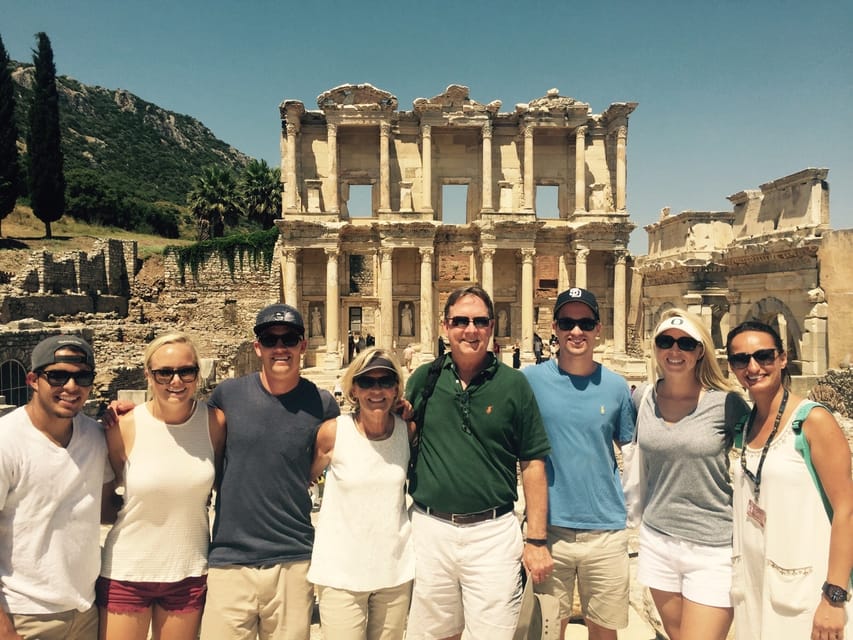
- Celsus Library photo stop: One of the best-preserved buildings in the complex
- Temple of Artemis time: About 20 minutes at the nearby iconic stop
- Guides who adjust to your pace: You may notice extra time if you’re eager about certain areas
Kuşadası pickup and the comfort that changes everything
This tour starts the way a good day in Turkey should: with a real pickup. You meet your guide in your Kuşadası hotel lobby or at the Kuşadası Cruise port. There’s also an option involving Konak for pickup/drop-off, depending on where you’re staying.
From there, you ride in private air-conditioned transport. That matters more than it sounds. Ephesus is not in the middle of a gentle park; you’re on a real archaeological site where walking adds up fast. Being able to cool down on the ride in (and again after) keeps you from turning the day into a sweaty sprint.
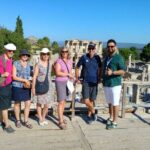
And because it’s a private group, you’re not stuck with the pace of a big crowd. You’re with a guide who can slow down when you want photos, or speed up when you’ve already seen enough of the basics.
You can also read our reviews of more private tours in Kusadasi

Skip-the-line at Ephesus: what it really buys you
The headline feature is straightforward: you get fast entry tickets that help you skip the ticket line. That’s not just a convenience perk—it’s time you can spend inside the ruins where the real value is.
Ephesus is famous for major structures like the Great Theater and Celsus Library, but the best moments aren’t just “standing in front of the object.” It’s understanding where you are in relation to the city, plus knowing what to look for as you move between sites. A shorter wait at the start means you lose fewer daylight minutes and fewer energy minutes.
Here’s the practical part for your planning: entrance fees are listed as not included in the tour price. So you should budget for those additional site costs, even if the tour handles the fast-entry experience. The key value is that you’re not trapped in a slow line while everyone else sorts tickets.
The main event: your 3-hour walkthrough through Ephesus
Your guided time at the ruins is about three hours. That duration is long enough to get a proper sense of the site without turning it into a full-day march. It’s a sweet spot for people who want the big sights and the story, but don’t want to commit to hours of logistics.
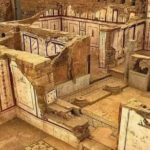
Also, you’ll be guided through the layers of Ephesus—created by the Ionians in the 11th-century BC and later expanded under the Romans. You’ll see it as one connected space, not as disconnected ruins. The guide’s job is to make the transitions make sense: how the city grew, what the major public buildings were for, and why certain structures are so recognizable even now.
Temple of Hadrian: the “big public” feel
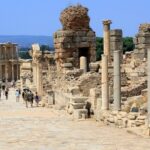
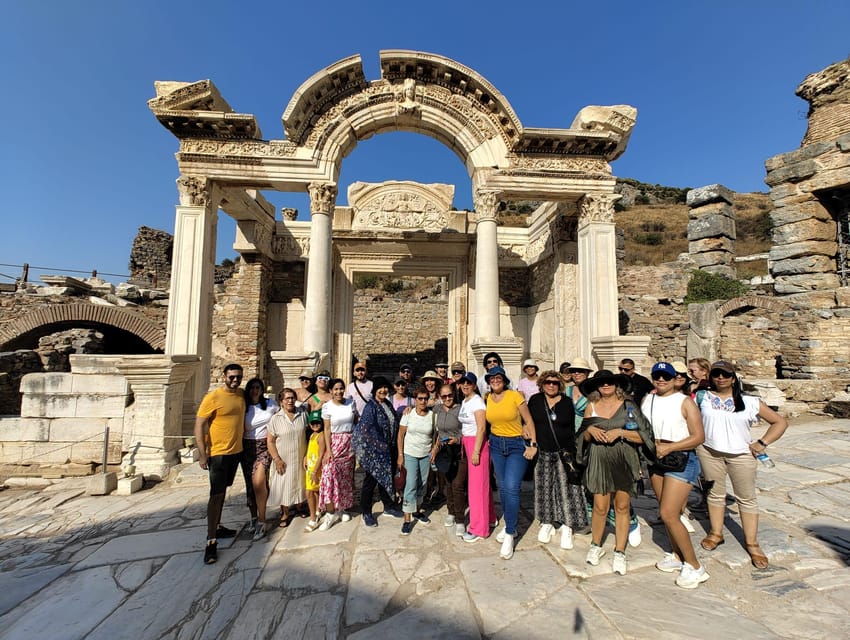
One stop you can expect is the Temple of Hadrian. In a site like this, temples are more than religious buildings. They’re symbols of civic power and the way rulers presented themselves. With a guide, you’re more likely to notice design cues and location choices that connect temples to the rest of the city grid.
The practical takeaway: spend a minute or two orienting yourself here. A good guide will help you build a mental map so the next steps feel less like random ruins and more like an organized city walk.
Fountain of Trajan: a stop that shows daily life
Next up is the Fountain of Trajan. Water features on ancient sites aren’t just for aesthetics. Even when you don’t think about it consciously, fountains like this help you understand how a city supported public life.
This is a great example of why a guide matters. Without context, you might treat it like another stone structure. With context, it becomes evidence of planning and civic infrastructure—something you can picture as you move.


Great Theater: the perfect “stand back and look” moment
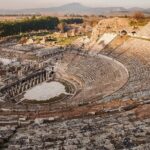
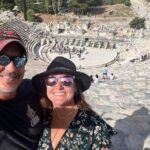
Then there’s the Great Theater. This part is where you can actually read the space with your body. The shape, the sightlines, and the sense of scale click in your mind fast—especially when you’re told what it was used for.
If you’re someone who likes architecture and crowds-in-the-past vibes, this is one of the best areas to pause and take in the geometry. It also tends to work well for photos since the theater’s setting gives you dramatic angles without you needing to hike to a hidden viewpoint.
Celsus Library: why it’s the star attraction
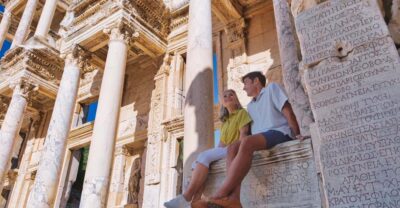
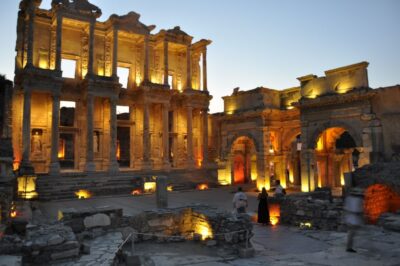
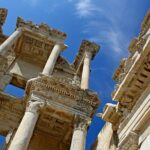
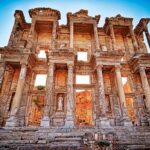
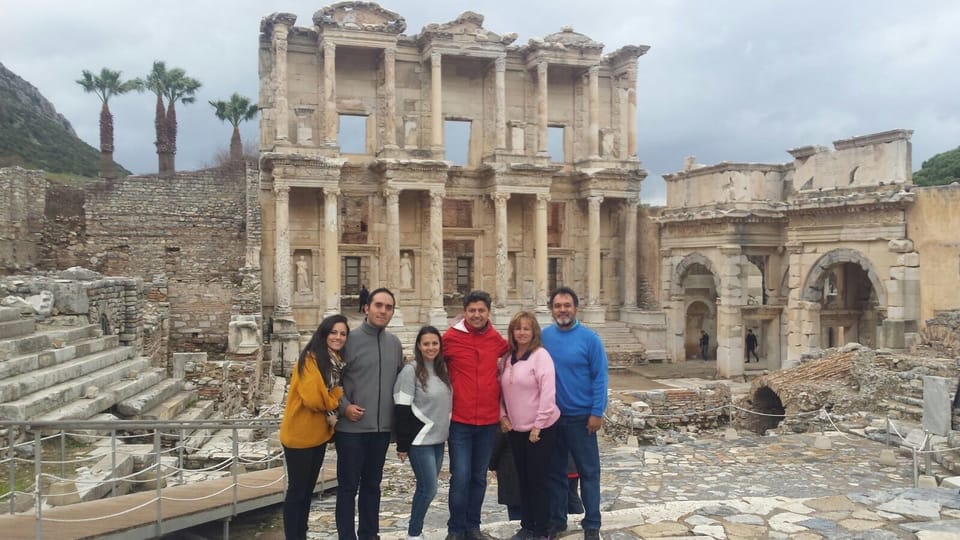
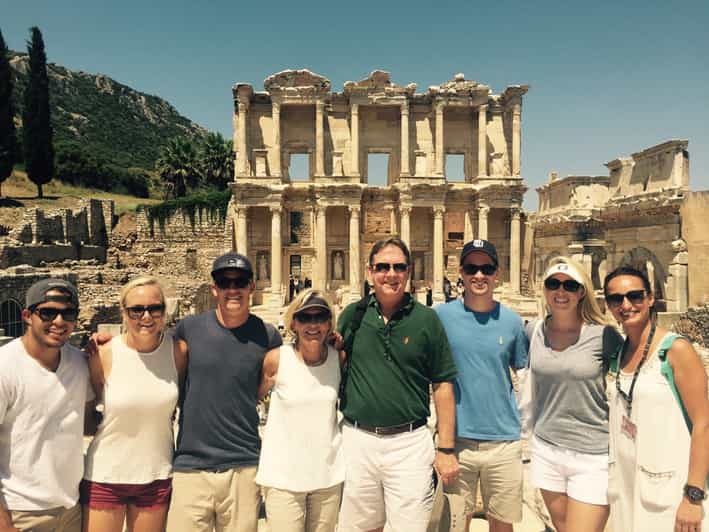
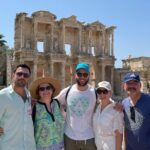
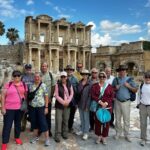
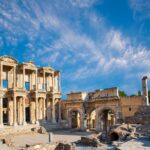
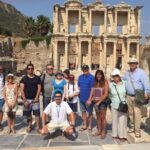
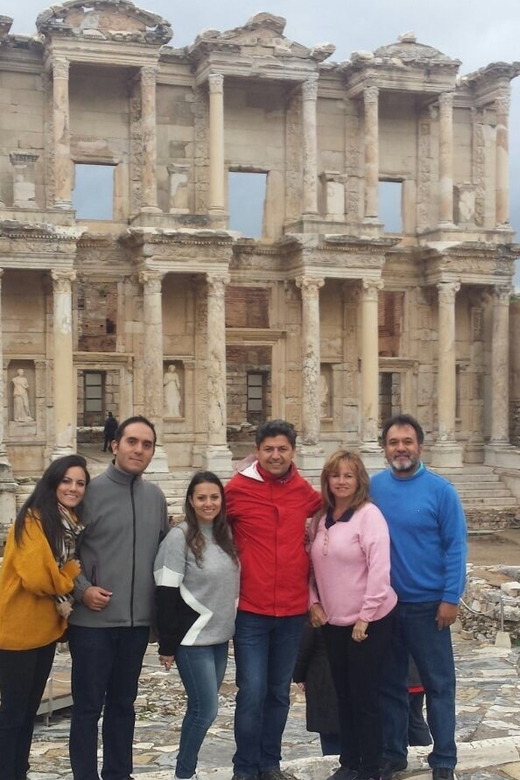
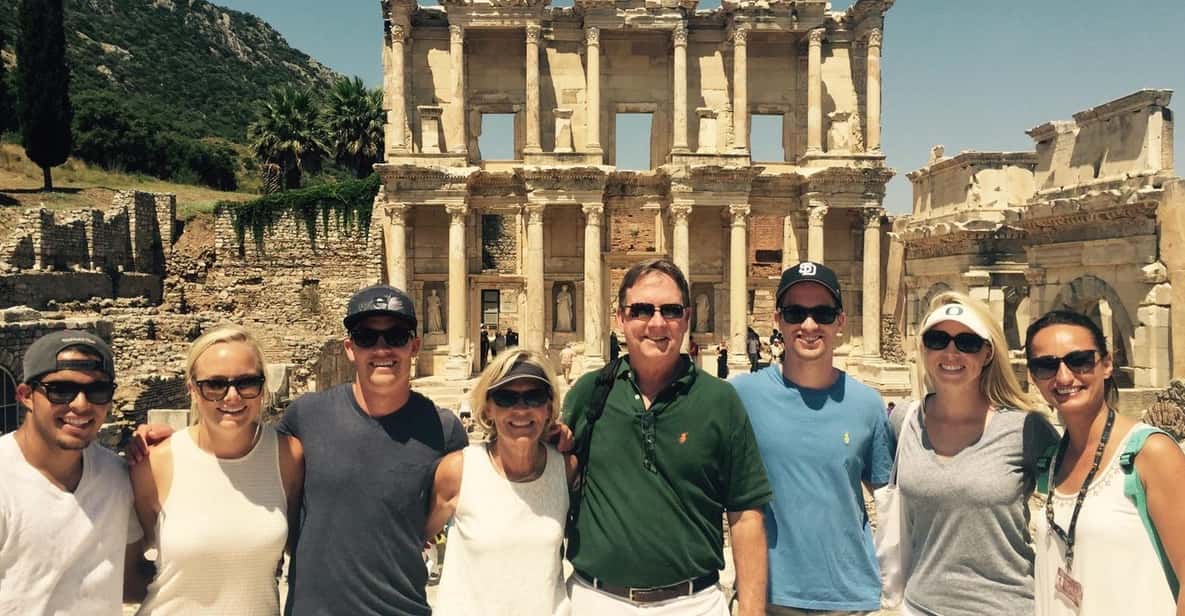
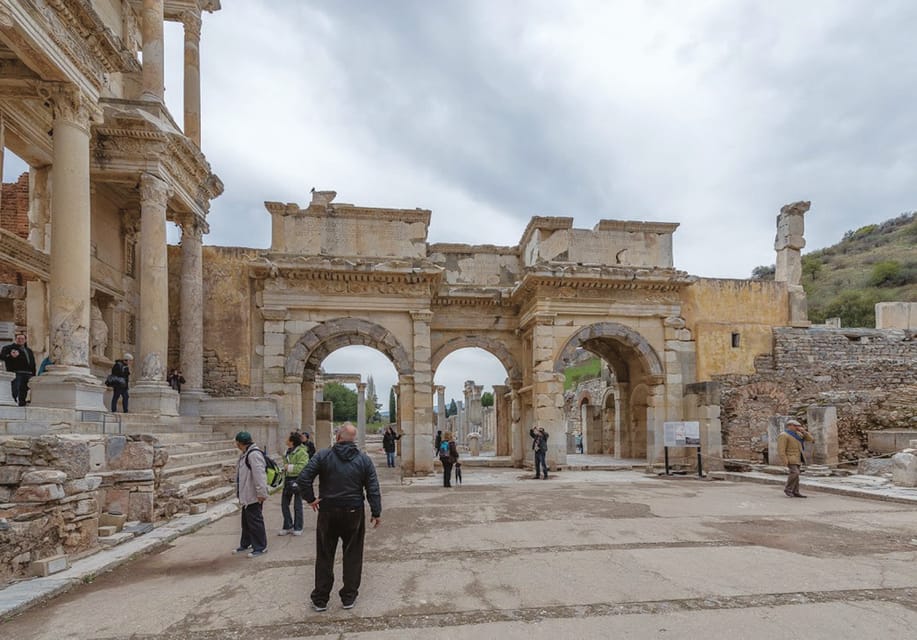
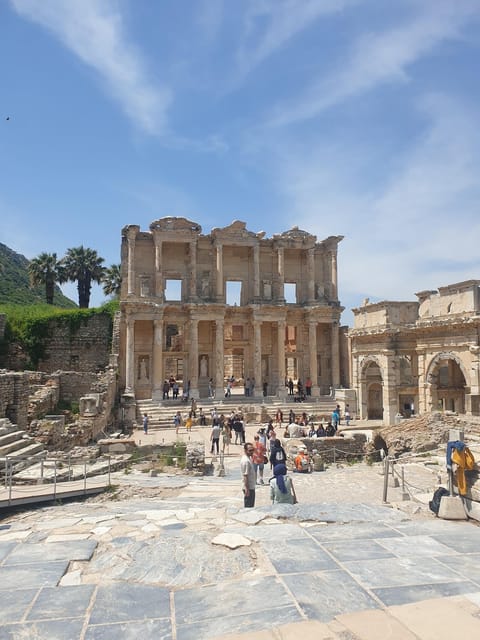
The most famous stop in the route is the Celsus Library, one of the best-preserved buildings in the ruins and often the most photographed. You’ll see why right away. Even if you’ve only seen a few images online, it hits differently in person because of the way the façade and overall structure hold up.
What I love about including Celsus in a guided schedule is that you don’t just get a photo moment—you get help noticing why it looks the way it does, and what role the library would have played in the city.
If you’re short on time, this is the “don’t rush past it” stop. You’ll want a few minutes to look carefully, then step back for wider shots.
Temple of Artemis: a quick stop that still makes sense
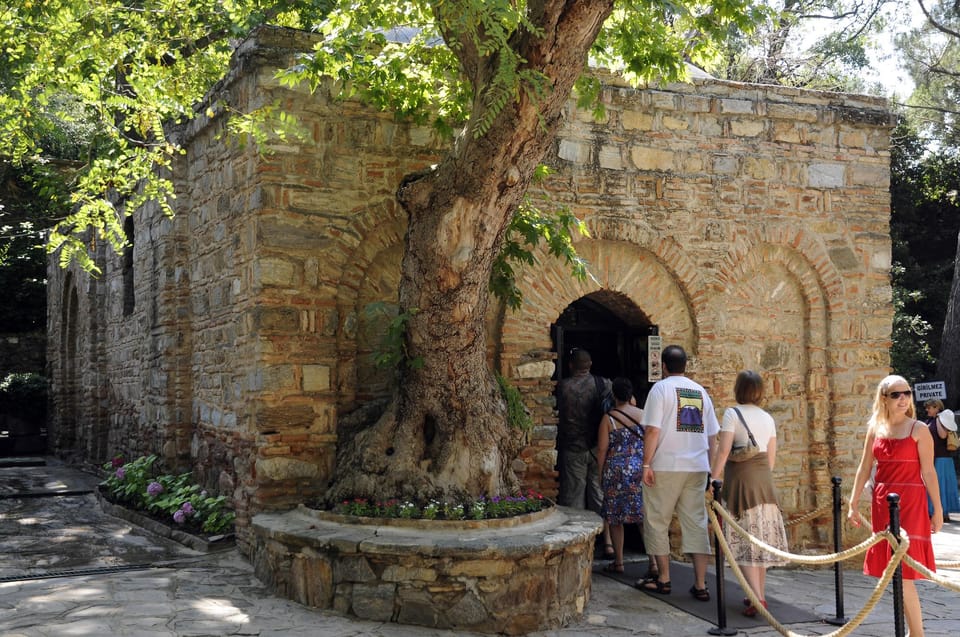
The tour includes a visit to the Temple of Artemis for about 20 minutes. That time is short, so you’ll want to use it for exactly what this stop is: a chance to connect Ephesus with one of the most iconic names in the region.
Not everyone thinks they’ll care because it’s not as visually complete as some other structures. But the value of the quick stop is the context it adds to the bigger Ephesus story. If you like myth-and-architecture connections, you’ll get more out of those 20 minutes with a guide explaining what you’re seeing.
Private guide impact: names you might meet and how they help
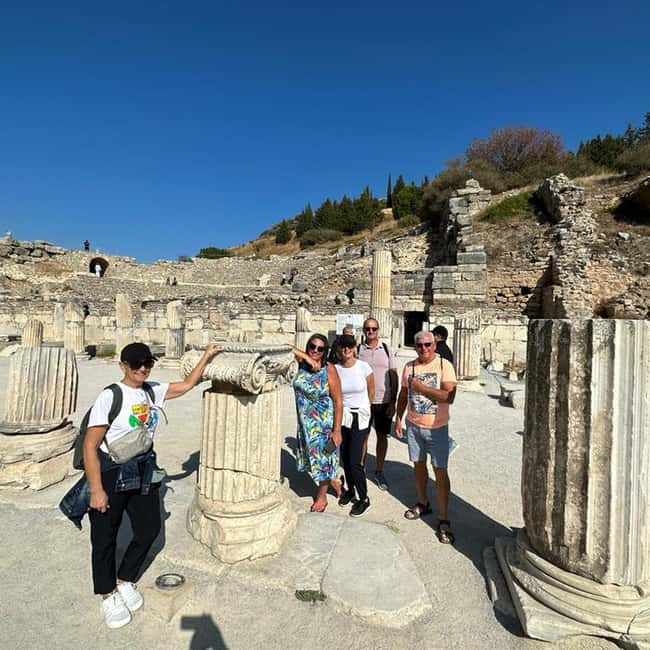
This tour is led by a professional licensed guide, and the language options listed are Spanish and English. The real reason people keep giving this experience a strong rating is how guides shape the pacing and the learning.
In past outings, guides such as Nafia, Nadia, and Mavi were praised for being helpful, fun, and knowledgeable. One guest specifically noted Nafia was phenomenal and that the day felt enjoyable, while another mentioned Nadia ran a bit long to cover the places they were most interested in.
What that means for you: if there’s a part of Ephesus you care about—like the theater vibe or getting extra time at Celsus—say it early. A private guide can often adjust within the time limits, and the best ones do it without making you feel rushed or awkward.
One more detail to keep in mind: in at least one experience, a rug demonstration and lunch were mentioned as part of the day. That doesn’t mean it’s guaranteed for every schedule, and lunch itself is listed as not included—so plan on bringing your own ideas for where you’ll eat. But it does suggest your guide may offer extra cultural stops if there’s time.
Timing: 3.5 to 4 hours total, built for real life
The total tour duration is listed as 3.5 to 4 hours, with the main ruins time around 3 hours. That timing is actually helpful because it fits into a half-day slot—especially if you’re visiting from a cruise or if you’ve got other plans in Kuşadası.
The downside of a shorter tour is also obvious: you can’t see everything at Ephesus in 3 hours. You’re choosing focus over saturation. For most people, that’s a win. For hardcore ruin explorers who want every corner, you might feel a touch limited.
What’s included (and what you’ll need to budget for)
This tour includes:
- Transportation (private air-conditioned vehicle)
- A professional licensed guide
- Parking fees
This tour does not include:
- Entrance fees
- Lunch
- Drinks
For value, I look at this as a trade: you’re paying for the structure and the guide-led time. You’re not paying for site entry and meals inside the base price. If you’re the type who wants to see the big anchors—Hadrian, Trajan’s fountain, the theater, and Celsus—while skipping lines, that structure tends to feel worth it.
Also note the tour has a very high rating (4.9) from 16 reviews, which is a good sign that the experience is working as intended: clear guidance, smoother logistics, and a good pace.
Who this tour is best for
This experience fits well if you:
- Want the major Ephesus highlights without fighting crowds or lines
- Prefer a private group with a guide who can answer questions in real time
- Like a tight walking schedule that still feels thoughtful
It’s not suitable for people with mobility impairments, mainly because ancient terrain and walking requirements are not designed for easy access.
And if you’re traveling with kids or older relatives, you might want to judge carefully. The tour isn’t described as wheelchair-friendly, and the walking still counts even if the tour is “only” a few hours.
What to bring so you enjoy the day instead of surviving it
This is one of those tours where small preparation pays off fast. Bring:
- Comfortable shoes (seriously, you’ll be on uneven surfaces)
- A big bottle of water
- A hat and sunglasses are recommended
Also, since it’s a hot region in many seasons, dress with that in mind. Think breathable layers you can tolerate on the walk between stops, then cool down in the air-conditioned vehicle.
Is $108 per person good value for this Ephesus plan?
Here’s my take: at $108 per person, the price is easier to justify if you value three things—time, comfort, and guidance.
- Time: skip-the-line fast entry helps you start faster and spend more time where it matters.
- Comfort: private air-conditioned transport reduces fatigue.
- Guidance: a licensed guide turns the ruins into a story you can follow instead of a list of stone fragments.
If you were going to Ephesus on your own, you’d still spend money on transportation and entrance, and you’d lose the benefit of a tailored walkthrough.
One caution: because entrance fees, lunch, and drinks aren’t included, your final day cost will be a bit higher than $108. Still, you’ll be buying smoother logistics and a guide-led route.
Should you book this private 3-hour Ephesus tour?
I’d book it if your goal is simple: see the real highlights of Ephesus with a guide, skip the line, and keep the day short enough to enjoy the rest of your schedule in Kuşadası.
Skip it only if you want a full-day archaeological deep scan of every corner of the site, or if mobility access is a must. For most people—especially first-timers—this private format is a practical way to get the best parts without the headache.
If you do book, send a message or tell your guide what you want most (Celsus Library time, the theater, Temple of Artemis). With private tours, those preferences can shape the pace more than you’d expect.
FAQ
FAQ
How long is the Ephesus 3-Hours Private Tour?
The total duration is listed as 3.5 to 4 hours, with about 3 hours to explore the ancient ruins.
Where does the tour start in Kuşadası?
You meet your guide in your hotel lobby in Kuşadası or at the Kuşadası Cruise port.
Are there different pickup and drop-off locations?
Yes. Pickup includes options in Kuşadası and Konak, and drop-off is also available in Konak and Kuşadası.
What sites are included during the guided Ephesus time?
You can expect Temple of Hadrian, Fountain of Trajan, the Great Theater, and the Celsus Library.
Is Temple of Artemis included?
Yes. Temple of Artemis is visited for about 20 minutes.
Is this tour private?
Yes, it’s a private group tour.
Does it include skip-the-line entry?
It includes skip-the ticket line with fast entry tickets.
What’s included in the price?
Transportation, a professional licensed guide, and parking fees are included.
What’s not included?
Entrance fees, lunch, and drinks are not included.
Is it suitable for people with mobility impairments?
No, it is not suitable for people with mobility impairments.
What should I bring?
Bring comfortable shoes and a big bottle of water. A hat and sunglasses are recommended.