REVIEW · EPHESUS TOURS
Ephesus Skip Line Tour From Kusadasi Port
Book on Viator →Operated by Turco Travel · Bookable on Viator
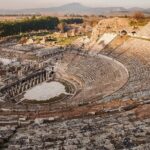
Skip the line, then see Ephesus in focused time. This VIP-style shore excursion takes you from Kusadasi Port straight to key sites, using a private minivan and a structured walk that keeps your day on track. You’ll enter Ephesus through the Magnesia Gate and work your way past the Terrace Houses, the Library of Celsus, and the Great Theater without getting lost in the crowd crush.
I love how the itinerary groups the “main Ephesus hits” together, so your visit feels efficient but not rushed. I also like the spiritual shift at the House of the Virgin Mary, where the pace cools down after the Roman city walk.
The main thing to plan for is that the Ephesus admission ticket isn’t included, and the overall visit is timed for a 3–5 hour window.
In This Review
- Key highlights at a glance
- Kusadasi Port pickup: the smooth start you want on a shore day
- Riding in a private luxury minivan (and why it matters)
- Entering Ephesus through the Magnesia Gate: start with the right frame
- The Terrace Houses: what you’re really seeing besides mosaics
- Library of Celsus and the Great Theater: two big spaces, two different vibes
- State Agora, Prytaneion, Curetes Street: the city’s “backbone” walk
- Virgin Mary statue stop: a quiet pause before Mount Koressos
- House of the Virgin Mary on Mount Koressos: the change in tone is real
- Gazi Beğendi Hill: your last look back at the port
- Price and tickets: is $25 actually good value?
- Timing: how a 3–5 hour day works in real life
- What this tour feels like for different travel styles
- Who should book this skip-line Ephesus excursion?
- Should you book this Ephesus skip-line tour from Kusadasi Port?
- FAQ
- Where does the tour start in Kusadasi?
- Is this tour private?
- How long is the excursion?
- Are admission tickets included?
- How do you get tickets for the tour?
- What is the cancellation window?
Key highlights at a glance
- Pickup from Kusadasi Cruise Port with no waiting plus a private luxury minivan ride
- Skip-line style entry into Ancient Ephesus from the Magnesia Gate (Upper Gate)
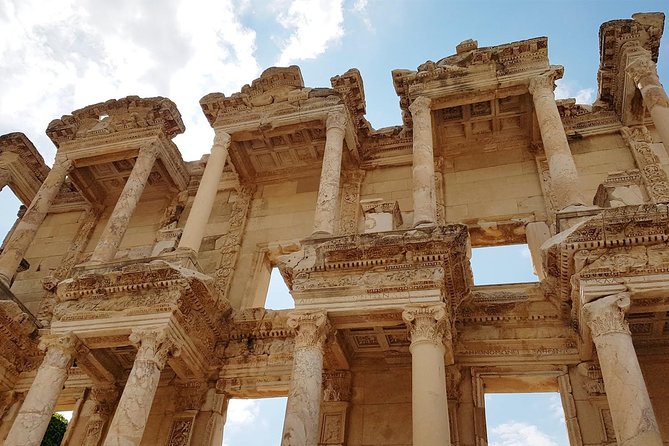
- Terrace Houses + Library of Celsus + Great Theater in one organized route
- Mount Koressos visit to the House of the Virgin Mary, a long-time pilgrimage stop
- Short photo break at Gazi Beğendi Hill with views over Kusadasi, the Aegean, and the port
- Private group format: only your group rides and tours together
Kusadasi Port pickup: the smooth start you want on a shore day
If you’re doing Ephesus from a cruise, the biggest stress is always timing. This tour is built around that reality: you’re picked up from Kusadasi Cruise Port and taken directly to your private luxury minivan, avoiding the shuffle and delays that can eat up your morning.
You also get a clear, simple meeting location at Kuşadası Port TürkiyeCamikebir, Feribot Limanı (09400 Kuşadası/Aydın). That matters because docking ports can feel like a maze, especially when ships arrive in batches. Having a specific, fixed start point makes it easier to stay calm.
You can also read our reviews of more tours and experiences in Kusadasi.
Riding in a private luxury minivan (and why it matters)
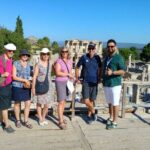
This is a private tour/activity, so only your group participates. In practice, that means you’re not wedged into a big group flow, and your guide can match pace to your crew—especially useful if your group includes older adults or anyone who prefers steady walking over sprinting between ruins.
The minivan also helps you handle the “two worlds” of the day: the busy Roman streets of Ephesus, then a quieter, uphill pilgrimage stop at the House of the Virgin Mary on Mount Koressos. That switch is easier when you’re not negotiating public transit mid-day.
Entering Ephesus through the Magnesia Gate: start with the right frame
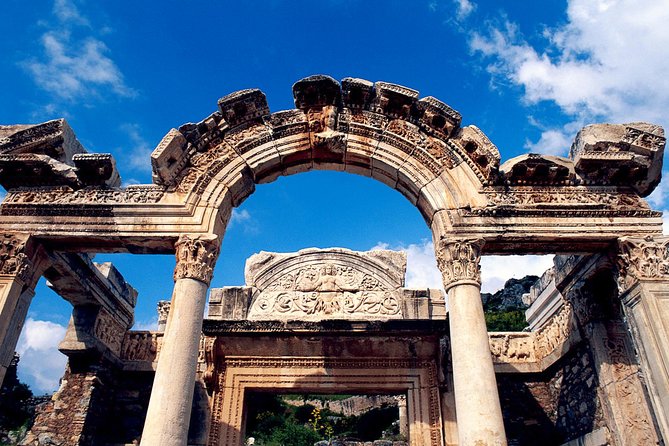
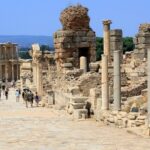
Your Ephesus walk begins with a direct arrival through the Magnesia Gate, also called the Upper Gate. I like this because it sets the scene fast: you’re not starting in the middle of nowhere. You’re stepping into an organized entry point that helps you build mental geography as you go.
The tour focuses on a sequence of major landmarks that show how Ephesus worked. You’ll pass the Odeon, a smaller theater that once hosted concerts and civic meetings. Then you’ll reach the State Agora, which served as the administrative heart—basically where public life, politics, and commerce collided.
From there, you move to the Prytaneion, the ceremonial center where a sacred flame burned perpetually. It’s one of those details that turns the ruins from “cool stones” into “a city with daily meaning.” Even if you only catch a few lines of explanation, the function sticks.
You’ll also see the Temple of Domitian, dedicated to Emperor Domitian—one of the earlier emperor temples. Then comes the Fountain of Pollio, a grand fountain built in honor of Sextilius Pollio. Together, these stops give you a sense of how power and public spaces were woven into city life.
The Terrace Houses: what you’re really seeing besides mosaics
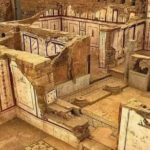
The Terrace Houses are often the star for a reason. These were luxurious homes of Ephesus’ elite, and the visitor experience is meant to show how wealth lived day-to-day in a Roman city. Here, you’re not just staring at fragments—you’re getting an idea of the scale and planning behind elite residences.
The tour route includes the Terrace Houses as a key stop inside your Ephesus time window (about 2 hours of walking in the ancient city). That timing is important: you can actually absorb what you’re seeing rather than being herded along to the next photo spot.
Mosaics and frescoes are part of the Terrace Houses story, but I’d frame them as more than decoration. They’re visual status—signals of comfort, education, and taste. If you enjoy art details, this portion tends to feel like the payoff.
Library of Celsus and the Great Theater: two big spaces, two different vibes
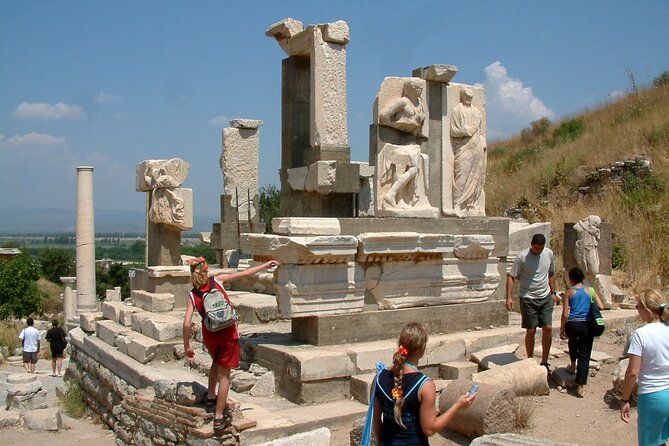
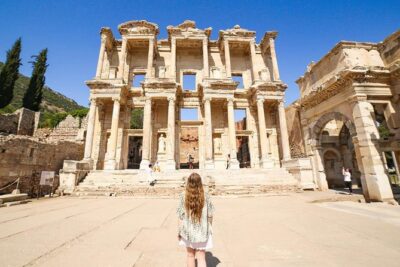
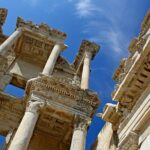
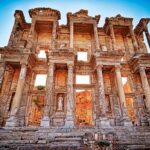
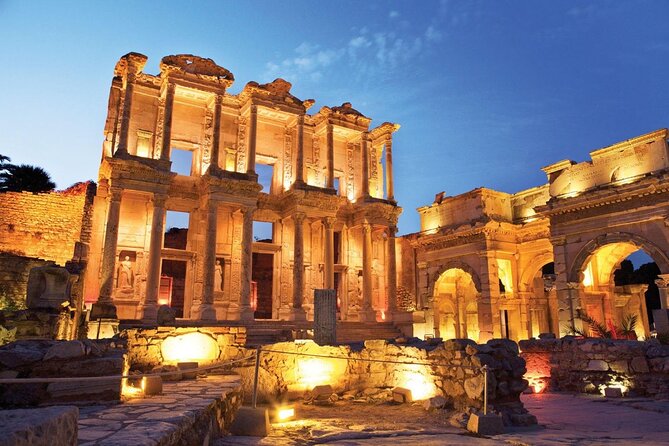
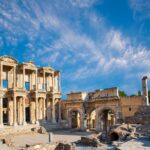
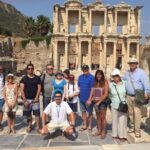
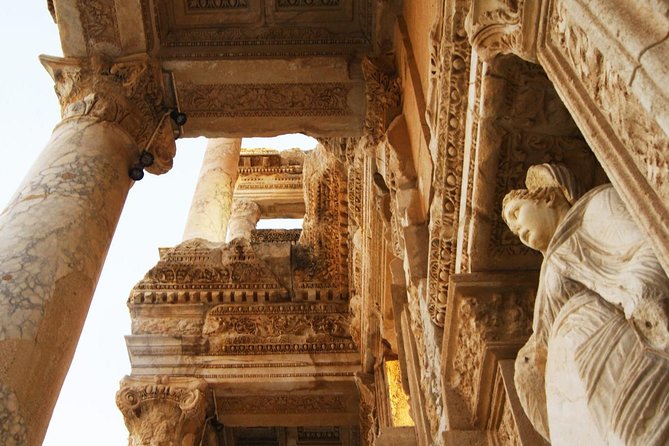
You’ll visit the Library of Celsus and the Great Theater, two of the most recognizable structures in Ephesus. The Library is famous, yes, but what I’d watch for is how it anchors the idea of knowledge as a public statement. A library in this location wasn’t just a room of books; it was part of civic identity.
The Great Theater gives you the other side: a massive venue meant for performance and gatherings. It’s the kind of space where your understanding changes when you stand in front of it. Even with a quick explanation, you can see why people would travel for events and why city leaders cared about being heard.
If you’re sensitive to walking pace, this segment is still manageable because the tour is structured and guided. You’ll still want good shoes, though, since ancient surfaces can be uneven and sun exposure is real.

State Agora, Prytaneion, Curetes Street: the city’s “backbone” walk
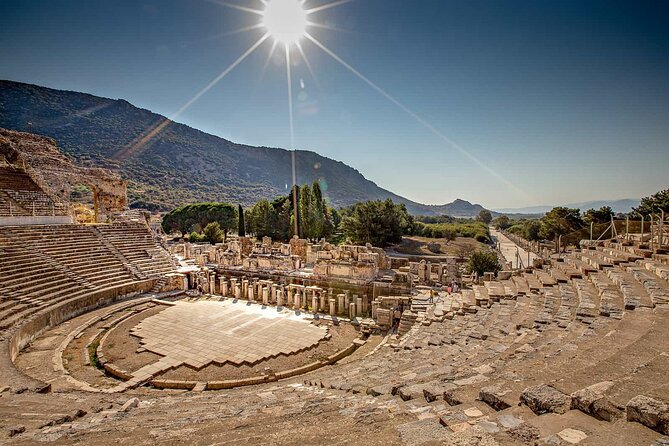
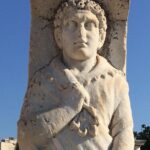
Between the theater and library moments, the tour threads through the functional core of the city. The route includes Curetes Street, described as a bustling avenue lined with statues, shops, and ancient ruins. This is the area that helps you imagine the everyday rhythm of Ephesus—processions, movement, and commerce.
You also revisit the “city systems” feel via the State Agora and Prytaneion stops. Those aren’t just architecture lessons; they’re reminders that the Roman world ran on public ceremony and civic organization. Once you connect those dots, Ephesus reads more like a lived-in city instead of a collection of famous objects.
Virgin Mary statue stop: a quiet pause before Mount Koressos
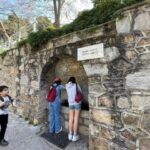
Before you go to the House of the Virgin Mary, you’ll make a short stop at a Statue of the Virgin Mary near the entrance. The stop is brief—about 5 minutes—but it’s intentional: it gives you a moment to reset mentally before you head uphill.
I like this kind of “in-between” stop on a shore excursion. It keeps the day from feeling like one long sprint from site to site. Even if you’re not a religious traveler, it helps you shift gears from Roman city grandeur to a more personal, reflective setting.
House of the Virgin Mary on Mount Koressos: the change in tone is real
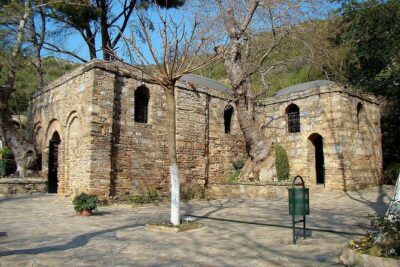
The main spiritual highlight is the House of the Virgin Mary, located on Mount Koressos. The tour frames it as the sacred site believed to be Mary’s final residence, and it’s been a pilgrimage stop for centuries.
In a day dominated by monumental ruins, this is where the atmosphere typically changes. Stone walls and a hilltop setting naturally slow things down, and that’s a good thing when you only have limited hours. The House stop is about 1 hour, so you have enough time to visit and absorb without feeling like you’re being rushed out the door.
One practical note: admission ticket details are listed as included for the Virgin Mary visits (at least for the statue stop and the House stop). I’d still budget for the Ephesus ticket separately, since that’s explicitly noted as not included.
Gazi Beğendi Hill: your last look back at the port
After the pilgrimage stop, you’ll finish with a visit to Gazi Beğendi Hill for panoramic views. This is a quick photo stop—about 10 minutes—but it’s one of the best ways to close the loop on a shore excursion.
From the hill you can see Kusadasi, the Aegean Sea, and even the cruise port below. I find that finishing with a wide-angle view helps your brain tie the day together: ruins in the morning, pilgrimage in the middle, and the real-world map of where your ship is waiting at the end.
Price and tickets: is $25 actually good value?
At $25.00 per person, this tour is positioned as an affordable “maximum structure” excursion: private pickup, private luxury minivan, guided route through major Ephesus landmarks, then the Virgin Mary House, then a scenic finish.
The biggest value driver is how the time is packaged. You’re looking at roughly 3 to 5 hours total, with a focused Ephesus window of about 2 hours. If you’ve ever spent a shore day trying to coordinate entry lines, transit, and directions on your own, you’ll know how quickly costs and stress add up.
The key tradeoff: Ephesus admission ticket is not included. So your true total cost depends on the entry fee you’ll pay for Ephesus. For the Virgin Mary House, the tour lists admission as included, and Gazi Beğendi is free. Plan your budget by treating Ephesus entry as the only extra ticket you’ll likely need.
Timing: how a 3–5 hour day works in real life
This tour is designed around cruise schedules, so it keeps the flow tight. The major Ephesus portion is about 2 hours, the Virgin Mary House is 1 hour, plus short breaks (statue stop, hill stop). That creates a day that’s full, but not chaotic.
Here’s the practical advice I’d give: treat it like a “guided highlights + one big spiritual stop” day. Don’t expect to wander for hours through every corner of Ephesus on your own after the tour ends. The power of this format is that it gets you oriented fast and covers the headline structures.
Also, bring a refillable water bottle if you’re allowed—long sun and stone walking can feel longer than you expect. And for shoes, go comfortable, because even with guidance, you’re still moving over uneven surfaces.
What this tour feels like for different travel styles
This works best if you want:
- A structured route that covers the main Ephesus sites without decision fatigue
- A smoother experience that starts at the port and ends back where you need to be
- A blend of Roman city landmarks and a meaningful pilgrimage visit
- A private format that’s easier for mixed-age groups
It’s less ideal if you want a long, free-form day with lots of time to roam at your own speed. With the guided timing, you’ll follow the plan rather than turn left or linger for an extra hour.
Who should book this skip-line Ephesus excursion?
Book it if:
- You’re short on time due to a cruise schedule
- You want skip-line style entry and a guided route
- You care about seeing major Ephesus landmarks like the Library of Celsus and Great Theater
- You also want the House of the Virgin Mary as a second anchor, not just another stop
If your group includes older adults, the pacing and structured format is a big plus—especially compared to DIY sightseeing. And if you like getting oriented quickly, starting through the Magnesia Gate helps you understand what you’re looking at instead of just collecting photos.
Should you book this Ephesus skip-line tour from Kusadasi Port?
For many cruise visitors, I’d say yes—mainly because the tour is engineered for time and sanity. You get port pickup, a private luxury minivan ride, entry through the Magnesia Gate, and a clear path through key Ephesus landmarks, then you add the Virgin Mary House and a final viewpoint over Kusadasi.
The “wait, check this” moment is tickets: Ephesus admission isn’t included, so verify your total cost before you buy. If that fits your budget and your walking comfort, this is a strong choice for a port day where you want real highlights without the stress spiral.
FAQ
Where does the tour start in Kusadasi?
The meeting point is Kuşadası Port TürkiyeCamikebir, Feribot Limanı, 09400 Kuşadası/Aydın, Türkiye. You’re picked up from Kusadasi Cruise Port without waiting.
Is this tour private?
Yes. It’s a private tour/activity, which means only your group participates.
How long is the excursion?
The duration is approximately 3 to 5 hours.
Are admission tickets included?
Ephesus Ancient City admission ticket is not included. Admission is listed as included for the Virgin Mary statue stop and the House of the Virgin Mary. The Gazi Beğendi Hill viewpoint stop is free.
How do you get tickets for the tour?
You receive a mobile ticket.
What is the cancellation window?
Free cancellation is available. You can cancel up to 24 hours in advance for a full refund, with cut-off times based on local experience time. If you cancel less than 24 hours before the start time, the amount paid is not refunded.