REVIEW · EPHESUS TOURS
Ephesus & Virgin Mary’s House Tour (Entry Fees Included)
Book on GetYourGuide →Operated by OKEANOS TRAVEL · Bookable on GetYourGuide
Ancient ruins and a quiet chapel, in one day. This tour strings together Ephesus and the Virgin Mary’s House with a guide who keeps the stories clear and useful. I especially like the fast, logical route through the city highlights, plus the way the day shifts from huge Roman scale to real peace in the mountains.
My other big win is the mix: you’ll see places tied to early Christianity in Ephesus, then step into a holy site where people come to pray, leave wishes, and even drink spring water. One drawback to plan for: the pace involves walking on uneven ground, so it is not suitable for wheelchair users or people with mobility impairments.
In This Review
- Key highlights worth planning for
- Ephesus on foot: marble streets, famous names, and a guided flow
- Great Theatre: the Roman scale shock (24,000 people)
- Celsus Library: not just shelves, a tomb-turned-masterpiece
- Temple of Hadrian and the Medusa head: mythology you can spot
- A funny secret: the footprint and heart “advert”
- Trajan Fountain: what’s left tells a bigger story
- The switch from city noise to mountain peace
- Virgin Mary’s House: chapel inside, wishing wall outside
- Timing and transport: why 4.5–5 hours can feel just right
- Price and value: why $150 makes sense for what’s included
- The guide is the product: languages and real-world flexibility
- Who should book this Ephesus + Mary’s House combo
- What to bring (and what to skip)
- Should you book this tour?
- FAQ
- How long is the Ephesus & Virgin Mary’s House tour?
- Is transportation and pickup included?
- Are entrance fees included?
- What languages is the live guide available in?
- What should I bring, and is video allowed?
- Is the tour wheelchair accessible?
- Can I cancel and get a full refund?
Key highlights worth planning for
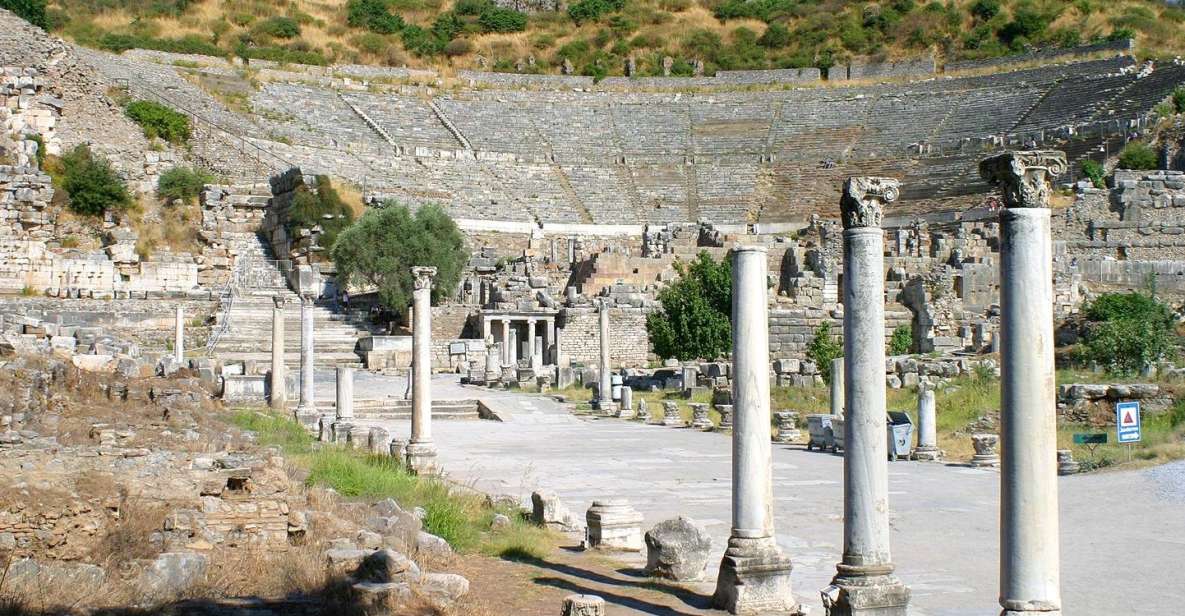
- Two “moods” in one outing: big Roman theater energy, then mountain silence at Mary’s house
- Ephesus anchors: Great Theatre (24,000 seats) and Celsus Library, explained in plain language
- Small archaeological details: Medusa’s stone head, the Hadrian Temple, and the footprint-heart “advert” clue
- Religious significance without being heavy-handed: a visit focused on the holy house tradition and prayer practices
- Guide quality matters: Spanish guide Ahu has a reputation for professionalism and making the day feel easy
- Efficient timing: about 4.5–5 hours, with pickup and drop-off included
Ephesus on foot: marble streets, famous names, and a guided flow
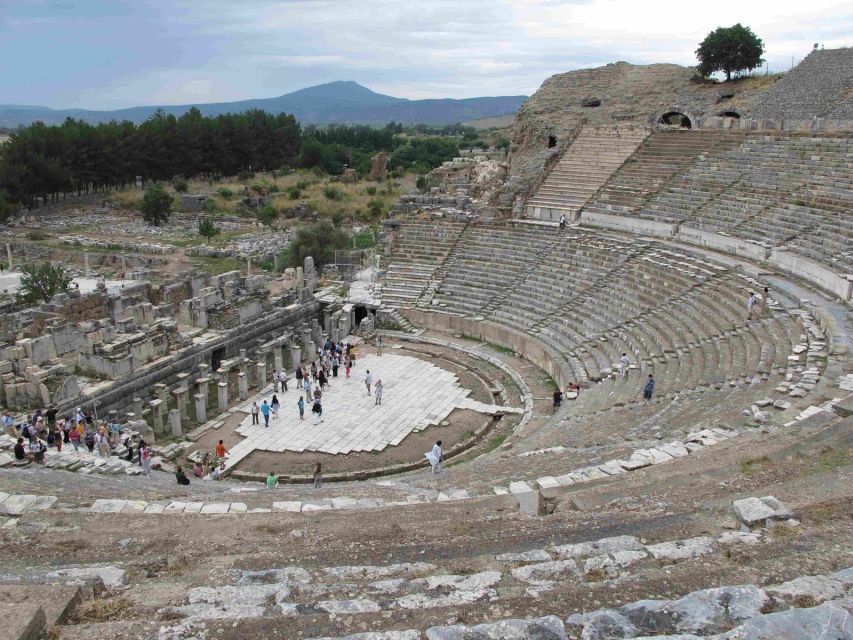
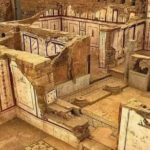
Ephesus is one of those places where you can get lost fast, even if you love ruins. That’s why I like this tour format: it keeps you moving in a sensible loop, with a licensed guide steering you to the best spots and explaining what you’re actually looking at.
You’ll start with Ephesus and walk through the city’s famous remains on old marble streets. It helps that the day is guided in multiple languages, so you’re not stuck guessing what the stones mean. If you end up with Ahu, you’ll probably feel the difference quickly—one of the strongest mentions is how he handles questions, shares details about culture and sites, and even helps with ideas like where to grab a simple local lunch.
Practical note: you’ll be walking. Bring comfortable shoes, sunglasses, and a sun hat. Also plan for the fact that there’s limited room for bags—large luggage is not allowed—so travel light.
You can also read our reviews of more tours and experiences in Kusadasi.
Great Theatre: the Roman scale shock (24,000 people)
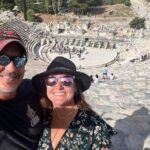
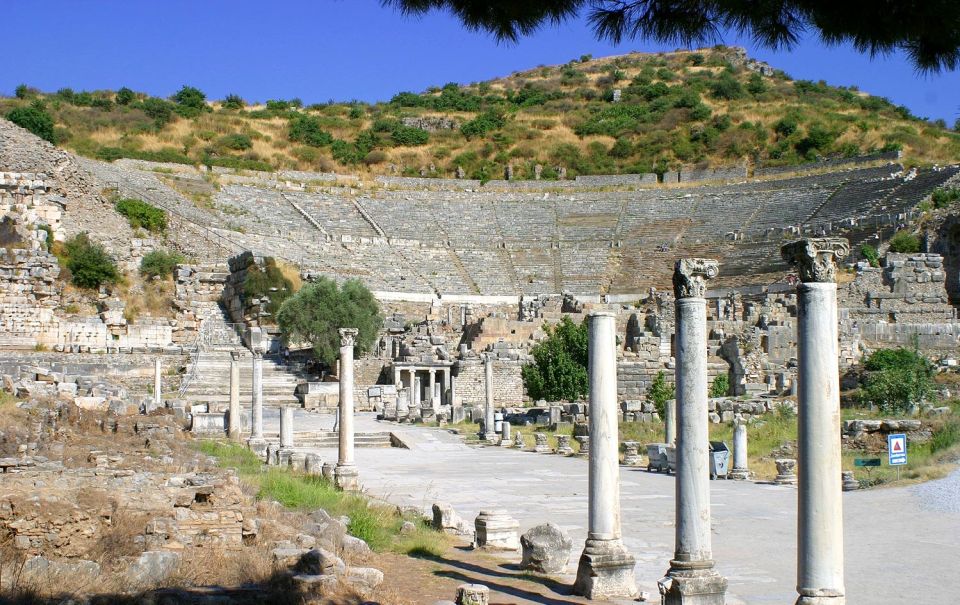
One of the biggest moments comes early: the Great Theatre. This is not a small amphitheater you can casually glance at. It’s built for huge crowds—about 24,000 people—and that size lands the point even if you’ve never visited a Roman city before.
Your guide connects the theatre to important Christian history by noting where St. Paul spoke. Even if you’re not visiting for religious reasons, that tie makes the space feel more than a set of old walls. You’re standing where public life and big ideas were heard—then you look back at the city layout and realize how Ephesus functioned.
What can be tricky: theatres mean open sky and sun exposure. Wear a hat you actually trust in wind, and bring water if your host allows it on-site (the tour includes natural spring water later at Mary’s house, but you’ll still want hydration earlier).
Celsus Library: not just shelves, a tomb-turned-masterpiece
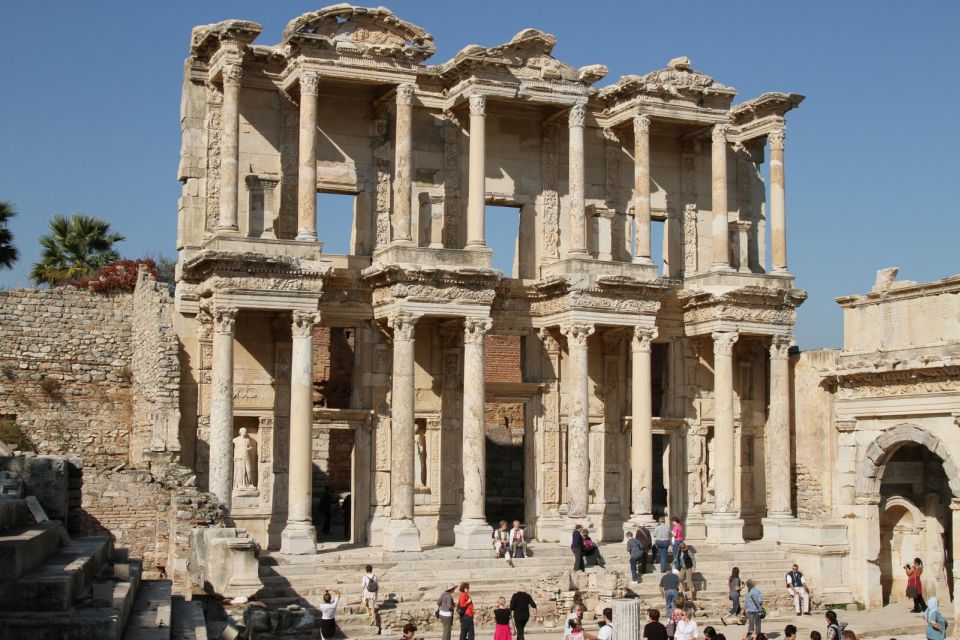
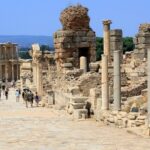
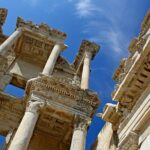
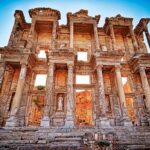
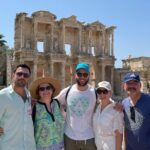
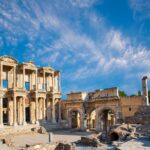
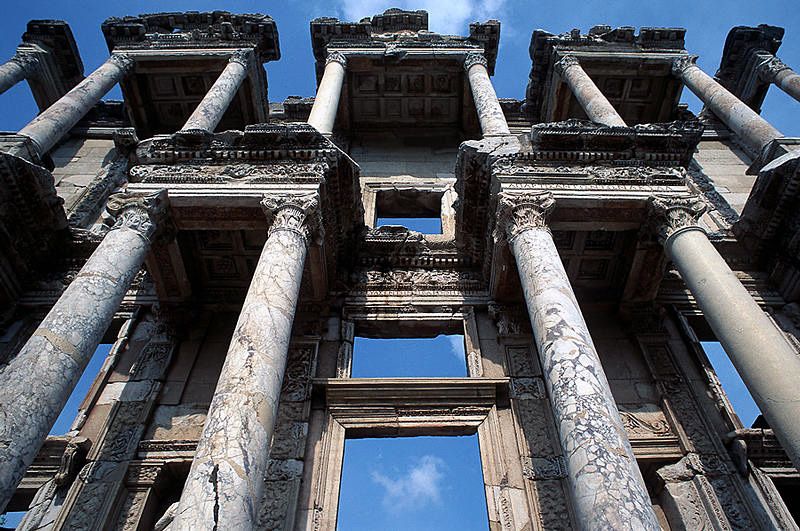
Next you’ll see the Celsus Library, one of Ephesus’s most photographed structures for a reason. It looks like a grand library facade, but here’s the key detail: it wasn’t just a place to store books. It functioned as a major tomb too, which changes how you read the design.
Your guide will point out what makes it impressive—the way the architecture holds attention and the way the site tells you “this city cared about power, memory, and learning.” This is the kind of explanation that helps ruins stop being random. You start seeing intentions behind shapes.
If you like details, you’ll also enjoy how the guide pulls meaning from smaller elements, not only the headline buildings. That matters at Celsus, because the best views come with understanding where to stand and what the facade is communicating.
Temple of Hadrian and the Medusa head: mythology you can spot
Ephesus doesn’t stay strictly historical in a museum sense. You’ll also run into symbolism that feels almost cinematic once you know what to look for.
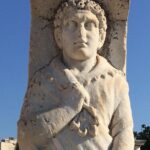
At the Temple of Hadrian, your guide will point out the stone head of Medusa set into the stonework. The story you’re given is that people believed it could keep bad luck away. Even if you don’t buy the superstition part, it’s a useful window into everyday belief in the ancient world—what people thought protected them, and how they expressed that in public spaces.
This stop is also a good reminder that the tour’s value isn’t only in seeing famous names. It’s in learning how the city communicated ideas visually, from religion to luck to identity.
A funny secret: the footprint and heart “advert”
One of the most memorable parts for many people is a smaller, clever clue your guide will help you locate: an ancient “advert”—described as the world’s first advertisement. You’re meant to spot a stone carving of a footprint and a heart, which indicates a route or direction toward an old meeting place.
It’s funny, but it’s also useful. It shows that people in ancient cities weren’t so different from us. They marked places, sent messages, and guided behavior in ways that made city life easier and social plans more predictable.
This is also where a guide really earns their fee. If you’re walking without context, you might walk right past it and never know you just missed one of the tour’s best stories.
Trajan Fountain: what’s left tells a bigger story
The Trajan Fountain stop is less about perfect restoration and more about archaeology as a detective game. Today, only one stone foot remains from what used to be a larger statue of the emperor.
That detail matters because it teaches you how to interpret ruins responsibly. You’re not just looking for the “complete” version. You’re learning what survived, what broke, and how we know what we know.
If you like photography, this is a great area to slow down. The scale of the remaining stone against the open ruins gives you strong framing opportunities—just keep an eye on steps and uneven ground.
The switch from city noise to mountain peace
After the Ephesus walk, the tour moves you out of the archaeological zone and into green mountains. This is the moment where the whole experience earns its name: a peaceful holy place after ancient streets.
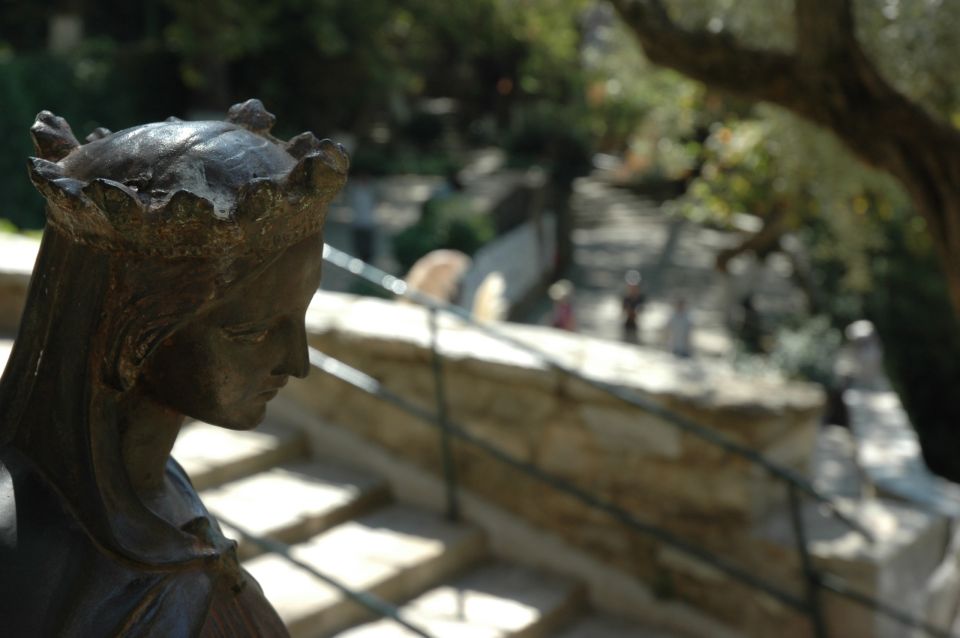
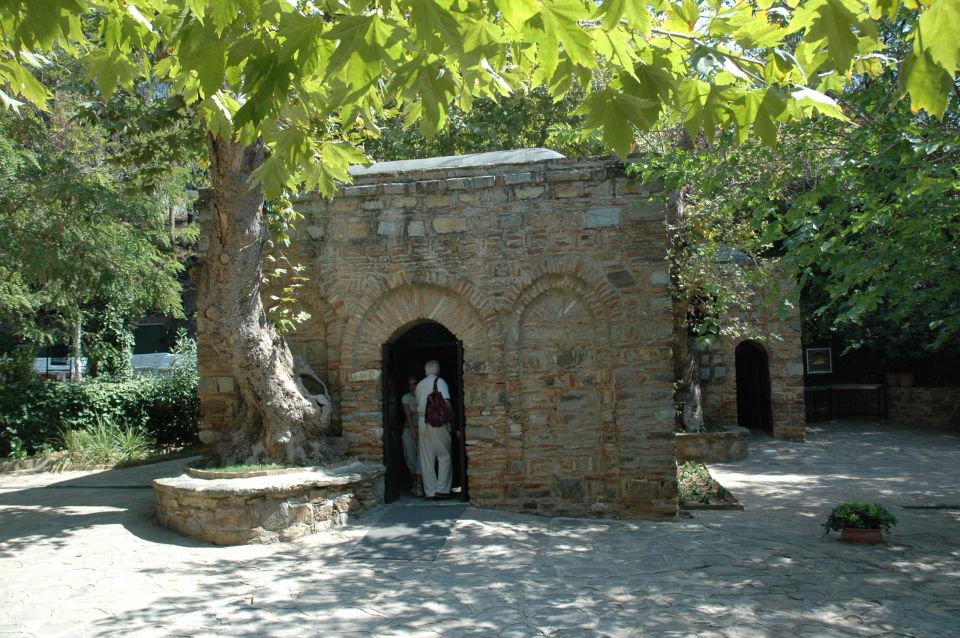
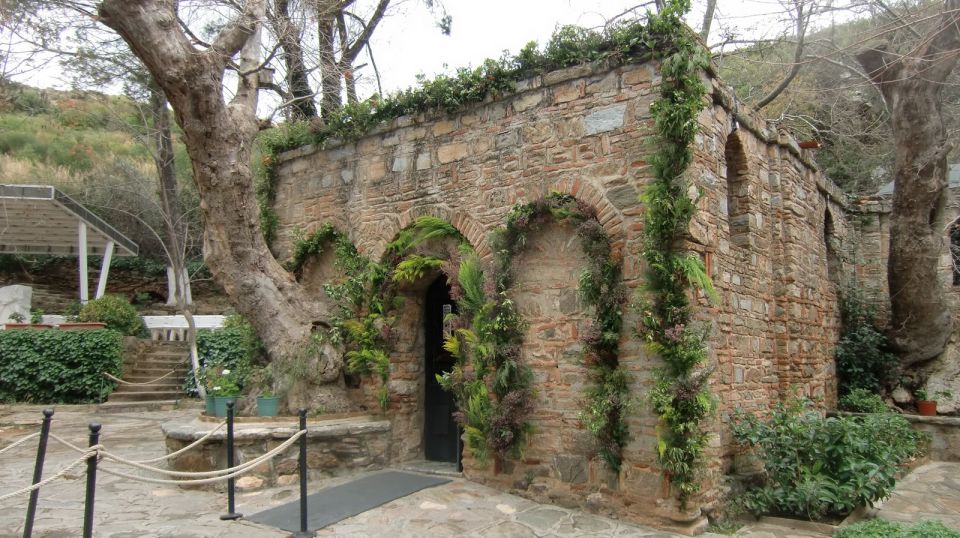
The Virgin Mary’s House visit feels completely different from the Roman city remains. You go from wide-open ruins to a small stone house setting where the mood changes the second you arrive. The tradition you’ll hear is that many Christians and Muslims believe Mary, the mother of Jesus, lived her last years here.
Even if you’re not religious, it’s still a meaningful stop because the place is built for quiet. People from around the world come to pray, and you can feel the respectful atmosphere as you walk through.
Virgin Mary’s House: chapel inside, wishing wall outside
At Mary’s house, the tour focuses on a few standout elements that you can actually participate in.
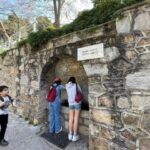
Inside, there’s a small chapel. Outside, you’ll see the Wishing Wall, where visitors tie prayers or wishes on pieces of cloth or paper. It’s a visual reminder that this isn’t only history—it’s living faith. You don’t need to overthink it; the point is to witness the practice and keep the tone respectful.
You’ll also be able to drink water from a natural spring, which many people believe is blessed. Whether you treat it as spiritual or simply refreshing, it helps you fully “land” in the moment rather than rushing through a checklist of sacred landmarks.
Timing and transport: why 4.5–5 hours can feel just right
This tour runs about 4.5–5 hours. That length matters. It’s long enough to experience both stops properly—Ephesus highlights plus Mary’s house—but short enough that you’re not spending your whole day traveling and standing in lines.
Pickup and drop-off are included, and that’s a big convenience win on the Aegean coast. You can be picked up from the port, airport, or your hotel—just make sure you share your preference when booking.
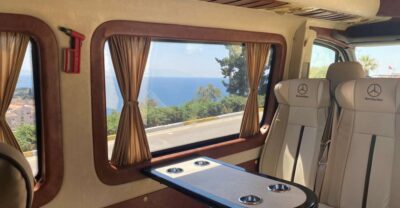
The transport is in a luxury, air-conditioned vehicle. On a hot day, that comfort can make a real difference, especially when you’re switching between sun exposure in Ephesus and cooler shaded areas at the holy site.
Price and value: why $150 makes sense for what’s included
At $150 per person, you’re paying for more than entry tickets. The tour includes a licensed professional guide, transportation, pickup/drop-off, and entrance fees to the sites on the itinerary. For many people, that’s the biggest hidden value: you’re not organizing multiple components yourself while trying to manage language barriers and time.
You also get an experience that would be harder to assemble casually. Ephesus alone is a lot. Adding Mary’s house in one smooth day is what turns it into a “worth it” combination.
Is it expensive compared to doing it independently? Potentially, but your time and confusion cost can be real here. This is a place where a good guide saves you from guessing, and the tour is built around that advantage.
The guide is the product: languages and real-world flexibility
This experience leans on one thing: the guide. The tour offers licensed professional guiding in multiple languages, including English, Spanish, German, French, Dutch, Italian, Greek, Russian, and Japanese (and you should see the exact options at booking time).
That language range is helpful if you’re traveling with mixed groups. It also supports one of the best parts of the day: learning the “why” behind what you see, like Celsus Library’s tomb function or the Medusa symbolism.
One standout from a praised guide is Ahu’s approach. The comments around him describe a high level of professionalism, answering questions, and making accommodations without fuss. If you like tours where the day feels calm and guided rather than rushed, that kind of guiding style is exactly what you want to look for.
Who should book this Ephesus + Mary’s House combo
You’ll probably love this tour if you want:
- A single-day plan that covers both Ephesus highlights and Virgin Mary’s house without splitting your schedule
- A guided walk focused on interpretation, not just sightseeing
- The blend of Roman-era scale and a quiet spiritual setting
You might want a different option if:
- You have mobility limits, since the tour is not suitable for wheelchair users or people with mobility impairments
- You hate walking on uneven surfaces and don’t plan for sun exposure
This combo also works well for mixed travelers. History fans get the Great Theatre, Celsus, Hadrian’s Temple, and the smaller clue stops. People seeking spirituality still get a respectful, focused visit that doesn’t try to turn it into a speed run.
What to bring (and what to skip)
To keep the day comfortable, pack:
- Passport or ID card
- Comfortable shoes for walking
- Sunglasses and a sun hat
And note what’s not allowed:
- Luggage or large bags
- Video recording
If you’re carrying a small daypack, you’ll likely be fine. Keep it light so you don’t lose time managing it on and off transport.
Should you book this tour?
I’d book it if you want the simplest way to experience Ephesus plus Virgin Mary’s House in one guided, timed outing. It’s built for people who don’t want to piece together logistics, and it’s strongest when you appreciate explanation: why a theatre mattered, why Celsus isn’t “just a library,” and what those small symbolic details mean.
Skip it if you’re looking for a totally DIY adventure or you need wheelchair-friendly accommodations. In that case, you’ll want a different format.
If your ideal day is “Roman wow factor, then real quiet,” this is a solid choice.
FAQ
How long is the Ephesus & Virgin Mary’s House tour?
The tour lasts about 4.5 to 5 hours.
Is transportation and pickup included?
Yes. The tour includes transportation by luxury air-conditioned vehicle and pickup and drop-off service. Pickup can be arranged from the port, airport, or your hotel.
Are entrance fees included?
Yes. Entrance fees to museums and sites according to the itinerary are included.
What languages is the live guide available in?
The live guide is available in several languages, including Spanish, English, Italian, Dutch, Greek, German, Russian, and French. A licensed professional guide is also listed among the available language options.
What should I bring, and is video allowed?
Bring your passport or ID card, comfortable shoes, sunglasses, and a sun hat. Video recording is not allowed.
Is the tour wheelchair accessible?
No. The tour is not suitable for wheelchair users or people with mobility impairments.
Can I cancel and get a full refund?
You can cancel up to 24 hours in advance for a full refund.