REVIEW · PAMUKKALE & HIERAPOLIS TOURS
From Kusadasi: Pamukkale & Hierapolis Tour with Entry Ticket
Book on GetYourGuide →Operated by Crossroads Travel · Bookable on GetYourGuide
White terraces and Roman tombs in one day. This tour pairs Pamukkale’s travertine terraces with guided Hierapolis ruins, so you get both the hot-spring science and the big, atmospheric necropolis. The one catch: the timing can feel a little tight at Pamukkale if you want extra time on the terraces and in the water.
I like that it’s built for convenience from the start—hotel pickup, an English guide, and entrance fees handled for you. You also skip the ticket line, which matters when Pamukkale is busy and you’re trying to get to the white terraces while the light is still nice.
Do plan ahead for the physical part. You’ll need a swimsuit and you must be able to walk about 0.5 miles over travertine without shoes, and the ground can be slippery. This tour also isn’t suitable for pregnant women, even though it’s listed as wheelchair accessible.
In This Review
- Key things to know before you go
- Pamukkale’s white terraces: what you’re actually seeing
- The water part: healing waters, practical pace, real footing
- Hierapolis: necropolis sarcophagi and Cleopatra’s Pool
- Cleopatra’s Pool: mineral-rich waters in a famous setting
- How the day runs from Kusadasi: timing, transport, and the reality of 10 hours
- The pace question: why Pamukkale can feel short
- Lunch at a Turkish restaurant: what’s included and what to watch
- Shopping stops and the onyx question
- Who this tour is best for (and who should consider another plan)
- Consider skipping if…
- Wheelchair access note
- Price and value: is $103 a fair deal?
- Should you book this Pamukkale & Hierapolis tour from Kusadasi?
- FAQ
- How long is the Kusadasi Pamukkale & Hierapolis tour?
- What areas are included besides Pamukkale?
- Is lunch included in the price?
- Is the entrance ticket included?
- Where are pickup and drop-off locations?
- What should I bring?
- How much walking is required, and do I need shoes?
- Is the tour wheelchair accessible?
Key things to know before you go
- Pamukkale’s white terraces form from calcium deposits left by hot springs over centuries
- Hierapolis necropolis + sarcophagi give you a real sense of how Romans used this thermal zone
- Guided time is fixed, so you’ll want to prioritize what you care about most
- Pamukkale’s water experience includes time at the hot springs and a stop at Cleopatra’s Pool
- Lunch is included, but drinks cost extra and can add up fast
Pamukkale’s white terraces: what you’re actually seeing
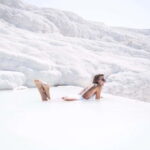
Pamukkale is one of those places where the photos look almost fake. Then you arrive and realize the “cotton castle” look comes from an honest-to-goodness hot-spring process. Thermal water rises from the area’s springs and travels about 320 meters before it spreads across the travertine terraces. As it cools, it deposits calcium carbonate, building the pale, stepped look that makes Pamukkale famous.
Here’s the part I’d underline for your expectations: you’re not just looking at a scenic view. You’re seeing a living chemical reaction, constantly being rewritten by water temperature and flow. The hot springs in the Pamukkale area are fed by multiple springs (17 total), with temperatures roughly ranging from 35°C to 100°C depending on the source.
On this tour, you get guided time at the Pamukkale Hot Springs area (about an hour with your guide). That’s enough to understand what you’re looking at, find the best viewing spots, and—if you’re comfortable with it—spend time in the water experience. You’ll also have enough free time to shop for small souvenirs afterward, but you shouldn’t count on shopping to be the highlight. The water and terraces are.
You can also read our reviews of more tours and experiences in Kusadasi

The water part: healing waters, practical pace, real footing
The thermal area is set up for visitors who want relief and rejuvenation in the hot pools. You’ll see the setup for soaking and the way people use mineral-rich water for therapeutic routines.
Just don’t underestimate the “bare-foot” part. You must be able to walk approximately 0.5 miles over travertine without shoes. That’s not a tiny stroll. If you’re prone to foot pain, have balance issues, or hate slippery surfaces, this is where you need to be honest with yourself.
Watch your step every time. Even if you’re feeling steady, the travertine can be slick. Pack the basics the tour asks for—hat and plenty of sunscreen—because the white terraces reflect sun and heat.
Hierapolis: necropolis sarcophagi and Cleopatra’s Pool

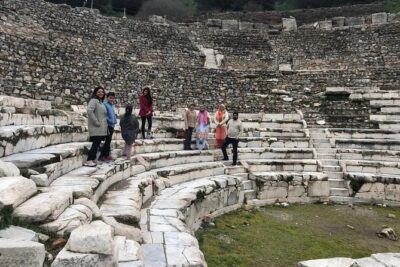
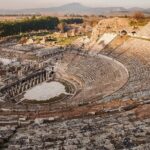
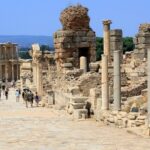
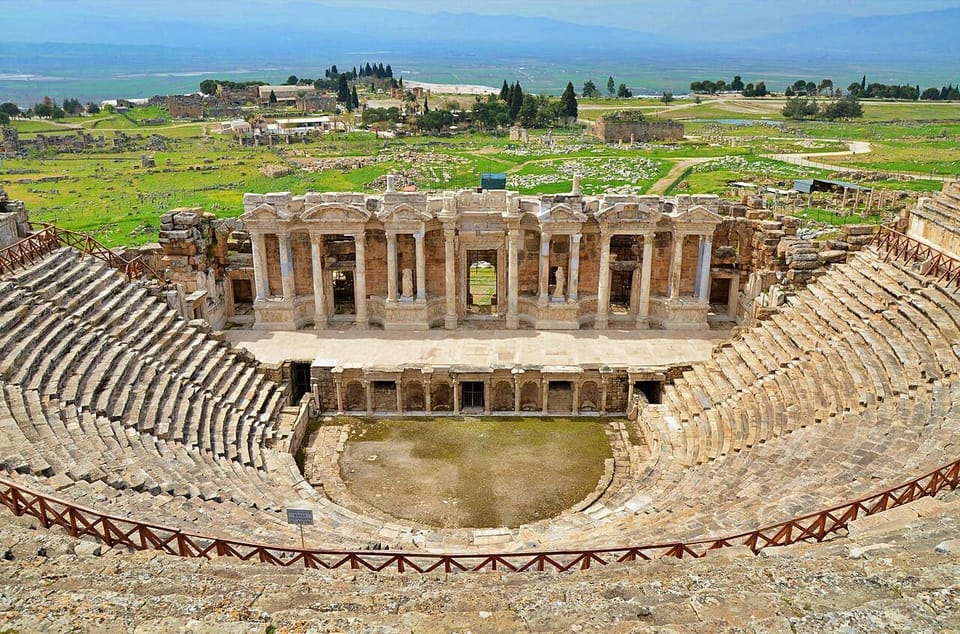
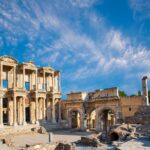
The day doesn’t stay only in the “white” world. After Pamukkale, you move into Hierapolis, the ancient city built around these thermal springs in classical Phrygia. Your guided time here is shorter than the Pamukkale hot-spring stop, but it’s still long enough to get the main structure of the site.
Hierapolis is known for a few big-picture features:
- a main colonnaded road that helps you orient fast
- city gates that feel dramatic even in ruins
- thermal baths tied to the same hot-spring energy that made the place important
- and the necropolis, including many sarcophagi
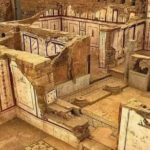
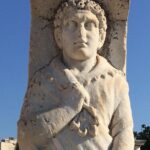
The sarcophagi matter because they turn Hierapolis from “cool ruins” into something more human. You see how the dead were honored in a city that also welcomed the living for healing.
Cleopatra’s Pool: mineral-rich waters in a famous setting
One highlight is Cleopatra’s Pool, where the mineral-rich waters are used for therapeutic showers and drinking cures (that’s how it’s described for visitors). Even if you don’t plan to do the drinking part, the pool area is the kind of stop that makes you pause. People come here for the ritual and the minerals; you come here because it’s one of the easiest ways to connect Pamukkale’s hot-spring story to the Roman-era world that grew up around it.
If you want the most out of your time, treat Cleopatra’s Pool as both a photo stop and a quick “what am I looking at?” stop. Your guide can connect the water deposits you saw on the terraces to what visitors sought thousands of years ago.
How the day runs from Kusadasi: timing, transport, and the reality of 10 hours
This is a 10-hour full-day tour, built around getting you from the coast to Pamukkale and back in a way that’s usually comfortable. You’ll ride in a non-smoking, air-conditioned mini/midi bus, and you get hotel or airport pickup and drop-off.
Pickup is available from two options:
- Kuşadası
- Selçuk
Your driver waits for you briefly—10 minutes before pickup, and then the driver won’t wait longer than 5 minutes after the scheduled pickup time. That means it helps to be ready early, especially if you’re staying in a hotel where you need a little time to reach the lobby.
On the schedule, you’ll get a break during the drive and then arrive for guided time in Pamukkale, move to Hierapolis, eat lunch, and then return for the trip back with another short photo/stop break. In other words: this is not a slow travel day. It’s a “see the must-dos” day.

The pace question: why Pamukkale can feel short
The best parts of the day are the places that require your attention. That’s why timing matters. Pamukkale is stunning, but it also needs time for proper viewing and the water/terrace experience.
Some people find they want more than an hour on the terraces. If you’re the type who likes to linger, plan your mindset accordingly. You can still get a lot done in the time you’re given, but if you’re hoping for a long, relaxed soak, you might feel slightly rushed.
Lunch at a Turkish restaurant: what’s included and what to watch
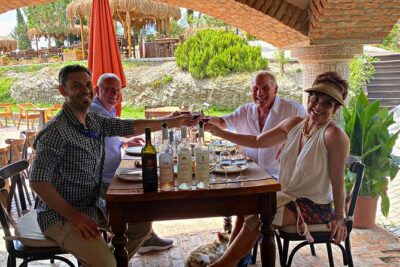
Lunch is included as a buffet at a typical Turkish restaurant. Expect a selection of Turkish dishes and the usual buffet rhythm: you can pick what you like, eat at your pace, and then get back on the bus without worrying about the meal cost.
Two practical notes:
- Beverages aren’t included, so water, soda, and other drinks will be extra.
- Buffet quality can vary, and this tour’s lunch sometimes feels like it’s sharing the table with a lot of tour groups at once.
If you’re sensitive to buffet chaos, pick items quickly, eat what feels freshest, and keep it simple. You’ll be back outside after lunch, where you’ll rely on that energy for the travertine walk.
Also keep in mind the added-cost trap: some tours (including this type of day trip) can charge more for drinks than you’d expect. If you’re traveling with a budget, it’s worth planning for those extras.
Shopping stops and the onyx question
You’ll have free time after the guided Pamukkale portion, including time for shopping. That can be handy if you want a few last souvenirs.
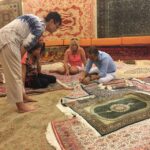
There’s also a chance your day includes a stop related to onyx (you might see an onyx showroom/workshop stop depending on the route plan). This is common on the region’s tours because local businesses benefit from tourist foot traffic. Still, it can feel like dead time if your focus is strictly ruins and water.
My advice: treat any shopping stop as optional in your mind. If you want the sights, use free time to prioritize what you came for—terraces, Cleopatra’s Pool, and the Hierapolis ruins.
Who this tour is best for (and who should consider another plan)
This tour works best if you want one day that covers:
- Pamukkale’s famous hot-spring terraces
- Hierapolis’ Roman ruins and necropolis sarcophagi
- an included Turkish buffet lunch
- an English guide and entry tickets organized for you
It’s also a good fit if you’re okay with a structured schedule and a bit of walking over uneven surfaces.
Consider skipping if…
- You can’t handle walking about 0.5 miles over travertine without shoes
- You don’t like slippery footing or you have mobility constraints you’re worried about
- You’re traveling during hot sun hours without enough sunscreen/hat comfort
- You’re pregnant (this tour is listed as not suitable)
Wheelchair access note
The tour is listed as wheelchair accessible, but the travertine requirement is the real deciding factor. If you use a wheelchair and can’t comfortably handle that barefoot travertine walk, you’ll want to think twice before booking.
Price and value: is $103 a fair deal?
At $103 per person for a 10-hour day, you’re paying for a lot of logistics to be handled: round-trip transport, an English-speaking guide, entrance fees, and a lunch buffet.
Here’s where the value holds up:
- You’re not buying separate tickets for the main Pamukkale and Hierapolis components.
- Skip-the-ticket-line helps keep your time from evaporating.
- Lunch is included, and you don’t have to search for a place close to the sites while everyone else is doing the same thing.
Where the value can wobble:
- The big extra costs tend to be drinks during the day and any optional purchases at shopping stops.
- The day’s structure can make Pamukkale feel like “see it, enjoy it, move on” instead of a slow retreat.
If you want a single, guided “greatest hits” day from Kusadasi, this price can make sense. If you’re the type who wants long hours at Pamukkale, you may feel the schedule doesn’t match your pace.
Should you book this Pamukkale & Hierapolis tour from Kusadasi?
Book it if you want a well-organized day that hits the two headline sites—Pamukkale’s hot-spring terraces and Hierapolis’ Roman ruins—without dealing with ticket logistics. You’ll likely appreciate the English guide, the included entrance fees, and the fact that you get both natural wonder and archaeology in one pass.
Don’t book it if you’re worried about the practical realities: the bare-travertine walking, the slippery surfaces, the sun exposure, and the fact that Pamukkale time can feel limited.
If you do go, treat your preparation like part of the trip. Pack your swimsuit, hat, and sunscreen, wear sun-smart clothing on the bus, and stay flexible about how much time you’ll spend on the terraces versus the ruins.
FAQ
How long is the Kusadasi Pamukkale & Hierapolis tour?
The tour lasts about 10 hours.
What areas are included besides Pamukkale?
You’ll visit Pamukkale Hot Springs (with guided time) and the ancient ruins of Hierapolis (with guided time), including key areas like the necropolis.
Is lunch included in the price?
Yes. Lunch is included as a Turkish restaurant buffet. Beverages are not included.
Is the entrance ticket included?
Yes. Entrance fees to the sites on the itinerary are included, and you also skip the ticket line.
Where are pickup and drop-off locations?
Pickup and drop-off are available for hotels around Kusadasi and Selcuk. Drop-off includes Kusadası and Selçuk.
What should I bring?
Bring a swimsuit. It’s also recommended to bring a hat and plenty of sunscreen.
How much walking is required, and do I need shoes?
You must be able to walk approximately 0.5 miles over travertine without shoes.
Is the tour wheelchair accessible?
The tour is listed as wheelchair accessible, but you still need to be able to handle the travertine walking requirement without shoes.