Four ancient cities in one day sounds crazy. But this private outing from Kusadasi links Ephesus, Miletus, Didyma, and the Temple of Artemis with a guide who keeps everything at your group’s pace. The big win is skip-the-line entry at Ephesus, so your day starts exploring instead of queueing.
I especially like the hotel or cruise-terminal pickup timed to your schedule, with an A/C vehicle waiting the whole time. The only real consideration is the length: expect about 7 to 8 hours on the move, plus multiple sites that require a moderate fitness level, so plan for walking and sun.
In This Review
- Key things that make this day trip work
- Kusadasi pickup: the day starts on your clock
- Miletus: the thinking-and-trade city you can actually picture
- Didyma’s Temple of Apollo: prophecy, the twins, and a 12-mile sacred road
- Ephesus: the headline site, handled with time-saving entry
- Artemis Temple: the famous finish, quick but meaningful
- Back in Kusadasi: a little breathing room for shopping
- Price and what you actually get for $149
- How the pacing feels: private time beats big-group speed
- What to bring (and what to plan around)
- Who this tour fits best
- Should you book this Private Ephesus – Miletus – Didyma tour?
- FAQ
- How long is the tour?
- Do you provide hotel or cruise terminal pickup?
- Are entrance fees included?
- Is this tour private or shared?
- Can I choose my departure time?
- Are meals included?
- What’s the cancellation option if plans change?
Key things that make this day trip work
- Skip-the-line at Ephesus with included entrance fees, handled by a pre-paid ticket approach
- Private licensed guide who adjusts pace for your group instead of marching a crowd
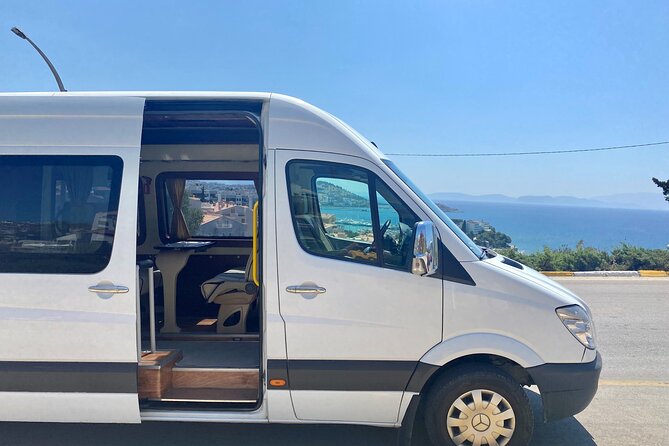
- Hotel or Kusadasi cruise-terminal pickup with a sign and a time you choose
- A/C private transfers plus a guaranteed on-time return to the port
- A tight ancient-circuit: Miletus, Didyma, Ephesus, then the Artemis Temple finish
- Optional add-on: Terrace Houses in Ephesus if you want more detail
Kusadasi pickup: the day starts on your clock

This is built for people who hate wasting vacation time. Your guide meets you at Kusadasi cruise terminal or your hotel with a sign showing your name, and you can pick the departure time. If your cruise docking hours or your hotel schedule are a little different, the private setup is what gives you the flexibility.
Once you’re picked up, you’re not constantly re-negotiating logistics. A private, air-conditioned vehicle handles the drives between sites, and the same guide stays with you at the monuments. There’s also a practical promise here: a guaranteed on-time return to the port, which matters a lot when you’re sailing.
You can also read our reviews of more private tours in Kusadasi

Miletus: the thinking-and-trade city you can actually picture
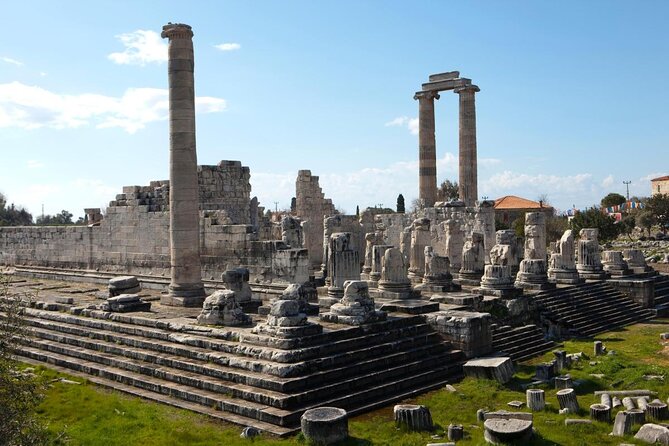
Milet Antik Kenti is a strong first stop because it’s less frantic than the biggest names, yet it connects directly to the ideas that later shaped the Greek world. The drive is about 40 minutes from Kusadasi, and you arrive near modern Akköy at the mouth of the Buyuk Menderes (meander) River.
What I like about Miletus is how the guide can make it feel lived-in, not just ruined. This was one of the largest cities in Anatolia, with estimates around 80,000 to 100,000 people, and its importance came from trade routes. The scale is echoed in what the city produced: colonies, philosophers, planners, and architects tied to the intellectual world.
You’ll hear names that are worth placing: Thales, Anaximander, and Anaximenes are associated with 6th-century BC thought, and Hippodamus is linked with urban planning. There’s also Isidorus connected to architectural work (notably Hagia Sophia), which is a neat bridge if you’re into how design travels across centuries. And because Miletus changed hands over time—Lydians, Persians, Romans, Seljuk Turks—the ruins don’t feel like a single snapshot. They feel like layers.
Practical note: you get about an hour here. That’s enough time to see what matters without turning it into a sprint.
Didyma’s Temple of Apollo: prophecy, the twins, and a 12-mile sacred road
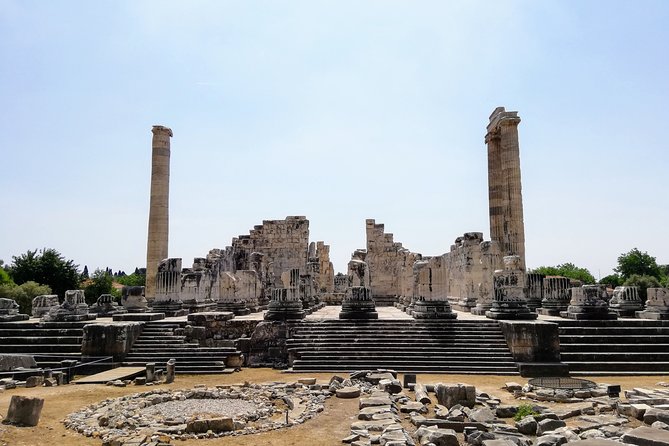
After Miletus, you head to Didyma, and the setting shifts the tone. Didyma means twins, and it’s tied to the mythic pairing of Apollo and Artemis. The sanctuary is famous for its prophecy center dedicated to Apollo, often described as having a role similar to Delphi in the Anatolian context.
One detail I find especially useful when you’re on-site: Didyma wasn’t a standalone city in the way Ephesus was. It was linked to Miletus by a sacred road—19 km (about 12 mi). That connection helps you understand the relationship between these ancient places: people didn’t just travel between cities for commerce; they also traveled for meaning and messages.
You’ll have about an hour at the Temple of Apollo. It’s long enough for the guide to connect myth, function, and setting, without making you feel stuck in one spot.
Small caution: the sanctuary is outdoors, so if you’re visiting in peak heat, pack shade strategy. A hat and water go a long way here.
Ephesus: the headline site, handled with time-saving entry
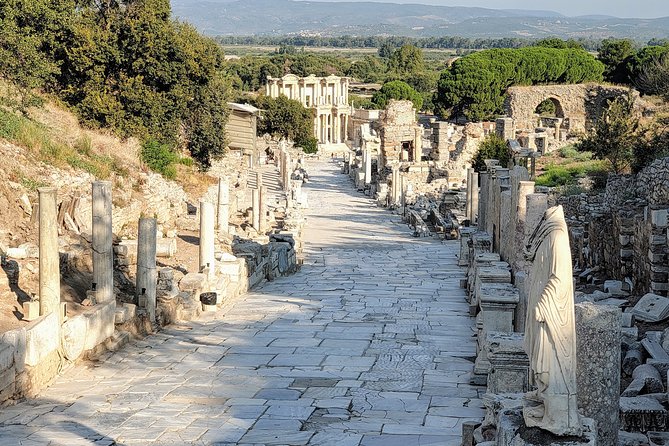
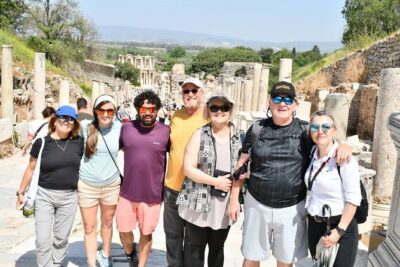
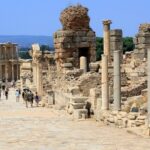
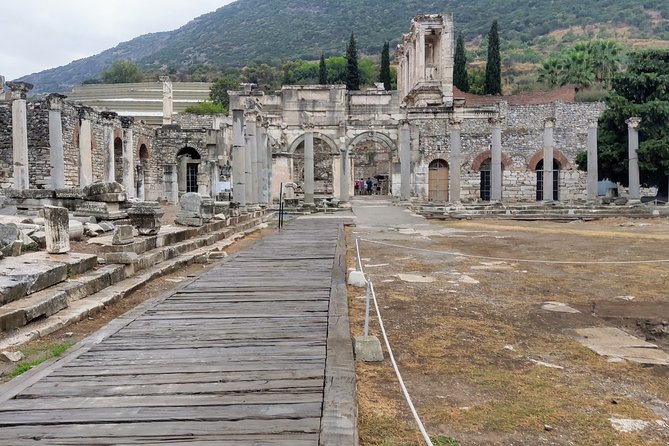
Ephesus is the reason most people come to the region, and this tour treats it like the centerpiece it is. You’ll drive roughly 50 minutes to reach Ephesus, then spend about two hours in the ancient city.
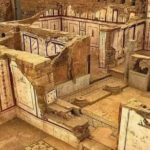
The best part for real-world planning is the included entrance fees with skip-the-line entry. Instead of losing time to ticket lines, you start walking through the marble streets where the public buildings make the city feel complex and organized.
The guide focuses on the buildings that are most impressive, and the names make the place easier to navigate:
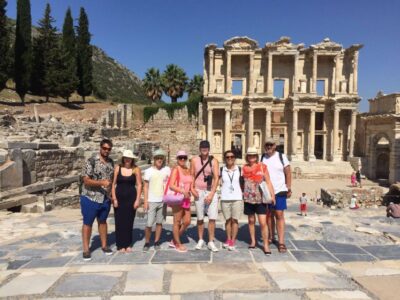
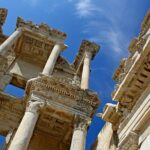
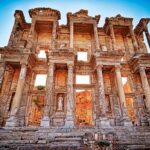
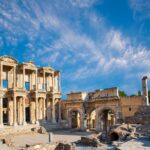
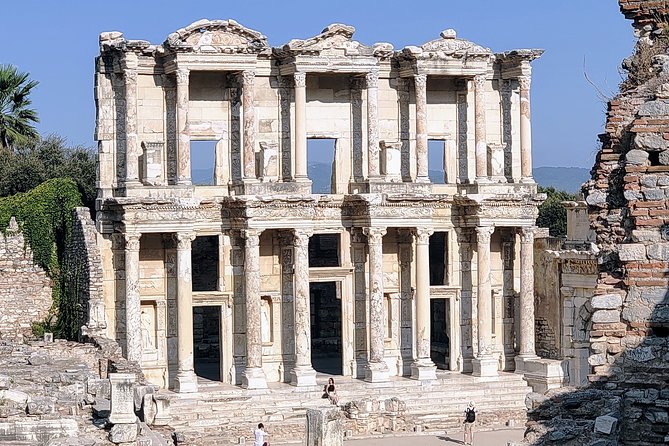
- Library of Celsus, built in the early 2nd century AD, tied to Gaius Julius Aquila and his father’s memorial
- Grand Theater, originally from the 3rd century BC and expanded by the Romans to about 24,000 spectators
- Temple of Hadrian, a reminder that the city kept evolving under Roman influence
- Baths of Scholastica, part of the city’s daily-life architecture
This is also where a private guide adds the most value. You’re not stuck listening to a script meant for a busload of people. You’re moving at your pace, with a licensed professional guiding the story so you can actually connect what you see to why it mattered.
If you want extra detail, there’s an option to add the Terrace Houses in Ephesus. That’s not automatically included—you’d pay the entrance fee—but the tour notes that the guide can help you add it to your day.
Artemis Temple: the famous finish, quick but meaningful
After Ephesus, the day ends with the Temple of Artemis. This is short—about 15 minutes—and the ticket admission for the stop is listed as free. It’s a fast landing after the deeper ruins, so think of it as a capstone: the name you’ve heard before, now in front of you in real size.
The Temple of Artemis is associated with one of the seven wonders of the ancient world. Even if you don’t spend a long time here, it’s worth using that short window well: take a few wide photos, then let the guide connect what you’re seeing to the wonder reputation.
Back in Kusadasi: a little breathing room for shopping
When you return to Kusadasi, you’re dropped back at your pickup point or Kusadasi center. You get about 15 minutes on your own, which is enough time to grab small items or refill water without turning the day into a complicated stop.
This is also where you’ll appreciate the private nature again. You’re not waiting on other people to decide where they want to be, and you’re not trying to “catch up” to a group that’s already gone.
Price and what you actually get for $149
At $149 per person, this tour becomes strong value because it bundles the things that usually nickel-and-dime you on shore excursions.
Included:
- Entrance fees, with skip-the-line handling at Ephesus
- Private professional licensed guide
- Private transportation with A/C vehicles
- Landing and facility fees, plus parking fees
- A guaranteed on-time return to port
Not included:
- Meals not mentioned in the plan
- Tips for the guide and driver
There’s also a clear message built into the setup: private tour rates are described as more reasonable than typical cruise shore tours. Even without comparing line-by-line, the structure makes sense. When entrance fees, a licensed guide, and transfers are already in the price, you’re not stuck doing math while you’re tired and time is ticking.
Meal strategy is the one open variable. The tour indicates you’ll have alternatives for Turkish food if you want lunch during the trip. That’s helpful because you can decide what fits your day—light bite, full sit-down, or just a snack and keep moving. Based on the overall feedback vibe, the day seems to allow room for lunch when you plan for it.
How the pacing feels: private time beats big-group speed
A big claim here is that the guide works at your group’s pace. That matters at Ephesus and Didyma, where walking and visual focus can wear people out. Private time also helps if your group has different interests—architecture lovers, myth fans, or history basics.
You also get practical extras that improve the day:
- Chances for photo stops during the tour
- No waiting around for other group members
- The guide and driver stay with you from arrival until departure
One detail that can change everything is the order of sites. The tour notes customization, and it’s also clear you can make requests. If you’re the type who prefers quieter moments and less crowd pressure, ask your guide about the best order for your day.
What to bring (and what to plan around)
This day is a classic “ruins + sun + walking” mix. You should have moderate physical fitness, and you’ll be moving through multiple outdoor spaces.
So I’d plan like this:
- Comfortable shoes for uneven ground
- Water and sun protection for the outdoor sites
- A light layer if you get early morning breeze or AC chills in the car
- A flexible lunch plan, since meals are not included
If you’re thinking about adding Terrace Houses, remember that it’s an extra entrance fee. If you know you want it, bring that into your timing so your Ephesus time doesn’t feel rushed.
Who this tour fits best
This is a strong match for:
- Cruise passengers who need a reliable return to port
- Families and small groups who want private guiding instead of being swept into a script
- People who want multiple major sites in one day without wasting time on tickets
- Travelers who like context: how trade routes, myth, and civic life connect across the region
If you’re the kind of traveler who wants a slow museum rhythm with long breaks in shaded cafes, you might find this schedule a bit full. But if you like a well-run circuit where the key highlights are handled efficiently, it’s a good fit.
Should you book this Private Ephesus – Miletus – Didyma tour?
If your priority is maximum ancient-site time with minimum logistical stress, I’d say yes. The included entrance fees and skip-the-line entry at Ephesus remove two of the biggest hassles, and the private guide setup means you’re not stuck with a one-size-fits-all pace.
Book it if:
- You want Ephesus, Miletus, and Didyma in one day
- You’re traveling with a group that benefits from flexibility
- You care about getting back to the port on time
- You’d rather pay once (with entrances included) than manage tickets all day
Skip it if:
- You dislike long days and lots of walking
- You want meals fully handled and included (they’re not listed as part of the plan)
FAQ
How long is the tour?
It runs about 7 to 8 hours, depending on the day’s timing.
Do you provide hotel or cruise terminal pickup?
Yes. Pickup is offered from listed hotels and the Kusadasi cruise terminal. The guide meets you with a sign showing your name.
Are entrance fees included?
Yes. Entrance fees are included, and the guide uses pre-paid tickets to provide skip-the-line entry to Ephesus.
Is this tour private or shared?
It’s private. Only your group participates.
Can I choose my departure time?
Yes. You decide on the departure time, and the guide meets you at the port with your name sign.
Are meals included?
Meals are not mentioned as included, so plan to handle lunch separately if you want one.
What’s the cancellation option if plans change?
You can cancel for a full refund up to 24 hours in advance of the experience start time.
If you want, tell me your travel dates and whether you’re on a cruise. I can suggest the smartest way to time the day for fewer crowds and a smoother return to port.