REVIEW · KUSADASI
Priene, Miletus, and Didyma Day Tour from Kusadasi
Book on Viator →Operated by Apasas travel · Bookable on Viator
Priene, Miletus, and Didyma in one day saves time. This small-group minibus tour uses an art historian guide and threads three major Ionian sites into a clean, doable route. I love that hotel pickup and drop-off are handled for you, and I also like that the day includes a buffet lunch plus site entry support. One thing to consider: the Priene stop’s ticket status is listed as not included, so double-check what you’ll pay on arrival.
The day is built for people who already did Ephesus and want the next layer of Greek and Greco-Roman ruins. You’ll walk through Didyma’s Apollo sanctuary, move on to Miletus’ harbour-world and Ionian Confederation stories, then end in Priene with its theatre and hilltop temple setting. The big drawback is timing: with roughly 8 hours and multiple stops, you’ll get great context, but you won’t linger for long photo marathons at every corner.
In This Review
- Quick hits (what makes this tour work)
- Getting the most from a Kusadasi day: Priene, Miletus, Didyma in one shot
- Minibus pace and small-group feel with an art historian
- Didyma’s Temple of Apollo and Sacred Way atmosphere
- Miletus ruins: Ionian League, harbour monuments, and early Greek coins
- Priene’s hilltop Athena temple and a theatre made for hearing
- Lunch, entrance fees, and value of the $216.74 price
- Should you book this Priene, Miletus, Didyma tour?
- FAQ
- What is the duration of the Priene, Miletus, and Didyma day tour?
- What time does the tour start?
- Is pickup and drop-off included?
- Is it a small-group tour?
- Is lunch included?
- Are entrance fees included?
- Are drinks included?
- What languages is the tour offered in?
- How does the ticketing work?
- Can I cancel for a full refund?
Quick hits (what makes this tour work)
- A maximum of 14 people keeps you from feeling like you’re in a train station crush.
- Hotel pickup from Kusadasi (and Selçuk-area hotels) cuts the hardest part of getting to ruins.
- Didyma’s Temple of Apollo is the dramatic centerpiece, with Greco-Roman architecture and the ruined sanctuary remains.
- Miletus links to Ionian power and even early Greek coin-making stories, not just stones and columns.
- Priene adds a theatre with real acoustics and famous front-row seating details.
Getting the most from a Kusadasi day: Priene, Miletus, Didyma in one shot
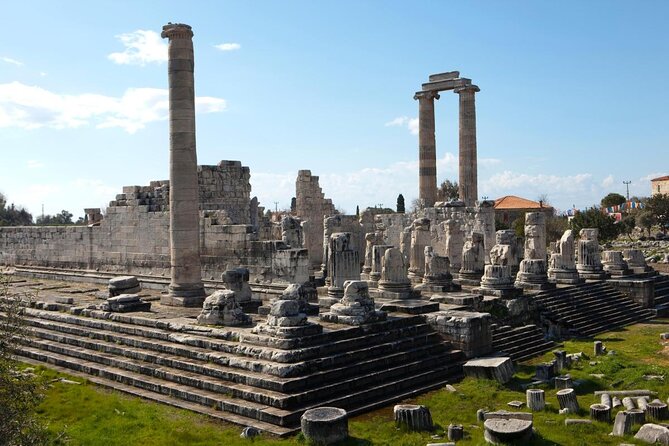
This tour is for you if you want the Ionian world without doing three separate half-days and three separate headaches. From Kusadasi (and the Selçuk area), you start with 9:00 am pickup, then the day turns into a “see it, understand it, then move on” rhythm. It’s also a smart plan if Ephesus is already checked off, because you still get Greek theatre architecture, sanctuary symbolism, and urban ruins—but in less crowded spaces.
Priene, Miletus, and Didyma share the same region but tell very different stories. Priene feels like a carefully planned hillside city with a theatre that could hold 6,500 people and a temple on top of the hill. Miletus is the maritime power—connected by the Maeander River system—where myths, philosophy names, and even coin-making show up in the narrative. Didyma, though, is the spiritual gravity: the oracle connected to Apollo and a sanctuary that pulled pilgrims from across the ancient Mediterranean.
The value here is how the tour connects the dots for you. You’re not just touring ruins; you’re seeing how a sanctuary site links to Miletus by a Sacred Way route, how Ionian cities challenged bigger powers, and how the same places changed from Greek to Roman hands over centuries. Even the drive has story in it: views between Samsun Mountain and the Maeander River flood plain stretch toward cotton fields and out toward the Aegean.
You can also read our reviews of more tours and experiences in Kusadasi.
Minibus pace and small-group feel with an art historian
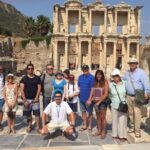
You’re in a minibus with a small group, and that matters more than you might think. With up to 14 people, the guide can actually pace the day around questions, not around a fixed herd schedule. Your guide is an art historian by trade, which helps because the sites are visually impressive but historically layered—and you’ll get that layering explained as you go.
Expect a full-day tempo. The plan is roughly 8 hours total, and each main site gets a set amount of time: Didyma runs about 3 hours, Miletus about 3 hours, and Priene about 1 hour. That last number is the one to notice. Priene can take longer if you get serious about the details, but the overall route is still well balanced for a day trip.
Also, this is an English tour, and the tour uses a mobile ticket. That sounds like small stuff until you’re standing at a site entrance and trying to sort paperwork while your friends are already photographing columns. Here, the logistics are meant to keep you moving.
One practical note: the tour includes pickup and drop-off, so you don’t need to line up separate taxis or rental car parking stress. The tradeoff is that you’re on their schedule, so if you’re the type who loves slow wandering, you’ll want to manage expectations. Think “guided seeing with time for photos,” not “total freedom all day.”
Didyma’s Temple of Apollo and Sacred Way atmosphere
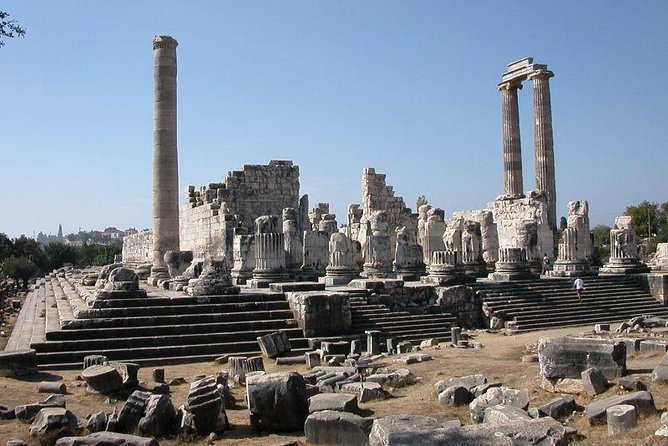
Didyma is the emotional high point. This wasn’t really a city in the way people picture city life today—it was a major worship place, with its oracle known across the ancient world. The mythology matters here: the Word behind Didyma is tied to the twins idea, where Zeus and Leto connect to Apollo and Artemis. Even if you don’t care about Greek myth deeply, the site concept clicks fast once you understand it was a place people traveled to ask questions.
You’ll see the dramatic remains of what was once a colossal Temple of Apollo, and the tour frames the site’s importance with its connection to Miletus via the Sacred Way. That means the ruins aren’t just one stop; they’re part of a larger pilgrim route system. The first temple at Didyma dates back to the late 8th century BCE, and today you’re walking over layers—because the archaic temple remains sit under later Hellenistic construction.
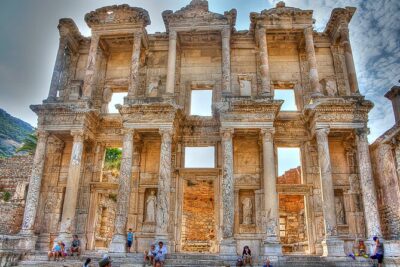
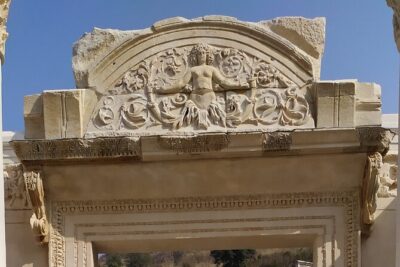
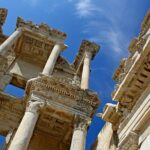
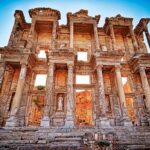
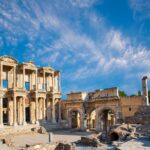
At the practical level, the standout visuals are what you’d hope for at a Didyma visit: Greco-Roman architecture, rows of white columns, a stone medusa’s head, and the stepped base that gives the site its commanding views. This is one of those places where the guide’s timing matters. If you catch the light right, those architectural lines feel crisp and purposeful. If the light is harsh, it can still be impressive, but you’ll rely more on the explanation to bring the structure together.
One more detail worth keeping in your head: the guide’s job is to connect the oracle idea to what you’re standing next to. If you go in expecting a single temple photo moment, you might miss the bigger feeling—that this was a pilgrimage destination, not just a monument.
Miletus ruins: Ionian League, harbour monuments, and early Greek coins
Miletus is where the tour shifts from spiritual gravity to political and economic power. This city was part of the Ionian League, and it challenged the power of Ephesus. That’s a useful context because the ruins don’t automatically tell you “this used to compete with that.” The art historian guide helps you see why these sites mattered in a regional chess game.
The story also goes bigger than just local rivalry. Miletus was tied to a major port on the Maeander River system, and the narration connects it to ship routes reaching around the Mediterranean, the Black Sea, and the Sea of Marmara. That maritime angle helps explain why names of thinkers show up alongside harbour-like ruins and civic spaces.
The tour also highlights Miletus as a place where early Greek coins were minted. That’s a great detail for you to remember because it makes the site feel practical and grounded in daily power, not only myth and monuments.
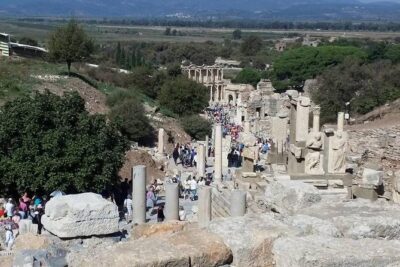
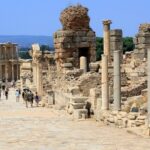
As you walk the area, you may pass key features such as the theatre, Byzantine Fortress, Harbour Monuments, Delphinium, South Agora, Baths of Faustina, the Mosque of Ilyas Bey, and a Caravansaray. That mix can be a blessing. Greek city spaces, Roman-era layers, and later structures all overlap here, so you’re getting a real sense of how the same ground can keep getting repurposed.
The only caution is the usual one for big ruin areas: if you want to pause to read every plaque and scan every wall, you’ll feel the time pressure. You’ll have around 3 hours, which is enough for a strong overview, but not enough to become a solo archaeologist.
Priene’s hilltop Athena temple and a theatre made for hearing
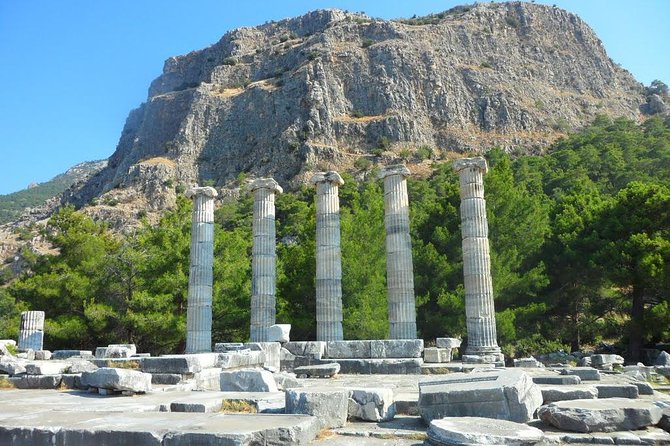
Priene is a calmer finish to the day, but it’s not a weak one. This ancient city sits between Ephesus and Miletus in the region, and it later became important again in Byzantine times. The hilltop placement is part of the drama: the most important building here is the temple of Athina on top of the hill, so you get a natural sense of how the city was laid out.
Then there’s the theatre. The tour leans into details, and those details are why Priene feels special. You can see the front row has five king chairs, and the theatre could hold about 6,500 people. It’s also described as the only theatre not renewed by the Romans, which matters if you like architecture that didn’t get “edited” in a later era.
The acoustic is a highlight too. When a theatre is built with sound in mind, you can often feel it even without doing a formal test. The guide’s explanation helps you imagine how people heard speeches and performances in a time before microphones.
Another Priene fact that makes the ruins feel human: the city was known for luxury houses, and about 33% of citizens reportedly had their own bathroom with toilet. You’re not touring a museum here; you’re looking at a city’s bones. That kind of domestic detail gives the place a pulse.
Practical note for your wallet: the stop’s entry listing says Admission Ticket Not Included for Priene, even though the overall tour description says entrance fees are included. Because of that mismatch, I’d plan to confirm what you’ll pay at the site—or ask your booking agent before you go.
Lunch, entrance fees, and value of the $216.74 price
Let’s talk value, because $216.74 can feel like a lot until you price it in real life. This tour includes pickup and drop-off, transport by minibus, a professional art historian guide, a buffet lunch, and support for entrance fees. Drinks are not included, so you’ll want to budget for water or soft drinks if you tend to sip all day.
The buffet lunch is one of the quiet wins. Ruin days can turn into hunger management hell, especially when you’re trying to find food near sites. Here, lunch is baked into the schedule, and there’s a vegetarian option if you mention it when booking. That’s a practical convenience that usually pays off fast.
Guide impact is another value factor. In this region, the ruins can look similar at a glance—columns, theatres, stone bases. A strong guide is what helps you tell Priene from Miletus and Didyma from each other. The names Gul, Mehmet, and Melike show up as examples of guides who brought clear explanations and friendly company, which is exactly what you want when you’re investing a full day.
For money-savvy planning: if you’ve already spent time around Ephesus, you’re paying here for the “next set of major sites” plus the explanation and logistics. If you only want one monument and you hate structured tours, this might feel like too much. But if you want three ancient cities in a day without driving, parking, and sorting multiple tickets, it’s a strong deal.
Should you book this Priene, Miletus, Didyma tour?
Book it if you want a guided day that goes beyond the big headline sites and still gives you top-tier ruins: Apollo’s sanctuary at Didyma, maritime-power Miletus, and the compact, impressive theatre-and-temple feel of Priene. You’ll especially like it if you value clear interpretation and you don’t want to juggle transportation.
Skip it or adjust expectations if you need lots of free time on your own at each stop. Priene is only about an hour, and the day is built to cover three major areas. Also, if you’re strict about entrance fees being fully included with no surprises, confirm the Priene ticket situation before you go.
If you’re coming from the Kusadasi area and want the Ionian coast’s big stories in one smooth day, this is the kind of tour that makes planning easier and sight-seeing better.
FAQ
What is the duration of the Priene, Miletus, and Didyma day tour?
It runs about 8 hours.
What time does the tour start?
It starts at 9:00 am.
Is pickup and drop-off included?
Yes. Pickup is available from hotels in the Selçuk or Kusadasi-area and from the port in Kusadasi, with drop-off back at your hotel.
Is it a small-group tour?
Yes. It has a maximum of 14 travelers.
Is lunch included?
Yes. Lunch is a buffet, and a vegetarian option is available if you request it at booking.
Are entrance fees included?
The tour description says entrance fees are included, but the Priene stop listing says admission ticket not included. Confirm what applies to Priene when booking.
Are drinks included?
No. Drinks are not included.
What languages is the tour offered in?
The tour is offered in English.
How does the ticketing work?
You get a mobile ticket.
Can I cancel for a full refund?
Yes. Free cancellation is available up to 24 hours before the experience start time.