REVIEW · CRUISES & BOAT TOURS
Skip the Line: Ephesus Tour For Cruise Guest
Book on Viator →Operated by Moira Travel Agency · Bookable on Viator
Skip the Ephesus lines, see more. This cruise-guest tour in Kusadasi is built around priority admission and cruise-port pickup, so your day stays focused on walking ancient sites instead of waiting in crowds.
What I like is the practical comfort: an air-conditioned vehicle, timed for cruise schedules, plus an English-speaking guide to keep the history clear and usable. I also like that the day isn’t only about marble and columns. The stop at the House of the Virgin Mary adds a quieter, spiritual break with a mountain setting.
The main drawback to plan for is cost and timing. The tour price is low, but entrance fees for major sights are listed separately, and the whole schedule is built around your ship’s onboard time.
In This Review
- Key things to know before you go
- Cruise-guest setup: meeting fast and getting to Ephesus early
- Price and value: what $12 really covers
- In the van: air-conditioned comfort and a day that stays timed
- Ephesus Ancient City: priority entry and where to spend your time
- House of the Virgin Mary: Bulbul Mountain adds a different kind of meaning
- Ephesus Museum and the Public Latrine: small stops that add real context
- Temple of Artemis and Kusadasi: a quick finish with the right pace
- What to bring for a smooth day in Kusadasi heat
- Should you book this Skip the Line Ephesus Tour for Cruise Guest?
- FAQ
- Where do cruise passengers meet for this Ephesus tour?
- How long is the tour?
- Is the tour offered in English?
- Are entrance fees included in the tour price?
- Will I get picked up at the cruise port or my hotel?
- Is this a private tour or a group tour?
- Can I cancel for a full refund?
Key things to know before you go
- Priority admission at Ephesus helps you save time at one of Turkey’s busiest archaeological sites.
- Cruise-port meet-up inside a time window is the difference between a smooth start and a stressful scramble.
- Air-conditioned transport keeps the touring comfortable in hot Aegean weather.
- A guide-led route that mixes big-ticket ruins with smaller, meaningful stops.
- Short, smart stop durations (like 15 minutes for Kusadasi and the public latrine) keep the day moving.
- You return to the port based on your onboard time, not some generic clock.
Cruise-guest setup: meeting fast and getting to Ephesus early
This is a Kusadasi cruise port–focused experience, and the biggest factor is how early you start. You meet at the cruise port at Kuşadası Port Türkiye, Camikebir, Feribot Limanı (09400 Kusadası/Aydın). The guide meets you with a sign that has your name on it, and for cruise guests you’re advised to follow others from your ship, then look for the sign after you pass through customs control.
Here’s the key tip: when your ship docks, give yourself time to meet the team within 30 to 45 minutes of arrival. That window is there for a reason—buses, crowds, and heat can quietly eat your schedule.
After you book, you’ll be asked to contact the team to agree and secure your meeting time. That’s worth doing right away so you’re not trying to coordinate after you’re already off the ship.
One more planning detail I appreciate: cruise ships vary by arrival/departure times. The team coordinates your return to the port based on your specific onboard time, so the day is built as a timed route rather than a loose sightseeing stroll.
You can also read our reviews of more boat tours in Kusadasi

Price and value: what $12 really covers
The advertised price is $12.00 per person, and the value comes from what’s actually included versus what’s typically extra in Turkey.
Included in the tour:
- Air-conditioned vehicle
- Private transportation
- Guide
Not included:
- Entrance fees listed as €40.00 per person for Ephesus
- Another listed fee of €10.00 per person (also not included)
One small catch: the tour description also says an admission ticket is free for Ephesus Ancient City in the stop notes. The safest approach is to budget for the separately listed entrance fees until you confirm what your booking covers. Either way, you’ll want to be ready with some euros, especially if ticket lines or payment instructions don’t match your expectations on the day.
If you’re debating whether priority admission is worth it, think about this: waiting time at Ephesus can eat half your limited cruise shore time. Even with a short day like this, fewer delays usually means you actually see the major highlights with your energy intact.
In the van: air-conditioned comfort and a day that stays timed
You’ll travel in an air-conditioned vehicle with a licensed guide. The tour is offered as either small-group or private, and the private option means only your group participates.
That matters for cruise travelers because you’re not stuck with slow movers or stretched group management. It also means you can keep the pace steady—important when you’re also working under a hard return deadline.
Expect a day that’s structured but not frantic. The stops are deliberately short for some key add-ons:
- Kusadasi: about 15 minutes
- Public latrine: about 15 minutes
- Temple of Artemis: about 30 minutes
Those quick segments help you see more variety without turning the day into a marathon.
Ephesus Ancient City: priority entry and where to spend your time
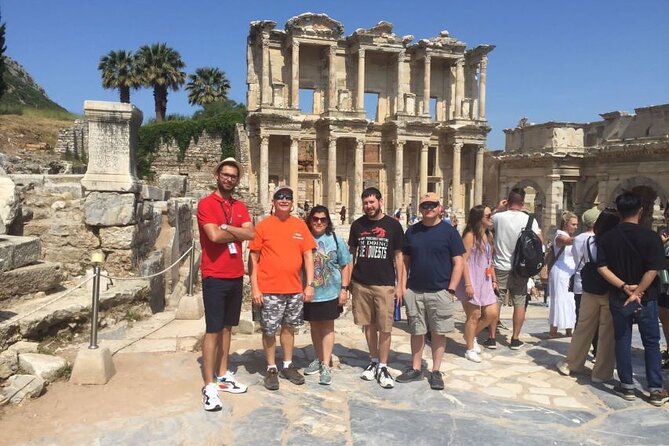
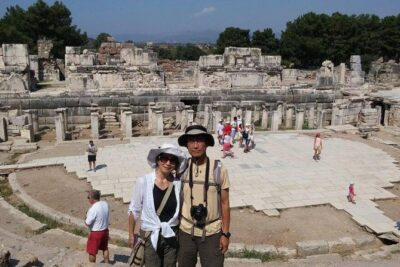
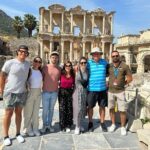
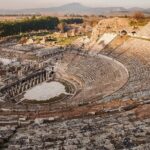
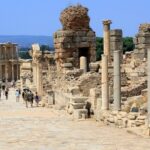
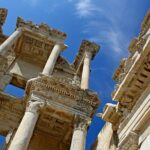
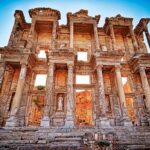
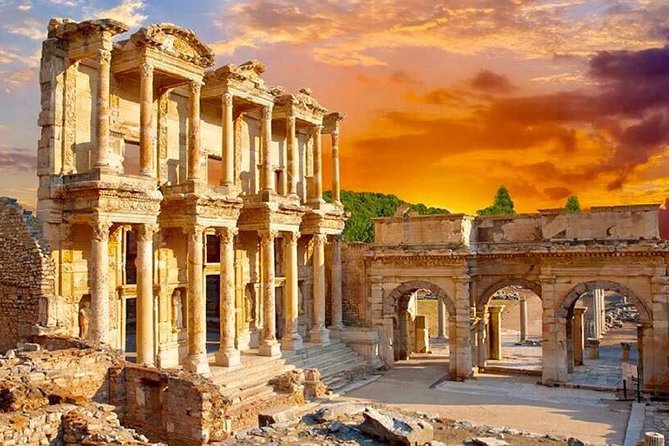
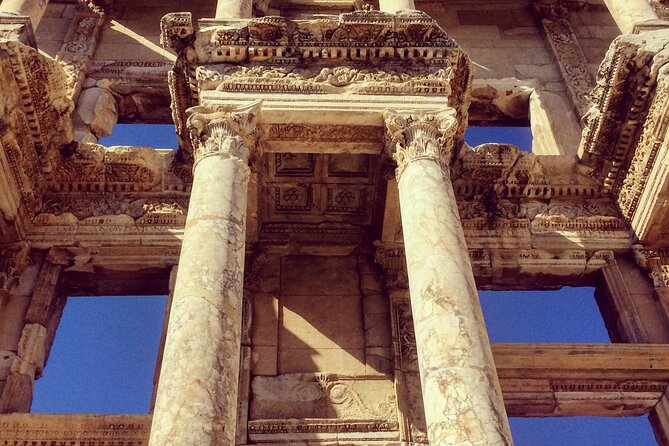
Ephesus (Efes) is one of the most famous archaeological sites in the Mediterranean, and the reason it’s worth your shore time is scale. In its heyday in the first century BC, it was a powerhouse—described here as the second-largest city in the world, with only Rome holding more sway.
On this tour, you get Ephesus priority admission, which is the whole point of the skip-the-line idea. You’ll enter the ancient city and have time—about 2 hours—to see major reconstructed and surviving ruins, including the Temple of Artemis, referenced as one of the Seven Wonders of the Ancient World.
What you should focus on at Ephesus:
- Look for the “big story” areas first. Artemis is a headline landmark, but try to connect what you see to the city’s role as a major Mediterranean center.
- Don’t rush straight to the fanciest photo spots. Take a few minutes to orient yourself so the street-level ruins make sense.
Also, this tour’s value comes from a guide who explains more than dates. Past experiences with this operator’s guides include English that’s easy to follow and historical context that helps you understand how people lived—what the city was built for and why it mattered. Guides such as Ali Tanriverdi, Rose, and Luke have been singled out for strong English and clear site knowledge, and that kind of guidance makes the ruins feel less like scattered rocks.
House of the Virgin Mary: Bulbul Mountain adds a different kind of meaning
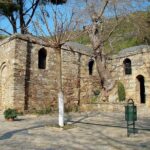
After Ephesus, you head to the House of the Virgin Mary, located on top of Bulbul mountain. The distance is stated as about 6 km from the ancient city, so this is still close enough to feel like part of the same day, not a full transfer day.
This stop is about 45 minutes, and the tone shifts from ancient city power to pilgrimage tradition. The house is believed to mark where Mary spent her last years, based on Catholic tradition that St. John brought her to Ephesus after the crucifixion. The foundation is described here as being based on the visions of Anna Catherine Emmerich, and the house was founded as a shrine in 1891. When it was found, the structure was already collapsed due to an earthquake. It was later rebuilt as a church, and it’s noted as having been visited by Pope Paul VI in 1967 and Pope John Paul II in 1979.
A practical way to enjoy this stop:
- Go in expecting a quieter visit than Ephesus. You’re not chasing big reconstruction scenes the same way.
- Plan on views and atmosphere. Mountain-top locations can feel cooler than the city ruins, but you’ll still want sun protection.
If you like religious history with a real sense of place, this is often the most memorable contrast of the day.
You can also read our reviews of more tours and experiences in Kusadasi



Ephesus Museum and the Public Latrine: small stops that add real context
Between the headline ruins, you’ll have a stop at the Ephesus Museum for about 1 hour. Museum time is a smart use of limited cruise hours because it helps you translate what you saw outside into objects, details, and the physical “why” behind the structures. Entrance fees are listed as not included for this stop, so again, plan for separate payments.
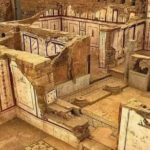
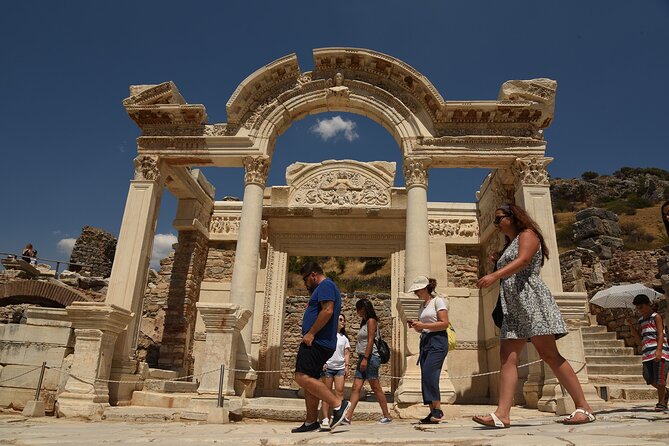
Then comes a stop that many first-time visitors overlook: the Public Latrine. This is one of those “wait, the Romans had toilets like this?” moments that actually makes the ancient world feel human.
Here’s what’s worth knowing about it:
- It’s part of the ruins of the ancient Roman city in Selçuk.
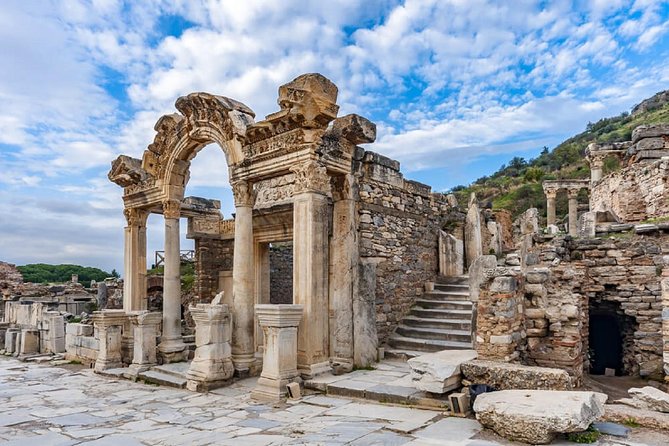
- It’s described as next to major nearby landmarks like the Hadrian Temple and the bordello.
- The public latrines were built in the 1st century AD as part of the Scholastica Baths.
- They’re said to have included 36 marble toilets, arranged along the walls.
- You can still see the lineup, but you can’t use them.
- There was an uncovered pool with columns supporting a wooden ceiling.
- There’s a drainage system underneath, plus a trough with relatively clean water near where your feet would go.
- People needed to pay an entrance fee to use the toilets.
That’s the kind of detail a good guide turns into a story about daily life—how public infrastructure worked, how people paid for convenience, and what hygiene meant in a city built to serve thousands.
Temple of Artemis and Kusadasi: a quick finish with the right pace
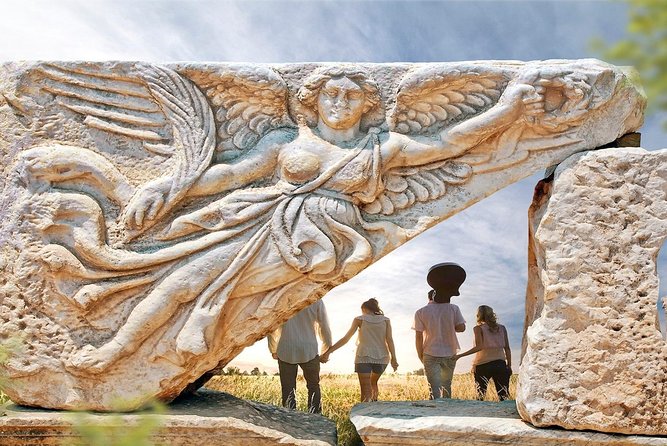
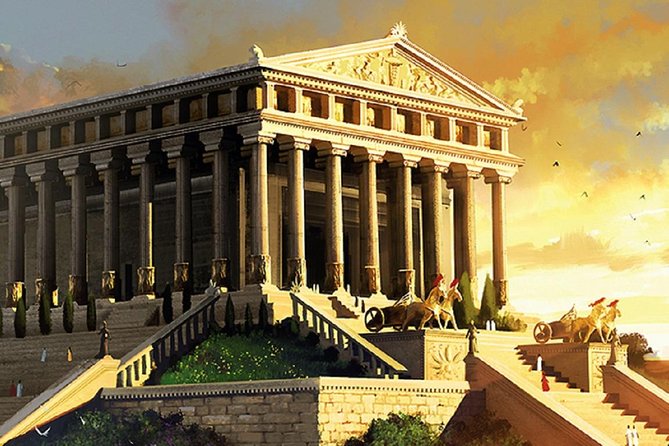
Next is the Temple of Artemis. Today, only the basic structure and a column remain, but the stop is still worthwhile because the site is part of the origin story of Ephesus’s power. The description here frames it as the first settlement of the Ephesians where the temple once stood. Even in its reduced form, it helps you connect Ephesus to its best-known mythic-level reputation.
This stop is about 30 minutes with free admission.
Finally, you’ll have a short Kusadasi break (about 15 minutes). This is the Aegean resort town that acts as the gateway to Ephesus. The cruise port handles large volumes of passengers, and it’s also a ferry link to the Greek Islands. Even though the time is brief, this is enough to reorient you back to the modern setting once you’ve been living in Roman and ancient timelines all day.
What to bring for a smooth day in Kusadasi heat
A cruise shore day is short. Your comfort choices matter more than usual.
Bring:
- Sunscreen and a hat. You’re outside for major parts of the day.
- Comfortable walking shoes. Even without a long hike, you’re on uneven ancient surfaces.
- Water. There’s no water promise in the tour details, so plan like you might need your own.
- Small cash or payment method for entrance fees. The listed €40 and €10 mean you should assume separate costs.
If you’re prone to timing stress, do this: treat the first hour like the most important. Meeting within 30 to 45 minutes of arrival isn’t just advice. It’s what protects your time at Ephesus.
Also, this tour is typically booked well ahead—on average 40 days in advance. If your ship has a busy port schedule, booking early can help you secure a spot and your preferred timing.
Should you book this Skip the Line Ephesus Tour for Cruise Guest?
If you’re on a cruise and you want the Ephesus headline sights without spending half your day trapped in lines, I think this is a strong choice. The biggest reasons:
- Priority admission is exactly what cruise travelers need.
- The cruise-port pickup and guided route reduce the guesswork.
- The tour mixes major ruins with stops like the House of the Virgin Mary and the Public Latrine, which often become the “I didn’t expect that” highlights.
You might skip or modify plans if:
- You strongly dislike paying separate entrance fees. The tour includes the guide and transport, but the major site costs are listed separately.
- Your ship timing is tight and you tend to run late getting off the ship. This day is designed to work when you meet the team quickly.
My practical recommendation: if you’re organized enough to meet within that 30 to 45 minute window, this is the kind of tour that turns limited shore time into a satisfying, well-paced Ephesus day.
FAQ
Where do cruise passengers meet for this Ephesus tour?
You meet at the Kusadası Cruise Port area at Camikebir, Feribot Limanı (09400 Kuşadası/Aydın, Türkiye). The guide meets you with a sign showing your name, and you should follow others from your ship, then look for the sign after you pass through customs control.
How long is the tour?
The duration is approximately 4 to 6 hours.
Is the tour offered in English?
Yes, the tour is offered in English.
Are entrance fees included in the tour price?
Entrance fees are not included. The details list entrance fees of €40.00 per person and €10.00 per person as separate from the tour price.
Will I get picked up at the cruise port or my hotel?
Pickup is offered, including for cruise guests at the Kusadası Cruise Port (and it can also include hotel pickup, depending on your situation).
Is this a private tour or a group tour?
This is described as a private tour/activity, meaning only your group participates. There is also mention of choosing from a small-group or private tour option.
Can I cancel for a full refund?
Yes. Free cancellation is available up to 24 hours in advance for a full refund. The experience requires good weather, and if it’s canceled due to poor weather, you’ll be offered a different date or a full refund.