REVIEW · EPHESUS TOURS
Ephesus Shore Excursion Private Guided Tour
Book on Viator →Operated by Istanbul Custom Tours · Bookable on Viator
Ephesus, timed to your cruise day. A private guide plus a smooth cruise-port pickup means less stress and more looking at what matters. I also like the tight focus of the route, which hits the big Ephesus sights and then works in Selçuk stops like the Basilica of St. John and Meryemana.
The main thing to watch is cost creep: most entrances are not included, and the Ephesus Ancient City ticket is €40 per person, so you’ll want to budget for admissions and tips on top of the $450 group price.
In This Review
- Key things to know before you go
- Cruise-port pickup and dropoff: why it matters in Kusadasi
- The 5 to 6 hour rhythm: what the schedule feels like
- Ancient City of Ephesus: the main event (and your big ticket item)
- The Celsus Library and Trajan Fountain: short stops that add context
- Bibliothèque de Celsus (10 minutes, free entry)
- Trajan Fountain (10 minutes, free entry)
- Terrace Houses: Roman luxury—and what it says about family life
- Ephesus theatre and Temple of Artemis: big names, controlled time
- Ephesus Ancient Greek Theatre (10 minutes, free entry)
- Temple of Artemis (10 minutes, free entry)
- St. John Basilica ruins and Meryemana: the Selçuk shift
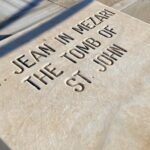
- Basilica of St. John (20 minutes, admission not included)
- Meryemana (The Virgin Mary’s House) (40 minutes, admission not included)
- Kusadasi market time: a useful optional break
- Price and value: what $450 per group really buys you
- Who should book this Ephesus shore excursion
- Should you book this Ephesus shore excursion?
- FAQ
- How much does the Ephesus shore excursion cost?
- Where do we meet the guide on cruise day?
- How long is the tour?
- Are entrance fees included in the price?
- Is the tour private?
- Is the tour offered in English?
Key things to know before you go
- Cruise-port meeting with a name sign at the exit gate, so you can find your guide fast.
- Private group up to 8 with a licensed local guide and English service.
- Ephesus ticket not included (and other sites listed as not included), so plan cash for entrances.
- A deliberate pace: roughly 1.5 hours at Ephesus, then short timed stops to cover the rest of the classics.
- Selçuk add-ons: Terrace Houses, the Byzantine Basilica of St. John, and Meryemana (Virgin Mary’s House).
- Optional Kusadasi market time if you want handicrafts and demonstrations without hunting alone.
Cruise-port pickup and dropoff: why it matters in Kusadasi
The best part of this style of shore excursion is that it respects the real enemy of port days: time. You meet your guide at the cruise port exit gate with a sign showing your name. That one detail matters. It cuts down the awkward roaming and the panic of trying to match faces in a crowded terminal.
From there, the tour uses a deluxe van and sticks to a standard plan: pickup from the port/hotel, then a return back to the cruise port aligned with your boarding time. When you’re doing Ephesus from Kusadasi, this is the difference between a calm day and a sprint.
You’ll also get a mobile ticket, which is the kind of thing that prevents the small-day chaos: no paper hunt, no lost voucher. The itinerary is designed for an easy handoff—your guide is the one doing the navigating through the major sites, not you.
You can also read our reviews of more guided tours in Kusadasi


The 5 to 6 hour rhythm: what the schedule feels like
This is a private tour (only your group), and it runs about 5–6 hours. That length is a sweet spot for Ephesus shore days, because it’s long enough to see the big highlights, but not so long that you’re exhausted before you even reach the ruins.
The pacing is practical:
- You get 1 hour 30 minutes at the Ancient City of Ephesus.
- Then you have a series of short stops (often 10 minutes) for the major landmarks.
- Later, you shift to Selçuk-area sites like the Basilica of St. John and Meryemana, where the time is more generous (Meryemana is 40 minutes).
That means you’re not stuck in one spot for hours. You get to see a lot, but you also won’t have the freedom of a full-day independent wander. If you’re the type who wants to linger, take photos slowly, and chase side streets inside ruins, this schedule may feel a bit clicky. On the other hand, if your goal is to hit the must-sees without stress, it’s well set up.
Also note what’s not included: lunch is not included, so if you want food you’ll need to plan for it during your day. The tour also doesn’t include entrance fees, which affects how you handle each stop.
Ancient City of Ephesus: the main event (and your big ticket item)
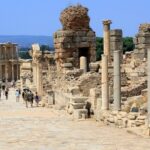
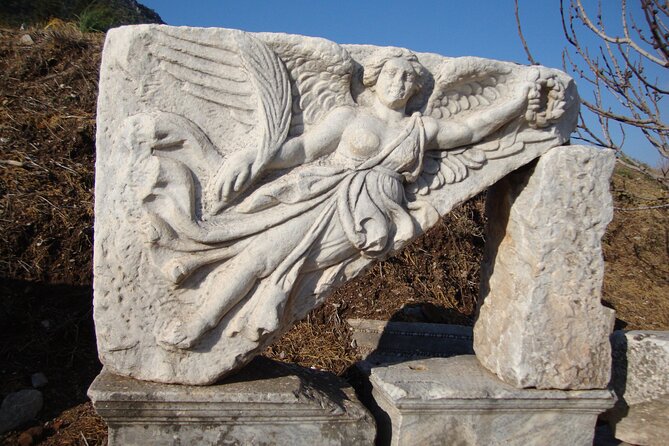
The centerpiece is the Ancient City of Ephesus, located near the modern village of Selcuk in western Turkey. The tour time here is 1 hour 30 minutes, which is enough to get grounded fast and still feel like you saw the real bones of the place.
You’ll want to know one key logistics detail: the Ephesus Ancient City admission is listed separately, and it’s €40 per person. That means your entrance cost won’t be bundled into the $450 group price. Plan for that early so you don’t lose time at the gate figuring out payments.
What your guide will likely do with your time is simple: get you oriented on what to look for, then connect the sights. Ephesus is described as the most important Greek city in Ionian Asia Minor, which gives you context for why the ruins matter. Your guide can also frame the Greek and Roman layers so you don’t just see piles of stone—you understand why each area sits where it does.
If you only have one shot at Ephesus in your trip, this is the right way to do it: guided first, then the shorter stops feel easier because you know what you’re seeing.
The Celsus Library and Trajan Fountain: short stops that add context
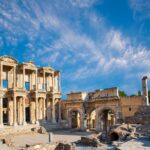
Not every highlight gets a long time slot. Two quick hits do a lot of storytelling work: the Bibliothèque de Celsus and the Trajan Fountain.
Bibliothèque de Celsus (10 minutes, free entry)
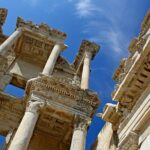
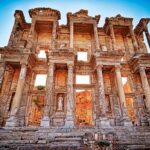
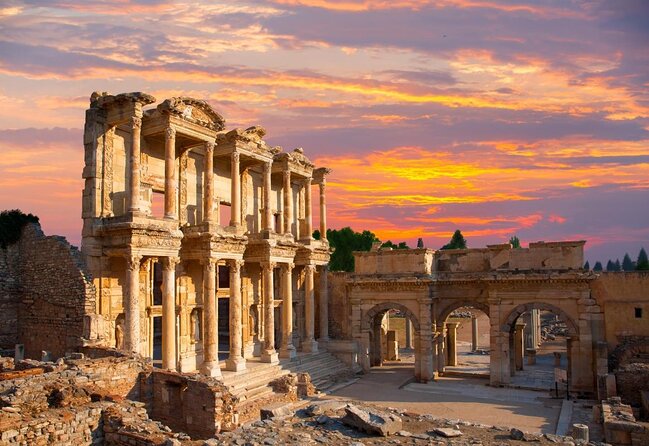
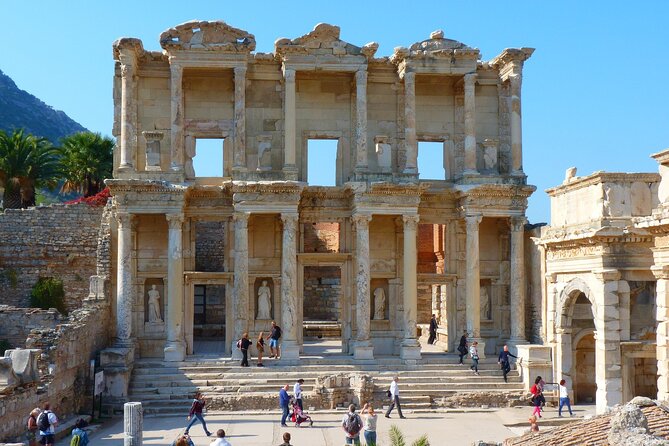
This stop is only 10 minutes, but it’s built for quick recognition. The Celsus Library is described as a site shaped by Greek, Roman, and Persian influences, so it’s a good moment to understand how Ephesus didn’t stay in one cultural lane. You’ll likely get pointed toward what makes it look the way it does—without needing a long detour.
If you’re the type who likes your history tied to architecture, these short stops are actually a plus. You see the standout structure, learn the angle, and move on.
You can also read our reviews of more private tours in Kusadasi

Trajan Fountain (10 minutes, free entry)
The Temple of Trajan is described as a Roman temple dedicated to Emperor Trajan and his wife Plotina after Trajan’s deification by the Roman Senate. The key here is not how long you stand there—it’s that someone gives you the reason it exists.
Ten minutes can be just enough time to absorb that kind of backstory, especially when your later stops bring you into other Roman and Byzantine scenes.
Terrace Houses: Roman luxury—and what it says about family life
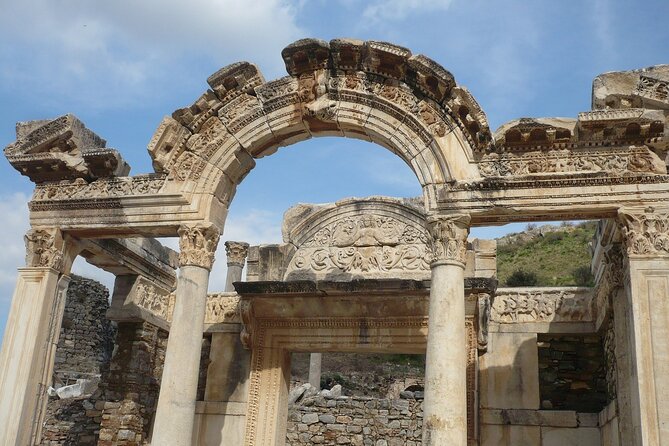
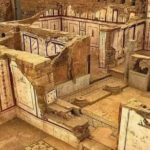
The Ephesus Terrace Houses are one of the most interesting stops on the route, even though the time is shorter: 30 minutes.
These are described as “Houses of the Rich,” luxury Roman villas located on a slope opposite the Hadrian Temple. The most useful part of this stop is the angle: it’s important because it helps explain family life during the Roman period.
That phrasing matters. You’re not just looking at wealth; you’re looking at how space and daily living likely worked. A good guide will help you translate what’s left into something human—where people would gather, how rooms relate, and what the layout suggests about domestic routines.
The entrance fee for this stop is listed as not included, so again, remember to budget for admissions as you go.
Ephesus theatre and Temple of Artemis: big names, controlled time
Two icons get 10 minutes each: the Ancient Greek Theatre and the Temple of Artemis.
Ephesus Ancient Greek Theatre (10 minutes, free entry)
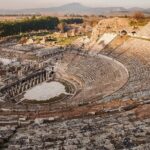
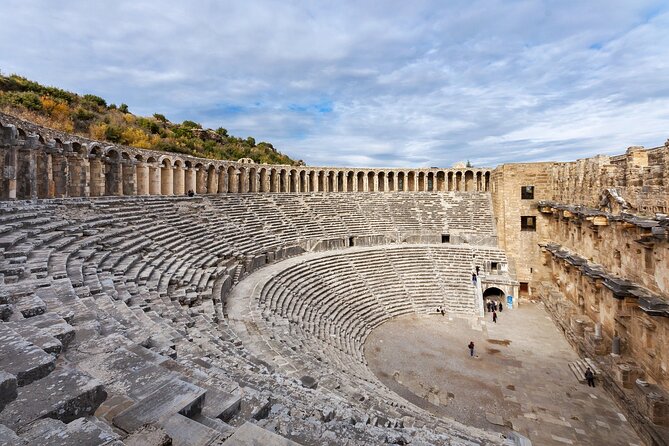
The theatre is framed as a great example of a Hellenistic building later transformed by Roman architects. Even in a short visit, this kind of detail helps you read the building instead of just looking at ruins.
The real value of a quick stop with a guide is that you leave with a clear “why it matters” in your head. Then, if you want photos, you know what to frame.
Temple of Artemis (10 minutes, free entry)
The Temple of Artemis is known as one of the Seven Wonders of the ancient world, dedicated to an ancient local form of the goddess Artemis. That’s a lot of weight for a 10-minute stop, but it’s also exactly why you want a guided approach: it keeps the brief visit focused.
If you’ve always heard of Artemis and wondered what it meant physically, this is your “see it, then understand it” moment—without spending half your day on the wrong choice.
St. John Basilica ruins and Meryemana: the Selçuk shift
After the Ephesus core, the tour moves to Selçuk-area stops, and the tone changes.
Basilica of St. John (20 minutes, admission not included)
The Basilica of Saint John is described as a massive Byzantine church that’s now in ruins, located in the town of Selçuk a few kilometers from Ephesus. The time here is 20 minutes, which is enough to slow down a bit after the faster Ephesus sequence.
You can treat this stop like a palette cleanser. Ephesus gives you Greek-to-Roman layers; the Basilica gives you Byzantine-era Christianity, even if you’re seeing it in ruin form.
Entrance for this stop is listed as not included, so keep that budget in view.
Meryemana (The Virgin Mary’s House) (40 minutes, admission not included)
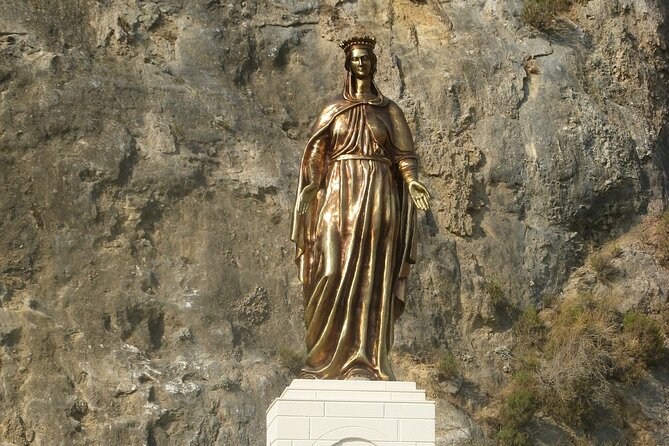
This is the most time you’ll spend outside the Ephesus core: 40 minutes at Meryemana, the House of the Virgin Mary. It’s presented as a place that can still be visited today, tied to beliefs that Mary spent her last years of life there.
Even if you’re not thinking in religious terms, a guided visit helps you understand what the site represents for many people and why it’s worth the time. This is a stop where it feels more respectful and reflective than stopwatch-driven.
One practical tip: if you plan to buy anything small or take your time with photos, this longer slot is the better place to do it than one of the 10-minute stops.
Kusadasi market time: a useful optional break
The final stop is Kusadasi Market, listed as optional, with 30 minutes of time. This is where you can trade ruins for something more modern: handicraft goods and demonstrations of crafts.
The tour notes that the guide knows the best shops in town and that you’ll have a chance to see demonstrations. That matters because markets can become time traps if you’re wandering without a plan. With a guide, you get pointed toward what’s worth your money and your energy.
If you’re not into shopping, you might treat this as a chance to stretch, use the facilities, and reset before the ride back to the port.
Price and value: what $450 per group really buys you
Here’s how I’d think about the price.
The cost is $450 per group, up to 8 people, and the tour includes:
- a private experienced licensed local guide
- pickup and dropoff from the cruise port with a deluxe van
- mobile ticket
- English service
What’s not included:
- entrance fees (with Ephesus Ancient City specifically listed as €40 per person)
- tips
- lunch
- other site entrances marked not included
So the value depends on two things:
1) How many people are in your group
2) How you handle admissions and meals
If you split $450 across 8 people, the base cost is roughly $56 per person for the guide + van + organization. Then you add €40 per person for the Ephesus Ancient City ticket, and potentially other entrance fees. If your group is smaller, your per-person share rises, but you still get the big advantage: private handling of a port-day schedule.
This is also where the guide quality shows up. In past experiences with this provider, guides like Mithat have been praised for being very passionate and having a master’s in archeology, while Yelez has been praised for caring and explaining the place clearly. That kind of guiding is part of what you’re paying for, not just transportation.
Who should book this Ephesus shore excursion
This tour fits best if you:
- want a private guide instead of a large bus group
- value cruise-day logistics and meeting points that don’t eat your time
- like seeing the key Ephesus sights, then adding Selçuk stops like Basilica of St. John and Meryemana
- have limited time and prefer a guided hit list over independent navigation
It may be less ideal if you:
- hate paying separate entrances and prefer packages where most fees are bundled
- want a long, slow, choose-your-own pace inside the ruins
- need lunch included or guaranteed food stops during the route
Should you book this Ephesus shore excursion?
I’d book it if you’re prioritizing ease and structure. This is one of those tours where the guide is the product: the timing from the cruise port, the way the stops connect, and the fact that you’re not piecing together transportation and ticket questions mid-day.
But do yourself a favor and go in with a simple plan for spending:
- budget for €40 per person for the Ephesus Ancient City admission
- expect that other entrances on the list may also cost extra
- plan for lunch since it’s not included
If you want a smooth, well-paced day that hits the major Ephesus landmarks plus the Selçuk sites, this is a strong choice.
FAQ
How much does the Ephesus shore excursion cost?
It costs $450 per group, up to 8 people.
Where do we meet the guide on cruise day?
You’ll meet your guide at the cruise port exit gate, who will hold a sign with your name.
How long is the tour?
The tour lasts about 5 to 6 hours.
Are entrance fees included in the price?
No. Admission fees are not included. The Ephesus Ancient City entrance is listed as €40 per person.
Is the tour private?
Yes. It’s a private tour/activity, and only your group participates.
Is the tour offered in English?
Yes, it’s offered in English, and you’ll receive a mobile ticket.