REVIEW · EPHESUS TOURS
Small Group Ephesus Full Day Tour with Lunch + Entry Fees
Book on Viator →Operated by Turkey Tours Company · Bookable on Viator
Ephesus in a half day? That’s the trick. This small-group tour maps the big Roman sights of the ancient city, adds quieter stops around Selcuk, and keeps you comfortable with air-conditioned transfers and a real lunch included plan. It’s a smart way to see far more than you could manage on your own without turning your day into a logistics project.
Two things I especially like: you get a guide who can connect the dots between monuments (not just point them out), and the route is paced for heat—so you spend time looking at ruins, not melting in the sun. I also like that it’s limited to 14 travelers, which usually means less crowding and more chance to ask questions.
One consideration: the day is still packed with multiple ancient sites in a few hours, so if you want a slow museum-style experience, you may feel a little rushed. If it’s very hot, plan to hydrate and keep snacks small and simple.
In This Review
- Key highlights (quick take)
- Why this Ephesus tour fits well from Kusadasi
- Price and what $117.95 really covers
- Pickup, timing, and the “small group” advantage
- Stop 1: Ephesus Ancient City and the wow-factor route
- Stop 2: The Temple of Artemis (Artemision) and what’s left
- Stop 3: House of the Virgin Mary—meaning, setting, and logistics
- Stop 4: Isa Bey Mosque on the Ayasuluk Hills
- Stop 5–7: Selcuk-area monuments that make the day feel complete
- State Agora: politics in a meeting-place form
- Hercules Gate: a famous relief with a backstory
- Vedius Gymnasium: education, mosaics, and the everyday elite
- Lunch and comfort: what to do with your food window
- The guide experience: how the tour stays human
- Tips, tickets, and extra costs you should plan for
- Who should book this Ephesus full day tour
- Should you book it
- FAQ
- What’s included in the tour price?
- How long is the Ephesus tour?
- Do you get hotel pickup and drop-off?
- Is the tour offered in English?
- Are drinks and tips included?
- Can I cancel for a full refund?
Key highlights (quick take)
- Small group up to 14 travelers for an easier, more personal pace
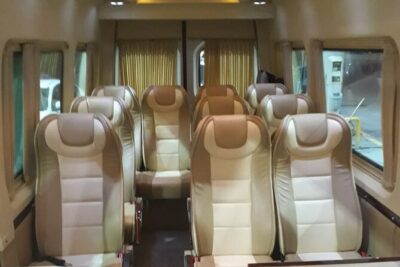
- Air-conditioned vehicle plus timely breaks when temperatures spike
- Ephesus included admission and a full guide-led walk through the main sights
- Lunch included, with drinks not included (bring water if you want extra)
- Selcuk area add-ons like Isa Bey Mosque and Hercules Gate, not just the famous blocks
- English-speaking professional guide (you may meet guides such as Ceyda, Filiz, Baris, or Umut Kurt)
Why this Ephesus tour fits well from Kusadasi
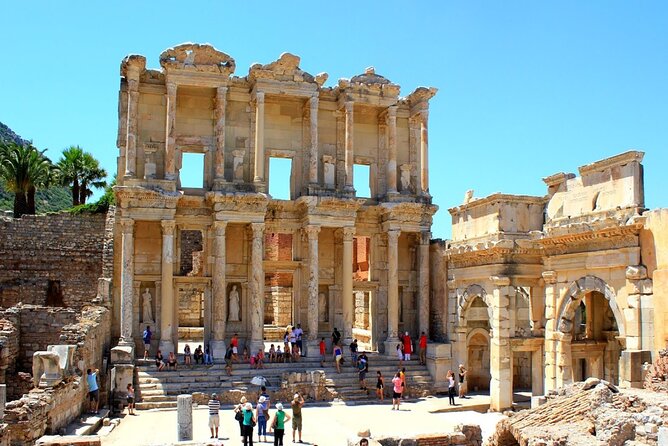
Ephesus is big. Even if you know the names—Celsus, Theatre, Artemis—it helps to have a route that makes sense on the ground. This tour is built for a single day, so you get the major highlights while still having time to notice details like street alignments, building materials, and how power and religion shaped the city.
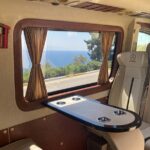
Another practical advantage: the pickup-and-drop-off setup from Kusadasi or Selcuk hotels means you can focus on the ruins instead of arranging transport. And because the ride is in a fully air-conditioned vehicle, the day starts more pleasantly, especially in summer.
You can also read our reviews of more tours and experiences in Kusadasi
Price and what $117.95 really covers
At $117.95 per person, the headline price looks straightforward, but the value is in what’s included. You’re getting a professional guide, lunch, insurance, and admission fees for the attractions on the program. You also get the convenience of a mobile ticket setup, which reduces the fuss at ticket points.
Drinks and personal expenses are not included, and tips for the guide/driver are also not included—so budget a little extra for that. In real terms, that means you’re paying once for the main structure of the day, then handling small extras on your own.
The tour also notes specific entrance ticket amounts (useful for planning): House of the Virgin Mary: 700 TRY and Ephesus entrance: 40 €. Even though admission fees are listed as included, those numbers tell you what ticketing can look like locally. For faster entry, the operator mentions paying the guide for skip-the-line tickets—handy if you hate waiting.
Pickup, timing, and the “small group” advantage
The tour runs about 4 to 6 hours, which is long enough to feel like you did something real, but short enough to stay sane. It’s also offered in English, and the group size is capped at 14 travelers, which tends to make the walk-through smoother.
Pickup is free from hotels in Kusadasi or Selcuk, and drop-off returns you to your hotel at the end. If you’re booking from nearby areas like Sirince or Ozdere, the tour notes extra pickup/drop-off charges (10 € from Sirince; 20 € from Ozdere, Davutlar, or Guzelcamli). That’s the one place where the price can quietly change—so double-check your starting town.
One more detail that matters for planning: it’s marked as having guaranteed return on time to cruise. If you’re doing this as part of a port day, that’s a big reason to choose a structured tour.
Stop 1: Ephesus Ancient City and the wow-factor route
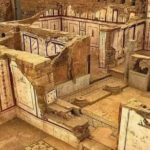
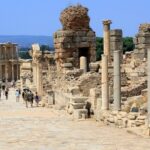
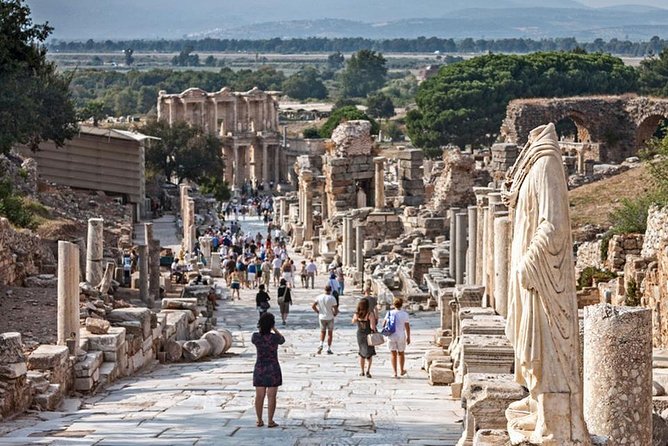
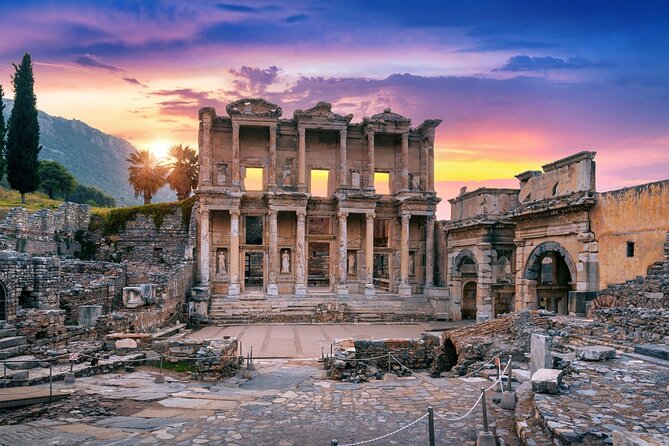
Ephesus isn’t just impressive because it’s old. It’s impressive because it was important. In the 1st century BC, it was described as the Roman Empire’s second-largest city, behind Rome, with over 250,000 people and a strong role as a harbor city. Standing among the remains, you can almost see the traffic: goods, visitors, officials, and the daily rhythm of a city built to impress.
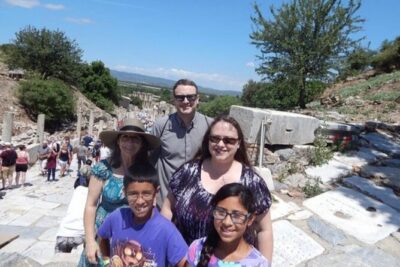
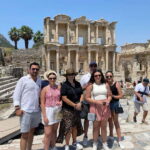
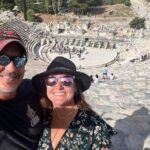
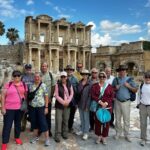
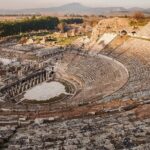
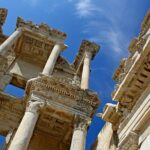
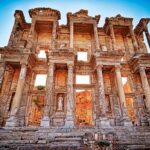
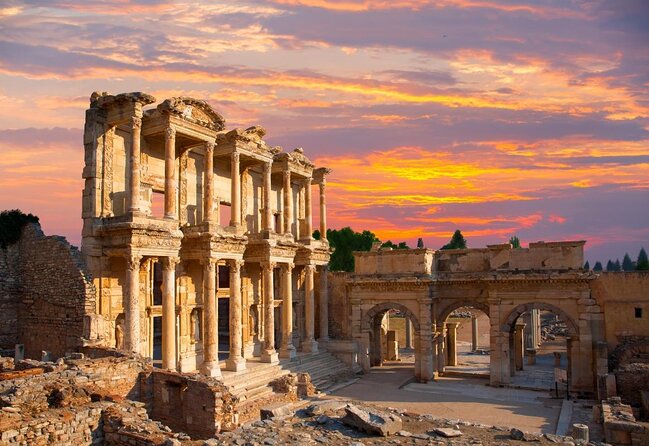
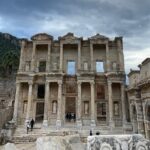
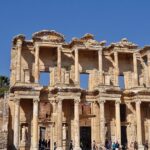
In your time here (about 2 hours), you’re guided through the layout so the monuments connect. You’ll get classic photo moments—especially the Library of Celsus views, the Great Theatre, and the Temple of Hadria. The guide’s value is turning those names into something you can visualize: who used the space, what the buildings were for, and how Ephesus used architecture to project authority.
A practical note: Ephesus is outdoors and uneven in places. The tour helps with air-conditioned transfers, but once you’re inside the ancient city, you’ll still be walking. Wear shoes that don’t slip and expect bright sun, even if the morning starts cool.
Stop 2: The Temple of Artemis (Artemision) and what’s left
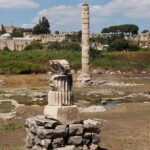
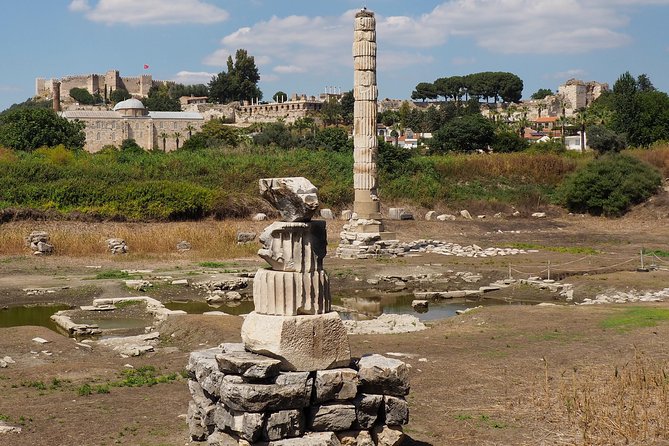
The Temple of Artemis—also called the Artemision or Temple of Diana—isn’t just a stop on a list. It’s tied to the idea of the Seven Wonders of the ancient world. On this tour, you spend about 30 minutes at the site.
What you should expect: the structure isn’t intact like a standing temple you might see today. Instead, you’re looking at the scale and setting, with the guide helping you understand what a “wonder” meant in that era. In other words, you’ll be filling in the missing parts with context, which is exactly why a guided stop helps.
This is a good palate cleanser after the heavier Roman city blocks. If you love mythology and religion, it also gives you a different lens on Ephesus—less government, more goddess worship and civic identity.
You can also read our reviews of more tours and experiences in Kusadasi
Stop 3: House of the Virgin Mary—meaning, setting, and logistics
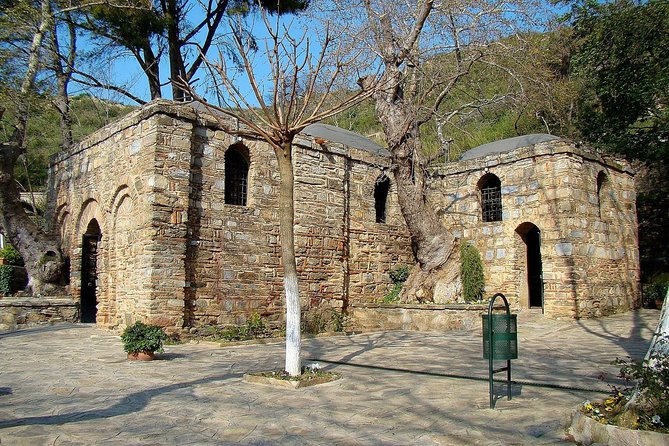
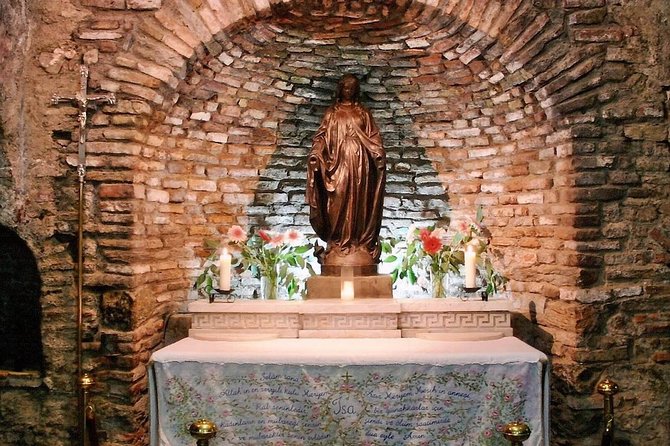
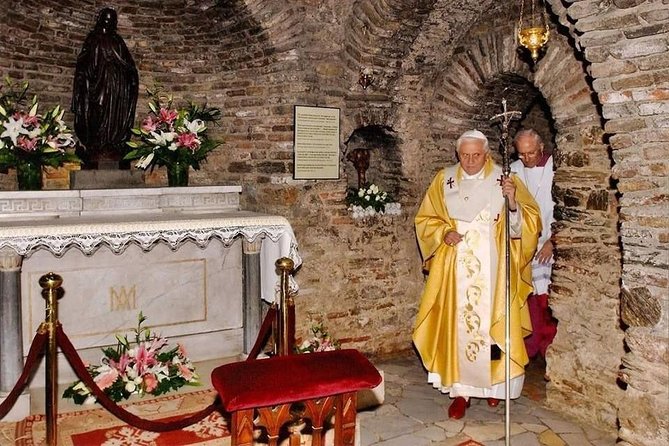
Next is the House of the Virgin Mary, where many people believe Mary spent her last years. You have about 1 hour, which is enough for the quiet feel of the place without turning it into a quick photo sprint.
Ticketing here can be a little tricky in practice, which is why the tour notes the entrance fee as 700 TRY and offers skip-the-line options if you pay the guide. Even if admission is included in the tour price, it’s still smart to ask what’s easiest on the day—especially if you’re tight on time.
Why this stop works on a full-day itinerary: it breaks the “only ruins” pattern. You get a calmer atmosphere and a different kind of historical interpretation—part tradition, part spiritual geography. If you’re someone who likes your history with a human dimension, this is usually the most memorable hour.
Stop 4: Isa Bey Mosque on the Ayasuluk Hills
The tour then heads to the Isa Bey Mosque, also spelled Isabey Mosque, built around 1374–1375. You get about 30 minutes, and the location on the Ayasuluk Hills near Selcuk gives the stop a sense of place beyond just another building.
This isn’t Roman. It’s Anatolian Beylik-era architecture, and that shift matters if you’re trying to understand the region over time. The guide can help you see what changes between eras—materials, design language, and the role of religious architecture in everyday life.
Because this stop is shorter, it’s also a good one if you’re tiring out. You see something meaningful without needing to stay there for hours.
Stop 5–7: Selcuk-area monuments that make the day feel complete
After the main Ephesus highlights, you keep moving through smaller but very “worth it” pieces. These shorter stops (some 15 minutes, one 10 minutes) are like the finishing touches that prevent the day from feeling like a checklist.
State Agora: politics in a meeting-place form
The State Agora is described as a Roman-period space built in the 1st century BC, used for business and governmental discussions rather than commerce. The guide’s role here is key: the Agora’s purpose isn’t always obvious if you’re only seeing stones.
The tour notes that excavation in the northeast corner revealed graves from the 7th–6th centuries BC, a stone-paved road, and an archaic sarcophagus of terra cotta. That’s a reminder that Ephesus wasn’t static—it had layers.
Hercules Gate: a famous relief with a backstory
The Hercules Gate sits toward the end of Curetes Street. It’s named for the relief of Hercules on the gate. The tour notes that the gate was brought from another place in the 4th century AD, while the relief dates back to the 2nd century AD.
That detail is the kind of thing you won’t get just from photos. It helps you understand that even “ancient” objects can have travel and change built into their story.
Vedius Gymnasium: education, mosaics, and the everyday elite
The Vedius Gymnasium is visible as you enter Ephesus from the south. It dates around the 2nd century AD and was funded by Publius Vedius Antoninus and his wife Flavia Papiana. They dedicated it to Artemis and the emperor Antoninus Pius.
The tour describes gymnasiums as schools for young people—art, sports, literature, drama, and speech. So you’re not just viewing a building; you’re seeing a system for training the future. The tour also notes architectural specifics like the entrance on the east, a palaestra courtyard surrounded by columns, and a hall with statues and mosaics.
Lunch and comfort: what to do with your food window
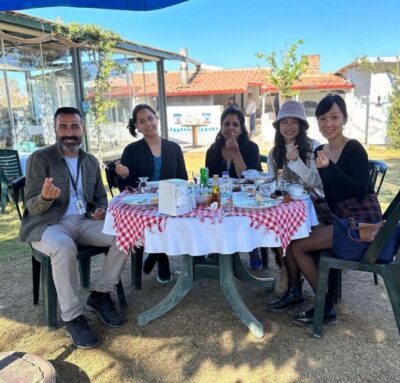
Lunch is included, and that matters more than it sounds. On a day when you’re outside and walking, a planned meal keeps your energy up so you don’t end up cranky at the last stop.
The one thing to remember is that drinks aren’t included. If you’re sensitive to heat, consider bringing water habits into your day: drink before you feel thirsty, then top up when you get your next break. The program also highlights air-conditioned time for relief during breaks, which is important on record-heat days.
This is also where the small group helps. With fewer people, it’s easier for the guide to manage timing so you’re not stuck waiting for the last person to finish lunch.
The guide experience: how the tour stays human
This tour is guided, and that’s the difference between seeing ruins and understanding them. Named guides associated with this experience include Ceyda, Filiz, Baris, and Umut Kurt, and the common thread in their approach is clear storytelling tied to architecture and daily life.
You’ll get the sense that someone is connecting the big Roman picture to the smaller details: why this road was laid out like this, what the theatre design says about public life, and how a gate relief can carry meaning long after its original placement.
A practical tip: use the guide’s early explanations to shape how you look at each site. If you catch what the place was used for, your photos and mental map come out better later.
Tips, tickets, and extra costs you should plan for
Even with admission fees included, there are a few money items to keep in mind:
- Guide and driver tips are not included
- Drinks aren’t included
- There may be extra charges for skip-the-line entry if you want faster access (the tour mentions paying the guide for that option)
- Pickup add-on charges apply if you’re not starting in Kusadasi or Selcuk (like Sirince or Ozdere)
If you want smooth sailing, I’d bring small cash or a card you’re comfortable using for optional extras. It keeps you from negotiating on the fly when the group is moving.
Who should book this Ephesus full day tour
This is a strong fit if you:
- want a tight, efficient day with the main Ephesus sights and a few Selcuk-area highlights
- appreciate guided context (you like history that explains itself)
- travel in warmer months and value AC transportation
- prefer a small group over large bus crowds
It may feel like a lot if you:
- want slower pacing and more time wandering without a set route
- get tired quickly from uneven walking and sun exposure
Should you book it
If your priority is to see Ephesus with less stress, this tour makes sense. You’re paying for structure: guide-led time, lunch, admission coverage, and air-conditioned comfort—all in a schedule that’s short enough to stay enjoyable.
For me, the decision comes down to this: can you handle a packed route for the payoff of seeing the big names (Celsus views, Great Theatre, Temple of Hadria) plus the quieter stops around Selcuk? If yes, book it. If you want long unstructured time in just one or two areas, you might be happier with a slower plan.
FAQ
What’s included in the tour price?
The tour includes a professional tour guide, a fully air-conditioned vehicle, lunch, insurance, and admission fees to all attractions listed on the program.
How long is the Ephesus tour?
The duration is approximately 4 to 6 hours.
Do you get hotel pickup and drop-off?
Yes. The tour includes free pick-up and drop-off from hotels in Kusadasi or Selcuk. If you’re booking from Sirince or nearby towns like Ozdere, Davutlar, or Guzelcamli, the tour notes extra charges for pickup and drop-off.
Is the tour offered in English?
Yes, it’s offered in English.
Are drinks and tips included?
No. Drinks are not included, and guide and driver tips are not included.
Can I cancel for a full refund?
Yes. Free cancellation is available up to 24 hours in advance of the experience start time for a full refund.