REVIEW · SELCUK
Kusadasi Shore Excursion: Private Full-Day Tour to Ephesus, Didyma and Miletus
Book on Viator →Operated by Fez Travel · Bookable on Viator
Three sites, one long day of ruins. This private Kusadasi shore excursion links Ephesus with Didyma’s Temple of Apollo and Miletus, so you’re not just ticking boxes—you’re seeing how the ancient Aegean worked.
I especially like the private guide attention. It makes the walking feel calmer, and it’s easier to learn what you’re looking at without fighting a loud group vibe.
The main drawback to plan around is cost and timing: entrance fees may not be included, lunch is an own-expense stop, and the visit order can shift based on the day’s schedule.
In This Review
- Quick highlights before you go
- Kusadasi shore pickup and the pace inside an air-conditioned minivan
- Miletus first: harbors, silt, and that huge Theater of Miletus
- Didyma’s Temple of Apollo: Medusa, oracle energy, and calmer crowds
- Ephesus: Library of Celsus, Great Theatre, marble streets, and baths
- Lunch stops, entry fees, and the real math on that $236.18 price
- Guide quality and crowd control: why names like Jun, Serdar Karakas, and Juan matter
- How to get the most out of your 7-hour ruins marathon
- Who should book this Kusadasi Ephesus–Didyma–Miletus tour
- Should you book this private shore excursion?
- FAQ
- How long is the private tour from Kusadasi?
- Is port pickup and drop-off included?
- Is this a private tour or shared with other people?
- Which sites are included in the day?
- Are entrance fees included?
- Is lunch included?
- What if my ship is delayed or the weather is bad?
Quick highlights before you go
- Private minivan with port pickup keeps the day efficient, with a worry-free plan to get you back to Kusadasi
- Miletus theater for 25,000 and the story of harbors choked by silt sets up the rest of your day
- Didyma’s Temple of Apollo stands out for its Medusa detail and the oracle-world atmosphere
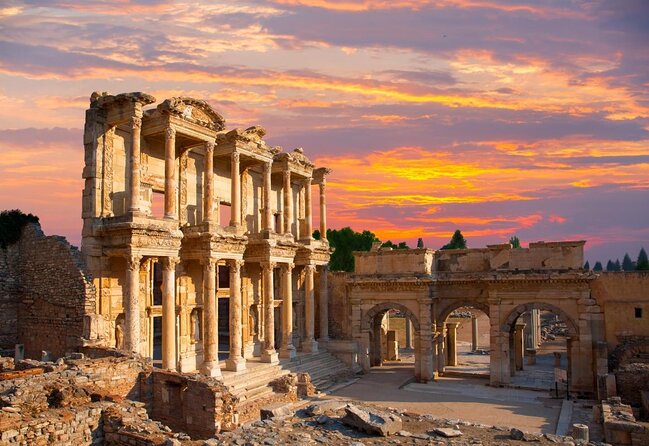
- Ephesus without the late-day crowd crush is the payoff: marble streets, baths, Library of Celsus, and the Great Theatre
- Guide quality matters here, and names like Jun, Serdar Karakas, and Juan show up with standout experiences
- Comfort and photo-friendly timing can make a difference, including front-seat options on the van when available
Kusadasi shore pickup and the pace inside an air-conditioned minivan
This tour is built for a cruise day: you meet your guide after your ship docks in Kusadasi, then you hop into an air-conditioned minivan for the drive between sites. Expect about 7 hours total, including transit and time on the ground. The private setup matters because you’re not waiting for others to find the bus, wrestle a map, or take a ten-minute “just one more photo” detour.
A practical win: you get port pickup and drop-off, so you’re not trying to coordinate taxi timing with a hard ship schedule. There’s also a worry-free promise that they’ll get you back to the port. If the unexpected happens and a ship is delayed, the plan can include transportation or a refund if you can’t make it.
Do note one thing that can affect your day: the order of stops can be modified on the spot. That sounds vague, but it usually means your guide can respond to traffic, ticket lines, or timing gaps rather than forcing a rigid route no matter what the day throws at you.
You can also read our reviews of more private tours in Selcuk
Miletus first: harbors, silt, and that huge Theater of Miletus
You start with Miletus, an ancient Greco-Roman city near the mouth of the River Meander. What makes this stop more than a “pre-Ephesus warm-up” is the harbor story: Miletus had four important coastal harbors, and it gradually declined when the river filled with silt. That one detail helps the ruins make sense. You’re not just looking at stone—you’re watching geography rewrite history.
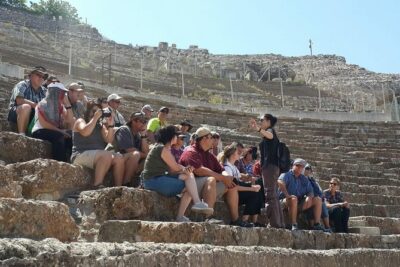
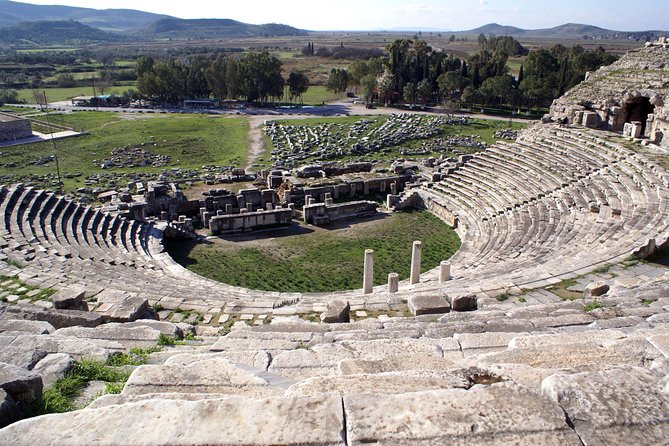
From there, you’ll see key monuments such as the Delphinium temple, plus bathhouse ruins and other remains tied to everyday Roman life. Then there’s the star: the Theater of Miletus, known for seating about 25,000 people. Even if you’ve seen ancient theaters before, this scale can hit differently when you’re picturing not just plays, but serious public events and gladiator spectacle.
Why I like putting Miletus early: it often feels less crowded than the headline site, and it gives you a chance to learn the “pattern” of Roman urban life—baths, gathering spaces, and public architecture—before the big Ephesus finale.
Didyma’s Temple of Apollo: Medusa, oracle energy, and calmer crowds
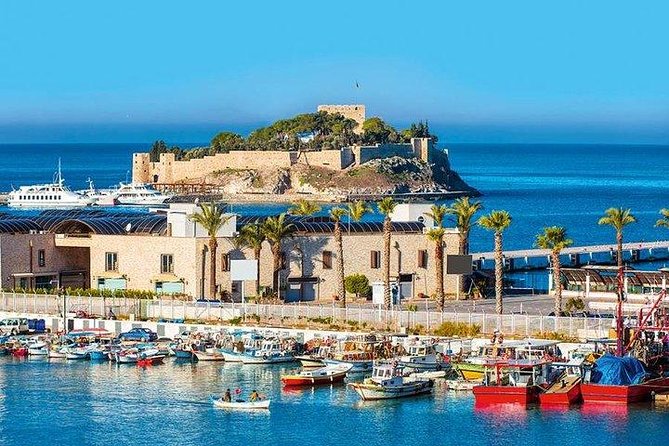
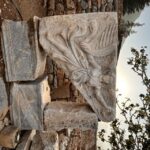
Next comes Didyma, home to the Temple of Apollo, one of Turkey’s most dramatic ancient religious sites. The temple is famous for its Greek oracle role—people came for guidance, not just sightseeing. When you enter, you’ll be looking at sculptural details like the chiseled head of Medusa, a detail that makes the whole place feel less generic and more personal.
You’ll also hear the site explained in a way that tries to recreate the atmosphere—how a huge sanctuary would have felt, not just what’s left behind now. That oracle connection is important. Delphi gets a lot of fame, but Didyma’s Apollo is part of the same cultural world, which helps you connect the dots across the region.
One big practical plus: Didyma can be a breather from the busiest crowds. Several guide styles focus on getting you there early in the day, and the result is often a more peaceful experience—more time to look, more time to ask questions, and fewer people constantly in your “right there” photo angle. For many cruise travelers, that calm is the difference between rushing and actually remembering the details.
A realistic note: Didyma is a long drive day from Kusadasi, and you’ll feel it in your legs. Bring shoes that don’t fight uphill or uneven ground, and you’ll enjoy this stop much more.
Ephesus: Library of Celsus, Great Theatre, marble streets, and baths
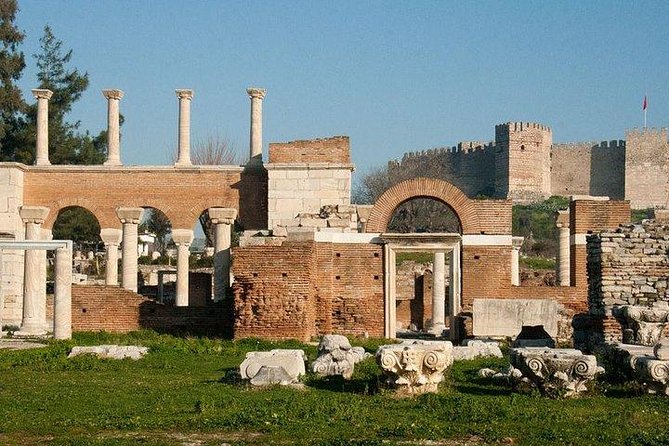
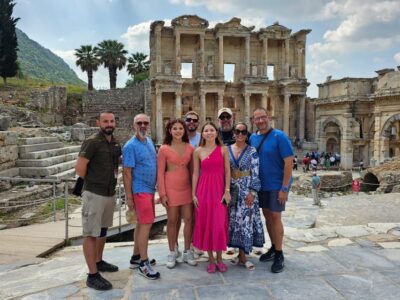
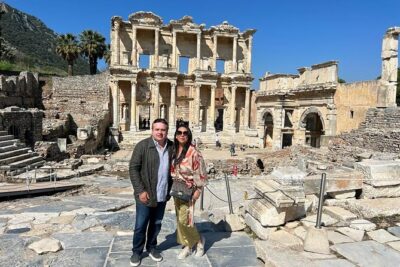
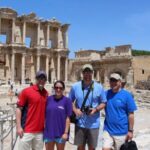
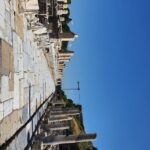
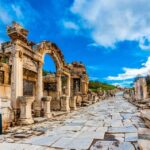
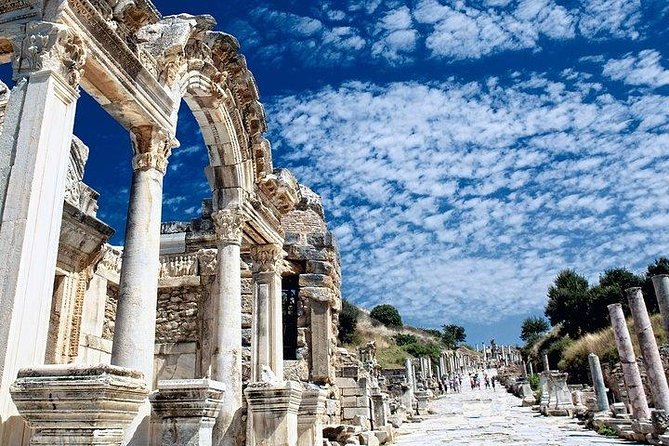
Then you reach the main event: Ephesus, often called one of the best-preserved classical cities in Turkey. This is the part of the day where you’ll feel like the ruins are speaking in a louder voice. You’ll walk along marble-covered streets lined with structures like bathhouses and shops—city life made stone.
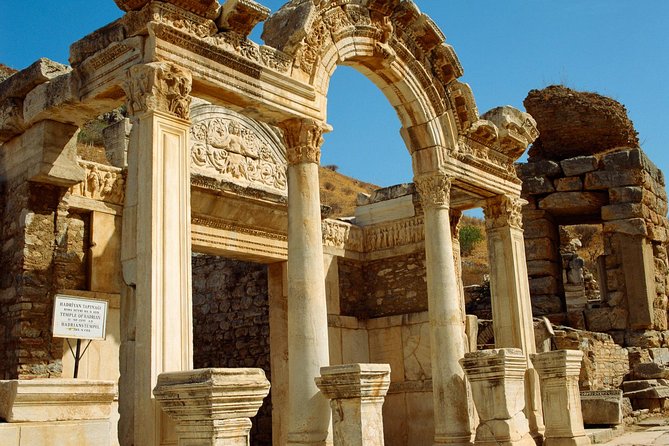
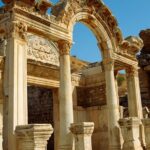
The entry point is memorable too: stepping through the Magnesia Gate is like crossing from modern tourism into an ancient urban grid. From there, your guide should help you connect the major monuments to how the city functioned. You’ll see highlights that include the Fountain of Trajan, the Odeon, and the Temple of Hadrian.
Two sights are often the photo magnets for good reason:
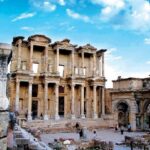
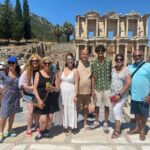
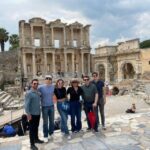
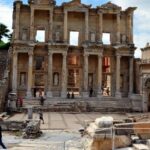
- The Library of Celsus: its facade is stunning even after centuries, and it anchors the “public knowledge” side of Roman culture.
- The Great Theatre: it’s tied to the famous moment of sermons by St Paul, and it once held about 24,000 attendees.
Here’s the value of a private guide at Ephesus: the park is large, and the ruins are dense. Without guidance, it’s easy to see a bunch of buildings and remember almost none of the story. With guidance, you get the “why” behind what you’re seeing—what people did there, how space was organized, and which features mattered most.
One timing trick I’d watch for: if your guide manages the day so you spend more actual time in Ephesus rather than driving between minor pull-offs, you’ll feel it. The best versions of this day get you a full Ephesus experience, not a “drive-by plus souvenirs” version.
Lunch stops, entry fees, and the real math on that $236.18 price
Let’s talk money like an adult. The listed price is $236.18 per person, for a private full-day itinerary with port pickup and drop-off plus a private air-conditioned minivan. That’s not cheap, but for many cruise days, private logistics can be the difference between stress and enjoyment. You’re also paying for more than car rides—you’re paying for a guide who can explain and time your day.
Now, check the fine print on entrance fees. The tour details say admission tickets are included in one spot, yet the “not included” list also says entrance fees are not included. That contradiction matters. Before you go, confirm whether site entry for Ephesus, Didyma, and Miletus is covered in your booking or if you’ll pay on arrival.
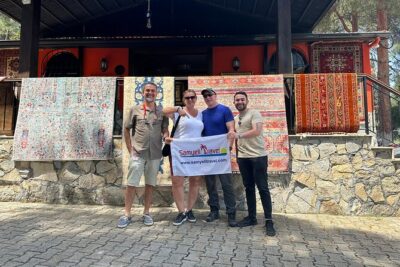
Lunch is another planning piece. Lunch is listed as own expense. Still, one past experience noted a free lunch at a carpet sales facility or crafts center—so you might encounter an included meal offer depending on how your day is arranged. Don’t rely on it without confirming, but do be prepared for a stop where shopping is part of the routine.
If you want this tour to feel like value, here’s what to aim for:
- Enough time on the ground at Ephesus to absorb it, not just pass through.
- Clear info from your guide so the monuments don’t blur together.
- A plan that doesn’t waste your port hours on long, unnecessary detours.
You can also read our reviews of more tours and experiences in Selcuk

Guide quality and crowd control: why names like Jun, Serdar Karakas, and Juan matter
In places like this, your guide is half the trip. The strongest versions of the day you’ll read about share a pattern: guides meet you right at the terminal, get you settled quickly, and manage time like they know your ship clock is ticking.
Names that have shown up with particularly strong days include Jun, Serdar Karakas, and Juan. People also reported the difference between a guide who’s simply moving you along and one who’s actually making the ruins intelligible. The passionate ones tend to focus on what matters most—temples, theaters, civic space, and how those pieces fit together.
You’ll also benefit from small, practical choices. One common win: early site timing to reduce crowd friction. Another: making it easier to get photos by letting you sit in a good spot in the van when available. Even a minor detail like that can help on a day where you’re doing a lot of looking and little resting.
There can be changes too. One experience included a request to swap plans so time could be rebalanced—like choosing a different church or house stop instead of one of the main Ephesus segments when it already felt familiar. Not every request can be accommodated, but private guidance increases your odds compared with a big group bus.
How to get the most out of your 7-hour ruins marathon
You’ll cover three major archaeological areas, which means your comfort matters. Here’s how to prepare so the day feels enjoyable instead of exhausting:
- Wear comfortable shoes you trust on uneven ground.
- Bring something for sun and a light layer; the day starts early and shifts between sheltered ruins and open areas.
- Plan to walk a lot. This is not a sit-and-watch tour.
- Keep your expectations realistic on a cruise day. Even when the tour is “full-day,” port time is always the boss.
If you’re sensitive to crowds, ask your guide how the timing is planned for Didyma and when you’ll be inside Ephesus. When the schedule hits right, those early-morning minutes can be the difference between a chaotic park and a calm, readable one.
Also: if you get a version where the guide manages more time at Ephesus instead of heavy extra stop-and-start segments, you’ll likely come away happier. Ephesus is big enough that you don’t need filler. You need focus.
Who should book this Kusadasi Ephesus–Didyma–Miletus tour
This tour fits best if you:
- Want a private experience that feels organized and calmer than group buses.
- Care about context, not just photos—especially for Ephesus monuments and Didyma’s oracle setting.
- Are short on time during a cruise and want a smart, single-day plan.
It’s also a good match for couples, small families, and older travelers who value comfort and clear pacing over maximal “quantity of stops.”
Consider skipping or adjusting expectations if:
- You want a super relaxed day with lots of free roaming and no schedule pressure.
- You’re not ready to handle potential confusion around entrance fees and lunch costs (confirm before you pay).
- You’re the type who hates change; the order of visits can shift depending on conditions.
Should you book this private shore excursion?
If your priority is seeing Ephesus, Didyma, and Miletus with a guide who can turn ruins into an understandable story, this is a strong option. The combination of private logistics, a focus on major monuments, and a route that can reduce crowd stress at key moments makes the higher price feel easier to justify.
I’d book it if you confirm two things first: whether entrance fees are truly included in your booking, and how lunch is handled on your exact schedule. Once those are clear, you’re set up for a day that feels like more than a checklist—three ancient worlds in one tight, memorable loop.
FAQ
How long is the private tour from Kusadasi?
The tour runs about 7 hours (approximately), covering all three archaeological areas plus transit.
Is port pickup and drop-off included?
Yes. The tour includes port pickup and drop-off in Kusadasi.
Is this a private tour or shared with other people?
This is a private tour/activity. Only your group participates.
Which sites are included in the day?
You visit Ancient City of Ephesus, Didyma (Temple of Apollo), and Miletus.
Are entrance fees included?
The details are inconsistent: one part lists admission ticket as included, while the “not included” section says entrance fees are not included. Confirm the inclusion of site entry with your booking before you go.
Is lunch included?
Lunch is listed as not included (own expense). Some days may include a stop where lunch is offered, but don’t assume it unless confirmed for your departure.
What if my ship is delayed or the weather is bad?
This tour uses a worry-free approach to help you get back to Kusadasi. If the tour can’t run due to poor weather, you’ll be offered a different date or a full refund, and if your ship is delayed and you can’t attend, you may be refunded under the terms.