REVIEW · EPHESUS TOURS
Private Guided Ephesus Tour With New Museum
Book on Viator →Operated by Ada Vegas Travel · Bookable on Viator
Ephesus feels big the moment you arrive. This private tour links Temple of Artemis and the top Ephesus highlights with a guide, plus Kusadasi port or hotel pickup so you can get moving fast.
What I like most is the time-saving skip-the-line approach. You’re not just walking ruins on your own—you’re following a plan that covers the gates, streets, theaters, and big photo stops without wasting hours waiting.
One thing to watch: the local meal piece can change. The idea is a home-style experience with a Turkish chef, but I’ve seen at least one report where it turned into a restaurant instead, after a last-minute mix-up with availability and confirmation.
In This Review
- Quick hits before you go
- Kusadasi to Ephesus: a day built for momentum
- Artemis Temple: starting with a Seven Wonders moment
- The Ephesus ruins walk: what you actually see and why it matters
- Magnesia Gate and the start of your downhill route
- Fountain and imperial stops: Trajan and Hadrian’s footprint
- Great Theater: where the city’s public voice lived
- Celsus Library: the best-preserved icon
- Odeon, Bouleterion, and the civic layer
- Marble Street and Arcadian Way: the “city you can walk”
- Double Church and big-theater area wrap-up
- Meryemana (Virgin Mary’s House): a quiet, meaningful stop
- Ephesus Museum: why artifacts help your ruins make sense
- The village-style shop stop and the Turkish chef meal plan
- Price and logistics: does $75 feel fair?
- How private pacing changes your Ephesus experience
- What could trip you up (and how to prepare)
- Who this tour is best for
- Should you book this private Ephesus tour?
- FAQ
- How long is the private Ephesus tour?
- Where does the tour start and end?
- Is the tour offered in English?
- Does the tour skip long lines?
- What’s included in the price?
- What is not included?
- Is it really private?
- Can I cancel for a full refund?
Quick hits before you go
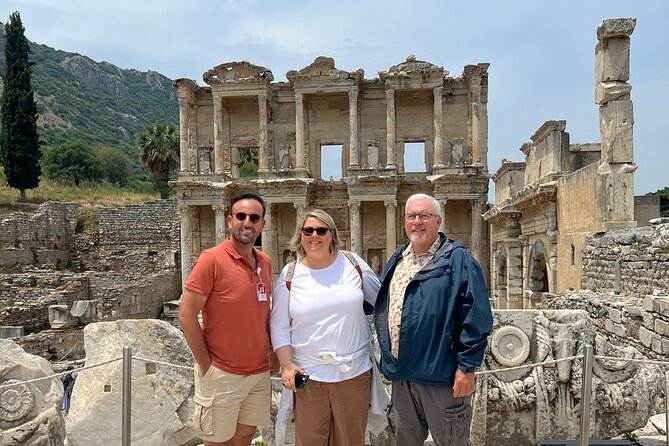
- Skip-the-lines with a private guide so your day stays on schedule
- Artemis Temple first (one of the Seven Wonders) to set the tone
- A focused Ephesus route with Celsus Library, Great Theater, Marble Street, and more
- Meryemana stop added after the main ruins walk
- Newer Ephesus Museum visit to place artifacts in context
- Kusadasi pickup/drop-off designed to fit cruise timing
Kusadasi to Ephesus: a day built for momentum
Kusadasi is a smart base for Ephesus because you’re not stuck with a half-day of transport just to reach the ruins. This tour is scheduled for about 5 hours, which means you can do a lot without turning it into a marathon.
The tour is private, so it’s only your group. That matters because Ephesus is spread out and the best parts are also the most crowded. When you have a guide who can steer pacing—when to pause, where to start, how to move—you spend more time seeing and less time stuck in bottlenecks.
You also get pickup and drop-off from the Kusadasi port or your hotel, with a promise to return without feeling rushed. If you’re on a cruise, that’s the kind of detail that helps your whole day feel calmer.
You can also read our reviews of more guided tours in Kusadasi



Artemis Temple: starting with a Seven Wonders moment
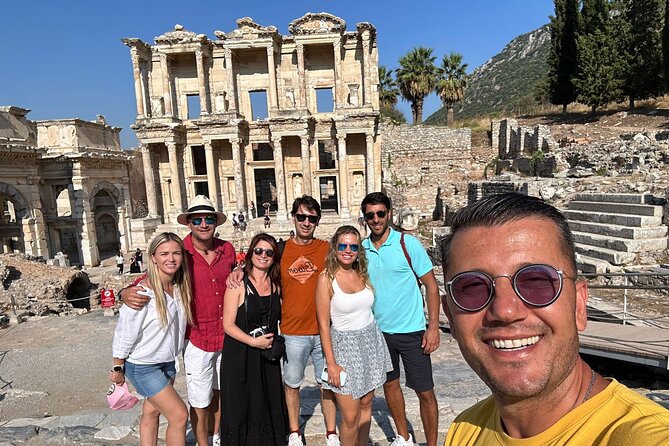
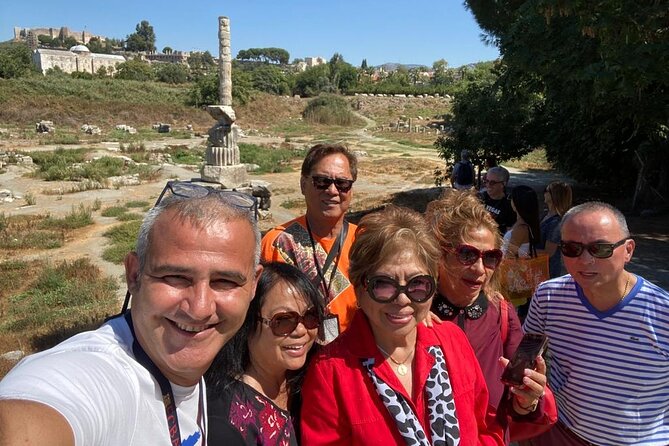
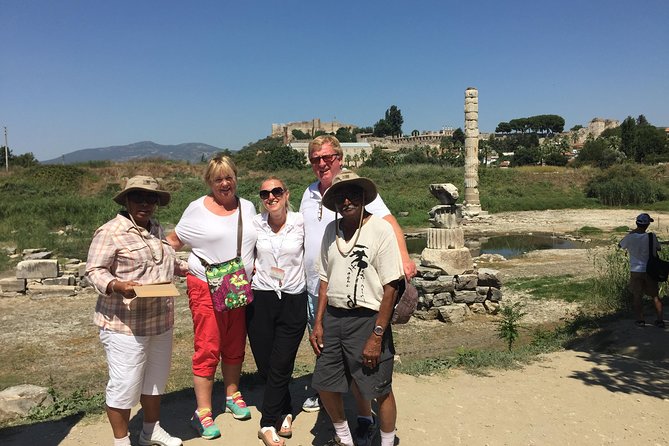
Your first major ancient stop is the Temple of Artemis, widely recognized as one of the Seven Wonders of the Ancient World. Even though the ruins are not intact like a whole building you can walk inside, the site still works as a powerful opening act.
Why it’s worth doing first: you get your bearings early. Artemis is a good mental warm-up before you hit Ephesus, because it gives you the religious and cultural backdrop for what you’re about to see. It also helps you understand the scale of what Ephesus became over time.
Practical tip: wear shoes you can walk in comfortably. The tour day is built around walking through uneven ancient surfaces and museum floors.
The Ephesus ruins walk: what you actually see and why it matters
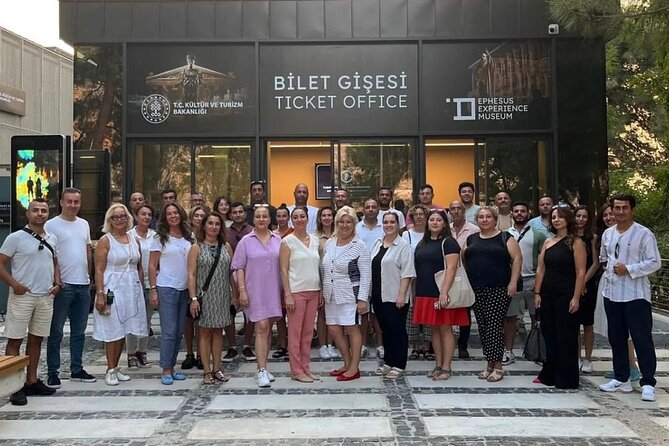
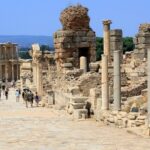
This is the heart of the day, and you’ll cover a long, downhill-style route through the Greco-Roman remains. The tour is designed to hit the “wow” buildings, but also the connectors—streets, gates, and key landmarks—so the ruins feel like a real city instead of random stones.
Here are some of the main stops you should expect:
Magnesia Gate and the start of your downhill route
You begin near the Magnesia Gate, then ease into the ruins with a guided flow that takes you past major public spaces. That downhill movement is more than just a walking route—it helps you feel how the city laid out civic life as you move through it.
Fountain and imperial stops: Trajan and Hadrian’s footprint
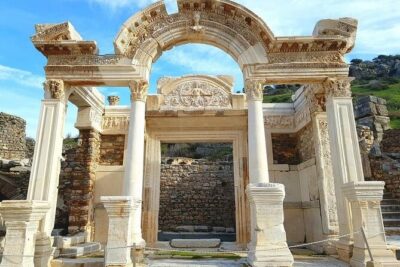
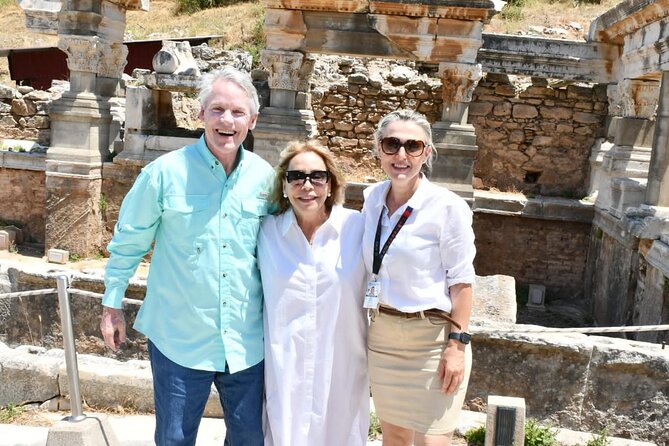
You’ll pass the Fountain of Trajan and the Temple of Hadrian. These are the kinds of sites that make Ephesus feel like a working political and ceremonial center, not just a tourist attraction.
You can also read our reviews of more private tours in Kusadasi


Great Theater: where the city’s public voice lived
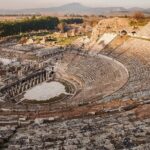
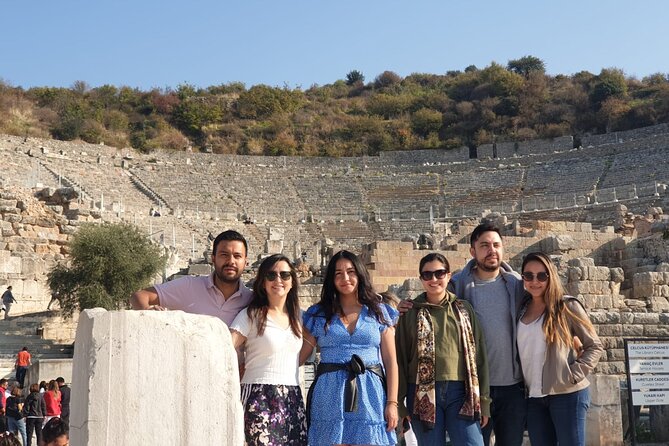
The Great Theater is one of those places where even if you know the basics, seeing it in person hits differently. It’s a reminder that crowds once gathered here for performances and public events—Ephesus was social, not quiet.
Celsus Library: the best-preserved icon
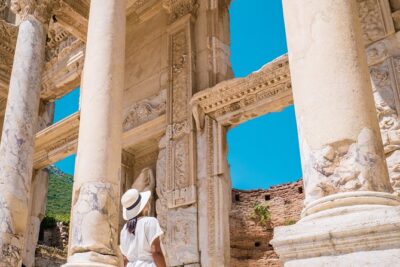
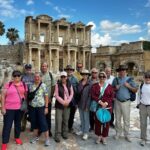
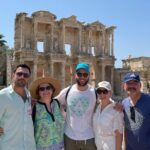
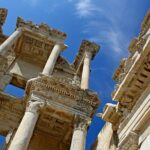
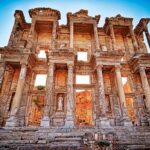
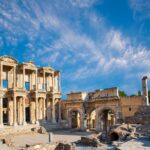
You’ll see the Celsus Library, often described as one of the most best-preserved buildings in the area. It’s a major highlight because it gives you a clear sense of architectural design and scale, even after centuries.
If you want good photos, don’t just shoot once from the first angle. The best views often come as you move along the guided route—especially where the street curves toward the bigger structures.
Odeon, Bouleterion, and the civic layer
The tour continues with the Odeon and the Bouleterion, plus sites like Serapis and Domitian. These stops matter because they fill in the civic layer: who met where, how decisions were made, and what functions different buildings served.
Marble Street and Arcadian Way: the “city you can walk”
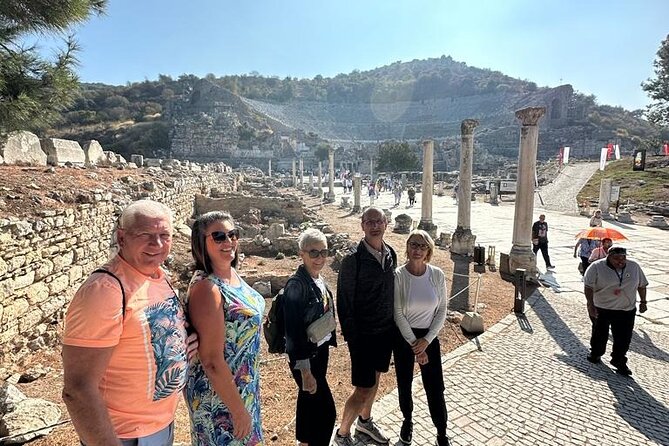
You’ll walk along Marble Street and also pass the Arcadian Way. This is one of my favorite kinds of ruins experience: you’re not only viewing big monuments, you’re moving along the same kinds of thoroughfares that shaped daily life.
Double Church and big-theater area wrap-up
You’ll reach stops including the Double Church, and your walking route keeps opening out with more recognizable landmarks. That’s a big reason Ephesus is so satisfying with a guide: you’re constantly getting orientation, so your brain builds a map while your feet do the work.
Meryemana (Virgin Mary’s House): a quiet, meaningful stop
After the main Ephesus ruins, the tour adds Meryemana, the Virgin Mary’s House. This is a different kind of stop than the theater-and-library circuit.
Why it works in the middle or later part of the day: it gives you a pause from ruins architecture and history-heavy sites. You’re switching to a more spiritual and reflective location, and it often feels like a reset before the museum.
If you prefer a day that balances major monuments with a human, personal scale, this stop helps you get that balance.
Ephesus Museum: why artifacts help your ruins make sense
Your final structured stop is the Ephesus Museum. Even if you’ve seen photos of Celsus or the gates, museums are where the pieces start to explain the story.
A key advantage of this order is timing. Walking through the city first gives you the physical layout in your mind. Then you walk into a museum to connect what you saw in stone to what’s preserved as objects—making your visit feel less like viewing and more like understanding.
This is also a relief stop if you’re doing the full ruins circuit. Your feet will appreciate a slower pace for a bit.
The village-style shop stop and the Turkish chef meal plan
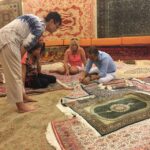
After Ephesus, your guide takes you to a local village shop from the village market. The point here is simple: you’re not just in ancient sites the whole time. You get a taste of everyday local shopping energy, even if it’s brief.
Then comes the food portion. The tour description emphasizes an authentic local experience with a Turkish chef at their home, and that would be the kind of experience that can add a genuine memory beyond photos.
Here’s the honest caution: a published account I saw described the chef-home plan switching to a restaurant after a last-minute scheduling scramble tied to confirmation issues. I don’t know how often this happens, but it’s enough to take seriously.
My practical advice: when you book, confirm what you’ll actually do for the meal component that day. Ask if it’s a chef-at-home setup or a restaurant stop, and whether that’s guaranteed in writing.
Price and logistics: does $75 feel fair?
At $75 per person for about 5 hours, this is positioned as a mid-range private tour. The value isn’t just the guide—it’s what the guide prevents.
You’re paying for:
- Hotel/port pickup and drop-off from Kusadasi
- Private pacing so your group stays together
- A plan that includes the core Ephesus highlights, plus Artemis and Meryemana
- A promised skip-the-long-lines benefit
- Transport in an air-conditioned minivan
Entrance fees are not included, and drinks and lunch aren’t included either. So your total day cost depends on what you decide to spend inside. Still, for many people, the skip-the-line angle plus the focused route makes this cost feel reasonable—especially if you’re on a cruise and want your time protected.
Departure times are flexible during the day, which helps you match your energy level to the sites. (Early is often easier for crowds, but you’d choose based on your ship schedule.)
How private pacing changes your Ephesus experience
Ephesus is famous, but it’s also easy to feel rushed. When you’re in a shared group, it can turn into a checklist: see, move, repeat, then sprint back to the bus.
A private setup changes that. You’re more likely to get:
- Better orientation at key junctions like gates and street sections
- More time at major photo anchors like Celsus Library and the Great Theater
- A steadier walking rhythm that fits your group
And because the tour is built as a single connected day plan, you’re less likely to waste time figuring out the route between far-apart ruins.
What could trip you up (and how to prepare)
Based on the tour details and one cautionary account I saw, here are the main issues to plan around:
1) Confirmation and last-minute communication
In at least one situation, the operator needed to scramble for a guide after confirmation didn’t arrive as expected. That’s not something you can fully control, but you can reduce risk by staying reachable (phone/WhatsApp) the night before and day-of.
2) The meal component
If the chef-at-home piece is important to you, confirm it clearly in advance. The same tour concept may be executed differently depending on availability.
3) Walking time
Even though the tour is around 5 hours, Ephesus is not a sit-every-10-minutes outing. Bring comfortable shoes and plan for some uneven ground.
Who this tour is best for
This works especially well if:
- You want a focused route across Ephesus without studying maps
- You care about seeing major landmarks like Celsus Library and the Great Theater efficiently
- You’re on a cruise or tight schedule and want a return that isn’t stressful
- You’d enjoy adding Meryemana and a museum stop instead of only ruins
It might be less ideal if:
- You’re mainly interested in a long, unstructured walk and don’t want any fixed itinerary flow
- You dislike the idea of schedule changes for the meal portion and won’t tolerate substitutions
Should you book this private Ephesus tour?
If your top goal is a well-run private day—Artemis Temple, the main Ephesus highlights, Meryemana, and the Ephesus Museum—this is a strong option for your money. The pickup/return plan from Kusadasi and the promised skip-the-lines benefit are exactly the kind of value that matters when your time is limited.
My “yes, with one step” recommendation:
- Book it if you like guided clarity and want to hit the most important ruins in one smooth day.
- Before you go, double-check the meal plan wording (home chef vs restaurant) and make sure you have a reliable way to confirm last-minute details.
If you can do that, you’re set up for a memorable Ephesus day that feels organized instead of chaotic.
FAQ
How long is the private Ephesus tour?
It’s listed at about 5 hours.
Where does the tour start and end?
The tour offers pickup and drop-off from Kusadasi port or your hotel, with a guarantee you’ll return on time.
Is the tour offered in English?
Yes, it’s offered in English.
Does the tour skip long lines?
Yes. It’s described as guaranteed to skip the long lines.
What’s included in the price?
Included items are a professional guide, hotel/port pickup and drop-off, private tour setup, and transport by air-conditioned minivan.
What is not included?
Entrance fees, drinks, and lunch are not included.
Is it really private?
Yes. It’s a private tour/activity, and only your group participates. A minimum of 2 people per booking is required.
Can I cancel for a full refund?
Yes. Free cancellation is offered up to 24 hours in advance for a full refund.