REVIEW · EPHESUS TOURS
Private Halfday Ephesus Tour with Temple of Artemis Tour
Book on GetYourGuide →Operated by AZURE VOYAGE TOURISM · Bookable on GetYourGuide
Ephesus hits fast, in the best way. What makes this half-day work is the private, English-speaking guidance that turns scattered ruins into a clear story, plus a smart first stop at the Temple of Artemis remains. I also love the smooth, door-to-port style setup. The one real drawback is that you’ll still need to pay admission fees on the day, since they’re not included in the tour price.
You start in Kusadasi (port or hotel), ride there in a non-smoking air-conditioned vehicle, and return with enough time left to explore the area on your own. At a 5-hour pace, you won’t see everything in the whole site, but you’ll see the monuments that make Ephesus feel real. Just be ready for uneven ground and lots of walking if you’re not used to archaeological sites.
In This Review
- Key Highlights Worth Knowing Before You Go
- Meeting in Kusadasi: Where Your Tour Actually Starts
- The Drive to Ephesus: Scenery Time and a Quick Reset
- Temple of Artemis Ruins: The Seven-Wonders Connection
- Ephesus Was Built on Stories: Amazons, Hittites, and Real Evidence
- Odeon, Roman Baths, and the Parts Most People Skip
- Ephesus Highlights: Celsus Library, Hadrian’s Temple, Great Theater, Trajan’s Fountain
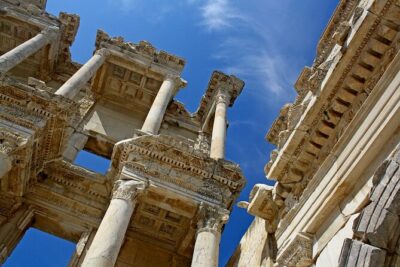
- Celsus Library: When Stone Looks Like a Promise
- Hadrian’s Temple: Power in Dedicated Form
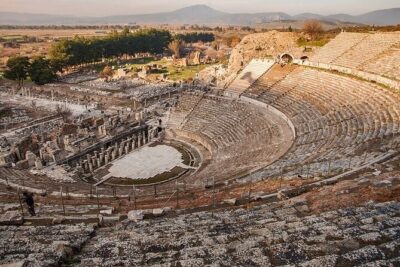
- Great Theater: The Sound-and-View Machine
- Trajan’s Fountain and the In-between Details
- Tickets and Time: The One Item You Should Plan For
- What to Bring (and What Not to Bring)
- Price and Value: Does $213 Make Sense for 5 Hours?
- Who This Tour Fits Best (and Who Should Consider Another Option)
- Should You Book This Private Ephesus Tour With the Artemis Stop?
- FAQ
- Where is the meeting point at Kusadasi Port?
- Can I be picked up from my hotel instead of the port?
- How long is the tour?
- Is this a private tour?
- Is the guide English-speaking?
- Are admission fees included in the price?
- Do you skip the ticket line?
- How do I pay for the entrance tickets?
- Does the tour run in bad weather?
- What should I bring, and is there anything I can’t bring?
- Can I cancel and get a refund?
Key Highlights Worth Knowing Before You Go
- Skip-the-line entry help: Your guide has pre-paid skip-the-line tickets, so you spend more time looking up than waiting.
- Artemis ruins first: You get the Seven Wonders connection before you switch gears to Ephesus itself.
- A guide who makes layout make sense: Stops include the Odeon, Roman Baths, Celsus Library, Hadrian’s Temple, Great Theater, Trajan’s Fountain, and more.
- Private, paced-for-you experience: It’s not a cattle-call format, so the guide can keep things moving at your rhythm.
- Comfort-focused transport: Transfers plus parking fees are handled, and the vehicle is air-conditioned and non-smoking.
- Rain or shine: The tour runs in bad weather too, so plan on flexible layers.
Meeting in Kusadasi: Where Your Tour Actually Starts
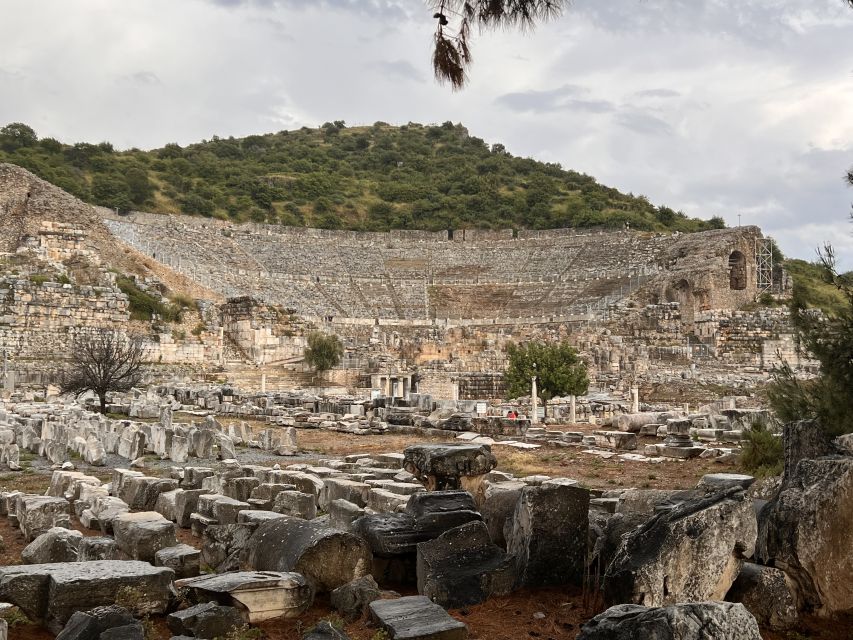
This tour is built around an easy pickup, which matters in Kusadasi because the port area can feel like a small city of gates, signs, and foot traffic.
You’ll meet your guide in front of the MAIN GATE at Kusadasi Port, at the passenger exit gate at the terminal. If you’re coming from your hotel in Kusadasi (or Selcuk), the meeting point is your hotel or the main gate area—basically, you shouldn’t have to figure out the whole logistics maze yourself.
One helpful detail: if you booked within the last 12 hours, the guide may meet you at the first security point after the main gate (outside). If that happens, walk through to the city center after the passenger exit gate, then find the main gate. And if you can’t find your name on arrival, there’s a local phone number to call—so you’re not left standing there guessing.
Practical tip: wear comfortable shoes even before you reach Ephesus. The day starts with walking at the port, then ramps up once you’re on site.
You can also read our reviews of more private tours in Kusadasi

The Drive to Ephesus: Scenery Time and a Quick Reset
The tour includes land transportation by an air-conditioned, non-smoking vehicle. That’s not just a comfort detail. It changes how you experience a short tour, because you arrive at Ephesus fresher, not overheated and already tired from a long day of travel.
There’s also some downtime built in. The route includes en-route scenery, and the guide may include time for shopping opportunities on the way back toward Kusadasi. That’s useful if you want a chance to grab small souvenirs without turning the whole day into an errand run.
You’ll also travel out to the country before the first major stop. If you’ve only seen Ephesus in photos, this is a nice mental switch. You’re going from modern coastline bustle to a landscape where Roman and Hellenistic architecture still shapes the view.
Temple of Artemis Ruins: The Seven-Wonders Connection
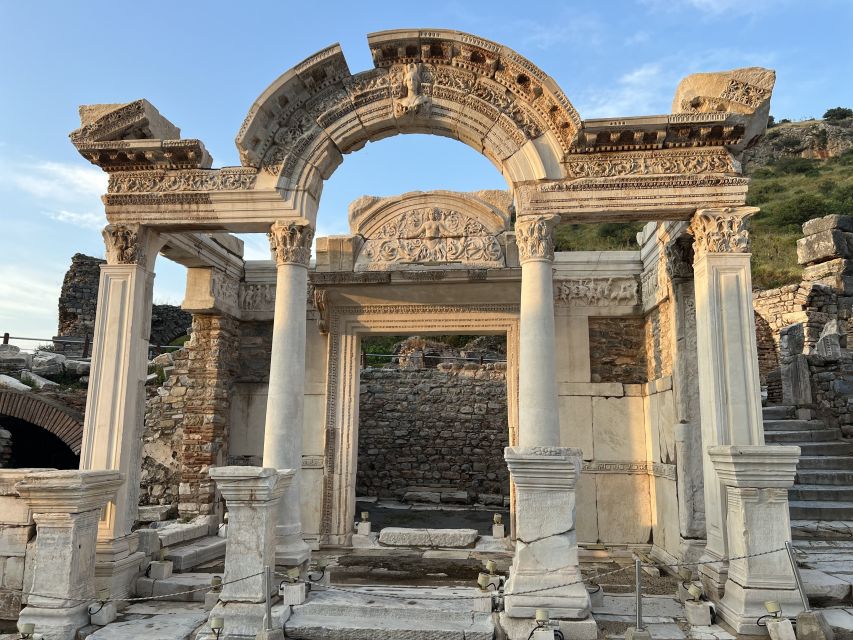
Before Ephesus, you’ll see the ruins of the Temple of Artemis—one of the ancient Seven Wonders. Even if you know the legend already, this stop helps you understand something important: Ephesus wasn’t just a city of buildings. It was a magnet for religion, trade, and power.
At the Artemis ruins, you’re basically looking at “the idea made physical.” The temple itself isn’t intact, so don’t expect a fully standing monument like you might see at other sites. But the payoff is in context. You get the sense of scale and significance, then you walk into Ephesus with the right mental reference point.
One smart thing here: doing Artemis first prevents the main Ephesus ruins from feeling like random stone rooms. When you start with the Wonder connection, everything else clicks faster.
If you’re taking photos, keep an eye on lighting and wind. The ruins are open-air, and you’ll want your hat and sunglasses working for you.
Ephesus Was Built on Stories: Amazons, Hittites, and Real Evidence
When you talk about Ephesus, you quickly hit stories about origins. Ancient historians believed it was founded by the Amazons. Modern scholarship leans toward a different earlier identity, often linked to a Hittite city called Apasas.
Why bring this up on a tour? Because it helps you read the site with the right attitude. Ephesus isn’t just about Roman marble. It’s about layers—people coming, rebuilding, and reusing space over time. A good guide ties those layers together so you don’t feel like you’re walking through disconnected ruins.
And that’s exactly what you want from a short half-day. You want the “why it exists” story in your head, not just a list of what’s where.
Odeon, Roman Baths, and the Parts Most People Skip
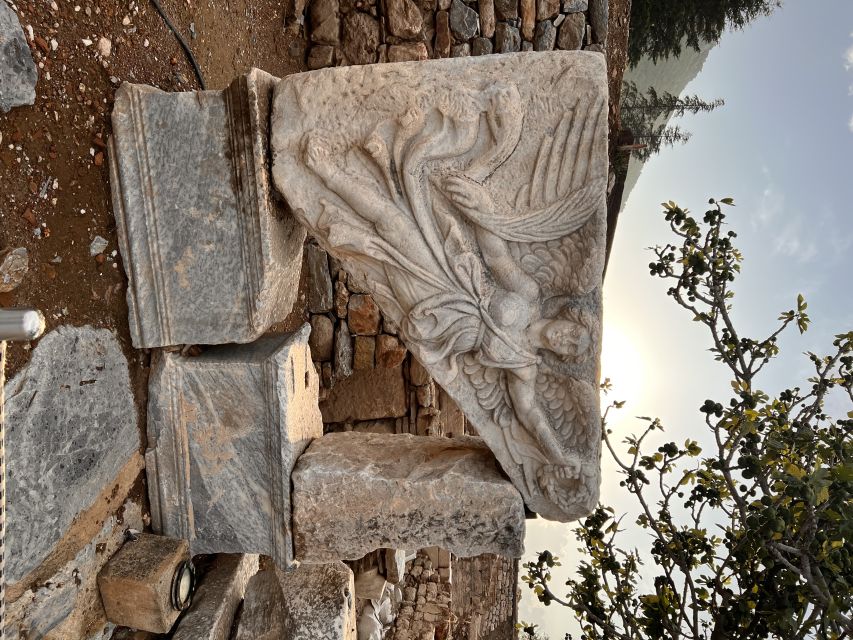
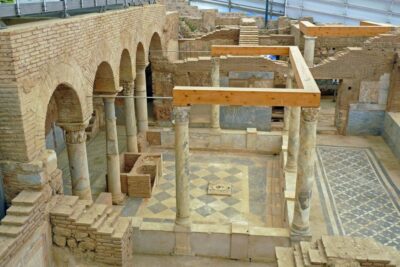
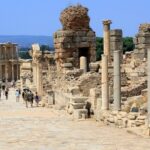
Once you’re in Ephesus, your guided route includes major structures beyond the headline photo spots. You’ll see the Odeon, where the advisory council held meetings, plus the Roman Baths area.
These stops do two things. First, they show Ephesus as a functioning civic city—not only a theatre-and-temple stopover. Second, they help you understand how Romans used architecture for daily life and governance.
The Odeon is a reminder that politics and culture lived in the same urban spaces. The baths reinforce that daily routines were built into the city’s design. When you later stand in front of Celsus Library or the Great Theater, you’ll notice the difference between monuments built for public spectacle and structures built for everyday power and comfort.
Short-tour mindset: don’t rush through these “supporting” stops. In a 5-hour tour, the guide is choosing them for a reason. Take a minute at each one to look for scale—then look for the details your guide points out.
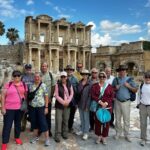
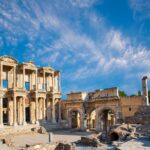
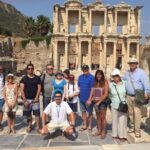
Ephesus Highlights: Celsus Library, Hadrian’s Temple, Great Theater, Trajan’s Fountain
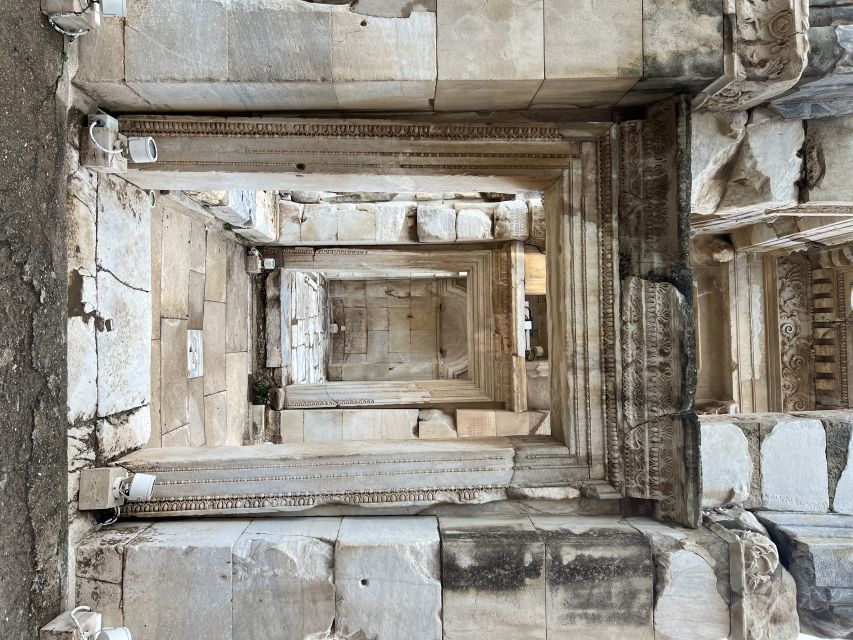
This is the heart of the experience. Your guide shows you the Ephesus classics that make people say Ephesus is one of the best-preserved ancient cities in the world.
Celsus Library: When Stone Looks Like a Promise
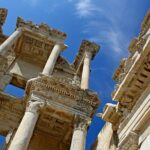
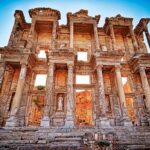
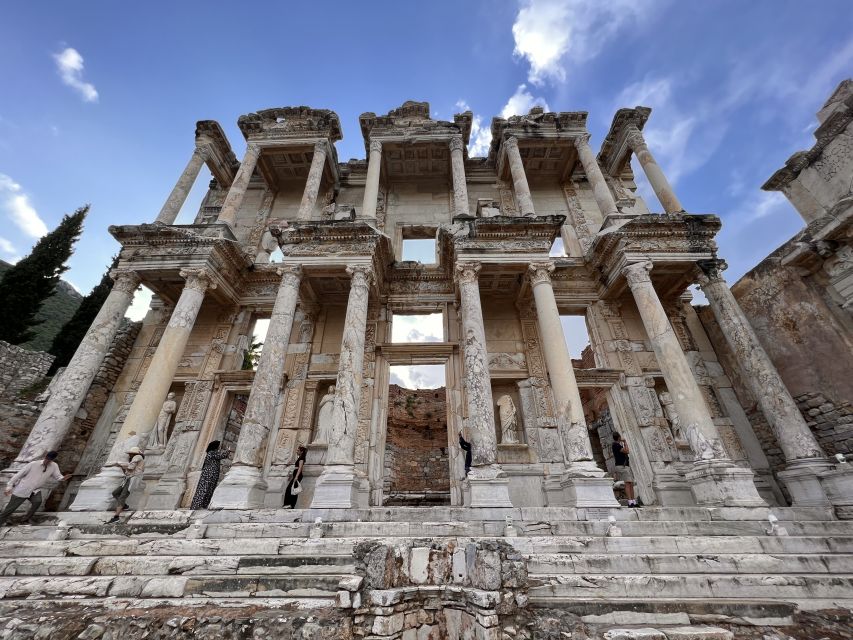
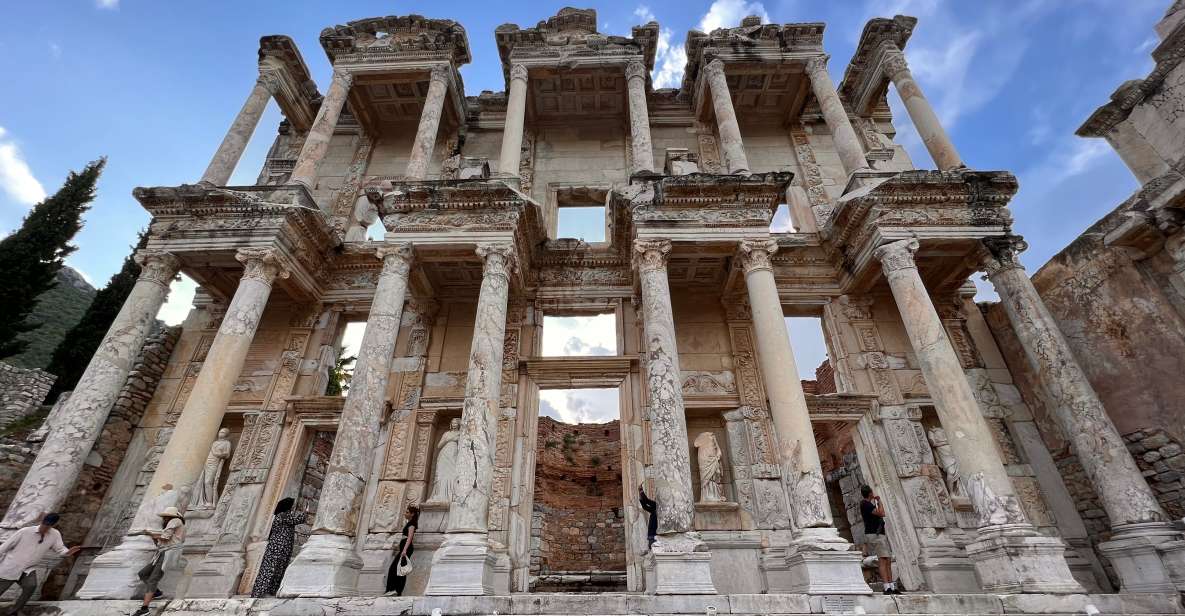
Celsus Library is one of those places where your brain starts reading the building like it’s alive. It’s not only impressive because it’s large. It’s impressive because it communicates function—knowledge, status, and public importance.
I love Celsus because it teaches you how ancient cities branded themselves. This wasn’t a random structure. It was a statement. With the right explanation from a guide, you understand why the façade matters and why the library’s layout was designed to be seen.
Hadrian’s Temple: Power in Dedicated Form
You’ll also see Hadrian’s Temple. Temples in Roman-era cities often signaled more than worship; they signaled authority and imperial presence. Standing here helps you understand how architecture served politics.
Even if you’re not the type who memorizes names, your guide’s route helps you connect Hadrian to the larger Roman pattern: monumental buildings meant to last, meant to impress, meant to say Rome is here.
Great Theater: The Sound-and-View Machine
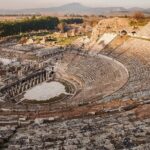
The Great Theater of Ephesus is one of the most memorable parts of the whole day. The theatre’s layout makes it easy to understand how public life worked. People gathered. Performances happened. Announcements mattered. The seating arrangement wasn’t just for comfort—it shaped the experience.
If you’ve ever wondered why ancient theatres were so important, this stop answers it through design. The guide’s pointers keep you from staring at the seats without understanding why they’re placed that way.
Practical tip: bring a hat. The sun can hit hard even when you’re not expecting it.
Trajan’s Fountain and the In-between Details
You’ll also see Trajan’s Fountain and more monuments and ruins along the way. These “in-between” stops are often where the guide helps you see patterns—how water, public space, and status blended into city life.
In a tight timeline, I appreciate when a tour doesn’t only show the obvious photo points. Trajan’s Fountain is a great example. It rounds out the day by reminding you that Ephesus was about infrastructure, not just spectacle.
Tickets and Time: The One Item You Should Plan For
Here’s the logistics detail that affects your day: admission fees.
The admission fee for Ancient Ephesus is listed as 40 EURO per person. That fee is not included in the tour price. Your guide has pre-paid for skip-the-line tickets to avoid long ticket queues, but the entry tickets themselves are paid directly to the guide in cash in euros, dollars, or Turkish Lira.
So the value question becomes: are you paying for convenience and guidance? In this case, yes. You’re paying the tour price for the guide, transfers, transportation, and ticket-line help. Then you still pay the site admission because that’s how this kind of archaeological ticketing works.
If you want a smooth start, carry the cash you plan to use in advance. Also, note that you’ll want to keep your phone charged. You’ll probably want photos and quick reference for your memories later.
What to Bring (and What Not to Bring)
For a day built around walking and looking up, the list is simple. Bring:
- Comfortable shoes
- Sunglasses
- Hat
- Camera
- Passport (a copy is accepted)
- Charged smartphone
What’s not allowed:
- Tripods
That matters if you travel with photo gear. If you rely on a tripod, you’ll need to plan for handheld shots or use a different approach for steady photos.
Weather note: the tour takes place rain or shine. That means you should wear layers and be ready for wet stone and slick paths if it rains.
Price and Value: Does $213 Make Sense for 5 Hours?
At $213 per person for about 5 hours, the key is what’s included versus what you still need to pay.
Included:
- Professional English-speaking guide
- Transfer service from Kusadasi Port/Hotel
- Air-conditioned, non-smoking vehicle
- Car park fees
Not included:
- Admission fees (40 EURO per person for Ancient Ephesus)
- Personal expenses
So you’re basically paying for a private guided experience plus the “get there, get inside, get out” support. In places like Ephesus, that support matters because the site is large and easy to misread without context. A strong guide keeps your time from disappearing into confusion.
The other value factor: this is private. That means you’re not competing with a group that wants to sprint ahead for selfies. With a private format, you get a better chance to slow down where you actually care—like Celsus Library or the Great Theater—and still cover the key stops.
Based on the strong satisfaction ratings (4.7 out of 5), the experience seems to deliver on the basics people care about: smooth transport and clear explanations during the walk.
Who This Tour Fits Best (and Who Should Consider Another Option)
This private half-day works best if you want:
- A focused highlights route without spending your whole day planning
- Clear guidance in English
- A smooth transfer from Kusadasi port or your hotel
- Skip-the-line ticket help
It’s not suitable for people with mobility impairments, mostly because archaeological sites have uneven ground and involve walking between monuments.
If you’re the type who likes history but also hates spending hours stuck at ticket lines, this is a good match. If you’re a hardcore architecture nerd who wants to measure everything down to the last column, you might wish you had more time. For most people, five hours hits a sweet spot.
Should You Book This Private Ephesus Tour With the Artemis Stop?
I’d book it if you want a half-day that feels organized, not rushed. The Artemis stop gives you the big-picture “Seven Wonders” context, then Ephesus gives you the readable highlights: Celsus Library, Hadrian’s Temple, Great Theater, Trajan’s Fountain, plus civic and daily-life structures like the Odeon and Roman Baths.
It’s also a solid value move if you’re traveling from Kusadasi and don’t want to fight transportation and entry logistics on your own. You’re paying for guidance, transfers, and convenience, then paying the site admission separately.
The only reason not to book is if you strongly prefer independent roaming or if walking on uneven ground will be an issue for you. Otherwise, this is a practical way to get real Ephesus without turning your day into a stressful checklist.
FAQ
Where is the meeting point at Kusadasi Port?
Your guide meets you in front of the MAIN GATE at the passenger exit gate of the Kusadasi Port terminal. If you booked within the last 12 hours, they may meet you at the first security point after the main gate (outside).
Can I be picked up from my hotel instead of the port?
Yes. The guide can meet you in front of the main gate of Kusadasi Port or from your hotel in Kusadasi (the meeting is also noted for Selcuk as an option).
How long is the tour?
The tour duration is 5 hours.
Is this a private tour?
Yes, it’s a private group tour.
Is the guide English-speaking?
Yes. The guide provides a live tour in English.
Are admission fees included in the price?
No. Admission fees to the attractions are not included. The Ancient Ephesus admission fee is listed as 40 EURO per person.
Do you skip the ticket line?
Yes. The tour includes skip-the-ticket line help. Your guide has pre-paid skip-the-line tickets.
How do I pay for the entrance tickets?
Your guide can accept cash payment for entry tickets in euros, dollars, or Turkish Lira.
Does the tour run in bad weather?
Yes. The tour takes place rain or shine.
What should I bring, and is there anything I can’t bring?
Bring comfortable shoes, sunglasses, a hat, a camera, a passport (a copy is accepted), and a charged smartphone. Tripods are not allowed.
Can I cancel and get a refund?
Yes. You can cancel up to 24 hours in advance for a full refund.
If you tell me your travel month and whether you’re starting from the port or a hotel, I can suggest how to time your photos and breaks so the 5 hours feel comfortable.