REVIEW · EPHESUS TOURS
Tailor-Made Private Ephesus Tour with Local Experiences
Book on Viator →Operated by OTTI Travel · Bookable on Viator
Ephesus can be a long day. This private tour keeps it manageable with skip-the-line tickets and a guide who adjusts to your pace, not the other way around. I like that it mixes big-ticket ruins with quieter places (like the Virgin Mary House), so the day feels more human than checklist-y.
What I also like is the comfort: a brand-new A/C Mercedes Vito with pickup and drop-off, plus a satisfying local lunch. The main drawback to plan for is cost stacking: the tour price is low, but several key site admissions are not included and can add up fast once you’re on-site.
In This Review
- Key Highlights Worth Your Attention
- A Tailor-Made Private Day That Still Works on a Tight Schedule
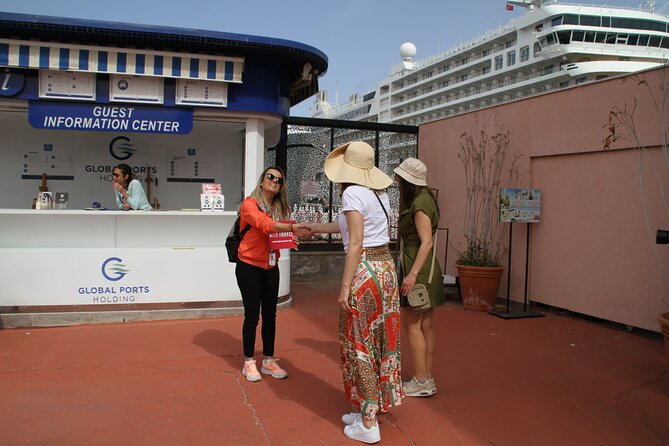
- Pickup and Comfort From Kusadasi (And Cruise Ports)
- Stop 1: House of the Virgin Mary on Bulbul Mountain
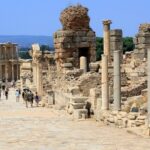
- Stops 2–6: Ephesus Ancient City Core Highlights (And How to Enjoy Them)
- The Great Anchor Sites: Library of Celsus and the Theatre
- Roman Power on Curetes Street: Hadrian and Domitian Temples
- Entering the Street Through Hercules Gate
- Terrace Houses: Wealthy Roman Domestic Life on the Hill
- Stops 3–4: State Agora and the Odeion (Where Decisions Happened)
- Stop 10: Basilica of St. John (A Christian Timeline in Stone)
- Stop 11: Temple of Artemis Foundations (Seven Wonders, Reduced to Footprints)
- Stop 12: Okuz Mehmet Pasa Kervansaray (Ottoman Egypt to Your Stopover)
- Stop 13: Kusadasi Bazaar Free Time (Shop Smart, Not Sloppy)
- Price and Value: The Tour Cost vs. Site Admissions
- Lunch: Local Food and a Possible Craft Connection
- Who This Tour Is Best For (And Who Might Want a Different Plan)
- Should You Book This Private Ephesus Tour?
- FAQ
- How long is the Tailor-Made Private Ephesus Tour?
- Is this tour private or shared?
- What’s included in the tour price?
- Are admission fees included for Ephesus and the other sites?
- Do I get pickup if I’m on a cruise?
- Is the tour offered in English?
- Is there a lunch included, and are drinks included?
- Is there an optional add-on like Sirince Village?
- Do they provide a mobile ticket?
Key Highlights Worth Your Attention
- Skip-the-line tickets for the major sites (you still pay admissions separately).
- Truly private guiding with flexible timing for your group.
- Bulbul Mountain stop at the House of the Virgin Mary, a calm break from the crowds.
- Roman Ephesus in one sweep: Library of Celsus, Great Theatre, Curetes Street landmarks, more.
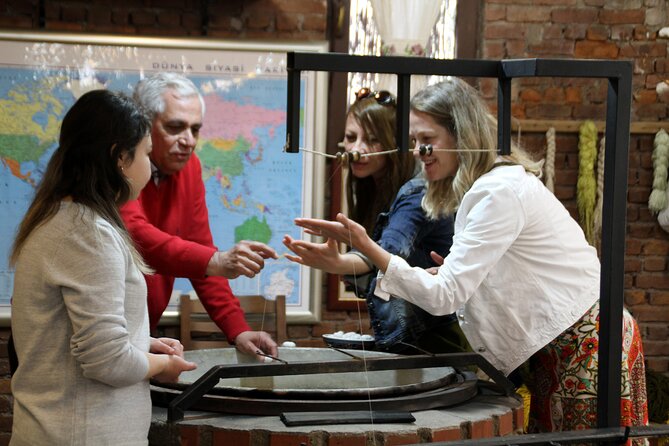
- Lunch with local flavor, sometimes tied to a weaving/carpet workshop setting where you may see short demos.
- Cruise-day friendly routing, including pickup from the Kusadasi port exit gate.
A Tailor-Made Private Day That Still Works on a Tight Schedule
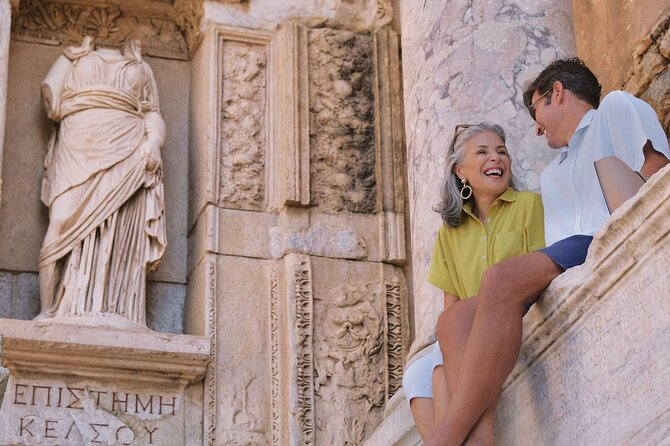
This is a private tour, so it’s just your group in the vehicle. That matters at Ephesus, where big crowds can turn a sightseeing plan into a slow shuffle. With a private setup, you’re freer to spend extra minutes where you care and cut time where you don’t.
The big promise here is not just transportation. It’s pacing. In practice, that shows up as a guide who keeps checking whether you want to move faster, linger longer, or skip a stop and reshape the day on the fly. People doing this on cruise schedules often value that kind of control, because the port clock is real.
Also, the tour is designed for a 6–8 hour window. That’s long enough to cover more than the obvious highlights, but short enough that you’re not stuck in bus-travel fatigue for the entire day.
You can also read our reviews of more private tours in Kusadasi

Pickup and Comfort From Kusadasi (And Cruise Ports)
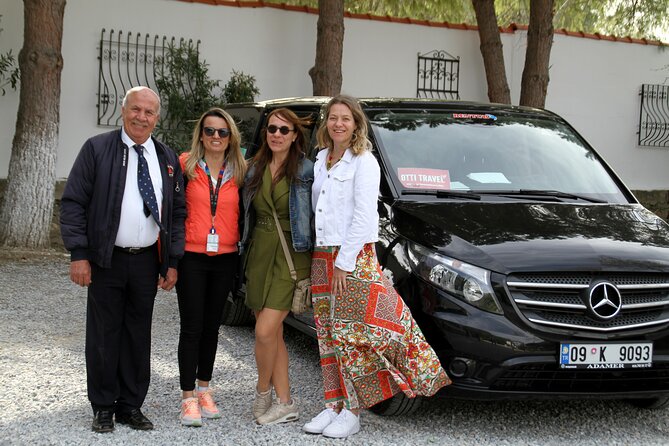
Pickup is included, and the meeting point rules are clear. If you’re on a cruise, you meet at the exit gate of the immigration terminal at the Kusadasi cruise port with an OTTI Travel sign. If you’re staying in Kusadasi hotels, they meet you at the hotel reception. For Izmir airport (ADB), it’s the exit gate of the domestic terminal with an OTTI Travel sign.
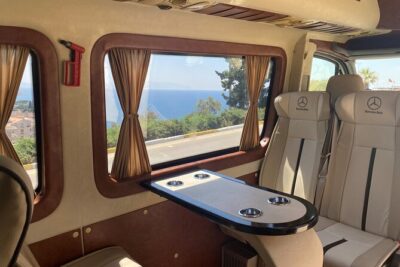
You’ll ride in a brand new A/C Mercedes Vito with a private driver. That’s a practical upgrade from the typical “cramped and hot” excursion feeling. It also helps on days when the sun is strong and the ground gets slippery in shaded stone areas.
One more practical note: the tour is listed for moderate physical fitness. Even if you’re not a hardcore hiker, you’ll likely deal with slopes and uneven walking—especially at hilltop stops like the Virgin Mary House and the terrace-area ruins.
Stop 1: House of the Virgin Mary on Bulbul Mountain
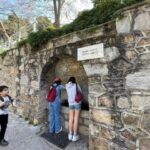
This is the first and often the most atmospheric stop. The House of the Virgin Mary sits on the top of the Bulbul Mountain, about 9 km ahead of Ephesus. The setting is shaded and green, which gives you a mental breather before the stone-and-sun heat of the ancient city.
Architecturally, it’s described as Roman in style, built entirely of stone. There’s also a layered religious history: by the 4th century AD, a church was built over the house, combining her house and grave. The layout matters for orientation too—there’s an anteroom area associated with today’s candles, a prayer space that functions like a Christian church area, and even a room with a fireplace linked to a Muslim chapel tradition.
Time on site: about 45 minutes (admission fee not included).
Your tip: plan for steps and hills. This is not a flat stroll, so comfortable shoes help. If you have mobility concerns, it’s worth telling your guide early; it can affect how you handle the walking.
Stops 2–6: Ephesus Ancient City Core Highlights (And How to Enjoy Them)
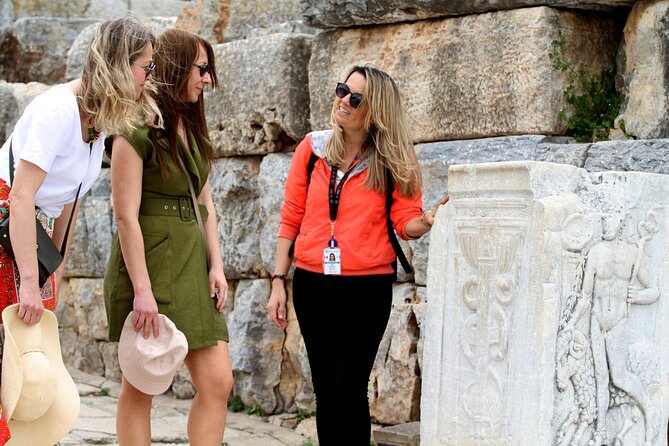
Ephesus is huge, so the value of a guided plan is simple: you get context while you’re still fresh, and you don’t wander in circles trying to figure out what matters.
The Great Anchor Sites: Library of Celsus and the Theatre
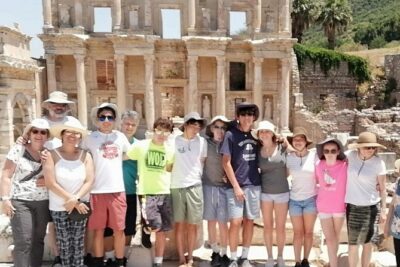
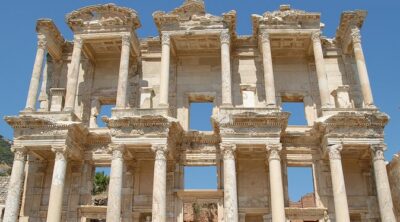
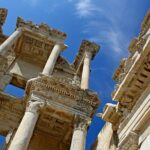
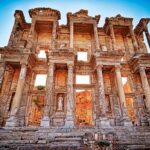
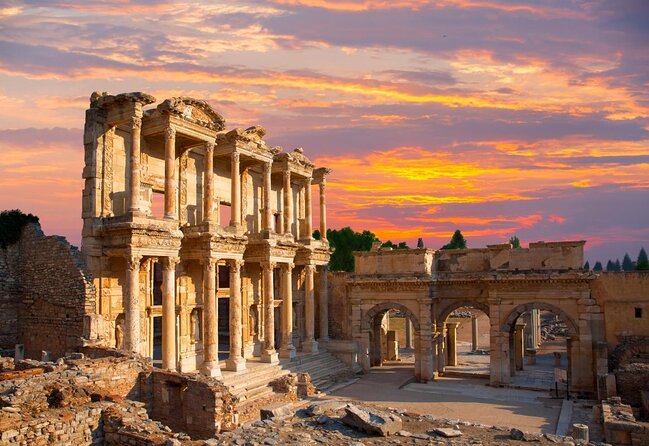
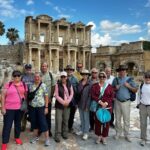
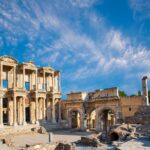
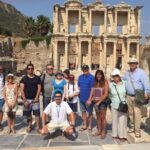
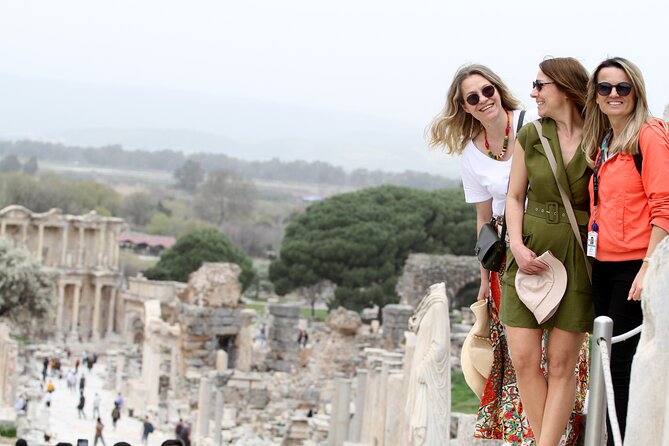
One of the most photogenic stops is the Library of Celsus. Built in 117 AD as a monumental tomb for Gaius Julius Celsus Polemaeanus, it was funded by his son Galius Julius Aquila. The design is part tomb, part library: the grave was beneath the ground floor, and Athena’s presence is tied to the idea of wisdom.
What I love here is the “how it worked” details you can visualize even if your Greek history is rusty—niches in the walls held the scrolls, and double walls were used to protect the manuscripts from temperature and humidity extremes. You’re basically looking at an ancient climate-control system.
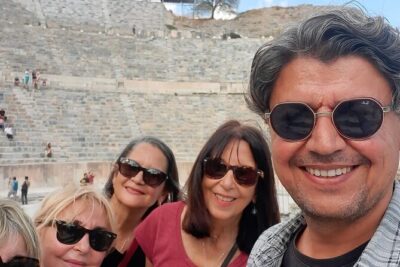
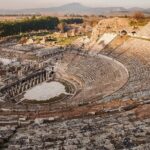
Then comes the Ephesus Great Theatre. It began in the Hellenistic period (3rd century BC), then expanded during the Roman era into the shape you see today. It’s the largest theatre in Anatolia, holding about 25,000 seats, with seating rows divided into sections. It wasn’t only for plays and concerts; it also hosted religious, political, and philosophical discussions, plus gladiator and animal fights.
Time on site: short blocks (around 15 minutes per stop), which is exactly why having a guide helps. You get the “big picture” without losing half your day.
Roman Power on Curetes Street: Hadrian and Domitian Temples
Curetes Street is where the architecture starts feeling like propaganda—emperor-focused, proud, and very Roman.
The Temple of Hadrian is one of the best-preserved structures on Curetes Street. Built before 138 AD and dedicated to Emperor Hadrian, it features four Corinthian columns and a curved arch with a relief of Tyche (victory/fate in a Greek context). In front are pedestal inscriptions connected to later emperors, even though the original statues aren’t all still in place.
A bit further along is the Temple of Domitian. It’s notable as the first structure in Ephesus dedicated to an emperor. It sits on a high terrace with vaulted foundations (50 x 100 meters), and the column rhythm is described with eight columns on the short side and thirteen on the long side. There’s also an altar detail linked to later museum display.
Entering the Street Through Hercules Gate
At the end of Curetes Street, you’ll reach Hercules Gate. What remains today is mostly two sides of columns, because the rest of the gate has not survived. Still, the reason it’s named Hercules is tied to a relief of Hercules. The relief itself dates to the 2nd century AD, while the gate was moved to its current location in the 4th century AD.
The gate’s design also explains why streets changed: it narrowed the entrance to stop vehicle passage. That’s a clue that by the 4th century, Curetes Street functioned more like a pedestrian zone.
Time on site: about 10–15 minutes depending on the block.
Terrace Houses: Wealthy Roman Domestic Life on the Hill
Stop 7 is the terrace houses, often called the houses of wealthy Romans. These are on the hill opposite the Hadrian Temple (near the slope of Bulbul Mountain). The important angle here is daily life: mosaics, frescos, and the layout give you a sense of what domestic living looked like for people with resources.
The site is arranged on three terraces with six residential units across that slope. The oldest building dates to the 1st century BC and remained used until the 7th century AD. Protective roofing now covers parts of the houses, and two houses are opened to the public as a museum.
Time on site: about 30 minutes.
Your tip: if mosaics and room layouts interest you, don’t rush this stop. If not, keep it moving and let the theatre/library moments take the spotlight.
Stops 3–4: State Agora and the Odeion (Where Decisions Happened)
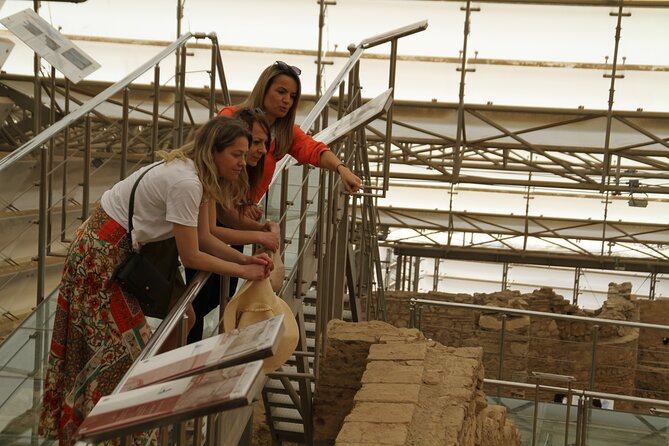
Not every stop in Ephesus is about temples. Some places are about meetings and civic life.
The State Agora is described as a meeting space used for governmental discussions, not commerce. During excavations, graves from the 7th–6th centuries BC and an archaic terra cotta sarcophagus were found in parts of the area. There’s also a water reservoir at the corner of the Agora that connects to a larger water system brought in through the Pollio Aqueduct.
The Odeion looks like a small theatre with stage building, seating, and an orchestra area. It had a dual purpose: it acted as a Bouleuterion for the senate meetings (the Boules), and it also functioned as a concert hall. Capacity is given as about 1,500 spectators, and it was built in the 2nd century AD by Publius Vedius Antonius and his wife Flavia Paiana.
Time on site: short—about 15 minutes for each of these stops—so expect overview-style guiding rather than a long museum session.
Stop 10: Basilica of St. John (A Christian Timeline in Stone)
This stop adds a different layer to the Ephesus story. It’s believed that the evangelist St. John spent his last years in the region and was buried on the southern slope of Ayosolug Hill. A small chapel was constructed over the grave in the 4th century, and later, during Emperor Justinian’s time (527–565 AD), the church developed into the basilica you can visit.
If you’re interested in early Christianity, this stop is useful because it connects tradition to physical places. It also ties into the broader persecution timeline described here: the 1st century was harsh for early Christians, with several key figures executed or sent away, and local tradition places John in Ephesus.
Time on site: about 30 minutes (admission fee not included).
Your tip: bring a little patience for the walking. This is a “stone story” stop, not a quick photo stop.
Stop 11: Temple of Artemis Foundations (Seven Wonders, Reduced to Footprints)
The Temple of Artemis is famous as one of the Seven Wonders of the ancient world. In Ephesus, the location was flat but turned into swamp land over time. Today, you mainly see ruins of the foundations rather than the full marble temple.
Even so, it’s still a significant stop because you’re seeing what remains of an enormous marble structure and learning what parts survived into modern memory. The most beautiful remaining pieces are said to be exhibited in the British Museum.
Time on site: about 25 minutes.
Admission note: this one is listed as free.
Stop 12: Okuz Mehmet Pasa Kervansaray (Ottoman Egypt to Your Stopover)
This is a nice palate cleanser after all the ancient stone. The caravanserai was commissioned by Öküz Mehmed Pasha, who served as Governor of Ottoman Egypt and Grand Vizier. It was built between 1615 and 1618.
The design is fortress-like, built to handle the needs of the time. It also served as a kind of customs house. Renovations are described too: work began in 1954 and ran until 1966, with costs listed and additional details about shanty removals on three sides.
Time on site: about 10 minutes.
Admission note: listed as free.
Stop 13: Kusadasi Bazaar Free Time (Shop Smart, Not Sloppy)
At the end of the tour, you get about an hour of free time in the Kusadasi town market. The shopping range is broad: Turkish goods, leather products, sweets, knick-knacks, and even fake clothing and watches.
This is the part where you can decide what you want your day to end with. If you like bargaining and browsing, use the hour to pick up small gifts. If you’d rather rest, you can also treat it as a short walk-and-refresh window before returning.
Tip: wear breathable clothes and rehydrate. Stone and walking adds up even when the stops are “only 10–30 minutes.”
Price and Value: The Tour Cost vs. Site Admissions
The tour price is listed at $75.00 per person, lasting about 6–8 hours. That’s attractive because the included services are real: a professional licensed English-speaking guide, pickup and drop-off for cruise guests, a brand-new A/C Mercedes Vito with a private driver, and a local lunch.
But you need to budget admissions separately. The Ephesus Ancient City admission is listed as €40. Virgin Mary House is €18, Terrace Houses are €15, and St. John Basilica is €6. Temple of Artemis and the caravanserai are listed as free.
So, if you visit the major paid sites, your admissions total can reach roughly €79 per person (based on the fees listed for those stops). Add the fact that alcohol at lunch isn’t included, and your “all-in” day depends on how you choose to handle the museum-like parts.
Where the value lands is this: you’re paying extra up front if you want lots of stops, but the guide and vehicle make it practical. Without that structure, you’d spend time coordinating transport and figuring out what to prioritize.
Lunch: Local Food and a Possible Craft Connection
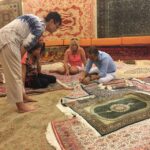
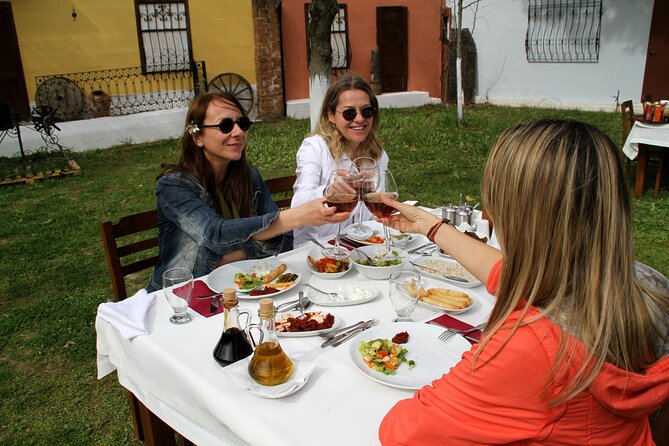
Lunch is included, and it’s described as a delicious local meal. In real use, the lunch setup can connect to a carpet weaving school or similar local workshop environment. That can mean you might see a short demo about how textiles are made.
This is one area where expectations help. Some setups are educational and low-pressure, while any workshop setting can also have a sales angle. If you want to buy, you’ll have time. If you don’t, you can still learn from the process and enjoy the meal.
Ask your guide to help you keep the day on your preferred timeline. A good guide will balance lunch with the remaining sites so you don’t feel rushed.
Who This Tour Is Best For (And Who Might Want a Different Plan)
This tour is a great fit if you:
- Want Ephesus with a private, flexible pace rather than a rigid group schedule.
- Appreciate a mix of Roman civic sites plus Christian sites like St. John Basilica.
- Are doing a cruise day and need reliable pickup and drop-off.
- Prefer practical comfort: A/C van, a guide handling the routing, and planned site blocks.
You might consider a different option if you:
- Hate stairs and slopes. The Virgin Mary House area is on a mountain, and the terrace sites involve walking on uneven ground.
- Want long museum-style time at only one or two places. This itinerary is built for breadth, not deep hours in a single building.
- Don’t want any chance of a workshop or shop stop in the lunch portion. Even when it’s low-pressure, it can still be part of the setting.
Should You Book This Private Ephesus Tour?
If your goal is to see the essentials of Ephesus plus the surrounding highlights without turning your day into logistics, I think this is an easy yes. The private format is the real value: you get a licensed English-speaking guide, reliable transport, and enough flexibility to shape the day.
Book it if you’re ready to plan for admissions on top of the tour price. Don’t book it if you want zero walking, or if you’re allergic to anything that might resemble a craft or showroom setting during lunch.
If you can, also pick your priorities before you go. Tell your guide what matters most—Virgin Mary House, terrace houses, the theatre, St. John Basilica, or Temples first. That way, your guide can build the day around your interests and keep the rhythm right.
FAQ
How long is the Tailor-Made Private Ephesus Tour?
It runs about 6 to 8 hours (approx.).
Is this tour private or shared?
It’s a private tour/activity, and only your group participates.
What’s included in the tour price?
A licensed English-speaking guide, pickup and drop-off for cruise guests, skip-the-line tickets (with admissions still not included), private A/C Mercedes Vito transportation, and a local lunch.
Are admission fees included for Ephesus and the other sites?
No. Admission fees are listed as not included for Ephesus Ancient City, House of the Virgin Mary, Terrace Houses, and St. John Basilica. Temple of Artemis and the caravanserai are listed as free.
Do I get pickup if I’m on a cruise?
Yes. For cruise passengers, you meet at the exit gate of the immigration terminal at the Kusadasi cruise port with an OTTI Travel sign.
Is the tour offered in English?
Yes, it’s offered in English.
Is there a lunch included, and are drinks included?
Lunch is included. Alcoholic beverages and drinks at lunch are not included.
Is there an optional add-on like Sirince Village?
Yes. Visiting Sirince Village is offered as an additional option for $50.00 per booking.
Do they provide a mobile ticket?
Yes, a mobile ticket is included.