REVIEW · EPHESUS TOURS
Deluxe Ephesus: Full Day Semi-Private Tour
Book on Viator →Operated by Ephesus Deluxe · Bookable on Viator
A smooth port-to-ruins day in Ephesus. I like the small-group feel (max 14) and that entrance fees plus a full Turkish lunch come with the price. One heads-up: the day may include a carpet-focused stop where sales talk can feel a bit pushy.
This tour also packs big-name Ephesus highlights with stops tied to early Christianity, including St. John’s Basilica and the House of the Virgin Mary. I’ve heard guides mentioned by name, like Chet and Ozlem, and the common theme is clear, energetic explanations that help you understand what you’re seeing as you walk.
You’re looking at roughly 5 to 7 hours total, mostly outdoors on uneven ground. If you like a well-paced highlights route without juggling tickets and transport on your own, this one fits nicely.
In This Review
- Key things to know before you go
- Why this Deluxe Ephesus tour works from Kusadasi
- Getting to Ephesus: port pickup and a clear plan
- Stop 1: Temple of Artemis (Diana) in a quick, high-impact hit
- Ancient City of Ephesus: from the Fountain of Trajan to Celsus
- Terrace Houses: mosaics, frescoes, and Roman family life
- St. John’s Basilica and the Virgin Mary House: faith sites with real questions
- St. John’s Basilica
- The Virgin Mary’s House (Meryem Ana Evi)
- Ephesus Museum: the artifacts that make the ruins click
- Lunch at a Turkish table: kebabs, salads, and seasonal fruit
- Guide quality: why Chet and Ozlem’s style matters
- Shopping stop reality: carpet making and sales pressure
- Price and value: what $75 includes (and why it matters)
- Who should book this tour, and who might prefer another format
- Should you book Deluxe Ephesus Full Day?
- FAQ
- Where is the meeting point for this tour?
- How long does the Deluxe Ephesus tour take?
- Is pickup and return from Kusadasi Port included?
- Are entrance fees included for the sites you visit?
- What is included in lunch?
- Are drinks included with lunch?
- How large is the group?
- What ticket format do I receive?
- What is the cancellation/refund window?
Key things to know before you go
- Max 14 travelers for a more personal pace than big bus tours
- Round-trip port pickup from Kusadasi, with air-conditioned minibus transport
- Entrance fees and licensed guide included, so you won’t stop to sort tickets
- Full Turkish lunch with grilled kebabs, Turkish salads, and seasonal fruit
- A mix of Greek, Roman, and Christian sites, not just one time period
- Ephesus Museum stop to anchor what you saw outside in real artifacts
Why this Deluxe Ephesus tour works from Kusadasi
Ephesus is one of those places where timing matters. You don’t just want to see ruins. You want to make sense of them, then get back to your ship or hotel without stress. This tour is designed for that exact need: a full-day route that starts with pickup from Kusadasi Port and returns the same way.
The value is in the bundle. For one price, you get:
- Round-trip transportation in an air-conditioned vehicle
- A professional licensed local guide
- Entrance fees for the major stops
- A Turkish lunch
- Parking and other fees folded in, plus a driver
At $75 per person, it’s not “cheap,” but it’s also not nickel-and-dime. You’re paying for the logistics, the guide time, and the admissions that add up quickly if you try to DIY. This is especially true if you’re on limited ship time.
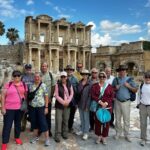
The small-group size (up to 14) also changes the experience. You’re more likely to get answers to your questions without competing with dozens of voices.
You can also read our reviews of more private tours in Kusadasi

Getting to Ephesus: port pickup and a clear plan
Your start point is Ege PortsCamikebir, Liman Cd. No:10, 09400 Kuşadası/Aydın, Türkiye. The meeting window runs daily during the provider’s operating hours (listed as 7:00 AM to 3:00 PM), so you can book and plan around that.
You’ll ride in an air-conditioned minibus with a driver. That matters in Turkey’s heat, and it keeps the day comfortable before you even hit the ruins. You’ll also get a mobile ticket, which is handy if you’re already juggling phone maps and cruise schedules.
Practical tip: since drinks aren’t included, plan to hydrate on your own. The tour provides lunch, but you’ll still want water for the walk. Sun protection is smart too: hat, sunglasses, and sunscreen.
Stop 1: Temple of Artemis (Diana) in a quick, high-impact hit
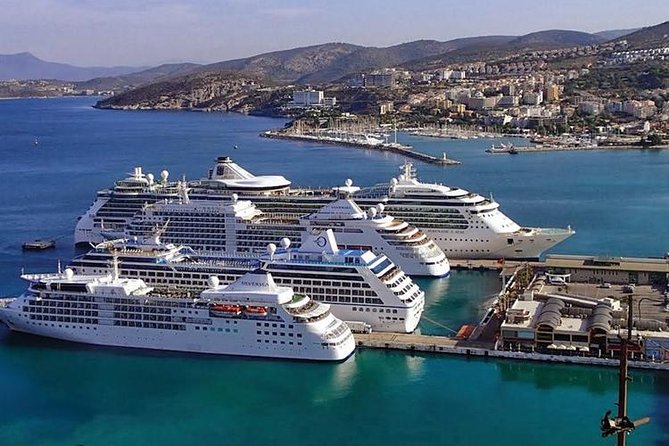
The day begins with the Temple of Artemis, also known as the Temple of Diana. Even in ruins, this site gives you the right “scale” for what Ephesus was. Artemis was a local form of the goddess, and Ephesus leaned into her importance so hard it ended up linked to one of the ancient world’s famous wonders.
Your time here is short (about 15 minutes), so think of it as orientation. You’re not meant to wander forever. You’re meant to understand the story, take photos, then move on to the parts of Ephesus where the city’s layout and daily life show up more clearly.
If you’re the type who wants every detail, you might wish you had more time. But for first-timers, this “starter stop” is a good use of time.
Ancient City of Ephesus: from the Fountain of Trajan to Celsus
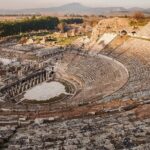
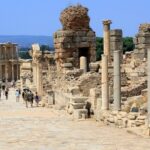
Most of your walking and sightseeing happens during the Ancient City of Ephesus segment (about 2 hours). This is where your guide earns their pay, because Ephesus can look like scattered columns until someone explains the connections.
Here are some of the major moments you’ll hit as you trace the route:
Fountain of Trajan
This stop is tied to Roman-era power and public life. You’ll see where statues of Dionysus, Aphrodite, and the Roman Emperor once stood guard over an enclosed pool. That mix of myth + empire is very Ephesus. It’s not just Greek tradition; it’s Greek tradition wearing Roman clothes.
Library of Celsus
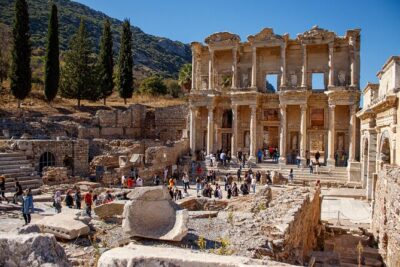
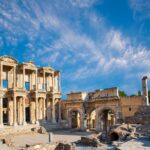
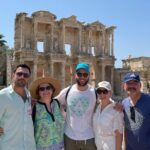
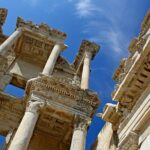
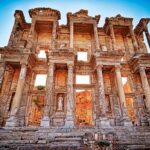
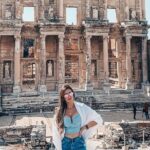
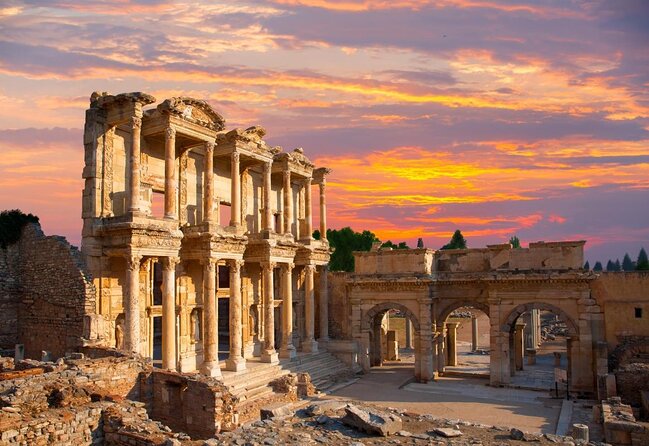
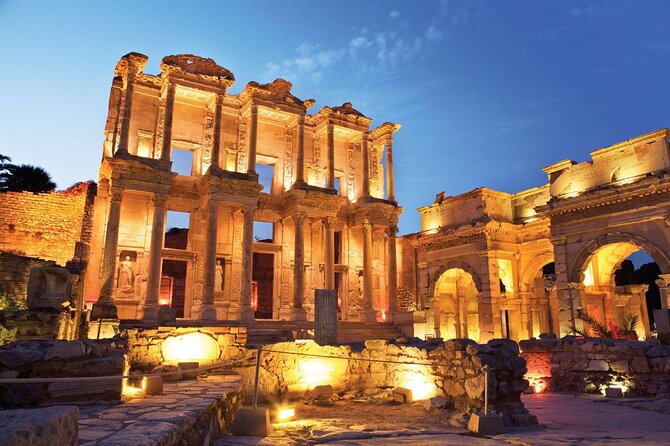
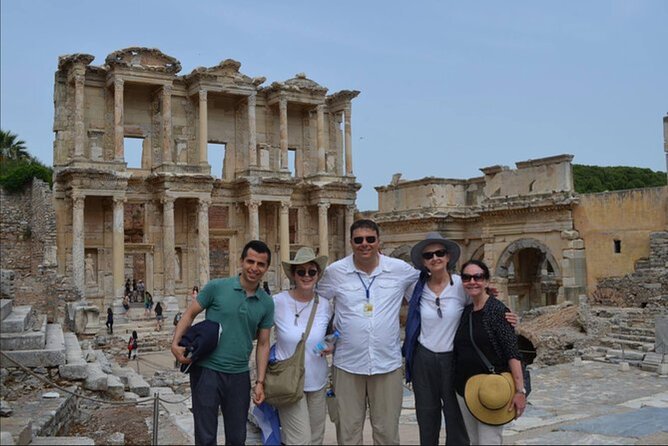
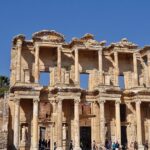
One of the most photographed stops in Turkey is the Library of Celsus, and it earns the attention. Your guide will connect it to the famous detail that it held about 12,000 scrolls, described as the third-largest library in the ancient world.
Practical angle: if you’re walking fast, the building can blur into “pretty facade.” Slow down for a few seconds and look at where the structure faces. That’s where you start understanding what Romans wanted visitors to feel—order, culture, prestige.
Hadrian’s 2nd-century temple
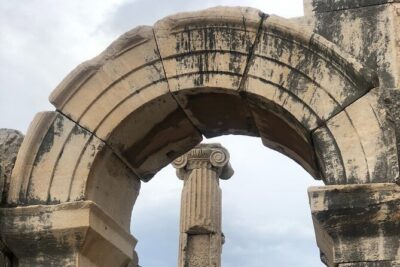
Emperor Hadrian’s temple has a distinctive look: a quartet of Corinthian columns framing a relief of Tyche, the Greek goddess of fortune and fate. It’s a great example of how religious symbols and political messaging overlap.
Baths of Scholastica
You’ll also get a glimpse of daily life at the Baths of Scholastica, where citizens bathed and socialized together. This is one of the most grounding parts of Ephesus. Temples are impressive, but baths tell you how people actually spent time.
One consideration: because you’re moving through major outdoor ruins, the ground can be uneven. Comfortable shoes are a bigger deal than you might think.
Terrace Houses: mosaics, frescoes, and Roman family life
Next up is the Ephesus Terrace Houses, sometimes called the houses of the rich. It’s located on the hill opposite the Hadrian Temple, so it naturally complements what you’ve just seen.
You’ll get about 30 minutes here, and that’s enough time to absorb the key idea: these homes aren’t just pretty floor patterns. They’re a window into family life during the Roman period, with mosaics and frescoes that show how status, taste, and daily routines could blend.
Why I like this stop for visitors: it adds texture. After temples, libraries, and baths, you get the private space where wealth and identity played out. Even if you’re not a mosaic nerd, you’ll still get the point quickly—these weren’t plain homes.
A small warning: the Terrace Houses can feel more like a curated walk than a full free-roam experience. If you love wandering with no structure, you may want more time later on your own. But if you like learning as you move, it fits the tour style.
You can also read our reviews of more tours and experiences in Kusadasi
St. John’s Basilica and the Virgin Mary House: faith sites with real questions
Then the route shifts into Christian landmarks, starting with St. John’s Basilica and continuing to Meryemana (the Virgin Mary’s House).
St. John’s Basilica
This 6th-century basilica is associated with the legendary burial site of John the Apostle. You’ll see the basilica stands over that believed location, and it was constructed by Justinian I.
Even if you’re not religious, it’s worth treating this as historical geography. You’re seeing how later communities organized sacred space in the same area where earlier empires had built big civic statements.
The Virgin Mary’s House (Meryem Ana Evi)
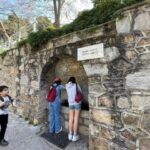
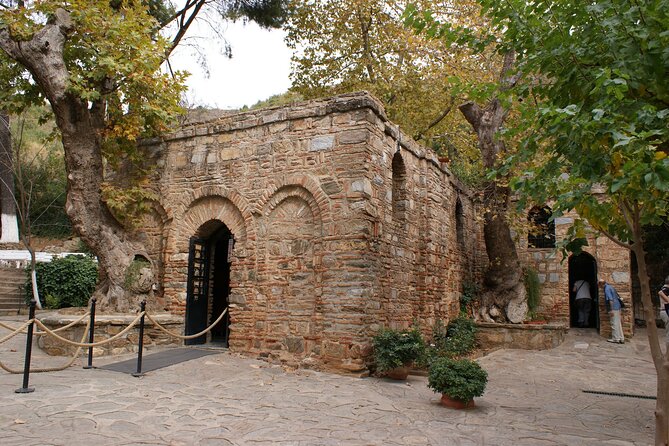
The House of the Virgin Mary is described as a simple, stone hut on the side of Bulbul mountain. Many people believe Mary spent her last years here.
Important nuance: the tour information explicitly notes there are many questions and uncertainties about this location, similar to what exists around St. John’s story. In other words, you’re visiting a site that people hold dear while acknowledging history can be messy.
How to make this stop feel respectful and real: keep your voice down, give yourself a few minutes to slow down, and don’t try to force certainty. Look at it as a place where belief shaped the landscape.
Time-wise, the Virgin Mary House stop is about 1 hour, which gives you room to absorb it without rushing.
Ephesus Museum: the artifacts that make the ruins click
Before you head back, you’ll visit the Ephesus Archaeological Museum (about 1 hour). This is the kind of stop that helps you understand what you just saw outside.
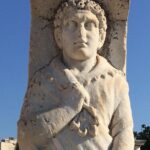
The museum’s best-known exhibit is an ancient statue of Artemis, retrieved from the temple of the goddess in Ephesus. Seeing the object after seeing the surrounding story helps a lot. Outside, you might see columns and fragments. Inside, the connection becomes clearer.
If you’re the type who hates museums, I’ll be honest: you might still find this one useful because it’s directly tied to the Ephesus ruins you walked.
Lunch at a Turkish table: kebabs, salads, and seasonal fruit
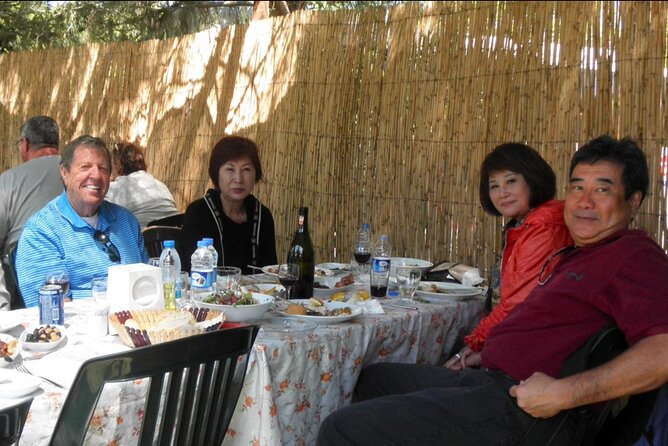
You get a full Turkish lunch after the main sightseeing stops. The meal includes grilled kebabs, Turkish salads, and seasonal fruits.
This is one of the easiest parts to appreciate for value. Food breaks up the day and keeps you from getting hangry at the worst time. It’s also included, so you’re not hunting for a restaurant while you’re tired and sunburned.
One practical note: drinks aren’t included. If you like soda, tea, or bottled water at meals, budget for that separately.
If you have dietary needs, the tour info doesn’t spell out special meals. I’d plan to speak up with the guide or the lunch provider when you arrive, but don’t expect guaranteed customization.
Guide quality: why Chet and Ozlem’s style matters
A lot of Ephesus tours look similar on paper. What changes the experience is the guide’s approach—how they explain what you’re seeing and how they handle questions.
In the feedback I’ve seen around this tour, guides like Chet and Ozlem come up repeatedly for their passion and strong explanations. That’s exactly what you want in a place like Ephesus, where the ruins are meaningful but not always obvious.
When you’re on the ground, use the guide time efficiently:
- Ask one question about what you’re seeing right now (not 10 stops ahead).
- If you’re into religion/history, ask how Greek, Roman, and Christian layers overlap here.
- If you’re mainly there for photos, ask where the best perspective is and what detail matters most.
Small group size helps. You’re less likely to get brushed aside.
Shopping stop reality: carpet making and sales pressure
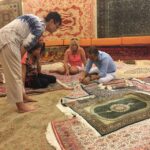
Here’s the one part of the day that can bug some people: the tour includes some form of carpet-focused stop. The good side is that it can be interesting to see craftsmanship. The downside is that the sales pitch can feel pushy, especially if you’re not in shopping mode.
So go in prepared. If you like textiles, browse with your time budget in mind. If you don’t, be polite and keep your boundaries clear. You don’t need to be rude; you just need to be firm.
The bigger point: don’t let the shopping moment steal your energy from the ruins. You came for Ephesus, and the morning and afternoon sightseeing carry the day.
Price and value: what $75 includes (and why it matters)
At $75 per person, you’re paying for more than just a seat on a vehicle.
The tour includes:
- All entrance fees
- A licensed local guide
- Luxurious air-conditioned transportation in new vehicles
- Pickup and return from Kusadasi Port
- Driver, parking fees, and all fees and taxes
- Lunch
That’s the value story. If you try to rebuild this day on your own, you’d typically have to line up transport, buy tickets, and pay for guide time. Here, those costs are already wrapped into one price.
One extra planning detail: the tour is often booked well ahead (the average booking window is listed around 85 days in advance). If your travel dates are fixed, don’t wait too long.
Who should book this tour, and who might prefer another format
This is a great fit if:
- You have limited time in Kusadasi and want an organized full day
- You want the headline sights without juggling logistics
- You like a small group pace (up to 14)
- You care about seeing both ancient ruins and Christian-era landmarks
You might want a different style if:
- You prefer long, slow time in one area over a highlights route
- Shopping stops make you cranky (and you’d rather spend every minute on ruins)
- You want very specific pacing, like lingering at mosaics or skipping museum entirely
Also, service animals are allowed, and most people can participate. Just expect walking and uneven ground.
Should you book Deluxe Ephesus Full Day?
If you want a smooth port-to-ruins day with entrance fees and lunch included, this tour is an easy recommendation. The best part is the combination: major Ephesus highlights plus the Christian sites, anchored by an Ephesus Museum stop that ties ruins to real objects.
Book it if you like structure and context. Skip it (or choose something else) if you strongly dislike any chance of sales pressure during the day. And regardless, wear good shoes, plan for hydration since drinks are not included, and treat the carpet stop as optional browsing, not a requirement.
FAQ
Where is the meeting point for this tour?
The meeting point is Ege PortsCamikebir, Liman Cd. No:10, 09400 Kuşadası/Aydın, Türkiye.
How long does the Deluxe Ephesus tour take?
It runs about 5 to 7 hours.
Is pickup and return from Kusadasi Port included?
Yes. Round-trip pickup and drop-off from Kusadasi Port are included.
Are entrance fees included for the sites you visit?
Yes. All entrance fees are included.
What is included in lunch?
Lunch includes grilled kebabs, Turkish salads, and seasonal fruits.
Are drinks included with lunch?
No. Drinks are not included.
How large is the group?
The tour has a maximum of 14 travelers.
What ticket format do I receive?
You receive a mobile ticket.
What is the cancellation/refund window?
You can cancel for a full refund up to 24 hours before the experience’s start time. If you cancel less than 24 hours before, the amount paid is not refunded.