REVIEW · EPHESUS TOURS
Private Full Day Ephesus Tour from Bodrum
Book on Viator →Operated by OTTI Travel · Bookable on Viator
A trip to Ephesus is impressive. Pair it with Meryemana (Mary’s House) and you get a day that swings from stone-age faith to Roman mega-cities. You’ll spend hours walking through world-famous remains, but in a private setup with pick-up, a licensed English guide, and a route built for seeing a lot without frantic sprinting.
I especially like the private A/C Mercedes Vito comfort for a long drive and heat-heavy site time. I also like that you get a guaranteed skip-the-line approach, plus a dedicated guide who can explain what you’re actually looking at.
One heads-up: tickets for big stops like the Ephesus Ancient City and Virgin Mary’s House cost extra, and there can also be time built in for shopping stops. If you dislike sales pressure or prefer strictly archaeological time, plan your expectations (and your budget) before you go.
In This Review
- Key things to know before you go
- Bodrum to Ephesus: timing, comfort, and not getting squeezed
- Meryemana (Virgin Mary’s House): quiet faith up on the Bulbul Mountain
- Ephesus Ancient City: seeing Rome’s star city without getting lost
- Curetes Street and the emperor monuments: Hadrian, Domitian, and Hercules Gate
- Terrace Houses: Roman family life on the hillside
- The Library of Celsus and the Great Theatre at Panayir Hill
- St John’s Basilica and the Temple of Artemis: belief and foundation ruins
- Lunch, tickets, and the rug-and-leather stop reality
- Who should book this private Ephesus and Meryemana day
- Should you book OTTI Travel’s Ephesus and Meryemana tour?
- FAQ
- How long is the tour?
- Where do cruise passengers get picked up?
- How long does it take to drive from Bodrum to Ephesus?
- What’s included in the tour price?
- Are admission tickets included?
- Is lunch included?
- Is the tour private?
- What’s the cancellation policy?
Key things to know before you go
- Skip-the-line promise at the main ancient site helps your time feel less stolen.
- Two-ticket add-ons matter: Ephesus admission and the Virgin Mary’s House fee are not included.
- A long, structured route means short stops at many highlights, not deep museum-style wandering.
- English licensed guide experience typically drives the day, not just the vehicle.
- Heat + walking are real—bring sun protection and pace yourself on the slopes.
Bodrum to Ephesus: timing, comfort, and not getting squeezed
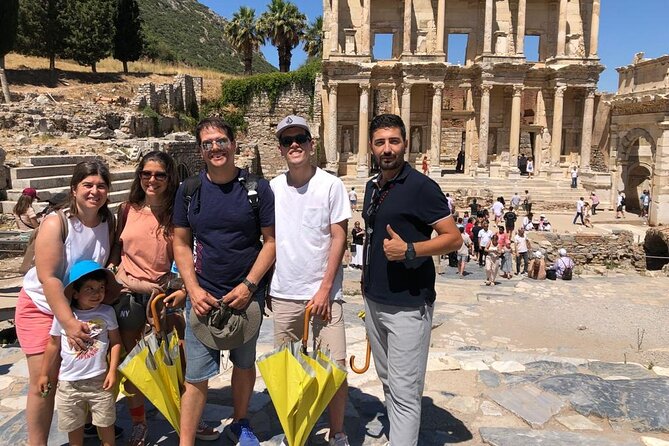
This tour is built as a full day, typically about 6 to 8 hours from pick-up to drop-off. The drive from Bodrum to Ephesus is listed as about 2 hours by car, but real life includes traffic and weather, so I’d treat drive time as an estimate, not a promise.
The ride is in a brand new A/C Luxury Mercedes Vito with a private driver, which is a big deal when you’re leaving early and returning late with hot feet. If you’re traveling as a group, the private format keeps everyone together, and group discounts are offered.
If you’re on a cruise, the meeting point is specific: you’ll meet at the exit gate of the immigration terminal at the Bodrum cruise port, with an OTTI Travel sign. You’ll also need to provide your ship name and docking/re-boarding times. That detail matters because this is the kind of day where timing discipline keeps you from staring at your watch.
You can also read our reviews of more private tours in Kusadasi

Meryemana (Virgin Mary’s House): quiet faith up on the Bulbul Mountain
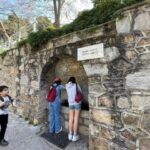
The day’s spiritual start is Meryemana, the House of the Virgin Mary, located about 9 km ahead of Ephesus on the Bulbul Mountain. You’re looking for a hidden, green-feeling place rather than a loud tourist stop. Expect about 45 minutes here.
What’s special is the setting and the way the site is presented: the house is described as a typical Roman stone structure, and later a 4th-century church was built that combines elements of the house and a grave area. Inside, you’ll hear about how different rooms correspond to different religious traditions over time, including an anteroom linked with a candle tradition, plus areas described as a praying room and a chapel space used by Muslims.
Tickets for this stop cost extra—€18 per person—so it’s worth setting aside cash or being ready for card payments. Also, plan modest clothing and comfortable shoes. Even if the walk is not long, you’ll be on uneven ground and up/down small slopes.
Ephesus Ancient City: seeing Rome’s star city without getting lost
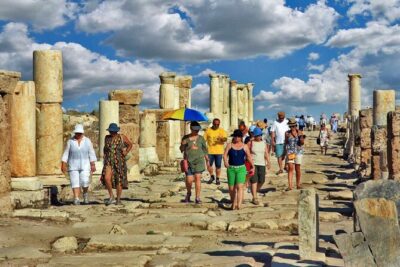
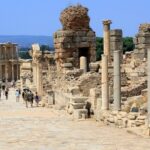
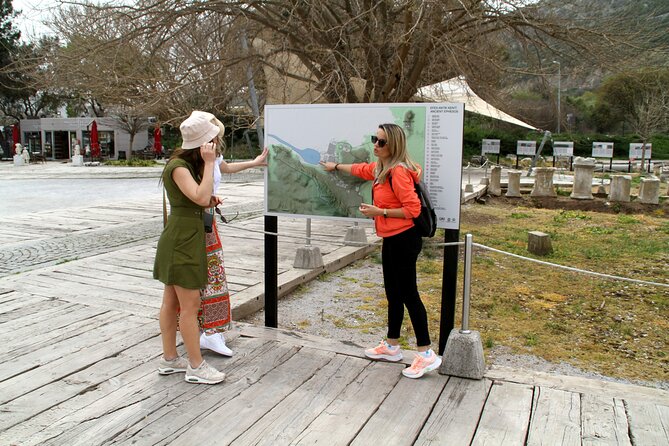
Ephesus is what happens when civilizations build on top of other civilizations. The main ancient city stop is about 1 hour 30 minutes, and with the rest of the itinerary timed in shorter chunks, you’ll be guided along a practical route instead of wandering cold.
You’ll see the city through major eras: Greek beginnings tied to the Artemesium (the temple complex for Artemis), then Roman growth where Ephesus became one of the biggest cities in the eastern Roman world. The big theme you’ll keep noticing is scale—colonnades, theatres, public buildings—plus the way civic and religious life were mixed together.
Admission to Ephesus Ancient City is not included: €40 per person. The good news is that the tour offers a guaranteed skip-the-line, which you’ll feel immediately. Standing around waiting is a buzzkill; skip-the-line is basically buying back your day.
Curetes Street and the emperor monuments: Hadrian, Domitian, and Hercules Gate
After you’re dropped into the core area, the route focuses on buildings tied to public life and imperial power. It starts with the State Agora, a Roman-period agora built in the 1st century BC. This wasn’t a market in the typical sense—it’s presented as a place for governmental and civic discussions. You’ll have about 15 minutes here, and the guide’s explanations are what turn these stones into a living street-corner of decisions.
Next comes the Odeion, a small theatre-like building with seating and a stage area. It had a dual role: it functioned as a Bouleuterion for senate-style meetings and also as an odeum for performances. It’s described as built in the 2nd century AD and aimed at around 1,500 spectators. Even in a short stop, this one is worth picturing as a place where politics and music shared the same roofline.
Then you’ll hit the emperor temples along Curetes Street:
- Temple of Hadrian: described as one of the best-preserved structures on the street, with four Corinthian columns supporting a curved arch and a relief of Tyche (goddess of victory). It’s tied to Hadrian’s visit period, and you’ll be looking at architectural details that still read clearly today. Plan about 15 minutes.
- Temple of Domitian: this one sits on a high terrace with vaulted foundations. The description includes its pro-style plan and a column layout that’s easy to recognize once you see the proportions. It’s presented as the first emperor-dedicated structure known in Ephesus. Admission for this stop is listed as included, which is a nice value bump. Expect about 15 minutes.
- Hercules Gate: located near the end of Curetes Street, known for a relief linked to Hercules. The remaining structure is mostly columns’ sides, but you’ll still get the idea that the gate narrowed street access and supported a more pedestrian flow in later centuries. Another 15 minutes stop.
This cluster is great if you like your ruins explained as a system: civic buildings, imperial messaging, and city planning all in one corridor.
Terrace Houses: Roman family life on the hillside
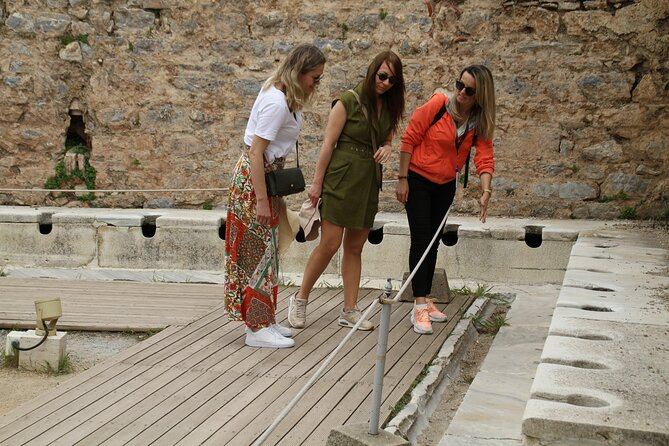
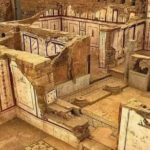
Not every Ephesus stop is about temples and theatres. The Ephesus Terrace Houses sit on the hill opposite Hadrian Temple and are sometimes called the houses of wealthy Romans.
You’ll spend about 30 minutes here, which is enough time to absorb the big idea: there are six residential units across three terraces on the Bulbul Mountain slope. The oldest building is dated to around the 1st century BC, and the residences are described as continuing in use until about the 7th century AD.
One practical perk: these areas are covered with protective roofing, so you’re less exposed to direct sun than at some open-air locations. You’ll see consolidated mosaics and frescos, and two houses are described as opened to the public as a museum space. If you want a quieter, more human-scale moment in the day, this is it.
You can also read our reviews of more tours and experiences in Kusadasi


The Library of Celsus and the Great Theatre at Panayir Hill
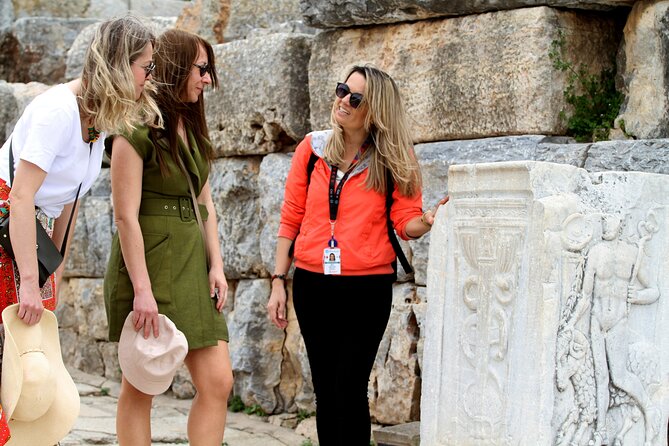
Then the route shifts to two of Ephesus’s most photogenic structures: the Library of Celsus and the Great Theatre. Both are time-boxed (around 15 minutes each), so the magic comes from how clearly the guide frames what you’re seeing.
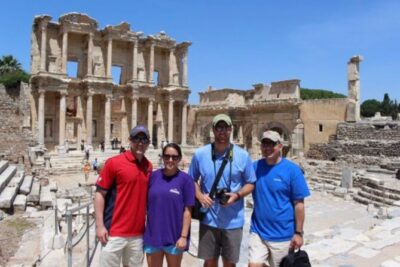
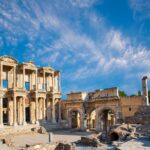
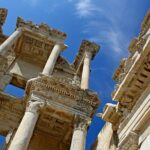
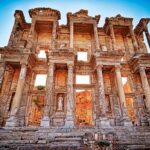
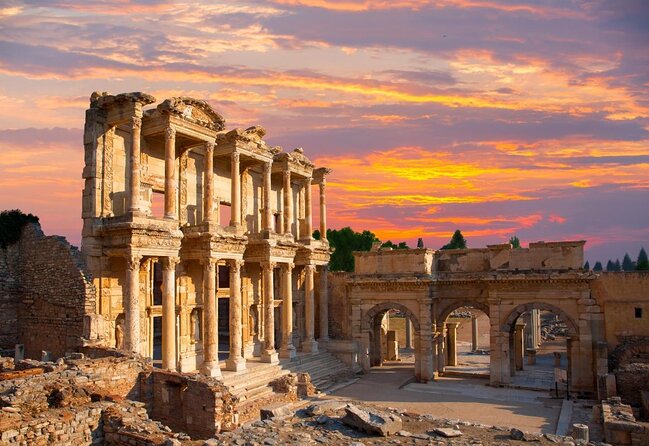
Library of Celsus: This is one of the most beautiful remaining structures in the city. Built in 117 AD, it’s described as a monumental tomb for Gaius Julius Celsus Polemaeanus. The design includes a burial area beneath the ground floor, and there’s mention of Athena as a wisdom symbol linked to the structure’s statue display. The library’s book-storage idea is explained too: scrolls placed in niches on walls, with double walls described as a climate-control feature. Capacity is described as over 12,000 scrolls. Even if you only get a short look, the façade is what sells the story.
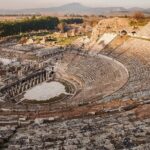
Ephesus Ancient Greek Theatre: The theatre is described as the most magnificent structure in the ancient city and the largest in Anatolia. It’s presented as first constructed in the Hellenistic period (3rd century BC) and then enlarged in Roman times into the style you see today. You’re given the scale: about 25,000 seats, with 66 rows and three seating sections divided by walkways (diazoma). The theatre served multiple purposes—plays, concerts, religious and political discussions, and even gladiator and animal fights. It’s a fast stop, but you can still stand there and picture the noise and drama.
If you’re sensitive to crowds and heat, go steady. Sitting in a theatre for a few minutes is one thing; climbing in and out along slopes is another.
St John’s Basilica and the Temple of Artemis: belief and foundation ruins
The religious element continues with Basilica of St. John. It’s believed to connect to the evangelist St. John spending his last years in the Ephesus region and being buried on Ayosolug Hill’s southern slope. The story in the itinerary explains that a small chapel was constructed over the grave in the 4th century, and then the basilica was changed during Emperor Justinian’s period (527–565 AD).
You’ll have about 30 minutes here, and the guide can help stitch together why the early Christian persecution era matters to the region’s story (Paul, Stephen, and other persecution references are included in the context you’ll hear). This stop often feels more reflective than the big civic monuments.
Finally, the day ends with the Temple of Artemis. You won’t see a whole temple standing; you’ll see ruins of foundations. The reason is part of the story: the area has turned into swamp-like land over centuries, and marble structures were dismantled over time. The itinerary notes that the most beautiful remaining pieces are displayed in the British Museum, and what you see in Ephesus today is essentially the footprint and foundation remains. Admission for this stop is listed as free.
This is a good closer because it reminds you that famous sites don’t always survive in full shape. Sometimes you’re really visiting absence—and learning how the past gets carried away.
Lunch, tickets, and the rug-and-leather stop reality
Let’s do the money math in plain terms. The tour price is $259 per person and includes the private A/C van, English speaking professional licensed guide, pickup and drop-off (hotel and cruise port), parking fees, and taxes. It also includes the big advantage of skip-the-line.
But some major fees are not included:
- Ephesus Ancient City: €40 per person
- Virgin Mary’s House: €18 per person
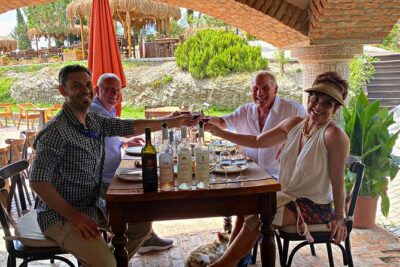
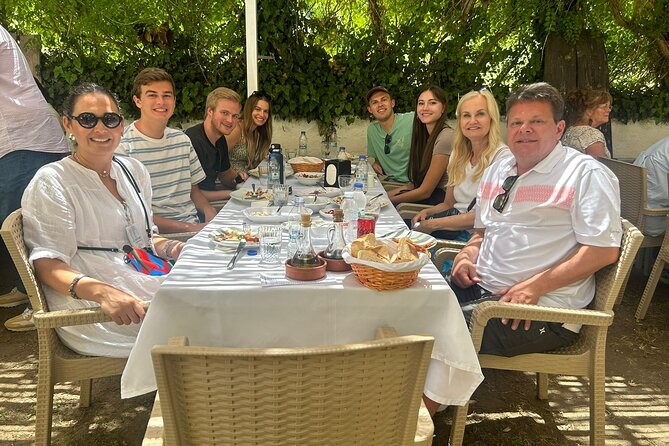
- Local lunch: $15 per person
There’s also a helpful balancing detail: Temple of Domitian admission is included, and Temple of Artemis is free. So you’re not paying for every single stop—just the two headline sites that usually require separate tickets.
One other practical reality: shopping time can creep into the day. The experience description doesn’t list it as a formal stop in the same way the ruins are, but the schedule in practice can include time at a rug shop / carpet weaving-style stop and a leather showcase. That’s not automatically a deal-breaker, but if you hate sales pressure, be ready.
A smart approach if you’re tempted to buy: ask what happens next in a very businesslike way. Confirm delivery terms and keep your paperwork. One bad outcome is enough to sour a long trip home, so treat any purchase like it’s a transaction, not a souvenir hunt.
Who should book this private Ephesus and Meryemana day
This tour makes sense if you want:
- A single-day combo of major Ephesus ruins plus the Virgin Mary’s House setting
- The convenience of hotel or cruise port pickup
- An English guide who can explain the why behind the stones
- A private group format where you’re not fighting strangers for hearing distance
It’s also a good pick if you’re traveling with older relatives or kids as long as everyone can handle walking and uneven surfaces. The tour notes moderate physical fitness is required, and Ephesus includes slopes and steps. If someone in your group struggles with stairs, the guide’s willingness to slow down can be the difference between a fun day and a stressful one.
If you’re the type who wants zero shopping stops and fully ticket-inclusive pricing, you may want to go in with eyes open. This is a classic Ephesus day with a bit of commercial time mixed in.
Should you book OTTI Travel’s Ephesus and Meryemana tour?
I’d book it if you value a guided, structured full day more than a do-it-yourself wander. The private AC van, skip-the-line approach, and the mix of civic, theatre, library, and religious sites all point to a day that fits first-timers and repeat visitors alike.
I’d think twice if your budget can’t handle the add-on admissions and lunch, or if you really dislike being pulled into sales conversations. In that case, ask how shopping time will be handled before you lock it in, and be ready to say no.
If your cruise schedule is tight, double-check your ship timing with the operator and give yourself a buffer for road variability. A smooth day is mostly planning, not luck.
FAQ
How long is the tour?
The tour lasts about 6 to 8 hours.
Where do cruise passengers get picked up?
For cruise passengers, the meeting point is at the exit gate of the immigration terminal at the Bodrum cruise port, where you’ll see a board with the OTTI Travel sign.
How long does it take to drive from Bodrum to Ephesus?
The drive from Bodrum to Ephesus Ancient City is listed as about 2 hours by car.
What’s included in the tour price?
Included are pickup and drop-off, a private A/C Mercedes Vito with driver, an English speaking licensed guide, guaranteed skip-the-line, parking fees, and taxes.
Are admission tickets included?
No. Ephesus Ancient City (€40 per person) and Virgin Mary House (€18 per person) are not included. Temple of Domitian admission is included, and Temple of Artemis is free.
Is lunch included?
Lunch is not included. A local lunch is offered for $15 per person.
Is the tour private?
Yes. It’s a private tour/activity, and only your group participates.
What’s the cancellation policy?
Free cancellation is available up to 24 hours in advance for a full refund.