REVIEW · SELCUK
Ephesus and House of Virgin Mary From Kusadasi or Selcuk
Book on Viator →Operated by FABULOUS TRAVEL · Bookable on Viator
Ancient Ephesus is surprisingly easy to reach. This small-group day links Roman Ephesus sights with Meryemana and the Temple of Artemis, with hotel pickup and entrance fees included so you spend less time planning and more time looking. It runs about 8 hours and starts at 8:30am.
I like the way the route hits the big emotional beats of the region: the Great Theatre and the restored Library of Celsus make Ephesus feel real fast. Then Meryemana offers a quieter shift, and a guide like Feyzullah (mentioned in feedback) can turn that visit into something thoughtful, not rushed.
One heads-up: the pacing can feel short in key places, and there may be time taken for shopping stops (carpet/leather and similar) that can dilute the sightseeing focus. If you want slow, sit-and-stare time everywhere, plan to manage your expectations.
In This Review
- Key things to know before you go
- Ephesus starts with the Ephesus Museum stop
- The main Ephesus walk: Theatre, Celsus, and Paul’s shadow
- Great Theatre: built for performance, used for spectacle
- Library of Celsus: the photo stop that’s actually worth it
- Other sights you might pass
- Meryemana (House of the Virgin Mary): spiritual pause, queue reality
- Temple of Artemis: the wonder feeling without the whole building
- Isa Bey Mosque: delicate Seljuk architecture under the Saint John area
- Price and logistics: where your $81.45 really goes
- How the timing can feel
- Shopping stops: how to enjoy the day without getting sidelined
- What to wear, bring, and how to pace yourself
- Who should book this Ephesus and Meryemana tour
- Should you book it?
- FAQ
- How long is the Ephesus and Virgin Mary House tour?
- What is included in the price?
- What time does the tour start?
- Is the tour limited to a small group?
- Are drinks included with lunch?
- What happens if weather is poor?
Key things to know before you go
- Small-group format (around 15 people) means you can hear the guide without feeling packed in.
- All entrance fees included plus a mobile ticket cuts down on ticket lines and decision fatigue.
- Ephesus highlights in a logical order: museum orientation, then the main classics.
- Meryemana is often the queue bottleneck, so arrive ready to wait.
- You’ll also see Temple of Artemis remains and Isa Bey Mosque in the same day, without extra logistics.
Ephesus starts with the Ephesus Museum stop
The day begins with an orientation at the Ephesus Museum, which is a smart move. You get a quick sense of how big the ancient city was before you walk the ruins. Ephesus is often described as one of the best-preserved classic cities in the Eastern Mediterranean, and the museum helps you understand what you’re about to see.
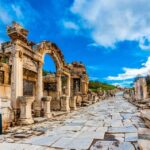
From there, you head into the main open-air area where Ephesus connects more than 30 buildings and structures through streets you can still picture in motion. One neat detail that matters when you’re there: the streets show marks linked to ancient chariot use. It’s the kind of small physical evidence that makes the place feel less like a postcard and more like a lived-in city.
The museum stop includes admission, and it usually works as your warm-up—short enough to keep momentum, helpful enough to make the ruins click faster later.
You can also read our reviews of more tours and experiences in Selcuk.
The main Ephesus walk: Theatre, Celsus, and Paul’s shadow
When Ephesus is working, it’s because the layout is readable. You can move from one landmark to the next and gradually fill in the story of daily life, religion, politics, and entertainment.
Great Theatre: built for performance, used for spectacle
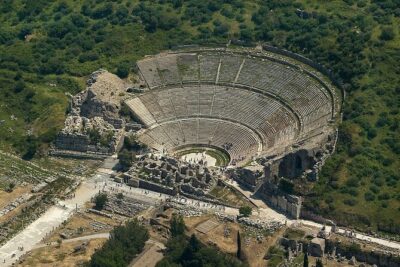
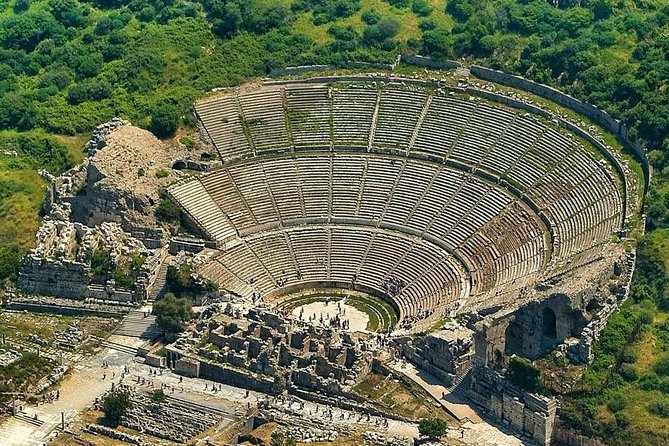
The Great Theatre is one of those places where size alone does the talking. It originally held about 25,000 people and reflects a mix of periods: built in the Hellenistic era and later renovated by Roman emperors. You’ll also hear how the space changed over time, including alterations that allowed gladiatorial contests.
And yes, Paul’s ministry gets woven into the explanation. Even if you don’t follow every historical thread, it helps to understand that Ephesus wasn’t just scenery—it was a place where ideas and conflicts mattered.
Library of Celsus: the photo stop that’s actually worth it
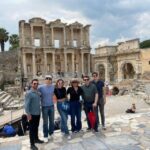
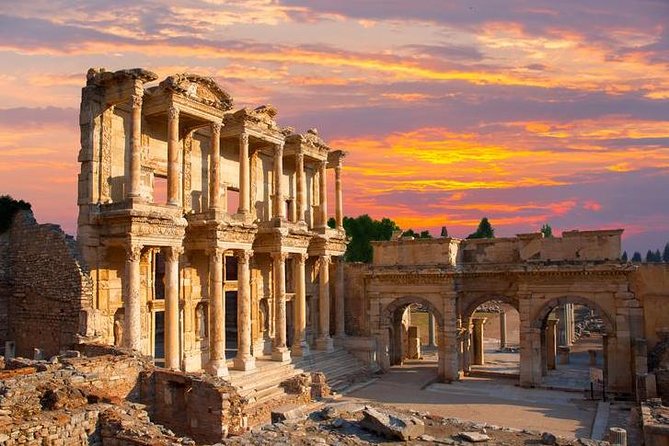
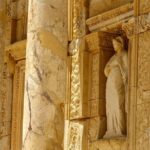
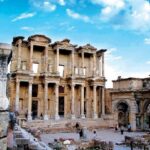
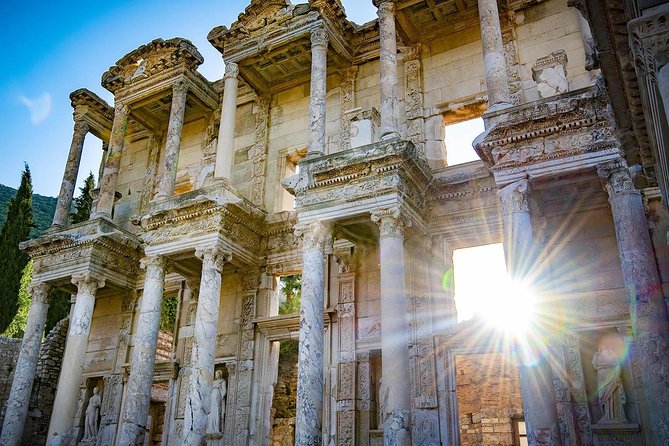
The Library of Celsus façade is remarkably restored, and it’s probably the most photographed spot in Ephesus for good reason. It was originally built between 115 and 125. The façade doesn’t just look impressive—it gives you a sense of civic pride and how public culture was displayed in stone.
Other sights you might pass
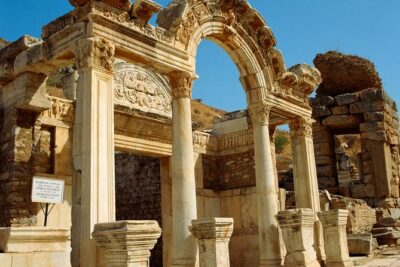
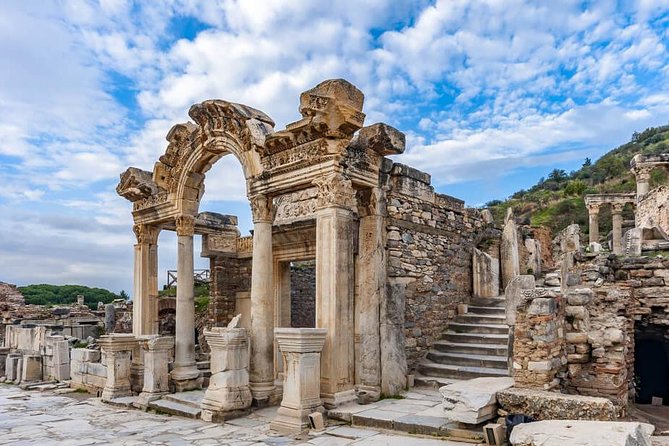
Depending on how the day flows, you might also see areas like the Odeon, Fountain of Trajan, Temple of Hadrian, the stream baths, the marble road, the Agora, and the Temple of Domition. Even if you don’t catch every detail, these stops help you understand that Ephesus was an entire city system, not just one or two “must-see” monuments.
Practical tip: wear shoes with real grip. The ruins are uneven, and you’ll be on your feet for most of the morning.

Meryemana (House of the Virgin Mary): spiritual pause, queue reality
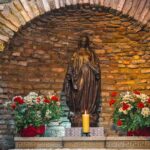
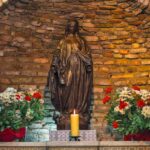
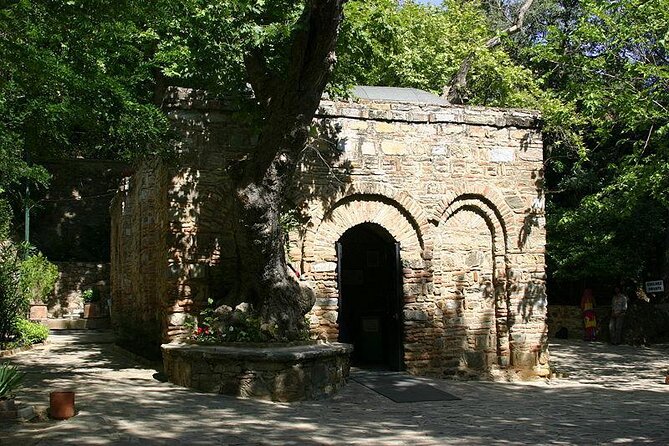
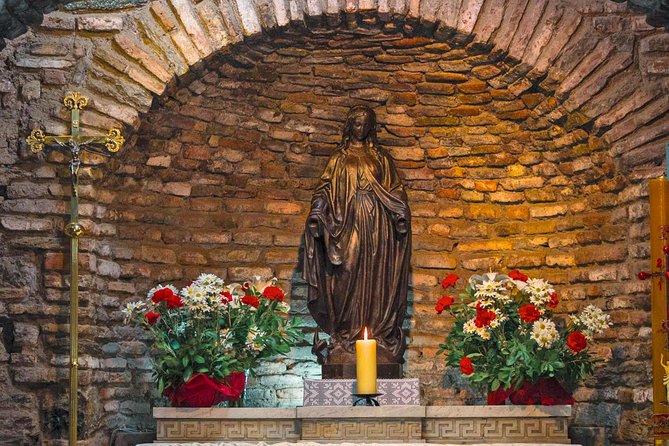
After the Roman grandeur, the mood shifts with Meryemana, also called the House of the Virgin Mary. The story you’ll hear is that Mary came to Ephesus with the apostle John after the Resurrection and lived her final days there. The site is built on the foundations of a house tradition associates with her final years.
This stop is often described as uplifting. The reason I think it works even for non-religious visitors is simple: it’s quieter and smaller than the ruins, so you feel like you can actually slow down for a bit. The visit includes admission, and the tour guide is there to frame what you’re looking at so it lands with context.
Now the reality check. If there’s a queue, it can stretch your time. One disappointing version of the day is getting a long line experience followed by a faster walk-through than you hoped for. If you’re someone who wants to linger, go in with two mindsets: be patient with the wait, and focus on the feeling of the space rather than trying to “win” at sightseeing time.
If your guide happens to be Feyzullah (he’s mentioned in feedback), you may also get an extra layer of warmth and clarity—exactly the kind of interpretation that makes a short visit feel meaningful.
Temple of Artemis: the wonder feeling without the whole building
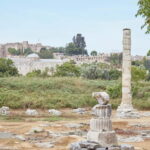
Next comes Temple of Artemis, one of the seven wonders of the ancient world. Here’s the key thing: today, only the foundation and a single column remain. You might think that means it’s a letdown—until you stand there and realize why people still care.
The scale that once existed matters. The temple was roughly 425 feet long and about 220 feet wide, dedicated to the goddess of hunting. When you see the remaining structures in place, you can picture the size even if you can’t see the full height and walls.
You’ll also hear how the city’s religious and cultural life connected with other events in Ephesus, including the idea that Paul’s ministry was seen as a threat to the temple’s influence. This stop works best when you let it be what it is: a powerful reminder that even “lost” monuments can still teach you about power, wealth, and belief.
If you only have a short time window, this is still a good stop. It’s quick to understand, and the single column acts like a visual anchor for scale.
Isa Bey Mosque: delicate Seljuk architecture under the Saint John area
The final sightseeing stop is Isa Bey Mosque, located below the basilica of Saint John. This is a great capstone if you like architecture that’s detailed rather than massive.
The mosque is known as a delicate example of Seljukian architecture, built by Ali son of Mushimis al-Damishki between 1374 and 1375. Even though you may only spend about an hour here, it’s the kind of place where you start noticing lines, materials, and craftsmanship instead of just walking from point to point.
It’s also a useful contrast after Ephesus. Roman Ephesus is about grand civic spaces and stone statements. Seljuk architecture brings a different style of elegance—more about precision and refinement than sheer scale.
After this stop, you drive back to the departure point to wrap up the day.
Price and logistics: where your $81.45 really goes
This tour costs $81.45 per person, lasts about 8 hours, and is often booked around 19 days in advance. On paper, that sounds like a “basic ruins day.” In practice, the value comes from how much the tour handles for you.
You get:
- Hotel pickup and drop-off
- Air-conditioned vehicle transportation
- Lunch included
- Professional English-speaking tour guide
- All entrance fees included
- Mobile ticket for smoother entry
That matters because Ephesus and the surrounding sites aren’t just “see it, leave it.” Entrance tickets and local transportation can add up fast when you’re self-planning. Here, you’re paying to remove friction: you show up, ride, walk the route, and eat.
Drinks are not included, though. Plan on either buying water/soft drinks during the day or bringing your own if that works for you. Also, the day needs good weather. If conditions are poor, you may be offered a different date or a full refund.
How the timing can feel
Eight hours is enough to cover the classics, but not enough to linger everywhere. If you love history, you’ll still be satisfied. If you love slow travel—coffee breaks, extra photos, long pauses—you’ll want to accept that the schedule is tight and built for coverage.
Shopping stops: how to enjoy the day without getting sidelined
One theme that comes up in feedback is the feeling that the tour could end sooner because time gets spent in commercial stops—sweet shop type places, carpet showrooms, and leather shopping, with staff working hard to get your attention.
You don’t have to hate those stops. But you should treat them as optional in your mind, not as part of the main sightseeing package. If you care most about ruins and spiritual sites, keep your priorities straight:
- Decide ahead of time whether you’re buying anything.
- If you are not shopping, focus on using the commercial stop time efficiently—quick look, then keep moving.
- Bring patience, because selling takes time even when the store is fast.
A good day of Ephesus is still a good day. Just don’t expect every minute to be pure monument time.
What to wear, bring, and how to pace yourself
This tour asks for moderate physical fitness. You should be ready for walking through uneven surfaces at Ephesus and being on your feet through multiple stops.
I recommend:
- Comfortable shoes with grip
- Sun protection (hat/sunglasses)
- A light layer (morning can feel different than mid-day)
- Water strategy since drinks aren’t included
For the spiritual stop at Meryemana, pack your mindset for waiting. If there’s a queue, you’ll have time to observe people and absorb the setting. And when you enter, try to keep your eyes on the experience rather than counting minutes.
Who should book this Ephesus and Meryemana tour
This tour is a strong fit if you want:
- A guided route that reduces decision-making
- Entrance fees and transportation handled
- A full day that covers Ephesus, Meryemana, Temple of Artemis, and Isa Bey Mosque
- The comfort of a small group around 15 people
It’s less ideal if you:
- Want extra-long, unhurried time at each site
- Hate shopping interruptions
- Need very structured accessibility support (moderate fitness is required, and you’ll walk)
If you’re balancing a vacation schedule and you want the highlights without building the plan yourself, this is a practical choice.
Should you book it?
I’d book it if you want a smooth, well-paced day with real sightseeing coverage and you appreciate that entrance fees, lunch, and transport are folded into the price. The Ephesus section is the backbone of the day, and Meryemana is a meaningful contrast when you go in with the right expectations about queues and time.
Skip this one if you’re chasing the slow-stroll experience and you strongly dislike commercial stops. In that case, you might prefer a more focused private plan where you control the time at each monument.
If the schedule works for your week, booking ahead is smart. And if weather threatens your plans, you’ll know there’s a route to a refund or alternate date.
FAQ
How long is the Ephesus and Virgin Mary House tour?
The tour runs about 8 hours.
What is included in the price?
It includes lunch, an air-conditioned vehicle, hotel or cruise terminal pickup and drop-off, a professional English-speaking tour guide, and all entrance fees and transportation.
What time does the tour start?
The start time is 8:30am.
Is the tour limited to a small group?
Yes. It is limited to a maximum of 15 travelers.
Are drinks included with lunch?
No. Drinks are not included.
What happens if weather is poor?
This experience requires good weather. If it’s canceled due to poor weather, you’ll be offered a different date or a full refund.