REVIEW · SELCUK
Private Pamukkale and Ephesus Tours
Book on Viator →Operated by Unique Ephesus Tours · Bookable on Viator
Ephesus and Pamukkale in two days sounds bold, but it works. This private tour lines up major ancient sights and Turkey’s cotton-white travertines with guided context, so you spend less time figuring out logistics and more time seeing what you came for. If you like big famous places with real story behind them, you’ll enjoy the pacing and the convenience.
What I like most is the private, licensed guide. A good guide can turn carved columns and ruined streets into clear, human-scale history, and the name Lori has come up as an example of that kind of guiding. I also love that lunch is included during your two days, which makes the day feel complete instead of snack-and-stress.
The main drawback to consider is that entrance fees aren’t included. Some stops are free to enjoy, but you’ll still want to budget for the ticketed attractions, especially the bigger sites in Pamukkale and Hierapolis.
In This Review
- Key Takeaways Before You Go
- Why This Private Ephesus and Pamukkale Combo Works
- Day 1 in Selçuk: Ephesus First, Then Sacred Stops
- Entering Ephesus With a Guide (and Enough Time to Actually See It)
- Meryemana (Virgin Mary’s House): Faith, Pilgrimage, and Quiet Focus
- Temple of Artemis Area: A Short Stop With Real Wow Potential
- Şirince and Kuşadası: Quick Aegean Flavor Stops
- Şirince: White Houses, St John’s Frescoes, and Weekend Crowds
- Kuşadası: A Coast Stop to Reset Your Brain
- Day 2: Pamukkale Natural Park and the Travertines Everyone Talks About
- Pamukkale Natural Park: Cotton Castle Terraces and the Sacred Pool
- Hierapolis Archaeology Museum: A Short Add-On With Context
- Pamukkale Thermal Pools: The Part That Feels Like Magic (and Is Free)
- Hierapolis and the Roman Necropolis Feel
- Price and Value: Is $150 Per Group a Good Deal?
- How the Private Format Changes Your Experience
- Who This Tour Fits Best (and Who Might Want Something Else)
- Should You Book This Private Ephesus and Pamukkale Tour?
- FAQ
- Is this a private tour?
- How much does the tour cost?
- How long is the tour?
- Does the price include lunch?
- Is pickup included?
- Are entrance fees included?
- Does the tour use mobile tickets?
- What are the main stops?
- Is free cancellation available?
- How far in advance should I book?
Key Takeaways Before You Go
- Private group up to 15 means less waiting and more room for a smoother pace.
- Pickup + air-conditioned vehicle saves you the public-transport puzzle between Selçuk, Ephesus, and Pamukkale.
- Ephesus gets real time (around 2 hours) instead of a rushed glance.
- Pamukkale + Hierapolis are paired on Day 2 for maximum contrast: thermal terraces, then the necropolis and ruins.
- Some sites are free (like the Temple of Artemis area and Pamukkale’s thermal pools), but key museums/parks usually require tickets.
- Lunch included (2x) keeps energy steady for walking and sun.
Why This Private Ephesus and Pamukkale Combo Works
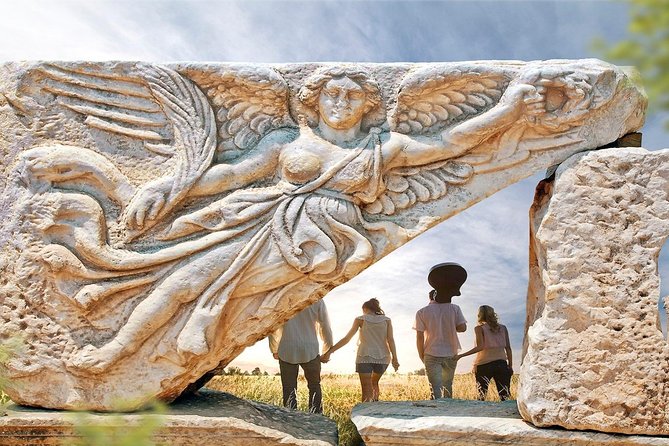
Western Turkey is loaded. You could spend a week just orbiting Ephesus, Selçuk, Hierapolis, and Pamukkale. This tour does something smarter: it groups the two biggest “wow” zones—Ephesus and Pamukkale/Hierapolis—into a tight two-day format without forcing you to zigzag on your own.
A private tour here is not just about comfort. It’s about time. Ephesus and Pamukkale are both popular, and the “how do I get from A to B” part can eat your best light. With transportation handled in a comfortable vehicle and a licensed guide at your side, you can focus on the main event.
And it’s not only ancient ruins. You’ll also get a dose of everyday coastal Aegean life with a brief look at Kuşadası, plus a stop at Şirince, a village that’s famous for its whitewashed houses and local wineries and olive groves.
You can also read our reviews of more private tours in Selcuk

Day 1 in Selçuk: Ephesus First, Then Sacred Stops
Entering Ephesus With a Guide (and Enough Time to Actually See It)
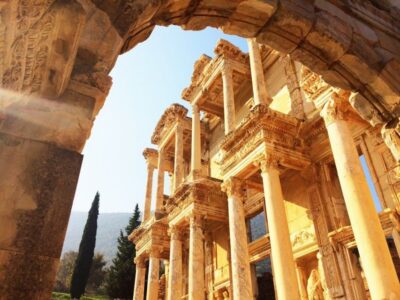
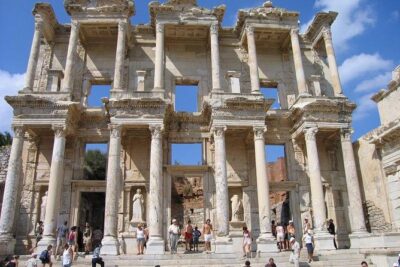
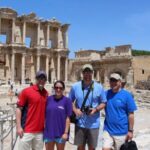
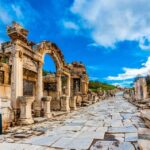
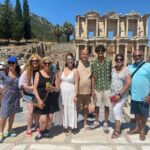
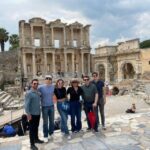
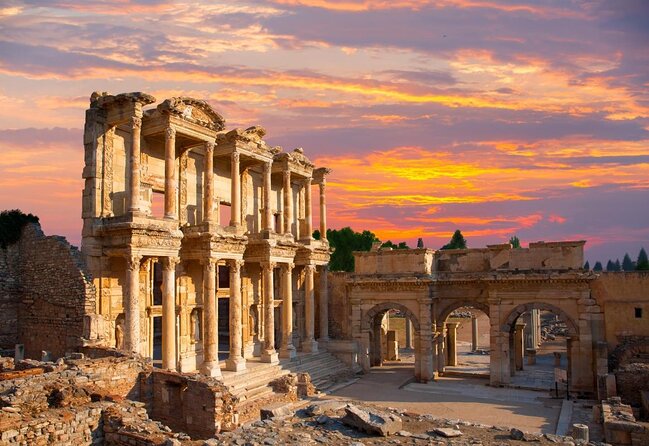
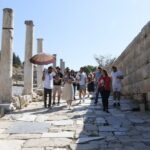
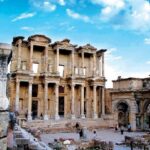
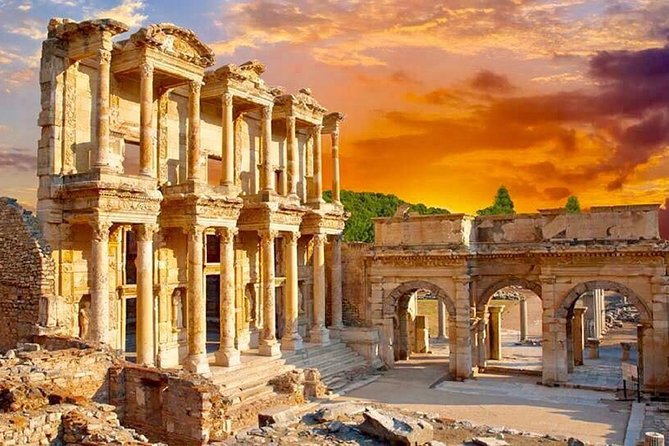
Ephesus is one of those places where you can easily waste a day if you don’t know what you’re looking at. This tour gives you about two hours at the Ancient City of Ephesus, and that matters. With a guide, you’re not just wandering between stones—you get orientation and story fast.
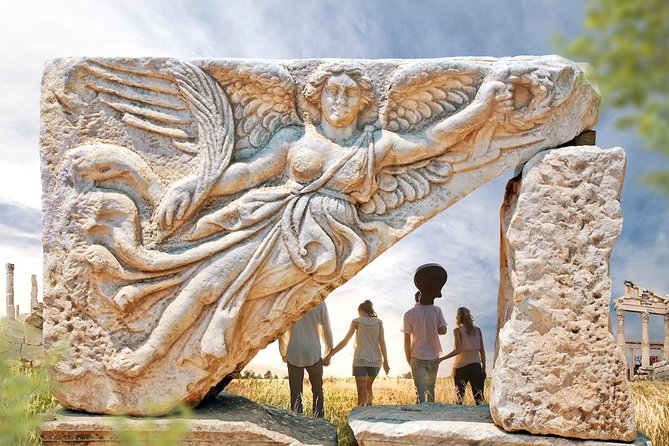
Ephesus (Efes) was a heavyweight in the Mediterranean world. In the first century BC, it was reported as the second-largest city in the world, with only Rome ahead in power. That context helps the scale click: this wasn’t a sleepy ruin field. It was a city built to move people, trade, and ideas.
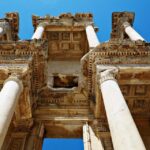
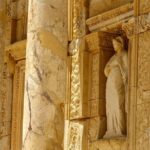
You’ll also get to see reconstructed structures and major ruins, including the Temple of Artemis. Even when restoration is partial, Ephesus feels like a living grid of ancient movement.
Practical note: admission isn’t included for Ephesus. So if you’re budgeting, plan ahead. Also, expect some walking and sun, since you’re outside most of the time.
Meryemana (Virgin Mary’s House): Faith, Pilgrimage, and Quiet Focus
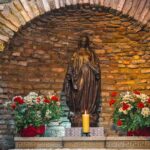
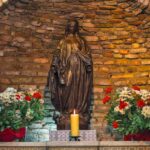
After Ephesus, you shift to a different type of sacred space: Meryemana, the Virgin Mary’s House. The tour allots about one hour, which is a good amount here. It gives you time to take in the atmosphere without feeling like you have to sprint through.
This is a shrine tied to the supposed place where St. Mary spent her final days. Whether you approach it through Christian or Islamic tradition, the site is recognized as sacred for both Christians and Muslims. The restored stone house functions as a chapel, and the Lazarist Fathers conduct mass daily.
You’ll hear the site’s deeper timeline too—remnants dating back to the 6th century are part of the story. That kind of detail matters because it makes the visit feel anchored rather than purely ceremonial.
Admission is not included here, so again, budget for tickets.
Temple of Artemis Area: A Short Stop With Real Wow Potential
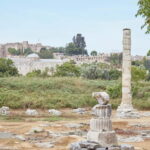
The Temple of Artemis (Artemision) is one of the Seven Wonders of the Ancient World. The key here: you won’t get a full intact temple moment, because it was rebuilt multiple times after destruction. Over time, much of what remains was moved for preservation.
Still, the stop is worth it. You can see one tall column and a handful of marble pieces from the foundations of the original structure. This is a great example of how ruins can still communicate the original ambition, even when only fragments survive.
The area is also close to Ephesus, so it fits neatly into the day without adding long travel stress. Admission is listed as free for this stop, which is nice.
From the Artemis area, you can also view the ruins of St. John’s Basilica on a hill near Selçuk. That panoramic perspective helps you see the wider Selçuk-Ephesus cluster instead of treating each stop like a separate planet.

Şirince and Kuşadası: Quick Aegean Flavor Stops
Şirince: White Houses, St John’s Frescoes, and Weekend Crowds
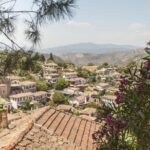
Şirince (Şirince/Şirince Köyü) is a small village of around 600 inhabitants, linked to Ephesus historically. You’ll get the background behind the name—rumor has it that the original name was associated with a playful meaning connected to freed Greek slaves, and later the name changed in the early 20th century to Şirince, meaning pleasant.
This stop is short on the schedule, but it’s still valuable if you want a sense of the human scale around the big archaeological zones. The village is known for preserved whitewashed stucco homes, a lush mountainous feel, and fruit-based wineries and olive groves.
There’s also the Church of St John the Baptist, which still has Byzantine frescoes, even if it’s not fully maintained by Turkish authorities. The practical drawback: Şirince can get very crowded on weekends, so if your dates are flexible, try to avoid the busiest days.
Admission is listed as free for this stop, which is a win.
Kuşadası: A Coast Stop to Reset Your Brain
Kuşadası is a coastal city on the Aegean, and the tour gives a brief about 20-minute look. If you’ve been in ancient stones all day, this is a helpful rhythm change.
One detail you can watch for: Pigeon Island (Güvercinada) is connected to the mainland by a man-made causeway. The hill of Kese Dağı is near the center of town, so you’ll get a sense of how the city sits between sea and elevation.
This stop is not about museums. It’s about momentum—so you arrive at Day 2 feeling like you saw more than just ruins.
Day 2: Pamukkale Natural Park and the Travertines Everyone Talks About
Pamukkale Natural Park: Cotton Castle Terraces and the Sacred Pool
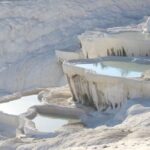
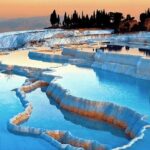
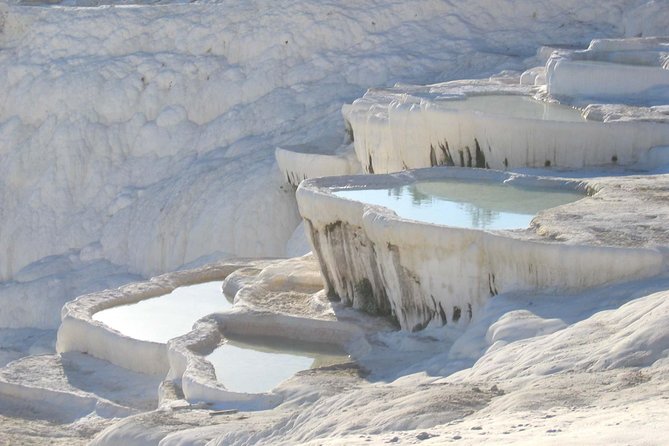
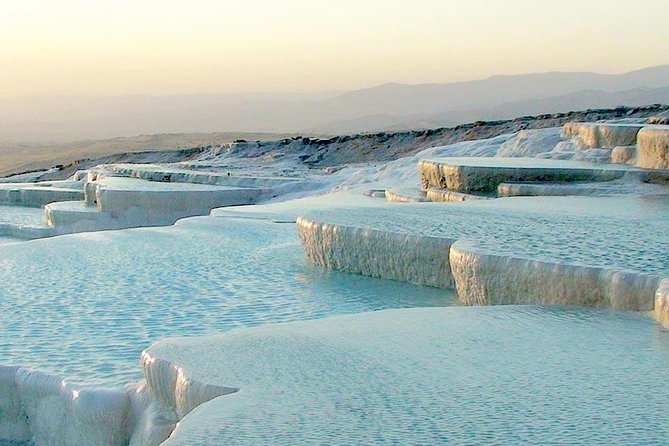
Day 2 is where the visual payoff lands. Pamukkale translates as Cotton Palace, tied to the bright white travertines and stepped terraces created by mineral-rich thermal waters.
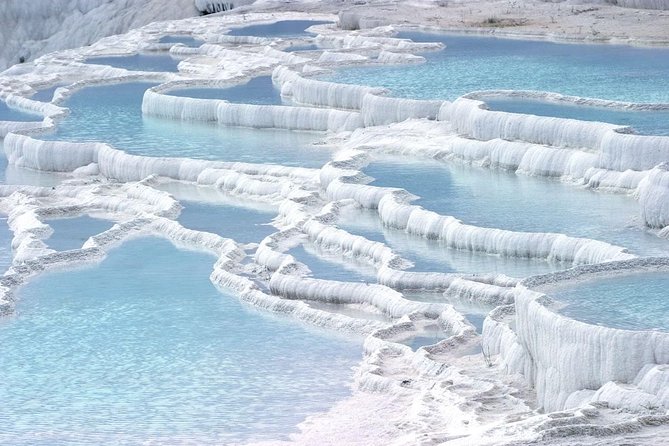
You’ll spend about two hours in Pamukkale Natural Park, and that time matters because the terraces are best when you can pause and look around. The key feature is the slope of white terraces—water moving down steps, leaving mineral deposits that create that cotton-like pattern.
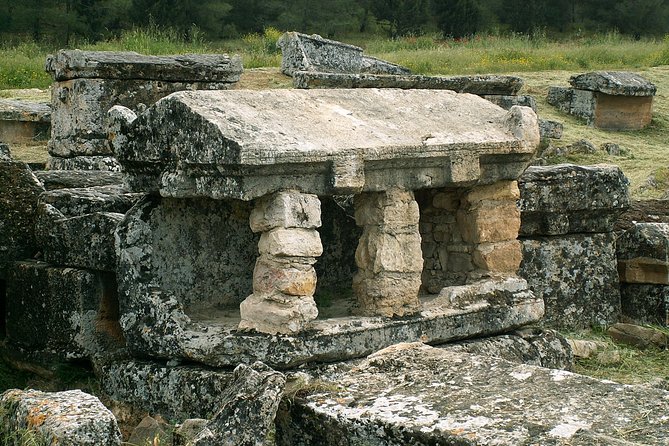
The tour also includes the visit to the ancient city of Hierapolis, and it highlights that the site contains the largest necropolis with about 1,200 gravestones in Anatolia. That’s the kind of fact a guide helps you place in your mind: you’re not only looking at white terraces—you’re standing on a place that was built to outlast time.
Another major highlight is the Sacred Pool. This is described as shallow thermal water rippling over ancient Roman ruins beneath the surface. That contrast—soft warm water over hard stone—creates a memorable, almost unreal effect. It’s one of those moments where it’s easy to forget photos and just watch.
Admission is listed as not included for the Natural Park stop.
Hierapolis Archaeology Museum: A Short Add-On With Context
After the terraces and ruins, you’ll have a stop at the Hierapolis Archaeology Museum for around 30 minutes. It’s listed as ticketed (admission not included).
This part is useful because it helps connect what you saw outside to artifacts and explanations you might otherwise miss. The tour notes that Hierapolis is listed as UNESCO, and it also mentions that Cleopatra’s name is tied to the hot springs as a treasured retreat. Whether you treat that as legend or romance, it’s a reminder that this place has always pulled people in.
If you prefer “see it, then understand it,” a quick museum stop is a smart rhythm. If you prefer only outdoor time, keep an eye on your energy level—this is still a fairly short museum visit.
Pamukkale Thermal Pools: The Part That Feels Like Magic (and Is Free)
Then you get time at the Pamukkale Thermal Pools for around 30 minutes. This stop is listed as free for admission.
This is where the tour’s “watch the water do its weird thing” theme becomes real. The mineral deposits and terraces are caused by mineral-rich water interacting with the environment over long periods. You can see the strangeness of a landscape shaped by calcite—stories of waterfalls frozen in stone and blue pools on tiered terraces are part of what draws people in.
A practical tip: you’ll want to time your moments. Travertines photograph well, but the best experience is when you slow down and look for patterns in the water flow and where deposits have built up.
Hierapolis and the Roman Necropolis Feel
Hierapolis is tied into the Pamukkale day, and the tone shifts from white terraces to the weight of ancient burial ground and ruin.
The tour mentions the necropolis with 1200 gravestones as a standout feature. That detail isn’t just trivia. It tells you this place was organized for the long term—Hierapolis wasn’t only built for life; it was built for memory, too.
You’ll also see the broader UNESCO-listed hot springs area, described as bright white terraces filled with turquoise water. The tour notes that calcium hardens over millennia, creating that stepped structure. There’s also a specific scientific note: the travertine terraces form as hot mineral water calcifies upon contact with carbon dioxide.
If you like your travel with at least a little science to go with the wonder, this kind of explanation is a good fit.
Price and Value: Is $150 Per Group a Good Deal?
At $150 per group (up to 15 people) for a two-day private format, the value depends on who you’re traveling with.
If you’re traveling solo or as a couple, the cost per person can rise if you end up near the low end of group size. But if you’re a small group—family, friends, or a group of friends—this pricing can feel very reasonable. Private transportation, a licensed guide, and lunch included (2x) are the big value drivers.
It’s also a more budget-friendly approach than “two separate tours.” You’re combining Ephesus + Selçuk area with Pamukkale + Hierapolis under one roof. That reduces duplication of travel time and guide coordination.
The one clear cost consideration is that entrance fees aren’t included. Since several stops are ticketed, your final total will depend on which entrances you pay for. Still, you’re not surprised at the last second: the big exclusions are clearly flagged.
If you want a straightforward way to see two of western Turkey’s most famous sites without turning your trip into a schedule puzzle, the structure makes sense.
How the Private Format Changes Your Experience
This tour is private, meaning your group goes together. That changes everything about pacing.
Instead of matching yourself to public transport schedules, you can follow the guide’s flow: Ephesus first while the day is still yours, then sacred stops, then the village/coastal reset. Day 2 flows from travertines and Hierapolis ruins into the museum and thermal pools.
You also get the benefit of flexible context. The guide is there to help you understand what you’re seeing—especially important at large ruins like Ephesus, where it’s easy to miss the “why” behind the “what.”
Also worth noting: the tour offers a mobile ticket, uses pickup, and travels in an air-conditioned vehicle. Small comforts add up when the weather is warm and you’re outside for several hours.
Who This Tour Fits Best (and Who Might Want Something Else)
This private Ephesus and Pamukkale tour is a great fit if you:
- Want two major areas covered in two days
- Prefer a licensed guide to make ancient sites clearer
- Like the idea of one included lunch rather than hunting for food during the day
- Travel as a small group and can split the group price
It may be less ideal if you:
- Want a fully ticketed, all-in price (since entrances aren’t included)
- Have very limited walking tolerance (ruins and park areas require decent mobility)
- Want to spend more time in one location than the schedule allows
Should You Book This Private Ephesus and Pamukkale Tour?
If your priority is seeing Ephesus and Pamukkale without turning travel logistics into your hobby, I’d book it. The two-day structure is efficient, the private vehicle and pickup reduce stress, and the lunch included detail makes the days feel smoother.
Do pay attention to entrance fees. If you’re the type who plans every budget line, you’ll feel comfortable with this setup. If you want everything wrapped in one price, you’ll need to add tickets to your mental math.
Finally, book with a little foresight. The tour is commonly booked about 27 days in advance, so if your travel dates are fixed, don’t wait until the last minute.
FAQ
Is this a private tour?
Yes. It’s listed as a private tour/activity, so only your group participates.
How much does the tour cost?
It costs $150 per group, for groups of up to 15 people.
How long is the tour?
The tour runs for 2 days (approximately).
Does the price include lunch?
Yes. Lunch is included, listed as Lunch (2), which matches the two-day format.
Is pickup included?
Pickup is offered.
Are entrance fees included?
No. Entrance fees for the sights mentioned in the plan are not included, and gratuities for your guide and driver are also not included.
Does the tour use mobile tickets?
Yes. Mobile ticket is included.
What are the main stops?
On Day 1 you visit Ephesus, Meryemana (Virgin Mary’s House), the Temple of Artemis area, and you also stop at Şirince and Kuşadası. On Day 2 you visit Pamukkale Natural Park and Hierapolis, plus the Hierapolis Archaeology Museum and Pamukkale Thermal Pools.
Is free cancellation available?
Yes. You can cancel for a full refund up to 24 hours in advance.
How far in advance should I book?
On average, it’s booked about 27 days in advance.