REVIEW · SELCUK
Daily Ephesus and Virgin Mary House Tour with Lunch Included
Book on Viator →Operated by Crowded House Tours · Bookable on Viator
Ephesus and Meryemana in one packed day. This tour pairs the pilgrimage site of Meryemana with a guided walk through Ephesus, with lunch and key entrances taken care of for you.
I like the small-group feel (up to 20 people) and the air-conditioned van pickup timed for a 9:00 start, which helps you settle in fast instead of waiting around. Lunch in Selçuk is included, so you’re not trying to find food while the day races by. One drawback to consider: the schedule leaves less wiggle room if you’re trying to catch a cruise departure or you prefer to avoid extra shop stops.
In This Review
- Key things that make this day tour work
- Price and logistics: what you’re really paying for
- Getting from Kusadasi (or the cruise port) to Selçuk
- Meryemana (The Virgin Mary’s House): pilgrimage, not a museum
- Ephesus in 2 hours: how to not feel rushed
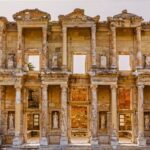
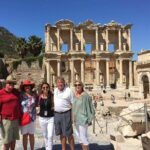
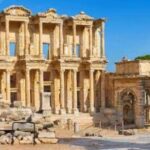
- Library of Celsus and the Great Theater: the wow moments
- Temple of Artemis: a 15-minute reality check
- Lunch in Selçuk and the shop-time reality
- Kusadasi handicrafts and the end-of-day drop-off
- Who this tour suits best
- What I’d do to get the most out of your day
- Should you book this Daily Ephesus and Virgin Mary House Tour?
- FAQ
- How long is the tour?
- What time does pickup start?
- Where is pickup for cruise passengers?
- What’s included in the price?
- Is lunch included?
- Are entrance tickets included for Ephesus and the Virgin Mary House?
- Is the Temple of Artemis included, and do I need a ticket?
- Is the Terrace Houses entrance included?
- What language is the tour guide?
- Is the tour cancelled for weather?
Key things that make this day tour work
- Meryemana (Virgin Mary House) gets a full hour, not a rushed photo-op.
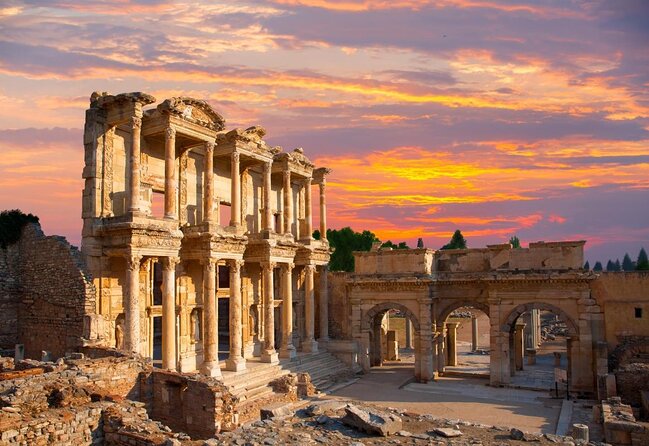
- Ephesus coverage hits major sights: marble streets, Odeon, Great Theater, and the Library of Celsus area.
- Celsus and theater views are easier to understand when you have a guide pointing out what you’re seeing.
- Temple of Artemis is short (about 15 minutes), but it helps you place why it was one of the Seven Wonders.
- Lunch is included in Selçuk, with no need to hunt for a restaurant between sites.
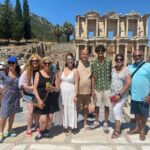
- Small group size (max 20) keeps the logistics manageable in a crowded ancient city.
Price and logistics: what you’re really paying for
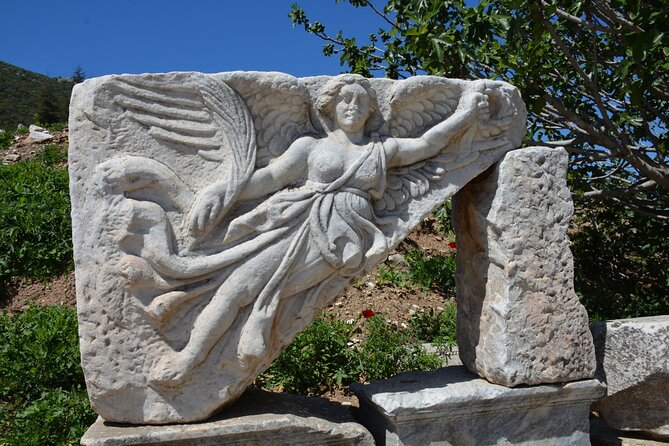
At $130.66 per person for roughly 7 hours, you’re paying for three things that matter in this region: transportation from Kusadasi (or the cruise port area), included entrance fees, and a guided day that bundles Ephesus plus the Virgin Mary House.
The “value math” is simple. Admission is included for the House of the Virgin Mary and the Ephesus ancient site, and lunch is included too. If you’re the type who hates ticket lines and last-minute planning, that’s where the cost starts to feel fair. If you’re the type who likes to DIY, you might find a cheaper day-trip-only ticket route—but you’d still need transit, timing, and navigation.
This is an English-language tour with a maximum group size of 20, which is a big deal at Ephesus. Even with that limit, it’s still an active day: you’ll be walking on stone and climbing gently between key spots.
You can also read our reviews of more tours and experiences in Selcuk
Getting from Kusadasi (or the cruise port) to Selçuk
The day starts with pickup. If you’re staying in Kusadasi, pickup is between 09:00 and 09:15. If you’re at the cruise port, pickup is in front of Kervansaray Hotel across the port between 09:00 and 09:15. If you’re based in Selçuk, pickup is later, between 09:30 and 09:45.
From Kusadasi to Selçuk, it’s about a 30-minute drive. That timing matters because your first real stop (Meryemana) is when the day begins to feel focused—around 10:00 am for exploring. You’re not spending half the morning in transit.
Practical tip: if you’re doing this from a cruise, you should treat your return time as a hard requirement. The tour runs until roughly 16:00 to 16:30, back at the ending point. Ask your driver/guide to confirm the exact drop-off point before you get too far into the schedule.
Meryemana (The Virgin Mary’s House): pilgrimage, not a museum
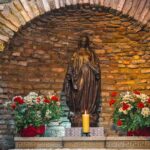
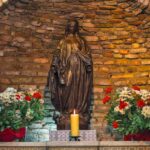
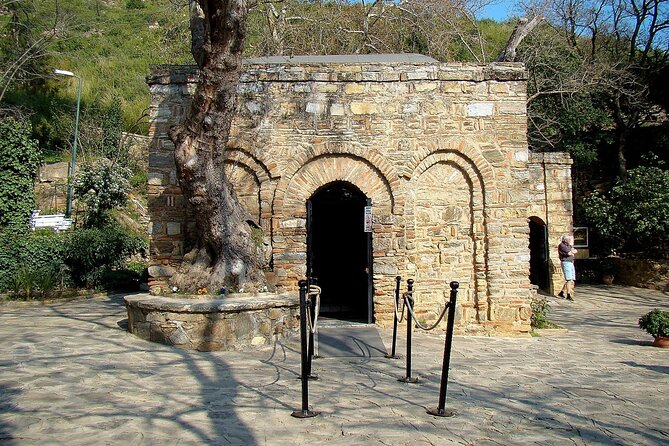
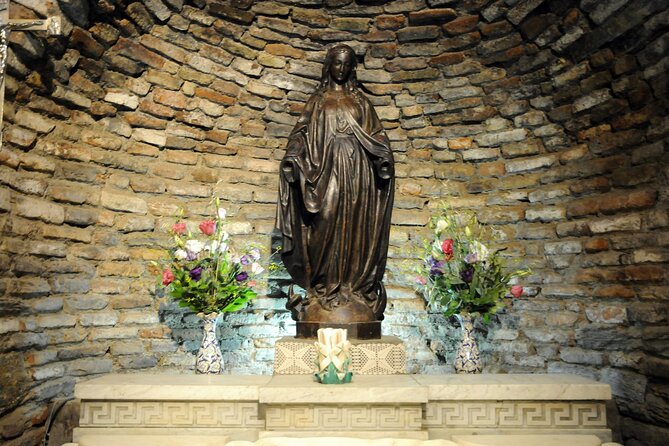
Meryemana is the spiritual anchor of the day. You’ll spend about 1 hour at the House of the Virgin Mary, with the ticket included. This site is strongly tied to Christian tradition: it’s associated with the idea that Saint John spent years in the area, and that Mary may have been in the region during her later life.
It also has modern milestones that help explain why people still treat it like a living place of worship. Pope Paul VI visited in the 1960s, and in the 1980s Pope John-Paul II declared the shrine a pilgrimage site for Christians. Those details aren’t just trivia; they give you context for why the site feels quiet and reverent compared to the louder ancient ruins later.
What you’ll actually do here is simple: walk the grounds, look at the prayer spaces, and take in the setting. Expect to move slowly. It’s a good stop if you want your day to include more than stones and columns.
Drawback to keep in mind: because this is a pilgrimage site, the vibe is calmer than Ephesus. If you prefer fast, high-energy sightseeing only, you may feel like the hour is a slower pace—but it also prevents the day from turning into pure sightseeing burnout.
Ephesus in 2 hours: how to not feel rushed
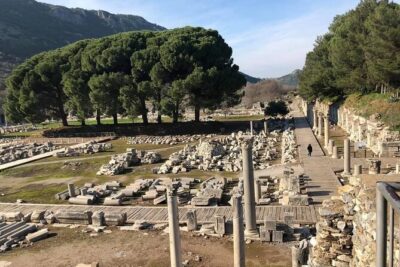
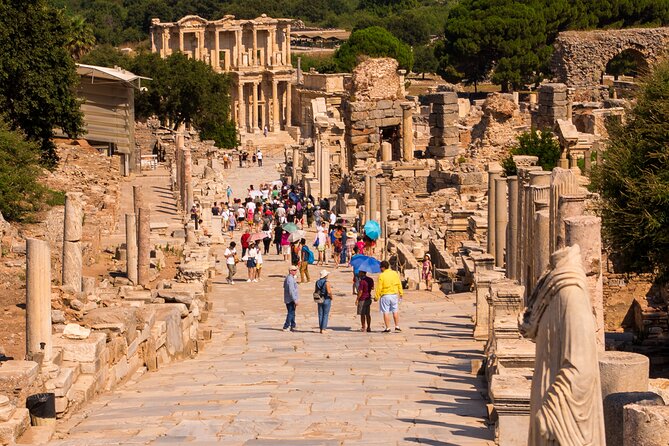
Your Ephesus time is about 2 hours, and that’s both the strength and the challenge. The strength is that you’ll cover a lot of major points. The challenge is that Ephesus is huge, so you’ll want to watch the guide’s plan and prioritize what you’re seeing.
Here’s what your route includes, in the order you’ll likely recognize it:
- Upper Agora: a sense of civic life, with big public-space vibes.
- Odeon theater: a smaller performance setting that helps you picture how entertainment worked beyond the Great Theater.
- Domitian Square and the Temple of Domitian: ceremonial space and imperial presence.
- Fountain of Pollio: a reminder that even practical infrastructure was meant to look impressive.
- Hercules Gate: a dramatic entryway with mythic symbolism.
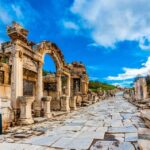
- Temple and fountain of Trajan and the Temple of Hadrian: the layering of rulers and styles you can read across the ruins.
- Roman baths, latrines, marketplace, and even an ancient brothel house: these stops help you see daily life, not just monuments.
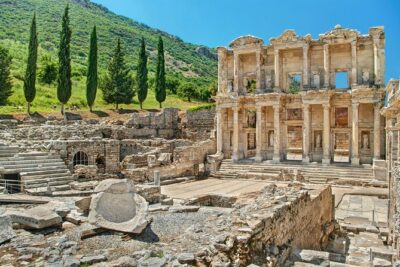
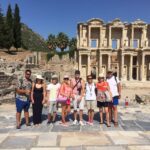
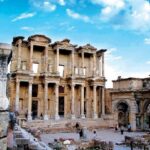
- Library of Celsus: you’ll reach one of the most famous facades, described here as one of the largest libraries in the Roman world.
- The Great Theater: you get to imagine scale—how sound and crowd energy would have worked at ancient performances.
The best way to enjoy this kind of compressed route is to stop fighting the clock. Instead of trying to absorb everything like a textbook, you’ll get more out of the tour by focusing on two things: the “why” behind each site (how people used it), and the “how it fits” into the city layout.
One more practical note: even with a guide, you’ll still walk. Wear shoes you trust. Ephesus is not hard in the athletic sense, but it is hard on your feet.
Library of Celsus and the Great Theater: the wow moments
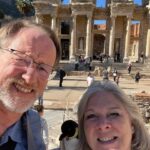
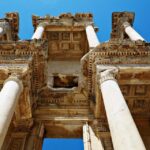
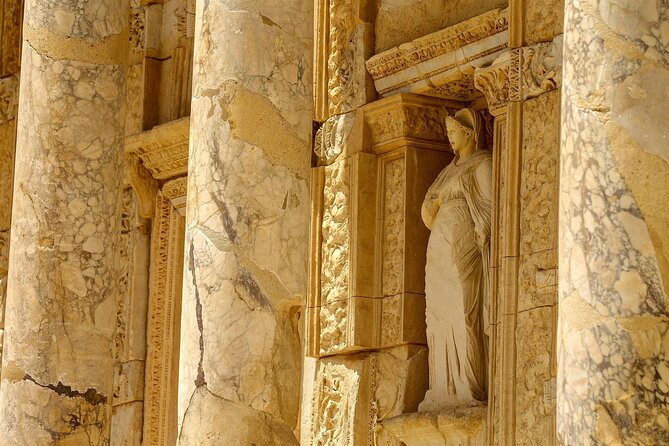
If you like big visual payoffs, this tour delivers two. First is the Library of Celsus area. The facade is the type of structure where you immediately get why people photographed it for centuries. Even if you can’t stand and read every inscription, you can still grasp the idea: knowledge was displayed like power.
Second is the Great Theater. Standing above it, you understand that theater in ancient times wasn’t just entertainment. It was public life. With a guide pointing out features, you’ll also start to notice things you might otherwise miss—where the stage would have sat and how seating tiers shaped the audience experience.
If you’re going to take photos, do it with a plan. Don’t spend all your time framing. Look once, then use your photos as reminders instead of as a replacement for seeing.

Temple of Artemis: a 15-minute reality check
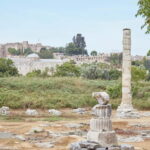
The Temple of Artemis stop is short—about 15 minutes—and it helps to know that in advance. According to tradition and historical accounts, Artemis’s temple was destroyed on July 21, 356 BC in an arson incident linked to Herostratus. The story says Alexander the Great was born the same night, and while Alexander supposedly offered to fund rebuilding, the Ephesians refused. The temple was later restored after Alexander’s death, then destroyed again during a raid by the Goths.
So when you arrive, you’re not walking into a fully intact wonder. You’re visiting a site that points to something grand that time didn’t preserve. That’s why the stop works best if you treat it as a “place-in-time” moment rather than a full visit.
If you want more time at Artemis than the tour gives, you’ll need to add that separately. For most people, though, the quick stop is a smart connector: it closes the loop between Ephesus and the idea that this region shaped the ancient world.
Lunch in Selçuk and the shop-time reality
Lunch is included, and it’s served in a restaurant in Selçuk after the main sightseeing portion. Having lunch handled is a real benefit in a day this full. You avoid the mental load of finding something open, choosing quickly, and still making the next stop on time.
That said, the day can include time spent in shops or product presentations. One person’s experience described a longer stretch focused on leather goods and another stretch tied to olive oil and Turkish products. Another part of the itinerary also includes handicrafts time in Kusadasi.
Here’s how I’d handle it: if you like browsing handmade goods, this can be enjoyable. If you hate sales pressure, set a personal rule before you go. Decide what you’re willing to look at, and if the atmosphere turns pushy, keep your shopping budget in your mind and don’t feel guilty skipping it.
A practical note: drinks at lunch aren’t included, so bring a little cash or plan to pay on site if you want water or something else.
Kusadasi handicrafts and the end-of-day drop-off
After lunch and Artemis, you’ll spend time in Kuşadası for about 1 hour, focused on local handicrafts. This is the gentler, slower part of the day—more shopping-friendly than ancient-ruin-friendly.
At the end, you’ll be dropped back around 16:00 to 16:30 to your pick-up location. The tour ends back at the meeting point, so you’re not trying to figure out transport on your own right when you’re tired.
If you’re using this from a cruise, keep one more thing in mind: you may have drop-offs arranged in a way that prioritizes other stops first. Build in buffer, and keep your cruise departure information handy.
Who this tour suits best
This is a good match if you:
- Want both Meryemana and Ephesus in one day without planning the logistics yourself.
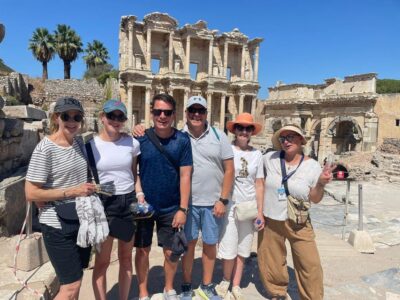
- Prefer a small group experience instead of a giant bus with a long queue for everything.
- Like guided interpretation, especially for Ephesus where the ruins can look similar until someone explains how they connect.
- Appreciate included entrances and included lunch to keep your day predictable.
It may be a weaker fit if you:
- Need a very strict schedule with no shopping or presentation time at all.
- Get overwhelmed by walking in historic sites and want more free time at fewer stops.
- Want a long, in-depth visit to Artemis beyond a quick stop.
What I’d do to get the most out of your day
Bring these basics and you’ll enjoy the tour more:
- Comfortable walking shoes (Ephesus is the star, and your feet do the work).
- A light layer. Morning can feel cooler in the region, and you’ll be moving in and out of sites.
- A small buffer mindset for timing. Even well-run tours can feel fast at Ephesus because you’re seeing a lot in a limited window.
- A shopping plan, not a vague hope. Decide what souvenirs you want, and skip anything that feels like hard selling.
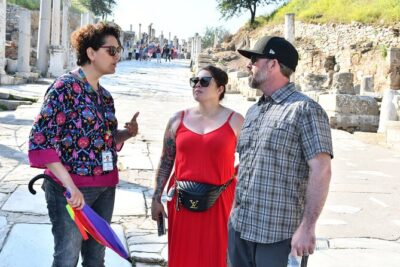
Guides in the feedback for this kind of tour often get praised for making the sites clearer, and names like Enders and Augusto appear in the guide mentions. Even if you don’t know who you’ll get, that’s a good sign: your experience will likely depend heavily on the guide’s pacing and explanations.
Should you book this Daily Ephesus and Virgin Mary House Tour?
If your priority is a well-organized day that covers Meryemana, Ephesus, and the Temple of Artemis without you doing the planning, I think this is a solid booking. At $130.66, the included entrance fees plus lunch do a lot to justify the cost, and the cap of 20 people helps keep it from turning into chaos.
I’d book with extra caution only if you’re on a cruise and you’re sensitive to timing stress. If that’s your situation, confirm the drop-off details early and don’t assume every “about 16:00” moment will feel perfectly calm.
Overall: it’s an efficient, meaningful day—equal parts sacred and ancient—best for people who like guided structure more than free-form wandering.
FAQ
How long is the tour?
It runs for about 7 hours (approx.).
What time does pickup start?
Pickup is offered around 09:00 to 09:15 from Kusadasi and from the cruise port area. Pickup from Selçuk is later, between 09:30 and 09:45.
Where is pickup for cruise passengers?
Pickup for cruises is in front of Kervansaray Hotel across the Kusadasi port between 09:00 and 09:15.
What’s included in the price?
Lunch, air-conditioned vehicle transport, and entrance fees for the House of the Virgin Mary and the Ephesus ancient site are included.
Is lunch included?
Yes. Lunch is provided in a restaurant in Selçuk.
Are entrance tickets included for Ephesus and the Virgin Mary House?
Yes. Entrance fees for both the House of the Virgin Mary and the Ephesus ancient site are included.
Is the Temple of Artemis included, and do I need a ticket?
The Temple of Artemis stop is included and the admission fee is listed as free for that stop.
Is the Terrace Houses entrance included?
No. Entrance fee to the Terrace Houses in Ephesus is not included.
What language is the tour guide?
The tour is offered in English.
Is the tour cancelled for weather?
The tour requires good weather. If it’s canceled due to poor weather, you’ll be offered a different date or a full refund.