REVIEW · EPHESUS TOURS
Ephesus Small Group Day Tour from Kusadasi
Book on Viator →Operated by Alaturca Ephesus · Bookable on Viator
Waking up early can be worth it. This small-group Ephesus day trip packs the big hitters—UNESCO ruins, the Virgin Mary’s House, and the Temple of Artemis—into about 7 hours with hotel pickup and a guide. You’ll see the “wow” monuments, but you’ll also get the human context for what this place looked like when it was alive.
Two things I really like: the plan is built around the most important sights (Celsus, the Great Theatre, and Meryemana) without turning it into a long bus tour. And the value is strong because entrance fees and lunch are included, so you’re not doing surprise math all day.
One possible drawback: like many Ephesus-area tours, this day can include short stops at trade-style workshops (often carpet and leather). If you hate sales pressure, you’ll want to set boundaries early.
In This Review
- Key highlights worth planning for
- Kusadasi Morning Pickup and a Day Built for Ephesus
- Meryemana: The House of the Virgin Mary and a Quiet 45 Minutes
- Ancient Ephesus: Celsus, Theatre Views, and the Arcadian Way
- Odeon, Hadrian’s Temple, and the Roman Details You Can Almost Hear
- Lunch Buffet Break and How to Keep Energy for the Afternoon
- İsa Bey Mosque in Selçuk: A Change of Scene from Roman Marble
- Temple of Artemis: One Pillar, Big Stories
- Price and What You’re Actually Paying For
- Shopping Stops: Worth It If You Want Them, Skip If You Don’t
- Who This Tour Fits Best (And Who Might Want to Skip)
- Should You Book the Ephesus Small Group Day Tour from Kusadasi?
- FAQ
- How long is the Ephesus small-group day tour from Kusadasi?
- What’s the pickup timing from Kusadasi?
- What’s included in the tour price?
- Are drinks included with lunch?
- How big is the group?
- Where does the tour end?
Key highlights worth planning for
- Hotel pickup and drop-off from central Kusadasi, plus an English-speaking local guide
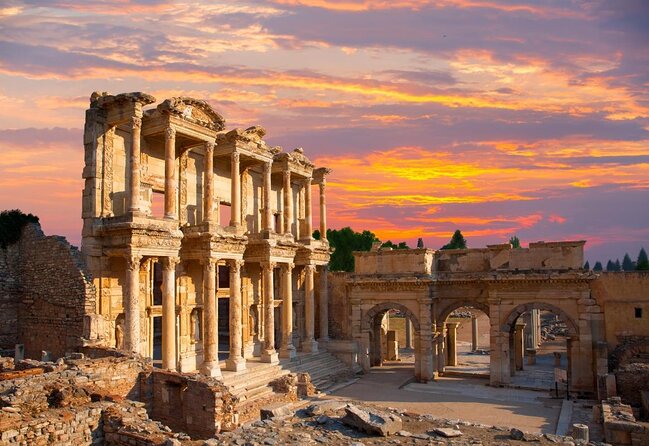
- UNESCO-listed Ancient Ephesus with major monuments like Celsus Library and the Great Theatre
- Meryemana (House of the Virgin Mary) with about 45 minutes at the site
- A break from ruins at İsa Bey Mosque in Selçuk, built in the 1370s
- A timed look at the Temple of Artemis, where only a solitary pillar remains
- Maximum 15 travelers, which usually means less rushing and easier questions
Kusadasi Morning Pickup and a Day Built for Ephesus
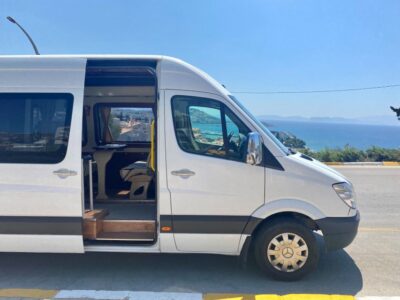
This tour starts early. The pickup window from Kusadasi is usually 8:00–9:00 am, with the tour starting at 8:30 am. You’ll ride in an air-conditioned coach, then head toward Ephesus with your guide pointing out what matters—why this city grew, and why it’s still so well preserved.
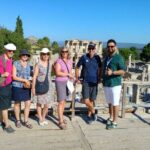
The small-group limit of 15 is a big deal here. Ancient sites can feel like controlled chaos, especially when you’re herded. With a smaller group, you usually get to pause longer at the good spots and ask better questions without yelling over everyone.
One practical thing to note: your exact pickup time depends on your hotel and how many extra people are added. The right move is to contact the pickup operator so you’re not guessing the morning of.
You can also read our reviews of more tours and experiences in Kusadasi.
Meryemana: The House of the Virgin Mary and a Quiet 45 Minutes
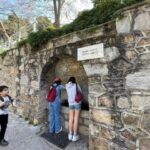
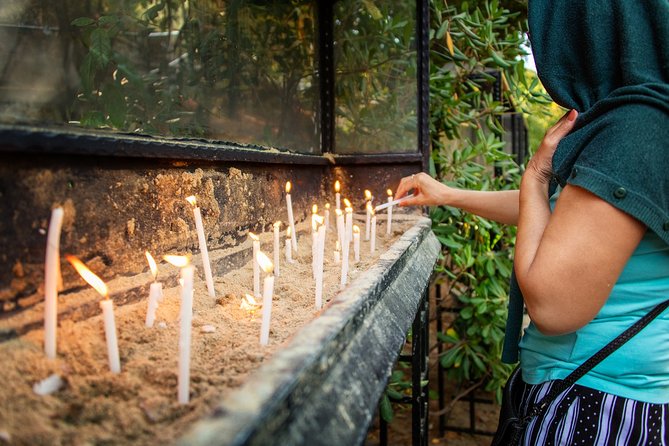
Your first stop is Meryemana (House of the Virgin Mary). The idea here is religious and historical at once: many beliefs place Mary’s last years in Ephesus, with St. John associated with the story, and the stay often dated to the late 1st century CE. Either way, this stop has a very different feel than the Roman ruins.
You’ll get about 45 minutes here, plus admission included. What to do with your time: slow down. Look at the setting on Bulbul Mountain, and notice how the site is arranged for reflection—this isn’t a “run-and-snap-photos” stop.
If you’re into architecture or atmosphere, it’s also a good moment to reset your brain before the bigger walking portion of Ephesus. If you’re not into the religious side, you can still enjoy it for the location and the human scale.
Ancient Ephesus: Celsus, Theatre Views, and the Arcadian Way
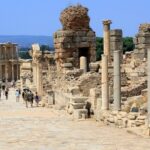
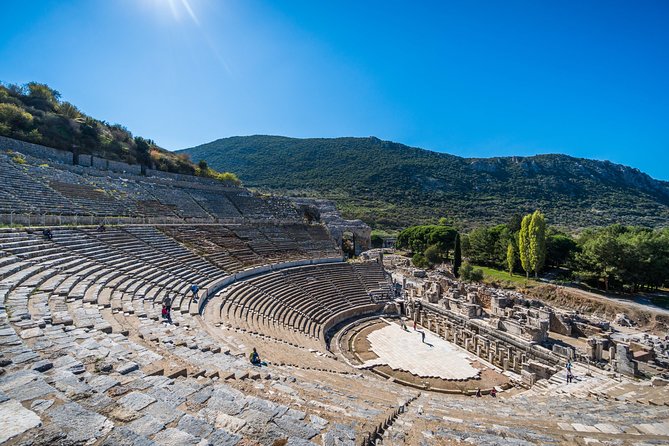
Now the main event. Ancient Ephesus is the big prize because it’s both grand and readable—you can still picture the city layout as you move through it. Ephesus was a major trading center and a major religious center too, including the cult of Cybele.
You’ll spend about 2 hours exploring the Ancient City with admission included. The tour focuses on the headliners and the ones that help you understand how daily life worked.
Here are the spots you’ll likely treat like landmarks as you go:
- Great Theatre: A huge marble theatre with room for tens of thousands of spectators in its heyday. You’ll probably stop long enough to look at the structure and imagine crowds. Even in ruins, it’s the kind of place that makes you sit up straighter.
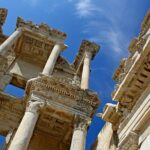
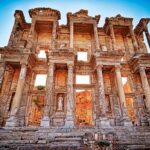
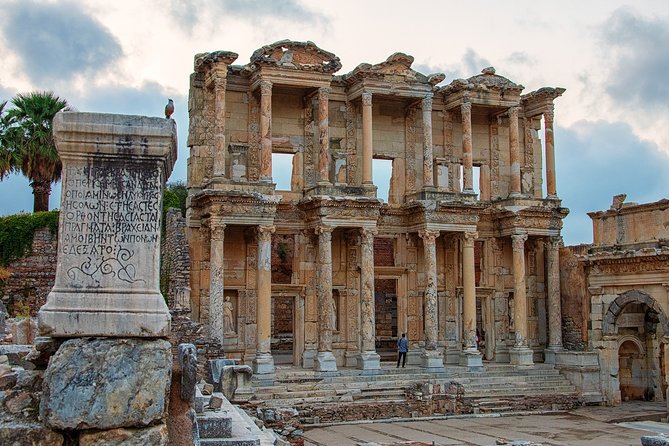
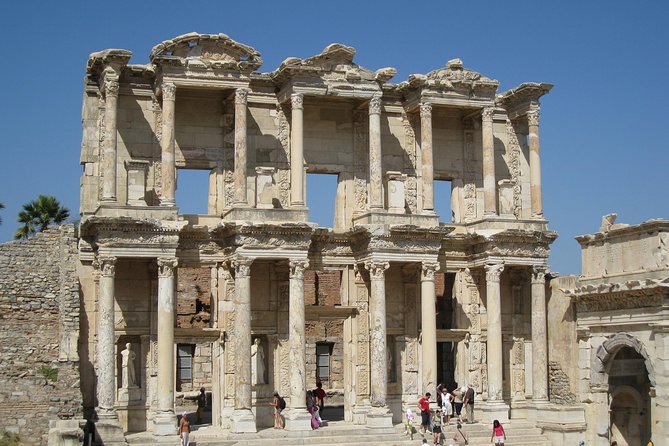
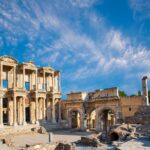
- Celsus Library: This is the one most people come to see. The façade is famous for its restored look and its clever design. It’s also a strong reminder that “library” buildings were statement pieces—these weren’t just storage rooms.
- Arcadian Way: The grand, marble-paved route you’ll walk along. It’s the best kind of sightseeing: moving through space the way people used to move.
- Agora and streetscape: You’ll stroll around the main public spaces, where trading and social life overlapped.
If you’re a first-timer, you’ll come away understanding why Ephesus feels so complete. If you’ve visited other Roman ruins, you’ll notice the difference: Ephesus doesn’t just have scattered columns. It has connected sections that make sense as you walk.
Odeon, Hadrian’s Temple, and the Roman Details You Can Almost Hear
After the core Ephesus walk, the tour adds more “in-between” stops that make the city feel real, not just impressive. You won’t spend all day just staring at the largest monuments—there’s also a focus on structures that show how Romans lived.
Odeion is next on the list, a smaller semi-circular venue from the 2nd century A.D. It likely hosted events like concerts and performances, and it also worked as a meeting-and-social space. The reason it’s worth stopping is simple: it bridges entertainment and politics in a way a big theatre doesn’t always show.
Then you get Temple of Hadrian, built early in the 2nd century AD. It sits on Curetes Street and is one of the best-preserved temples in the complex you’ll see. Think of it as a “main street” anchor—something to orient yourself around.
One of the smartest parts of the day is that your guide points out practical, everyday remnants too, like public latrines and Roman Baths. Those details are easy to overlook if you’re only chasing famous names. Here, they help you understand that the ancient world wasn’t only monuments. It was also sanitation, leisure, and routine.
Lunch Buffet Break and How to Keep Energy for the Afternoon
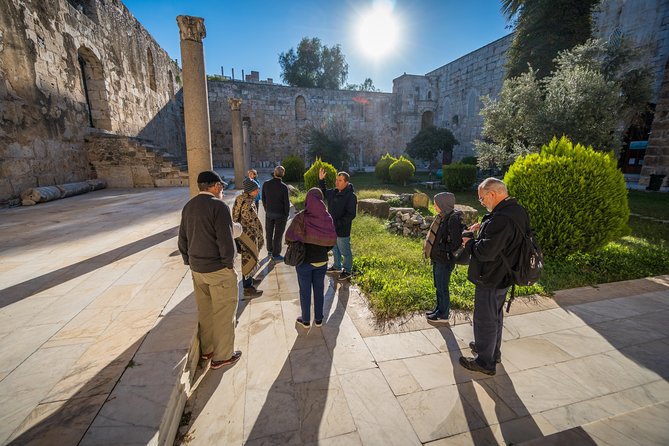
You’ll pause for lunch, and the best part is that it’s included as a buffet lunch. Drinks are not included, so if you want soda, tea, or water beyond what’s provided, you’ll plan for that cost.
A included lunch does two things for you. First, it saves time—this day is long enough that hunting for food would start to steal from the sights. Second, it keeps the schedule smoother, so you don’t end up sprinting between stops.
My tip: treat lunch like fuel, not a full stop. Eat enough to stay comfortable in the later ruins and mosque visits, then keep moving when you can. This tour has a lot of switching gears.
İsa Bey Mosque in Selçuk: A Change of Scene from Roman Marble
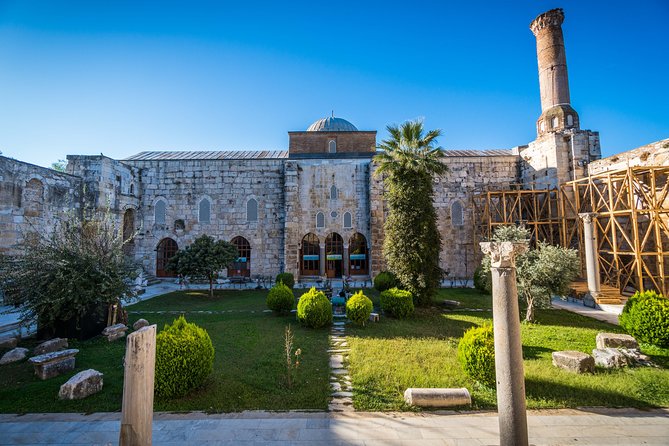
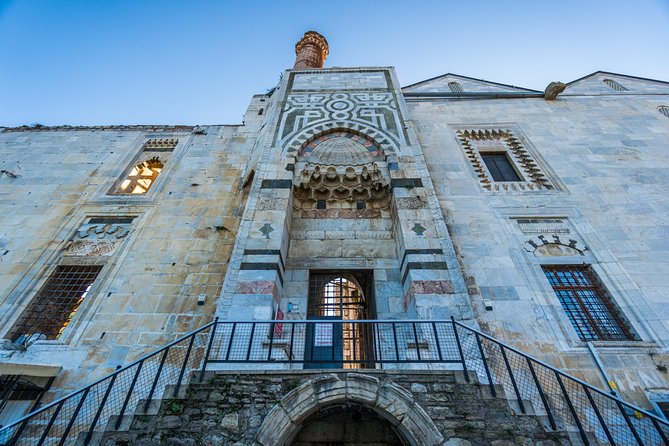
After lunch, you’ll head to Selçuk for İsa Bey Mosque. This is the kind of stop that stops the day from becoming one long timeline lesson. You shift from Roman stone to Seljukian architecture, and the style change is immediate.
The mosque was built in 1375 according to an inscription above the main entrance. It’s described as a post-Seljuk/pre-Ottoman transitional style, and it helps show how the region kept evolving long after the Roman era faded.
You’ll have about 20 minutes here. That’s enough time to appreciate the details without getting stuck in the “one more look” trap. This is a good moment to slow down, stand back, and look at the whole structure rather than only close-up details.
Temple of Artemis: One Pillar, Big Stories
Your final major history stop is the Temple of Artemis (Artemision). It’s famous because Artemis was one of the Seven Wonders of the Ancient World. Today, only a lone reconstructed pillar remains in an open field area to the west of the center.
You’ll get about 20 minutes here with admission included. This is one of those moments where imagination does some work. With only a pillar left, you’re not “seeing the building” so much as seeing the footprint of what once was—and understanding the scale implied by the remaining piece.
This stop is short, but it’s useful. It gives you perspective: the Roman city you explored earlier is still physically legible, while the Artemis temple is more about memory and reconstruction. Both are valuable. They just scratch different itches.
Price and What You’re Actually Paying For
The price is $174.60 per person, and for a day this packed, the key question is not just the number—it’s what comes with it.
Included items that drive value:
- Hotel/port pickup and drop-off
- Air-conditioned vehicle
- Local guide
- Lunch buffet
- Entrance fees and taxes
- Mobile ticket
- Tour limited to 15 travelers
The biggest “value lever” is entrance fees. Ephesus-area sites stack up quickly when you’re buying tickets one by one. With fees included, your money goes straight into guided time and access. You’re also not spending your day dealing with ticket counters.
The only commonly missed item is drinks—not included—so if you like having a bottled drink or extra tea, budget for it.
Shopping Stops: Worth It If You Want Them, Skip If You Don’t
Here’s the part to plan for. Some versions of this day can include factory-style trade stops—often a carpet making factory and a leather showhouse/workshop, plus other arts-and-crafts style presentations. In some cases, people feel the pitch is too strong, with products pushed as expensive options.
This doesn’t mean the tour is “bad.” It just means the day can shift from history to sales mode for stretches. If you love crafts, this can be a cultural break. If you don’t, you’ll want to protect your time and your wallet.
My advice: go in with a script.
- If you’re not buying, say you’re not shopping and stick to it.
- Don’t let a fashion-show style presentation drag you into impulse decisions.
- Treat any workshop stop as optional viewing, not a requirement.
If your priority is pure history, you’ll enjoy the Ephesus and Meryemana sections much more than the trade stops. You can also manage expectations: a tour can still be high value even if you don’t love every extra stop.
Who This Tour Fits Best (And Who Might Want to Skip)
This tour is a great fit if you want big-ticket Ephesus sights with less hassle. The small-group size makes it easier to keep pace and ask questions. The included lunch and admission fees make it a smoother budget day.
You’ll likely enjoy it most if:
- You want a guided route through Ephesus without planning a self-guided itinerary
- You like a structured day with clear time at key sites
- You’re okay with short workshop stops if you’re not pressured
You might want a different option if:
- You strongly dislike shopping or sales pitches during tours
- You prefer a more relaxed, slower pace with fewer stops
- You need more time at fewer sites rather than a packed day
Should You Book the Ephesus Small Group Day Tour from Kusadasi?
Book it if you want a time-efficient, structured day where Ephesus is the main event, plus Meryemana and İsa Bey Mosque. The combination of small group size, hotel pickup, and entrance fees + lunch included makes it a solid value package for first-timers.
Think twice if you’re shopping-averse. The added workshop stops can take the shine off the day unless you’re comfortable watching without buying. If that part sounds like a hassle, decide now how you’ll handle it—or pick a version of Ephesus that’s history-only.
If your goal is seeing Celsus and the Great Theatre with context, while still squeezing in Artemis and a mosque, this is a strong choice.
FAQ
How long is the Ephesus small-group day tour from Kusadasi?
The tour runs about 7 hours.
What’s the pickup timing from Kusadasi?
Pickup from Kusadasi is usually between 8:00 am and 9:00 am, and the tour starts at 8:30 am. Your exact pickup time may vary, so you should confirm it with the pickup operator the day before.
What’s included in the tour price?
It includes hotel/port pickup and drop-off, an English local guide, air-conditioned transportation, a lunch buffet, all fees and taxes, and entrance tickets for the listed stops.
Are drinks included with lunch?
No. The tour includes lunch buffet, but drinks are not included.
How big is the group?
This experience is limited to a maximum of 15 travelers.
Where does the tour end?
It ends back in Kusadasi with drop-off at your hotel.