REVIEW · EPHESUS TOURS
Private Ephesus Shore Excursion
Book on Viator →Operated by Guide of Ephesus · Bookable on Viator
A half-day in Ephesus is a good problem. This private Kusadasi cruise excursion lines up the big hits with a licensed local guide and air-conditioned round transfers, plus a real lunch break in the countryside. I like the way you get time at both the sacred stops—St. John and the Virgin Mary’s House—and the main ruins in Ancient Ephesus. One thing to plan for: entrance fees are not included, so you’ll want to budget a bit extra for the sites that charge admission.
What makes this one feel practical is the cruise focus. The tour is set up for a guaranteed on-time return to Kusadasi Cruise Port, so your day doesn’t turn into a stress test. And the guide quality seems to matter a lot here—names like Ibrahim and Umut Kurt come up in feedback as friendly, clear, and good at explaining what you’re seeing.
In This Review
- Key highlights that make this tour worth your time
- A cruise-day plan that doesn’t feel rushed
- Kusadası photo stops: Ottoman history with quick wow views
- St. John Kilisesi: the Basilica of St. John and the tomb story
- Meryemana (Virgin Mary’s House): calm, prayerful, and historically pointed
- Ancient City of Ephesus: the big sights in a sensible order
- Great Theater
- Public Agora
- Marble Street and Celsus Library
- Other classic Ephesus stops
- Handicrafts and local tips: useful, not a hard sell
- Lunch in the countryside: a real break, not a token meal
- Price and value: what you’re paying for (and what you’ll add)
- Who should book this and who might skip it
- Should you book this private Ephesus shore excursion?
- FAQ
- How long is the private Ephesus shore excursion?
- Is pickup and drop-off included?
- Is lunch included?
- Are entrance fees included for the sites?
- What kind of transportation do you use?
- How does the tour handle cruise timing?
- What is the cancellation policy?
Key highlights that make this tour worth your time
- Cruise-tuned schedule that aims to get you back before your ship leaves
- Private, licensed guiding with strong historical storytelling at each stop
- Skip-the-line ticket help from your guide (paying fees in cash)
- St. John Basilica + Meryemana (Virgin Mary’s House) with enough time to look around
- Ancient Ephesus core sights like the Great Theater, Marble Street, and Celsus Library
- Lunch included in the countryside with a break from the heat and walking
A cruise-day plan that doesn’t feel rushed
If you’re docking in Kusadasi and you want the headline sites of Ephesus without losing your whole day to logistics, this tour is built for that exact reality. The total time is about 5 to 6 hours, with an easy flow from port pickup to a guided route that mixes quick photo stops with longer visits where it counts.
You’ll ride in a separate, air-conditioned, non-smoking van. That matters more than people think, especially if your ship docks in warm weather and you’re coming straight from the harbor into open-air sites. Also, because it’s private, it’s just your group—not a cattle-call bus situation.
The other big plus is timing. This is the kind of itinerary where you really benefit from someone who knows how to work around cruise schedules and crowd patterns. You’re not guessing when to leave or worrying if your driver will be late. The tour is designed around getting you back to the port on time.
You can also read our reviews of more private tours in Kusadasi

Kusadası photo stops: Ottoman history with quick wow views
Before you hit the deeper Ephesus sights, you get a couple of in-between stops that help set the scene. Even if you’re only doing photos, they’re smart additions because they connect Kusadası’s modern cruise scene to what’s underneath it.
First up is a view of Kuşadası Castle on Pigeon Island. It’s an Ottoman-era fortress tied to coastal defense—basically the kind of structure you’d build when sea travel brought both trade and trouble. You’ll get panoramic viewpoints over the Aegean Sea area, which is a nice contrast before the walking begins.
Then you pass Öküz Mehmet Paşa Caravanserai. This one has a real backstory: built in 1618 as a trade hub for merchants moving between East and West. Caravanserais were like fortified rest stops for traveling goods and people. Standing near the stone arches, you can start seeing Ephesus and the broader region as connected parts of a much larger trade network—long before cruises.
These stops are short, but they do two things: they keep the drive interesting, and they give you context so the later ruins feel less like random stones.
St. John Kilisesi: the Basilica of St. John and the tomb story
The tour’s first major religious stop is centered on St. John the Evangelist and the Basilica of St. John. The guide’s job here is crucial, because without the context, you might see impressive structures but miss why people cared enough to build so grandly.
The background matters: St. John is tied to Ephesus in early Christian tradition, and the story continues with his exile on Patmos, where the Book of Revelation is associated with him. The Basilica is said to be built in the 6th century by Emperor Justinian, placed over his tomb.
What you’ll likely notice on-site is the scale and the craftsmanship implied by the description of domes and mosaics. Even if you’re not a church-art person, it’s a meaningful stop because it connects the ancient city to centuries of pilgrimage.
A practical note: this stop has an admission fee component (so budget for entry). But it’s also one of the places where you can slow down. You’re not racing down Marble Street—your job is to stand back, look, and let the story land.
Meryemana (Virgin Mary’s House): calm, prayerful, and historically pointed
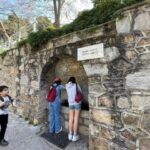
Next comes Meryemana, the House of the Virgin Mary, a Christian pilgrimage site near Ephesus. It’s traditionally believed to be where Mary spent her final days and where her life story was linked to the region after Christ’s death.
The tradition says Apostle John brought Mary to Ephesus after Christ’s Resurrection, as a safe haven following the martyrdoms of other apostles. What makes Meryemana feel more than just a scenic stop is the way it’s anchored by religious validation: visits are associated with three popes—Pope Paul VI in 1967, Pope John Paul II in 1979, and Pope Benedict XVI in 2006. That pope connection is part of what many visitors look for when they come.
Time here is about 45 minutes, which is usually enough to enter, look around, and take in the atmosphere without feeling like you’re being herded. The site isn’t focused on loud history facts the way a theater is. It’s focused on space, silence, and reflection.
Like the Basilica, it has admission fees not included in the tour price. Still, if you want your Ephesus day to include spiritual context—not just stone streets—this stop is the balancing act.
Ancient City of Ephesus: the big sights in a sensible order
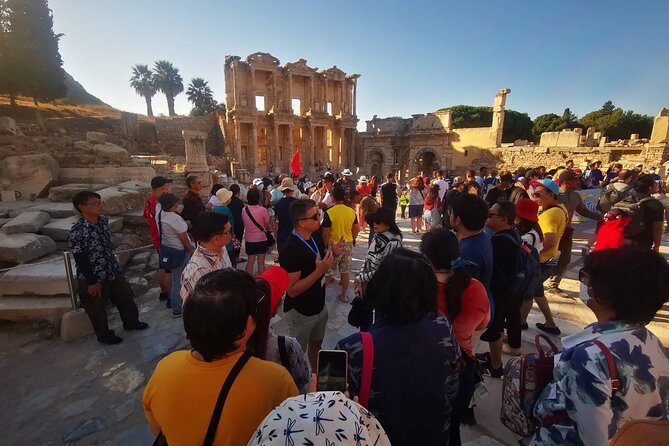
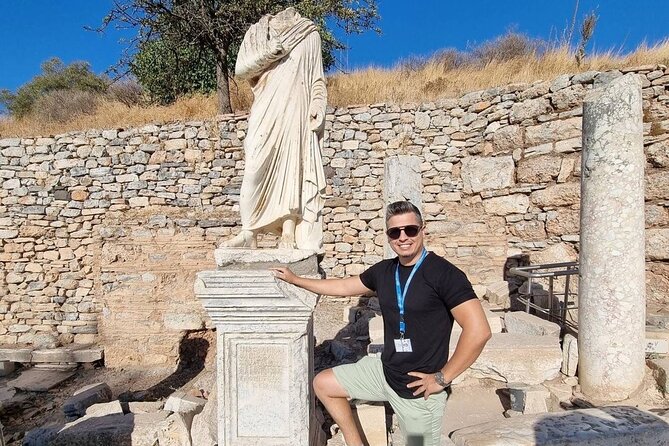
This is the main event, and it takes about 2 hours of guided time. Here’s how I think about Ephesus: it’s not one monument. It’s a whole walkable city. The good tours help you “read” it—what you’re looking at and how it functioned.
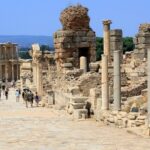
You start by noticing the street texture. The area has tracks and wheel marks that point back to ancient carts and chariots, so you’re not just viewing ruins—you’re seeing evidence of daily motion. From there, the tour highlights several signature places:
You can also read our reviews of more tours and experiences in Kusadasi

Great Theater
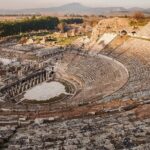
The Great Theater is the star for scale. It’s described as seating over 20,000, which is mind-bending when you stand among the ruins and realize how many people could pack into a single performance space. Even if you don’t imagine gladiators or speeches perfectly, the structure forces you to picture crowd life.
Public Agora
Then you shift to the Public Agora, framed as a hub where commerce and preaching overlapped. The idea that St. Paul preached here and that Anatolian handicrafts were traded gives you a clearer sense of why this city mattered. It wasn’t just ceremonial. It was working life.
Marble Street and Celsus Library
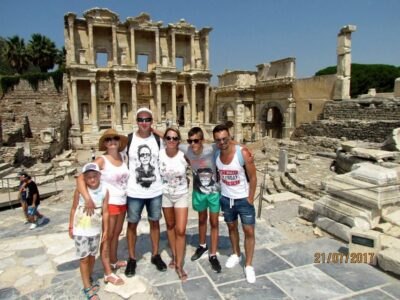
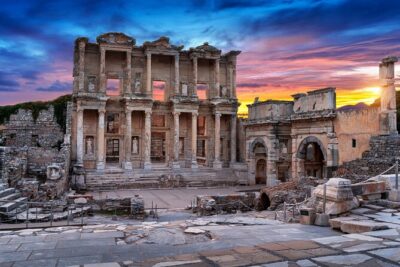
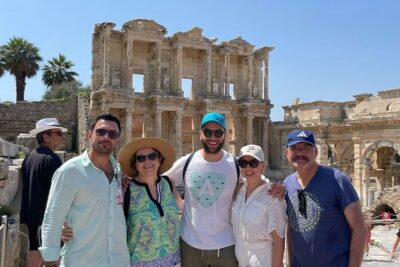
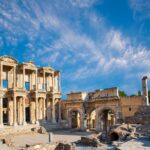
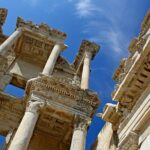
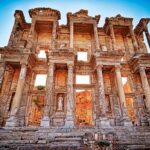
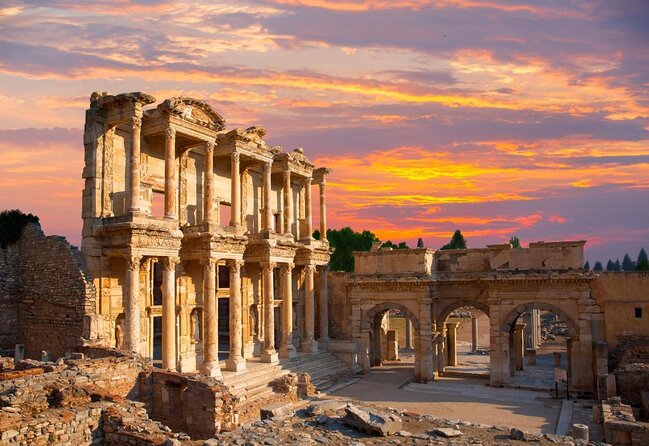
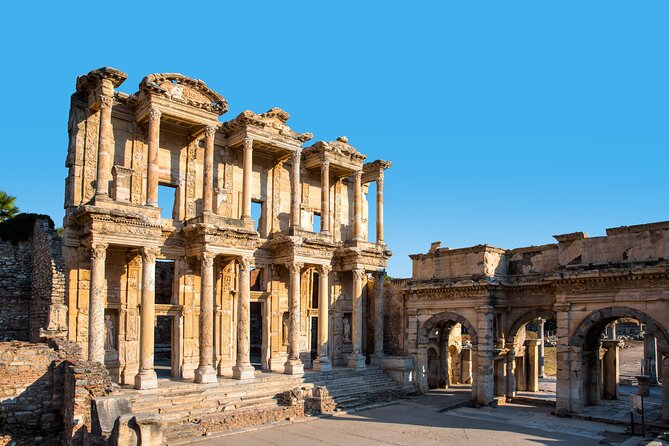
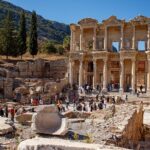
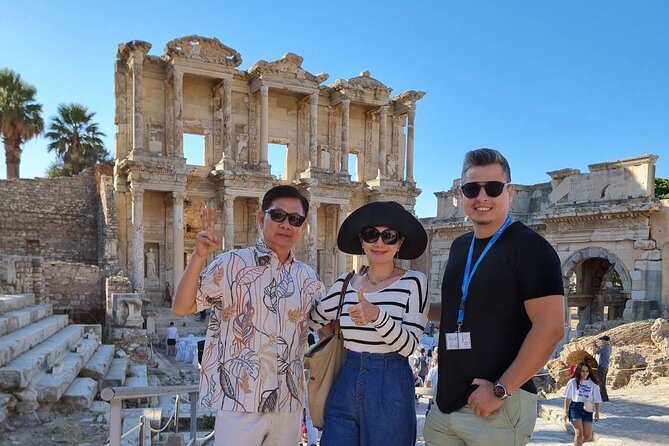
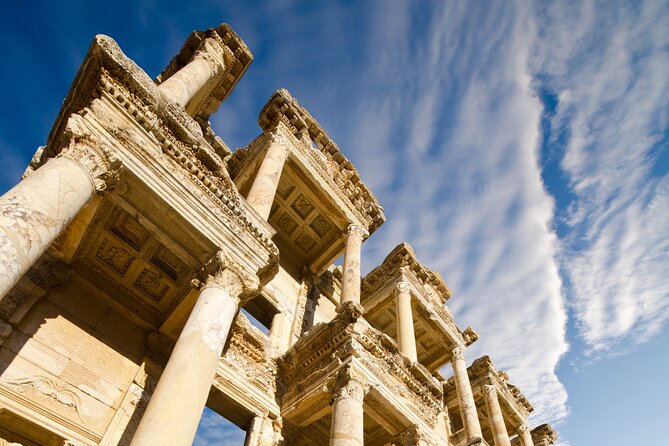
Next is Marble Street, often the easiest part to enjoy because it feels like an ancient walkway with a “main drag” vibe. You’ll reach Celsus Library, described as the third-largest library of the ancient world and known for its restored façade. The library façade is one of the easiest photo wins, but it also helps you understand how public spaces were designed to project knowledge and power.
Other classic Ephesus stops
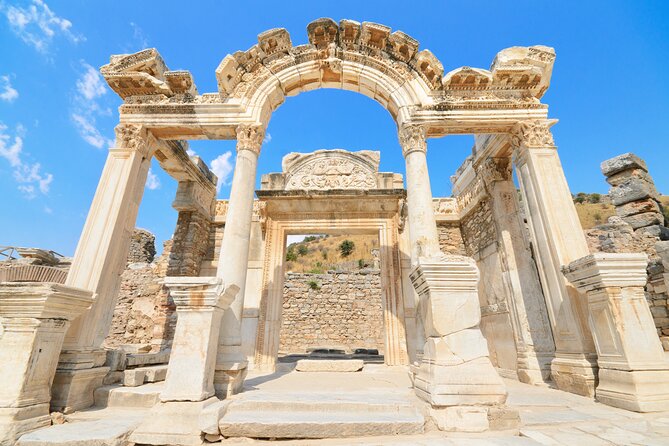
Depending on pace, you may also see the Temple of Hadrian, the Trajan Fountain, and the Domitian Temple. These are the kinds of sites where a guide really earns their fee. Without explanation, you might wonder what you’re standing in front of. With explanation, you start seeing how rulers and civic wealth shaped the city’s look.
Big practical consideration: this portion is mostly open-air. Your tour duration is tight, so wear comfortable shoes and don’t count on a long snack stop. But if you’re ready to walk and take photos, this is the part that makes the whole half-day feel worth it.
Handicrafts and local tips: useful, not a hard sell
Midway toward the end, there’s time for a stop that’s more about conversation than shopping. The guide offers help on traditional handicrafts, plus practical safety tips and recommendations for what’s worth seeing.
This is one of those “small” segments that can save you time later. If you’re trying to decide what to buy (or what to skip), the guidance matters because it keeps you from wasting money on low-quality souvenirs. You also get direction on how to navigate the area without turning your day into a chase.
If you’re not interested in shopping, you can still benefit. The real value is getting local context on what to look for and how to move around comfortably once you’re back in Kusadası.
Lunch in the countryside: a real break, not a token meal
Lunch is included, and it’s served in the countryside. That detail is underrated. In a port day, you can end up eating quickly somewhere convenient and then heading back out with your energy drained. Here, you get a chance to sit down and reset.
The tour specifies a traditional lunch and includes the meal itself, but beverages during lunch are not included. So if you like coffee, tea, water, or something fizzy with your food, plan to pay for it separately.
This meal break also helps you pace the day. By the time you’re done with Ephesus, St. John, and the Virgin Mary’s House, you’ll appreciate something more filling than a snack. The countryside setting is a small quality-of-life upgrade that makes the whole day feel less like a checklist.
Price and value: what you’re paying for (and what you’ll add)
At $51.20 per person, this isn’t positioned as a “budget-only” Ephesus trip. It’s priced like a shore excursion that covers real work: a private licensed guide, private transportation, parking, lunch, and a cruise-focused on-time return.
Here’s what you should feel good about in the value:
- You get private transport in an air-conditioned van
- You get a professional licensed local guide
- You get lunch included
- parking fees are included
- the operator emphasizes guaranteed on-time return to the port
Here’s what you should plan for outside the price:
- entrance fees to museums and sites aren’t included
- gratuities aren’t included
- personal expenses and beverages during lunch aren’t included
One clever help is the ticket approach: the tour notes that you can ask the guide to arrange tickets to skip ticket lines, paying the fee in cash to your guide. That’s practical. In cruise time, every minute counts, and the line factor can wreck schedules if you’re on your own.
So is it worth it? If you want a guided, cruise-friendly route that balances major sights with comfort, it often makes sense. If you’re purely price-driven and plan to DIY everything, you’ll likely spend less money—but you’ll also spend more effort, and your return timing will be on you.
Who should book this and who might skip it
This private excursion fits best if you:
- are on a cruise day and want a structured plan back to Kusadası Cruise Port
- want guidance for both ancient sites and religious history
- like the idea of private transport and a group limited to your party
- appreciate a lunch stop that’s more than a quick bite
You might consider a different style of Ephesus visit if you:
- have very limited walking tolerance, since Ephesus is spread across open ruins and the day includes multiple sites
- don’t want to pay extra for entrance fees once you arrive
- prefer to spend most of your time only in the ancient city and nothing else
Should you book this private Ephesus shore excursion?
If your goal is a smooth half-day that hits St. John, Meryemana, and the standout parts of Ancient Ephesus, this is a strong option. The biggest reasons are the private guiding, the air-conditioned transport, and the emphasis on getting you back to the port on time.
Book it if you want structure and comfort on a cruise day. Don’t book it if entrance fees and additional spending will annoy you, or if you hate guided schedules. For most people doing Ephesus as a shore stop, this strikes a practical balance.
FAQ
How long is the private Ephesus shore excursion?
The tour runs about 5 to 6 hours.
Is pickup and drop-off included?
Yes. The tour includes cruise port pickup and drop-off as described in the itinerary, using private transportation.
Is lunch included?
Yes. Lunch in the countryside is included, but beverages during lunch are not included.
Are entrance fees included for the sites?
No. Entrance fees to museums and any sites are not included. Your guide can arrange tickets to help you skip ticket lines, with fees paid in cash to your guide.
What kind of transportation do you use?
You travel in a private, air-conditioned, non-smoking van with a separate driver.
How does the tour handle cruise timing?
There is a guaranteed on-time return to the Kusadası Cruise Port. If the tour can’t fit your cruise time window, you’ll be informed.
What is the cancellation policy?
You can cancel for a full refund if you cancel at least 24 hours in advance of the experience start time. Free cancellation is available up to 24 hours before.