REVIEW · SELCUK
Ephesus Walking Tour
Book on Viator →Operated by Turkey Private Tours · Bookable on Viator
Ephesus can feel like a maze. This walking tour makes the Upper Gate start point click and turns scattered ruins into a clear story of ancient Roman life. You get 90 minutes of on-foot guidance at a leisurely pace, without wasting time wandering in the wrong direction.
I love how the tour stays small, with a maximum of 12 people, so questions don’t get lost in the crowd. I also like the way the guide brings the site to life with stories and connections, from emperors and everyday Roman routines to religion and cultural context shared in a way that’s easy to follow.
One thing to plan for: the tour price does not include the Ephesus entrance ticket, so you’ll need to budget for admission on top of the $46.82.
In This Review
- Key highlights you’ll actually use
- Upper Gate start: why this meeting point matters
- A focused 90 minutes in Ancient City of Ephesus
- Temple of Hadrian and the Library of Celsus: what you’re really looking at
- Temple of Hadrian
- Library of Celsus
- The guide’s storytelling: how it turns ruins into meaning
- Crowds, timing, and staying sane on a big site
- Price and value: what $46.82 really buys
- Who this Ephesus walk suits best
- Should you book this Ephesus walking tour?
- FAQ
- Where does the Ephesus walking tour start and end?
- How long is the tour?
- Is the entrance ticket to Ephesus included?
- How much is the Ephesus entrance ticket?
- Are tickets handled in advance?
- What language is the tour offered in?
- How big is the group?
- Can I pick a morning, afternoon, or evening time?
- Is there any extra option for speed at the entrance?
- Is the tour suitable for children?
- What is the cancellation policy?
Key highlights you’ll actually use
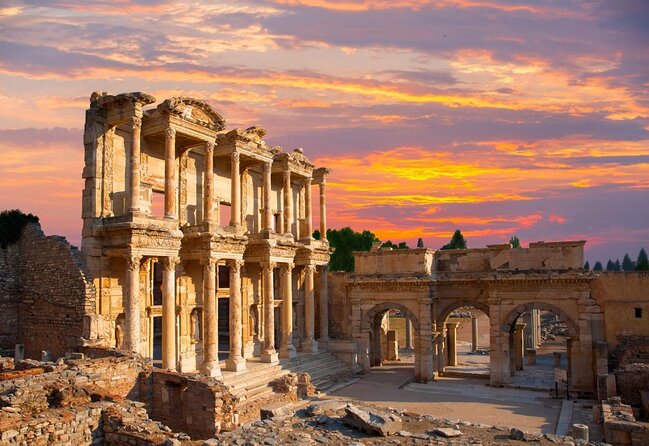
- Upper Gate meets the flow: You start right outside Ephesus and head in with your guide.
- Leisurely pacing on a big site: 90 minutes is short, but it’s paced so you can see key monuments.
- Roman “anchor stops”: Highlights like the Temple of Hadrian and the Library of Celsus are part of the route.
- English guide with story focus: You’ll get an explanation of what you’re looking at, plus engaging background.
- Pick your time of day: Multiple morning, afternoon, and evening start options help you match the rest of your itinerary.
- Flexible, small-group vibe: Many guides keep the group moving smoothly through crowds.
Upper Gate start: why this meeting point matters
Meeting right outside the Upper Gate at Ephesus is one of the smartest parts of this tour. Ephesus is large, and it’s easy to lose momentum when you’re facing a giant archaeological site with ticket lines, crowd crush, and wayfinding. Starting at a major entry point means you spend less of your limited time figuring things out and more of it looking at monuments.
The timing setup is also practical. You can choose from several start times (morning, afternoon, or evening), which is handy when you’re balancing a day in Selçuk, a stop at nearby sites, or even just needing an easier start after travel. This is a walk tour too, so the expectation is movement first, sightseeing second.
The tour begins with a quick meeting with your guide, then you pay your admission fee. Tickets are booked in advance by the operator, which helps reduce uncertainty at the entrance. You’ll then head directly into the site with your small group.
You can also read our reviews of more tours and experiences in Selcuk.



A focused 90 minutes in Ancient City of Ephesus
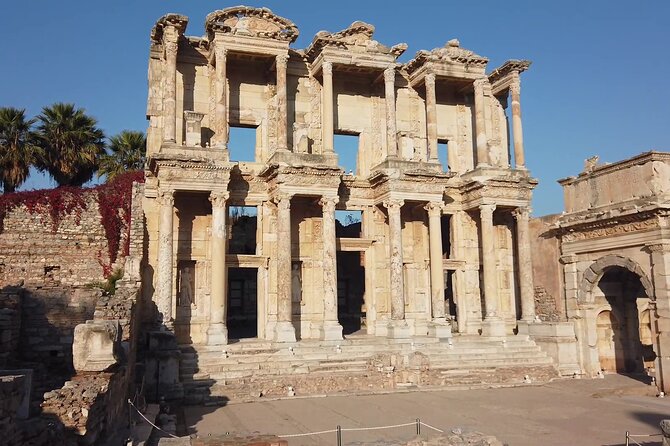
The heart of the experience is one continuous visit through the Ancient City of Ephesus, designed for about 1 hour 30 minutes. That duration is a sweet spot. It’s long enough to learn how the city worked and why certain ruins matter, but short enough that you don’t feel like you have to commit your entire day.
Here’s how this kind of guided “highlights route” plays out in real life:
- You’ll follow your guide through busy areas first, instead of getting stuck at the back of the line or second-guessing directions.
- The guide steers you to major, well-preserved structures rather than treating Ephesus like a random walk of ruins.
- You get time to appreciate what you’re seeing. A good guide slows you down at the right moments, so the place doesn’t turn into “I saw stones.”
Also keep in mind what’s stated about the city itself: Ephesus is described as a well-preserved ancient city with roots reaching back to around the 3rd century BC. That long timeline is part of why a guide helps. Without context, it’s easy to miss the meaning of each layer.
At the end, you return back to the meeting point near the Upper Gate area, so you aren’t stranded across the site.
Temple of Hadrian and the Library of Celsus: what you’re really looking at
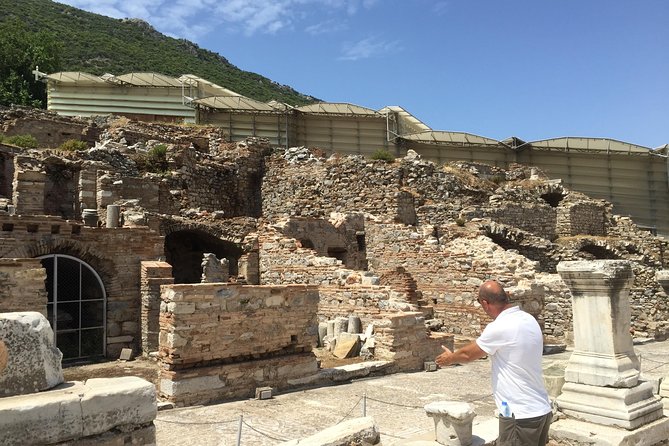
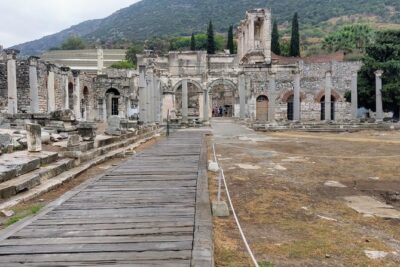
Two named highlights show up in the experience: the Temple of Hadrian and the Library of Celsus. Even if you’ve seen photos, these spots are worth it because they give you a “feel” for how Ephesus functioned as a Roman city.
Temple of Hadrian
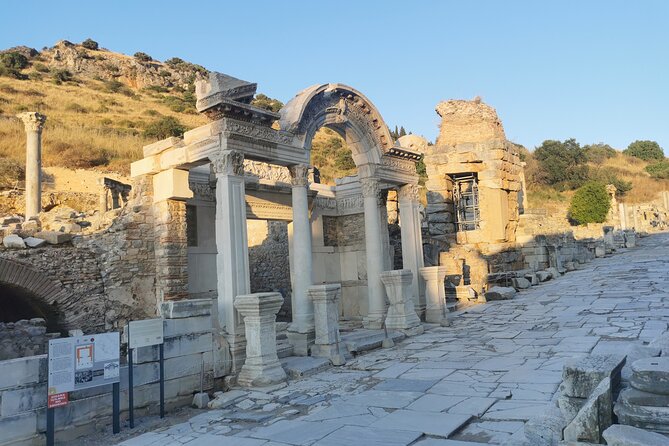
You’re looking at a Roman-era monument tied to imperial identity. Your guide’s job here is to help you notice what’s still legible in the ruins—how it signals Roman power and public life. The key value is not just seeing columns and stone, but understanding why this kind of building existed in a wealthy city.
Library of Celsus
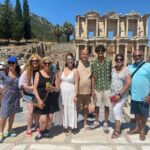
The Library of Celsus is the star attraction for a reason. It’s visually dramatic, but the real payoff comes from hearing the context: what libraries represented in the ancient world and what that meant for status and education. When your guide connects the building to everyday Roman aspirations—public culture, learning, civic pride—you start to see Ephesus as a living place rather than a museum label.
If you want a mental checklist, I suggest you pay attention to three things during these stops:
- how the structure is framed by surrounding remains,
- what kind of public function it served,
- and how the guide ties it to the wider city plan.
Those anchors make the rest of the walk feel organized.



The guide’s storytelling: how it turns ruins into meaning
The most repeated praise across the experience is the storytelling. Not just “facts,” but stories with a timeline and connections that help you hold the whole place in your head.
I like tours where the guide uses the ruins as the starting point for the narrative, instead of forcing the ruins to serve an unrelated talk. Here, the emphasis is on what daily life in Ephesus looked like under Rome—along with context about emperors and the way monuments fit into a sprawling archaeological site.
You’ll also see examples of guides tailoring the content to the audience. In several accounts, guides brought in religion and world history context, including how the story of early Christianity relates to Turkey and to Ephesus in particular. That’s especially useful if you’re interested in the Bible or in how religious history intersects with the Roman world.
One specific “quality signal” from the strong reviews: some guides are archaeological professionals or have worked directly on Ephesus. That tends to show up as better explanations of why certain features survived and what archaeologists look for during excavation. Even if you’re not an archaeology person, it changes the vibe. You stop treating the site like scenery and start treating it like evidence.
There’s also a pacing bonus. Several reviews mention that guides took time at meaningful areas, including additional attention around places like the House of Mary, when it fits the route and time. That’s the difference between a hurry-through tour and a “see it and understand it” visit.
Crowds, timing, and staying sane on a big site
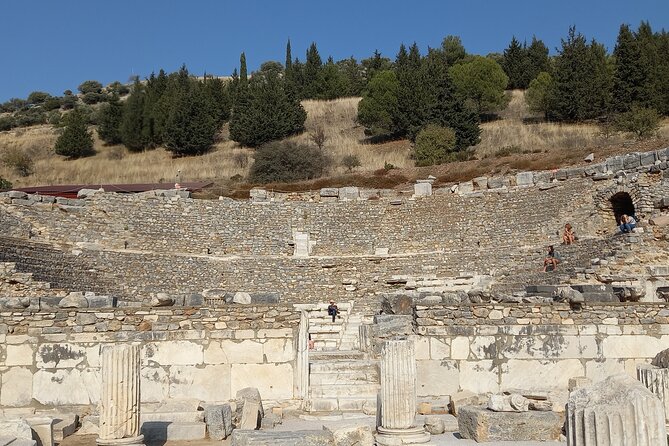
Ephesus gets busy. The tour format helps because it routes you through key areas with a guide, rather than leaving you alone to manage crowds, signage, and ticket moments.
Starting early in the day can help, and one review specifically described an early start (8:00) finishing around 10:00, with many people but not overwhelming crowd conditions. That lines up with what you’d expect: morning tours often feel more manageable, and the 90-minute length keeps you from getting worn out.
Still, you should plan for the reality that this is one of Turkey’s most visited attractions. Even with a guide, you’ll move with other people. What matters is how the guide navigates that flow—staying oriented and guiding you quickly to the “good stuff.”
There’s also mention of a speed-pass option if needed (listed with an extra €40 per person). If you’re the kind of person who hates waiting, it’s worth asking about how this is applied before you rely on it.
Price and value: what $46.82 really buys
Let’s talk value in plain terms. The tour price is $46.82 per person for about 1 hour 30 minutes with a professional guide, in English, for a maximum of 12 people.
That’s the “guide + coordination + curated route” piece. The separate cost is admission to Ephesus, listed as around €40 (with a note that you can buy the ticket in advance). So your full budget is:
- Tour price: $46.82 per person
- Ephesus admission: about €40 per person (not included)
When does this feel like a bargain? When you consider how much confusion a big site can cause without help. Ephesus is too large and too layered for most people to comfortably self-tour in 90 minutes. A guide compresses the learning curve, so you get more meaning per step.
It also helps that the experience is marked with strong ratings—4.9 overall with 98% recommended—and consistent praise for guides who combine structure with humor and story. In other words, you’re paying for interpretation, not just company.
Who this Ephesus walk suits best
This is a good fit if you:
- want to see major ruins without committing to a full day,
- prefer small groups and easy conversation,
- enjoy learning through stories and context,
- and like having someone help you navigate a large, complex archaeological site.
It’s also ideal for first-timers to Ephesus. The site can overwhelm your brain fast. With a guide, you get a timeline and a route that makes everything feel connected.
If you’re traveling with kids, note that children must be accompanied by an adult. Most people can participate, but the experience is a walking tour, so bring comfortable shoes.
Should you book this Ephesus walking tour?
If your goal is to leave Ephesus feeling like you understood what you saw, this is an easy yes.
Book it if you want:
- small-group attention (max 12),
- a structured route starting at the Upper Gate,
- and clear explanations at key monuments like the Temple of Hadrian and the Library of Celsus.
Consider a different option if:
- you hate paying separate admission on top of a tour price,
- or you’re the type who doesn’t care about context and just wants to wander with a loose plan.
One more practical tip: if you’re picky about tours staying focused, choose based on the guide style. Some accounts mention that certain guides included lots of celebrity/politician name-dropping, which can be fun or distracting depending on your taste. The upside is that the strongest reviews emphasize clean, structured storytelling and real depth—especially from guides tied closely to the site.
FAQ
Where does the Ephesus walking tour start and end?
It starts at Atatürk, Efes Harabeleri, 35920 Selçuk/İzmir, Türkiye, and it ends back at the same meeting point.
How long is the tour?
The tour lasts about 1 hour 30 minutes.
Is the entrance ticket to Ephesus included?
No. The entrance ticket is not included, and you pay your admission fee separately.
How much is the Ephesus entrance ticket?
The admission fee is listed as about 40 Euro.
Are tickets handled in advance?
The tour description says admission tickets will be booked in advance, and you also receive a mobile ticket.
What language is the tour offered in?
The tour is offered in English.
How big is the group?
The experience has a maximum of 12 travelers.
Can I pick a morning, afternoon, or evening time?
Yes. There are several start times available across morning, afternoon, and evening.
Is there any extra option for speed at the entrance?
There is a note about a guide speed pass if needed, listed as €40.00 per person.
Is the tour suitable for children?
Children must be accompanied by an adult.
What is the cancellation policy?
Free cancellation is available up to 24 hours in advance for a full refund. Canceling less than 24 hours before the start time won’t be refunded.