REVIEW · BIBLICAL EPHESUS & ST. JOHN TOURS
Private Full-Day Biblical Ephesus Tour From Kusadasi
Book on Viator →Operated by Ephesus Tours · Bookable on Viator
Biblical sites meet Roman ruins here. This private full-day tour connects Turkey’s Christian landmarks with the UNESCO-grade remains of Ephesus, with a route that makes the connections easy to follow. You get picked up close to your day at sea or on land, then spend a focused six hours seeing the places people come here for.
I especially like the door-to-door pickup from Kuşadası or Selçuk and the fact you’re traveling with a professional licensed guide. In the past, guides like Tannar and Phyllis have been praised for keeping the story straight, explaining what you’re looking at, and running an organized day so you don’t waste time guessing.
The only real drawback to plan around is that it’s a full day with several stops, so some sites feel more like a “see and understand” visit than a slow linger. Also, the site notes mention different ticket situations, so you’ll want to confirm what’s already covered before you arrive.
In This Review
- Key highlights worth your attention
- Why this private Ephesus day feels better than doing it solo
- Getting from Kuşadası or Selçuk to Ephesus: door-to-door comfort
- Meryemana (House of the Virgin Mary): your first calm stop
- Temple of Artemis: a Seven Wonders moment you can actually stand in
- Ancient Ephesus on foot: Celsus, the theater, and Hadrian
- Lunch in a local Turkish restaurant: a real reset
- Church of Mary (Council of Ephesus) and the surrounding Christian sites
- Cave of the Seven Sleepers and Basilica of Saint John
- Grotto of the Seven Sleepers
- Basilica of Saint John
- Pace and practical planning: how to make the most of six hours
- Price and value: what $160 buys you (and what to double-check)
- Who this tour is best for
- Should you book this private Ephesus tour?
- FAQ
- What’s the duration of the private Ephesus tour?
- Does the tour include pickup in Kuşadası or Selçuk?
- Is the tour private?
- Are entrance fees and lunch included?
- Is there a vegetarian option?
- Is the tour wheelchair accessible?
- What do cruise passengers need to provide at booking?
Key highlights worth your attention
- Private guide + private vehicle for a calmer, more efficient pace than bus tours
- UNESCO Ephesus site walking route built around top landmarks like Celsus and the Grand Theater
- Biblical sites included in the same day: Meryemana, Church of Mary, St. John’s Basilica, Seven Sleepers Cave
- Door-to-door pickup from Kusadası cruise port or your hotel in Kuşadası/Selçuk
- Wheelchair accessible (good to know when you’re planning your Ephesus day)
- Gift bag and guidebook included at the end, a nice touch for souvenirs with information
Why this private Ephesus day feels better than doing it solo
Ephesus is one of those places where a lot of people show up, take photos, and leave with half a story. This tour is built to prevent that. A licensed guide keeps the order logical—first the Christian sites, then the big Greco-Roman stage—and explains what the buildings were for, not just how old they look.
I also like that you’re not left to solve transportation on your own. You’re collected at your hotel reception or the cruise port, driven inland, and then brought back at the end. That matters because timing is everything when you have a ship schedule.
And because it’s private, the pace can feel more human. You don’t have to wait for someone who wandered off for souvenirs you didn’t ask for.
You can also read our reviews of more private tours in Kusadasi

Getting from Kuşadası or Selçuk to Ephesus: door-to-door comfort
The day usually starts with a meeting at your hotel reception in Kuşadası or Selçuk or at the cruise port. The stated pickup window is 7:00 AM to 8:30 AM, which is smart. You’ll be on the road before the busiest crowds fully hit, and you’ll have a better chance of enjoying the open-air ruins without feeling rushed from every direction.
You’re also in a private air-conditioned non-smoking vehicle. That’s not a small detail in Turkey. Even in shoulder seasons, you’ll appreciate AC once the day warms up and you’re bouncing between stone and open sun.
If you’re on a cruise, you’ll need to provide your ship name and timing details (docking, disembarkation, and re-boarding time). That’s part of making the plan work. When it’s set up correctly, it’s one less stressor for your day ashore.
Meryemana (House of the Virgin Mary): your first calm stop
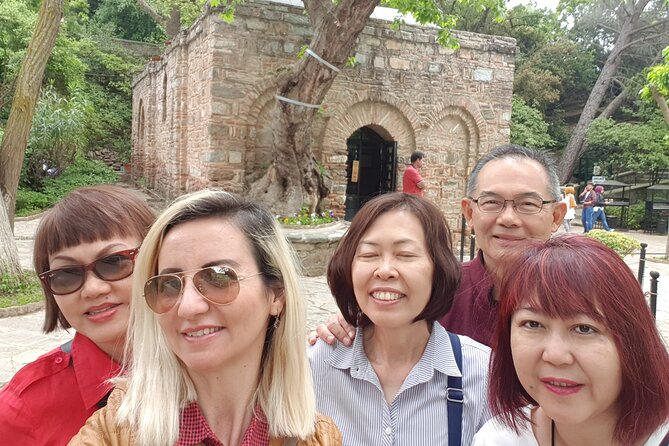
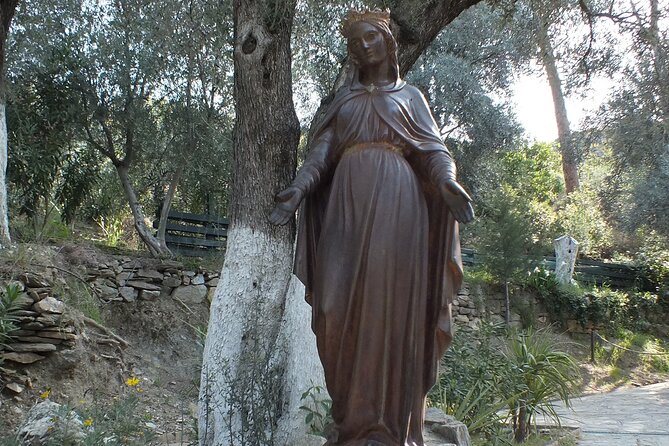
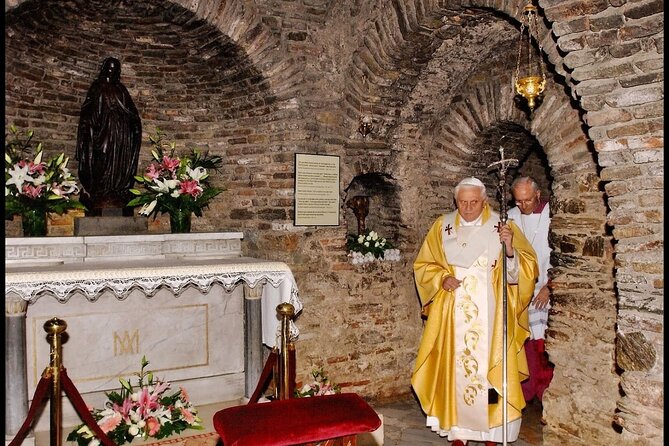
Your first stop is Meryemana, sometimes called the House of the Virgin Mary. This is where it’s believed Mary spent her last years, and the atmosphere here tends to feel different from a typical archaeological stop. It’s a quieter kind of place—more reflective than educational-by-demolition.
Plan for about 40 minutes. That’s usually enough time to take in the significance, observe the site layout, and let the guide connect it to the broader Christian story in Ephesus.
Admission for this stop is listed as not included in the provided notes, so budget time for that reality. If you’re traveling with a strict timetable, I’d make sure you know whether you’ll pay on-site or if it’s bundled—because the tour description also says entrance fees may be included. A quick question at booking can save you from uncertainty later.
Temple of Artemis: a Seven Wonders moment you can actually stand in
Next up is the Temple of Artemis, linked to the famous Seven Wonders of the Ancient World. Even though much of it is ruins now, seeing the site matters. Artemis is one of those names that lives in texts and trivia—here, you can ground it in geography and scale.
You’ll have around 20 minutes at this stop, with a note that the admission is free. For many people, this is the quickest “wow” moment of the day: the connection between legend and place becomes real fast.
One practical tip: in hot weather, this stop can feel like a sun test. Bring water, use sun protection, and don’t assume shade will be generous.
Ancient Ephesus on foot: Celsus, the theater, and Hadrian
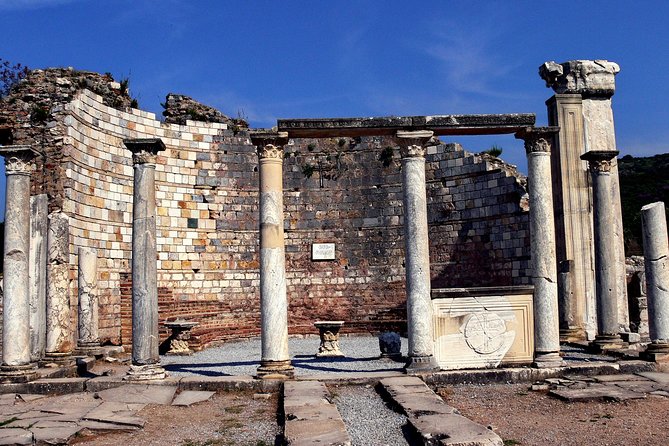
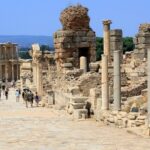
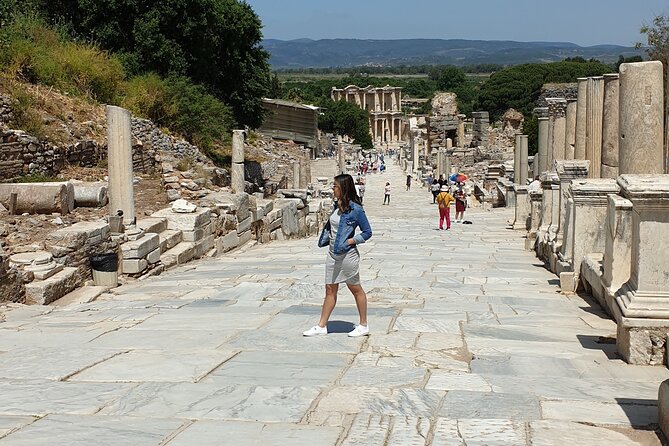
Now you get into the main event: the Ancient City of Ephesus. This is an open-air archeological site with Greco-Roman ruins that are among Turkey’s most visited.
You’ll explore on foot, following a route that’s designed around the biggest landmarks. Expect time to look at:
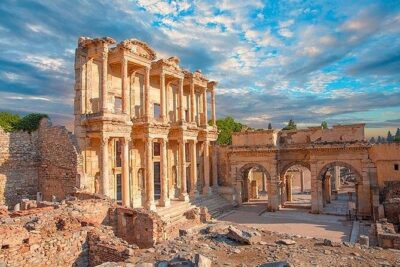
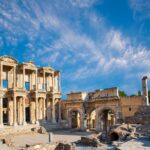
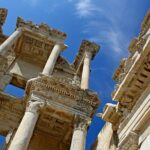
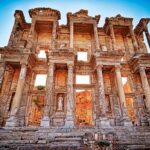
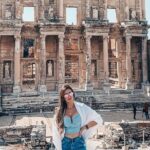
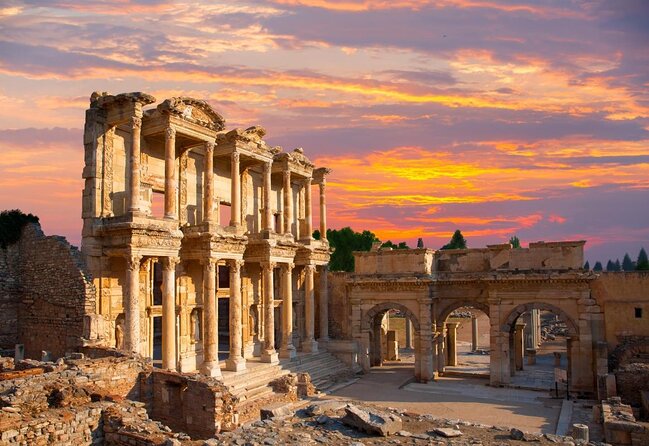
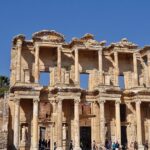
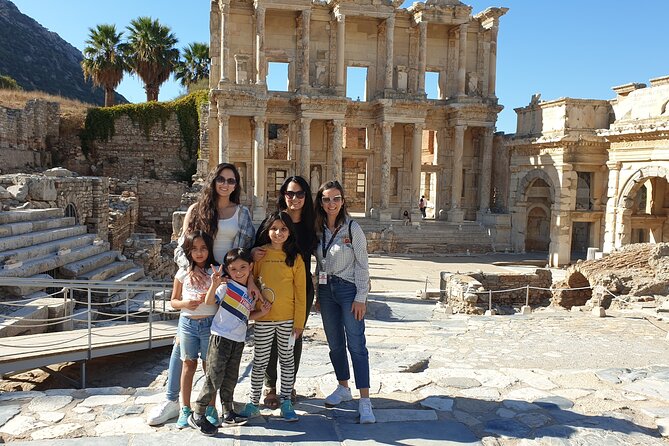
- Celsus Library: one of the iconic facades. It’s famous because it still gives you a sense of how important books and public learning were in the ancient world.
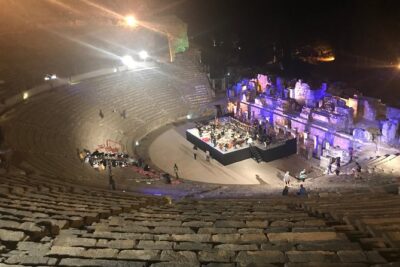
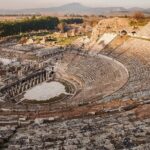
- Grand Theater: a major setting for performances and public gatherings. Standing near it helps you picture the scale.
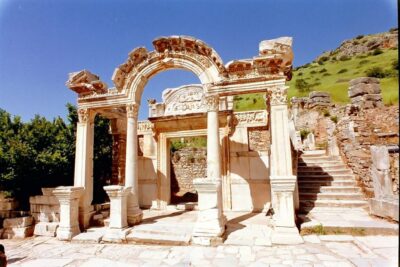
- Temple of Hadrian: a reminder that Ephesus wasn’t only about philosophy and religion—this city also broadcast power and civic identity.
You’ll also hear stories about how Ephesus worked as a city, not just what it looks like. In previous days, guides such as Tannar have been praised for helping people avoid confused or oversimplified explanations—so you don’t end up walking past something and learning the wrong thing.
One note on timing: there’s no single “hard stop” duration listed for Ephesus itself in the details you provided, but you do have a full-day schedule. That means you’ll want comfortable walking shoes and the mindset that you’re seeing the highlights, not every corner.
You can also read our reviews of more tours and experiences in Kusadasi

Lunch in a local Turkish restaurant: a real reset
Between ruins and biblical sites, you’ll have a chance to refuel with traditional lunch in a Turkish restaurant. The tour summary says lunch is included, and the structure of the day suggests it’s planned as an actual break, not just a snack stop.
This is also where you can reset your energy before the more spiritual sites later in the afternoon. If you’re sensitive to heat, lunch is often your best “pause” because you’ll be moving from open stone to indoor meal space (even if only for a little while).
A vegetarian option is available, and you’re asked to advise when booking. If you have any other dietary needs, you’ll want to mention them when you reserve.
Church of Mary (Council of Ephesus) and the surrounding Christian sites
After lunch, the route shifts back toward Christian Ephesus. You’ll visit the Church of Mary, and this is tied to a major moment: the Council of Ephesus in 431 AD. That date turns the stop from a beautiful building into a historical hinge.
The value here is context. When you see the ruins of an ancient city and then visit a Christian site inside the same region, the story starts to feel connected instead of list-like.
The timing is listed as 20 minutes for the Saint John Kilisesi stop later, and the Church of Mary portion is described within the flow without a separate minute count in the provided info. Practically, you should expect a short but focused visit here—long enough to understand why it matters, not long enough for a full study session.
Cave of the Seven Sleepers and Basilica of Saint John
Finally, you’ll visit two places that are well-known in Christian tradition: the Grotto of the Seven Sleepers and the Basilica of Saint John.
Grotto of the Seven Sleepers
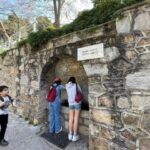
At the Seven Sleepers’ Cave, you’re told the story of young Christians who slept for about 200 years, accepted as a miracle. You’ll have about 20 minutes. Admission is noted as free here, which makes this stop feel like a bonus compared to ticketed moments earlier.
This is one of those places where a guide really helps. Without context, it can feel like another cave stop. With context, you start seeing how stories travel through time and become tied to specific geography.
Basilica of Saint John
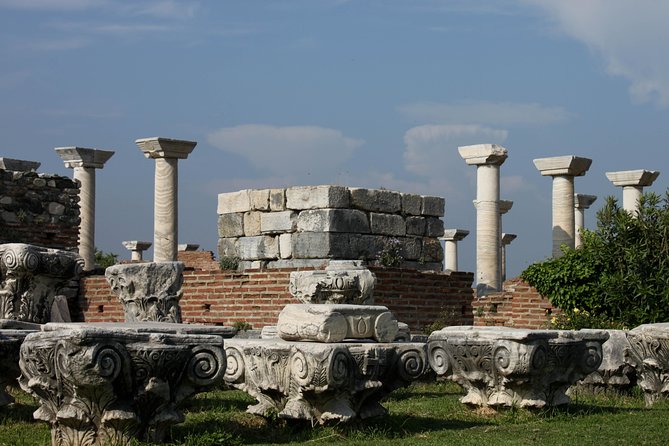
Next is the 6th-century Basilica of Saint John—built on the legendary burial site of John the Apostle. This is the kind of stop where age and meaning click together: the building you see dates from the 500s, but the tradition points back further.
The notes say Saint John Kilisesi is about 20 minutes, and admission is listed as not included in the provided stop notes. Again, that’s why it’s smart to confirm what you’ll pay on the day versus what’s pre-arranged in the total.
Pace and practical planning: how to make the most of six hours
A six-hour full-day tour can either feel efficient or rushed. The difference is how prepared you are.
I’d plan around these realities:
- You’ll do several distinct environments: pickup vehicle, likely varying levels of shade, then open-air ruins.
- You’ll move from Roman/Greek landmarks to Christian sites, so your brain will be switching modes.
- You should treat each stop as a highlight tour, not a “museum all day.”
Bring what you’d bring for a day of walking: water, sunscreen, and shoes you’re happy to keep on. If you have mobility needs, the tour is listed as wheelchair accessible, which is helpful. Still, ask about route surface conditions if you’re traveling with a wheelchair or stroller, since Ephesus is an outdoor site.
Price and value: what $160 buys you (and what to double-check)
The price is $160 per person. For that, you get a lot of what usually costs time and hassle:
- Private licensed guide
- Private air-conditioned vehicle
- Round-trip transport from Kuşadası or Selçuk
- Mobile ticket
- A day structure that hits the major Ephesus and biblical landmarks
- Lunch and a gift bag + guidebook are included in the tour description
Here’s the one part you should verify: the information you provided says entrance fees and lunch are included, but the stop notes also show some admissions as not included and some as free. That doesn’t automatically mean a problem—sometimes it depends on the site type or ticketing method that day. Still, before you go, ask the operator to confirm exactly which entrances you’ll pay for on-site versus what’s covered.
If you like the idea of not worrying about transit and finding your way across a big site, this price can feel fair. If you’re the type who prefers to go fully self-guided, you could spend less—but you’ll likely spend more time figuring things out.
Who this tour is best for
This is a strong fit if you want:
- A guided explanation that keeps the story coherent across both Greco-Roman and biblical Ephesus
- Door-to-door convenience (especially if you’re on a cruise)
- A private format where the day isn’t controlled by a large group
- A route that includes Meryemana, the Church of Mary, Seven Sleepers’ Cave, and St. John’s Basilica in one go
It’s also a good choice if you don’t want to plan a complicated day yourself. When guides like Phyllis run an organized agenda, it changes the experience—you spend more time looking and understanding, less time troubleshooting.
Should you book this private Ephesus tour?
If your main goal is to connect the dots—between ancient Ephesus and the Christian sites that make this region spiritually significant—this tour makes a lot of sense. I think it’s especially worth it for first-timers who worry they’ll see big ruins but miss the meaning.
I’d hold off or ask extra questions if you’re very price-sensitive and you don’t want any surprise costs at entrances. With the mixed ticket notes in the details you provided, it’s worth confirming what’s included for your exact departure day.
FAQ
What’s the duration of the private Ephesus tour?
The tour runs about 6 hours.
Does the tour include pickup in Kuşadası or Selçuk?
Yes. You can be picked up from your hotel reception in Kuşadası or Selçuk, or from the cruise port. Opening hours for pickup are listed as 7:00 AM to 8:30 AM.
Is the tour private?
Yes. It’s a private tour/activity, and only your group participates.
Are entrance fees and lunch included?
The tour overview says entrance fees and lunch are included, but the stop notes list some admissions as not included and some as free. When you book, confirm what’s covered for your day.
Is there a vegetarian option?
Yes. A vegetarian option is available, and you should advise when booking.
Is the tour wheelchair accessible?
Yes, the tour is listed as wheelchair accessible.
What do cruise passengers need to provide at booking?
Cruise passengers must provide ship name, docking time, disembarkation time, and re-boarding time.