REVIEW · EPHESUS TOURS
Shore Excursion 1 or 2 Day Private Tour from Kusadasi Port for Ephesus-Pergamon
Book on Viator →Operated by Guided Istanbul Tours · Bookable on Viator
Roman ruins, plus a hilltop view day. This private shore excursion strings together Ephesus and Pergamon with a local guide who helps you see more than stone. I love how well the pace works for a port day, and how guides bring the sites to life in plain language.
Two things stand out right away: the walk through Ephesus’ famously well-preserved streets and monuments, and the extra spiritual stop at Meryemana (House of the Virgin Mary) just beyond the main ruins. One thing to consider is that entrance tickets aren’t included, and it’s still a full day with a fair amount of walking and standing.
In This Review
- Key highlights worth planning for
- Why this Ephesus–Pergamon combo makes sense
- Getting there smoothly: port pickup and private A/C transport
- Entering Ephesus: marble streets and Roman city scale
- The Library of Celsus and the Great Theater area
- Temple of Hadrian and the quick-hit Roman monuments
- Meryemana: the House of the Virgin Mary stop
- Isa Bey Mosque, St. John Basilica remnants, and Artemis
- Isa Bey Mosque: early Islam and West Anatolia
- St. John Basilica remnants: a Biblical anchor point
- Temple of Artemis: a Seven Wonders connection
- Pergamon Theater: the hilltop stage and the Aegean view
- Pergamon Ancient City: walking the highest point of the region left behind
- Pergamon Parchment: finishing the day with a practical story
- Price and value: what you’re paying for in a private port day
- What to bring for a comfortable day in the ruins
- Family-friendly, but still physical
- Closing dates: plan around the Ephesus-area museum calendar
- Who should book this tour
- Should you book this private Ephesus–Pergamon tour from Kusadasi?
- FAQ
- How long is the Ephesus and Pergamon private shore excursion?
- Is pickup included from Kusadasi Port or the Ephesus area?
- Are entrance tickets included for the sites?
- How big is the private group?
- What should I bring for comfort?
- Are there days when Ephesus-area museums close?
Key highlights worth planning for
- Private group up to 8 with hotel or port pickup and drop-off
- Local guide storytelling that helps you connect the sites instead of just ticking boxes
- Ephesus first for the best-preserved Roman city feeling early in the day
- Meryemana stop for the Christian tradition connection and calm break from crowds
- Pergamon on a steep hill with wide Aegean views from the amphitheater and ruins
- Mobile ticket to make check-in simpler on a shore schedule
Why this Ephesus–Pergamon combo makes sense
If you only see one ancient site from Kusadasi, you’ll still leave impressed. But pairing Ephesus with Pergamon gives you a fuller snapshot of what this region looked like when different powers left their mark.
Ephesus is your big, walkable Roman-era city experience, with major monuments you can actually stand inside and around. Pergamon then flips the script with a city built higher up, where the theater and ruins feel tied to the land and the sea.
This is also a smart shore-excursion format. You’re not doing long transfers multiple times in a day, and the stops are stacked so you get several “wow” moments without wasting hours.
You can also read our reviews of more private tours in Kusadasi

Getting there smoothly: port pickup and private A/C transport
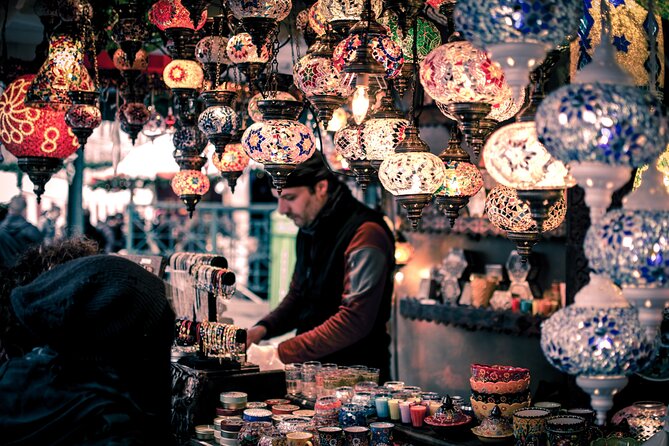
The tour is private, which matters on a cruise day. You get hotel pickup and drop-off (or pick-up tied to the port schedule), plus private air-conditioned transport, so you can focus on the day instead of logistics.
About group size: the cap is up to 8 people. That tends to make the guide’s explanations more useful, because you’re not buried in a crowd of strangers.
Bring your patience for the classic port reality—timing and crowds around entrances—but you’ll at least start with the advantage of a pre-arranged pickup and a dedicated vehicle.
Entering Ephesus: marble streets and Roman city scale
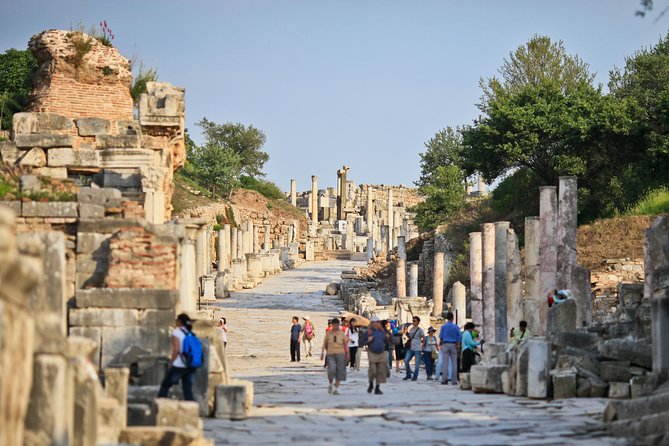
Ephesus is the core of the day, and the timing is set up so you hit the ruins while your energy is still strong. You’ll spend about 3 hours here walking the site and taking in the main monuments.
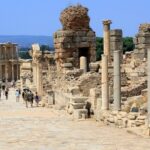
What I like about Ephesus is the way the city layout is still readable. You’re not just seeing isolated columns; you’re walking along what feels like a real street grid—marble paving, columns, and spaces that suggest everyday life in Roman times.
Practical tip: wear shoes you trust on uneven stone. Sun can hit fast in the open sections, so the recommended hat and sunglasses aren’t just nice-to-have.
The Library of Celsus and the Great Theater area
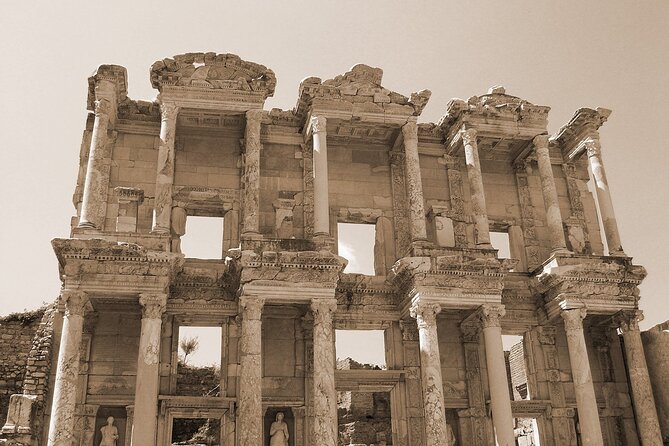
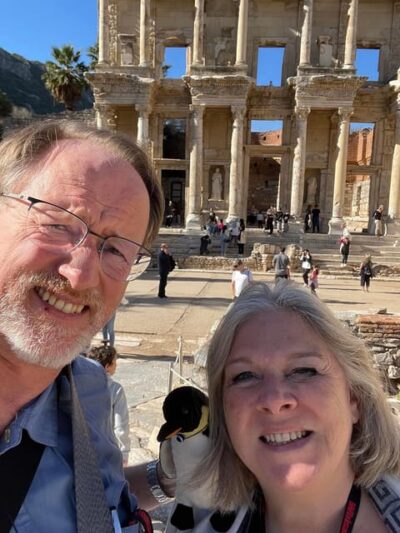
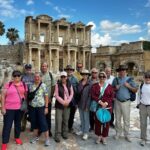
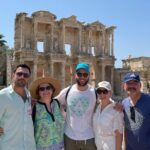
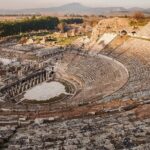
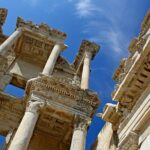
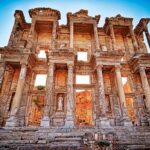
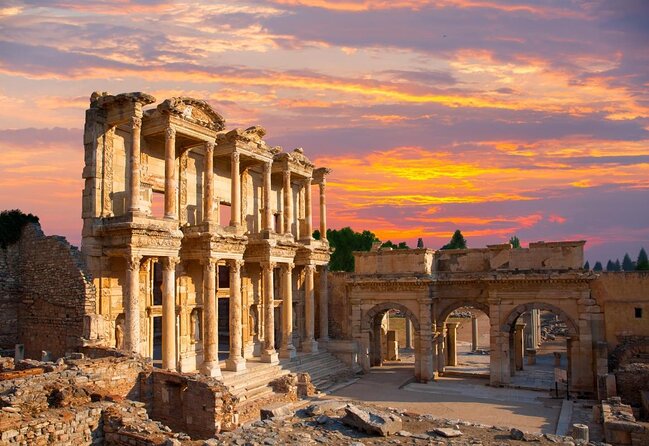
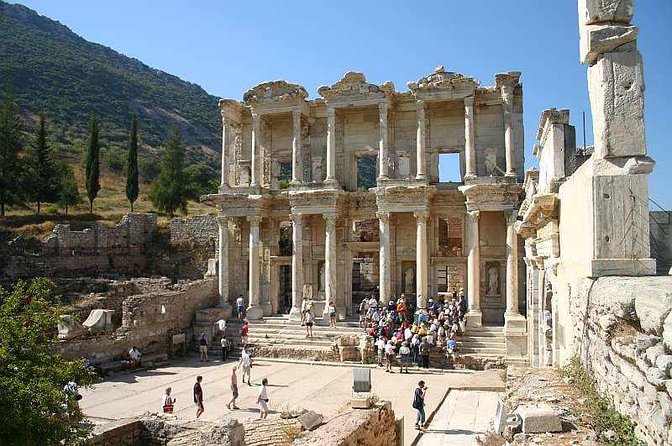
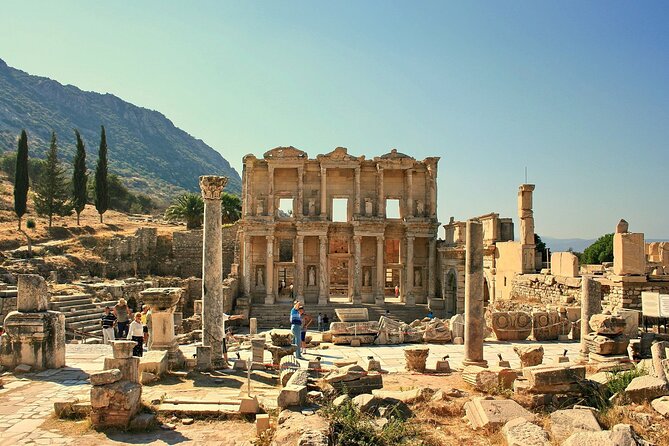
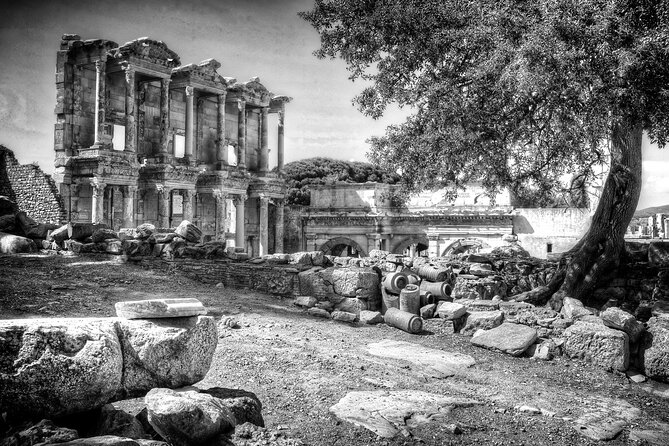
A big part of why Ephesus works is that major landmarks are close enough to group together. You’ll see the Library of Celsus facade and the Great Theater during this Ephesus portion.
Even if you don’t know a lot of Roman architecture, you’ll recognize the scale. Library facades like this were designed to signal status, education, and civic pride—stone that functioned like branding.
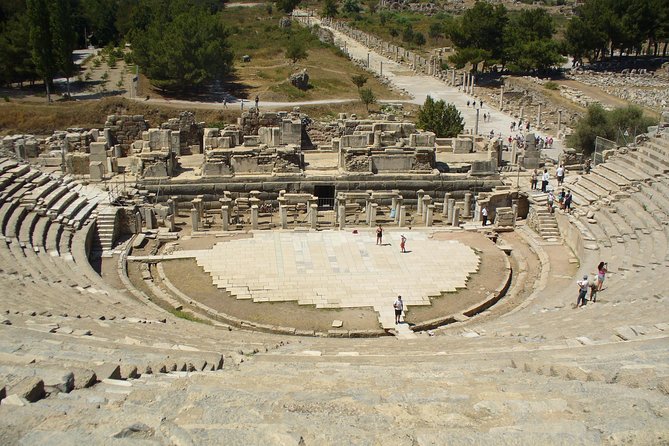
The theater adds a different feeling. Instead of upright ruins, you look out at the seating and imagine the roar of an ancient crowd. The guide’s job here is to connect what you’re seeing to how events and daily public life worked.
Temple of Hadrian and the quick-hit Roman monuments
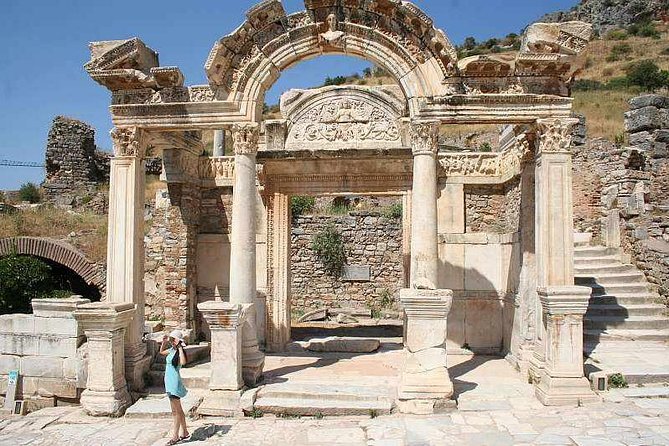
After Ephesus, there’s a short stop at the Temple of Hadrian area, around 30 minutes. The nice thing is the contrast: you go from a broader walkable city to a focused cluster of structures.
This stop is useful because it gives you context for how the region kept building on earlier prestige. Even when you only have a short window, you still get a guided explanation of the facades and the relationship between buildings.
If you’re trying to photograph efficiently, this is also a more manageable stretch. It’s short enough that you can move with the group without feeling like you missed your chance.
You can also read our reviews of more tours and experiences in Kusadasi
Meryemana: the House of the Virgin Mary stop
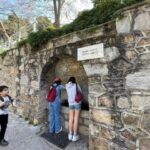
Then you head beyond the main ruins to Meryemana (the House of the Virgin Mary). You’ll have about an hour here, and it’s a different kind of experience than temples and theaters.
According to Christian tradition, this is where Mary spent her final days, brought here after the Resurrection by the Apostle John. The site has a small shrine, and the information shared on-site includes the Vatican’s recognition of the place as the final resting place of the Virgin.
For me, the value is the shift in mood. After hours of stone and scale, Meryemana gives you a quieter pause—more reflective, less about trying to spot every architectural detail.
Practical note: the grounds can include areas where you stand and walk a bit. Dress respectfully and keep comfortable layers, since you’re moving between open sun and indoor or sheltered sections.
Isa Bey Mosque, St. John Basilica remnants, and Artemis
One of the most interesting sequences in the day is the mix of faiths and time periods in a relatively short span. You’ll visit Isa Bey Mosque (14th century) and then continue toward the St. John Basilica remnants and the Temple of Artemis area.
Isa Bey Mosque: early Islam and West Anatolia
Isa Bey Mosque is tied to the first Muslim family that settled in West Anatolia. This is where the guide’s role really helps, because the architecture can feel unfamiliar if you’ve only seen Ottoman-era designs.
St. John Basilica remnants: a Biblical anchor point
The stop also includes the remnants of St. John’s Basilica, associated with the tradition that the Apostle John died and was buried after missions in Anatolia.
You’re not getting a full modern “museum experience” here. Instead, you see what’s left and you get help imagining what those spaces once meant.
Temple of Artemis: a Seven Wonders connection
Then comes the Temple of Artemis, described as one of the seven wonders of the ancient world. Even if you know the name already, seeing the remains and hearing how this sanctuary fit into religious and civic life gives it a stronger feeling than a quick mention.
This stop is short—about 30 minutes—but it’s packed with ideas. The guide helps you connect Artemis to the city’s identity and why the ancient world cared so much about this kind of monument.
Pergamon Theater: the hilltop stage and the Aegean view
After Ephesus and the related stops, you’ll shift to Pergamon. The day’s structure gives you about 1 hour at the Pergamon Amphitheater, where the theater sits on a steep hill looking toward the Aegean Sea.
This is a “stand and look” moment. The theater’s position changes how you understand it. It wasn’t just a place for performances; it was a stage anchored to the landscape, with visibility and drama built into the setting.
If you enjoy views, don’t rush this stop. Take a minute to scan the hillside and sea direction the way the theater audience would have experienced it.
Pergamon Ancient City: walking the highest point of the region left behind
Next you’ll spend about 2 hours in the Pergamon Ancient City. Pergamon is described as the highest point of Aegean civilization left behind, and the ruins reflect that upward, cliff-and-hill geometry.
This is where the day rewards patience. You’ll likely feel like you’re moving through different layers of the city at once—walls, slopes, and open spaces that explain why Pergamon became a power.
The guide’s live commentary here matters. Without it, ruins can feel like scattered stone. With it, you start to see the logic of how the city was laid out.
Pergamon Parchment: finishing the day with a practical story
You’ll get about 1 hour at Pergamon Parchment. The point of this stop is connected to what the region produced and how people lived and worked in the city, with the guide tying it into what’s still visible.
The practical value is that it puts some daily-life meaning behind the biggest stone monuments. Instead of ending with just dramatic overlooks, you close with an idea about learning, writing, and advanced production tied to the region.
Price and value: what you’re paying for in a private port day
This tour costs $400 per group (up to 8) for the roughly 7-hour experience, depending on pickup location timing. On paper, that can look steep—until you spread the cost across your group.
The value is in three places:
- Private transportation and pickup/drop-off, which reduces wasted time on a cruise schedule.
- A dedicated local guide, so you get explanations matched to the stops instead of relying on signage.
- Time efficiency, with Ephesus and Pergamon both covered in one day without you coordinating between sites.
Tickets and food are not included, so you’ll want to budget for entrance fees and meals separately. Still, the overall package is designed to save you the hassle of planning route changes, figuring out meeting points, and managing time pressure on your own.
What to bring for a comfortable day in the ruins
This tour recommends comfortable shoes, sunglasses, and a hat, and I agree with all of it. You’ll be outside for big stretches at Ephesus and Pergamon, and the ground is not museum-smooth.
I’d also plan your day around sun and hydration since food and drinks aren’t included. If you bring water or a snack where permitted, you’ll handle the gaps between stops better.
For photo lovers, bring a phone or camera with enough battery. There are several “pause and shoot” moments, especially at the Pergamon theater viewpoints.
Family-friendly, but still physical
The tour is described as family friendly with a kid-friendly guide who can be informative for all ages. That can make the day feel more like a shared story than a lecture.
At the same time, it’s listed for moderate physical fitness. Expect walking on uneven stone, standing in open areas, and moving between stops within a set schedule.
If you’re traveling with kids, this is one of those days where the guide’s pacing matters. A good guide can turn architectural details into simple stories, and it helps kids stay engaged without burning out.
Closing dates: plan around the Ephesus-area museum calendar
One real planning note for the area: some museums in the Ephesus area have annual closing dates. These include January 1 (New Year), June 15/17 (Ramadan Festival), and August 21/24 (Eid Festival).
If your cruise dates land near those windows, it’s worth checking before you go, especially since entrance tickets aren’t included. You might still be able to see exterior ruins and guided commentary, but any closed-ticket components can affect your experience.
Who should book this tour
You’ll enjoy this if you want:
- A private guide to connect Ephesus and Pergamon in one day
- A schedule built for shoreport timing rather than slow travel
- Both the big Roman city feel and the hilltop Pergamon outlook
- A day that includes spiritual and historic stops, not only archaeology
You might skip it if:
- You hate walking on uneven stone
- You want a lighter day focused on one site only
- You’re looking for meals included and don’t want to plan for food
Should you book this private Ephesus–Pergamon tour from Kusadasi?
I think this is a strong choice if you’re short on time and you care about understanding what you’re seeing. Private transport, pickup and drop-off, and a local guide make a huge difference when you’re working within a cruise schedule.
The itinerary also balances major monuments with a couple of meaningful detours—Meryemana and the faith-meets-ruins sequence around Isa Bey Mosque, St. John Basilica remnants, and Artemis. And Pergamon adds the view factor that many one-site Ephesus days miss.
If you book, do two things: wear good shoes, and budget for entrance tickets and food. After that, you’re set up for a day that feels full but not chaotic.
FAQ
How long is the Ephesus and Pergamon private shore excursion?
It runs about 7 hours.
Is pickup included from Kusadasi Port or the Ephesus area?
Yes. Hotel pickup and drop-off are included, and the tour is described as starting from Kusadasi Port or the Ephesus area.
Are entrance tickets included for the sites?
No. Entrance tickets are not included, and that applies to multiple stops.
How big is the private group?
It’s private for your group, up to 8 people.
What should I bring for comfort?
Comfortable shoes, sunglasses, and a hat are recommended. The tour also notes a moderate physical fitness level is needed.
Are there days when Ephesus-area museums close?
Yes. The listed annual closing dates include January 1 (New Year), June 15/17 (Ramadan Festival), and August 21/24 (Eid Festival).