REVIEW · SELCUK
From Kusadasi or Selcuk: Full-Day Ephesus Tour with Lunch
Book on GetYourGuide →Operated by Apasas Travel Turkey · Bookable on GetYourGuide
Ephesus in one day is a real test of time. You get a focused route to the House of Virgin Mary and the major Ephesus highlights, with a real lunch stop instead of a snack-and-go. I also like the hotel pickup and drop-off that makes the day feel smooth, even if you’re not renting a car. The one potential drawback: some departures add extra shop-style stops, and one past guest felt the time inside the ruins was rushed.
This is the kind of outing that’s best when you go in with the right expectations: a guided overview, not a slow self-guided wander. The tour covers everything from marble streets and big set-piece ruins to the Temple of Artemis, and you’ll be walking in heat, so good shoes matter.
If the forecast is hot (and it often is here), plan for sun time and limited shade at several stops. Bring water, stay on pace with your guide, and you’ll have a much better day than someone trying to stop for photos every ten seconds.
In This Review
- Key highlights to know before you go
- A Day That Fits 8 Hours (And Still Feels Full)
- Getting From Selcuk to Ephesus: Pickup, Timing, and the Real Pace
- House of the Virgin Mary: Pilgrimage, Perspective, and a Calm Start
- Ephesus in Motion: Celsus, Marble Road, and the Great Theater
- Lunch in a Local Restaurant: The Break That Saves the Afternoon
- Temple of Artemis: Why This Stop Matters (Even After the Walking)
- Shops, Rugs, and Wine Tastings: What Could Change Your Day
- Skip-the-Ticket-Line and the English Guide Advantage
- What to Bring for the Heat (This Tour Runs Outdoors)
- Price and Value: Is $90 a Good Deal?
- Who This Tour Fits Best
- Should You Book This Full-Day Ephesus Tour?
- FAQ
- What’s included in the tour price?
- How long is the Ephesus tour?
- Are hotel pickup and drop-off included?
- Do I need to pay extra for any Ephesus attractions?
- Is lunch included, and are drinks included?
- What should I bring for the day?
Key highlights to know before you go
- House of the Virgin Mary stop tied to Christian pilgrimage history
- Skip-the-ticket-line so you can spend more time outside in the sun
- Ephesus route that hits the big monuments like Celsus Library and the Great Theater
- Lunch at a local restaurant included, not an optional upgrade
- Temple of Artemis visit after lunch as a classic finale
- English live guide with the ruins explained in a practical way
A Day That Fits 8 Hours (And Still Feels Full)
Ephesus is huge. Even when you pick the “must-see” pieces, you’re still dealing with long distances, uneven surfaces, and lots of sun. That’s why I like this tour’s structure: it’s built to cover the main archaeological hits plus the most important religious sites in one go, without you having to plan transport.
Price-wise, the $90 per person can be a good deal because you’re not only paying for a guide. Entrance fees and round-trip transfers are included, and lunch is included too. The math changes fast if you were to try to do the same day on your own.
The catch is pacing. One guest complained about limited time inside the ruins. That doesn’t mean every departure is like that, but it’s a fair warning: this is an 8-hour overview route. If you want to linger for hours in one spot, you’ll probably feel rushed.
You can also read our reviews of more tours and experiences in Selcuk
Getting From Selcuk to Ephesus: Pickup, Timing, and the Real Pace
The tour starts with morning hotel pickup from Selcuk (and it also serves Kusadasi for cruise or hotel connections, depending on the booking). Once you’re in the vehicle, the day becomes a chain of short drives and steady walking.
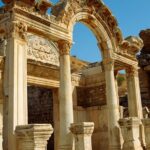
This is the practical part: in order to fit the route, you’ll move. You’ll see a long list of sites at Ephesus—Odeon, State Agora, Prytaneion, Curetes Street, Hadrian Temple, and more—so the guide can’t spend 60 minutes at every corner.
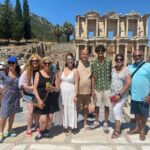
One small upside I appreciate from how this is commonly run: it can be a genuinely small group. In one past experience, the van held eight people, which generally means fewer delays and less time waiting for everyone to catch up.
If your hotel is in a tricky old-street area, pickup can be slightly complicated. One traveler noted an issue in the old city that was resolved by coordination between the operator and the hotel. If you’re staying somewhere narrow or hard to access, plan to communicate clearly the morning of pickup.
House of the Virgin Mary: Pilgrimage, Perspective, and a Calm Start
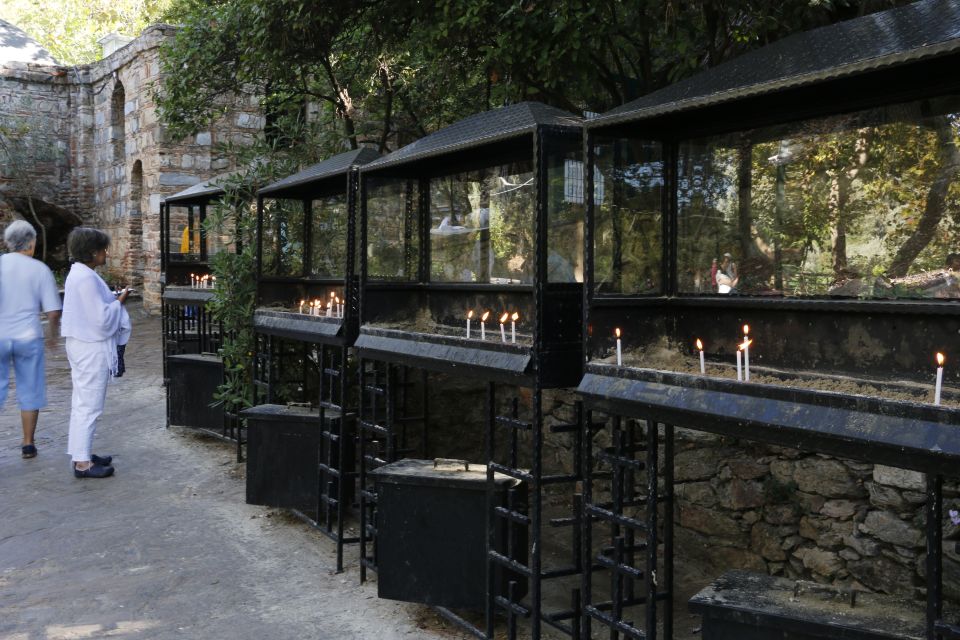
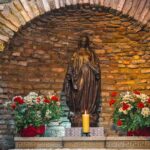
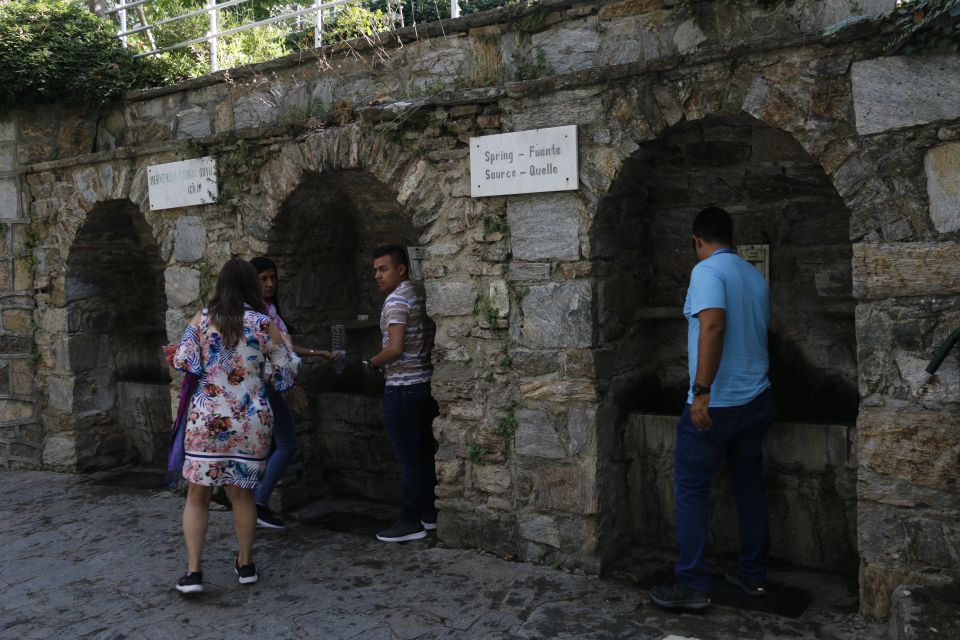
Your first major stop is the House of the Virgin Mary, the site widely associated with Mary’s final days. The tour treats it like more than scenery—it’s explained as a place of devotion that became a shrine in Roman Catholic tradition in 1986, and it’s also a regular pilgrimage stop.
Why I think this first matters: it changes how you view the rest of the day. After spending time here, Ephesus isn’t just “Roman ruins.” It becomes a Christian landscape too, including its importance tied to the seven Churches of Revelation (as part of the overall framing the guide provides).
Also, this stop gives you a mental reset before the big walking portion. It’s not a long endurance event, and it’s a good place to cool down briefly and get your bearings.
What to watch for: you’re still outdoors, and shade can be limited depending on the time of day. Wear shoes you can walk in for hours after this.
Ephesus in Motion: Celsus, Marble Road, and the Great Theater
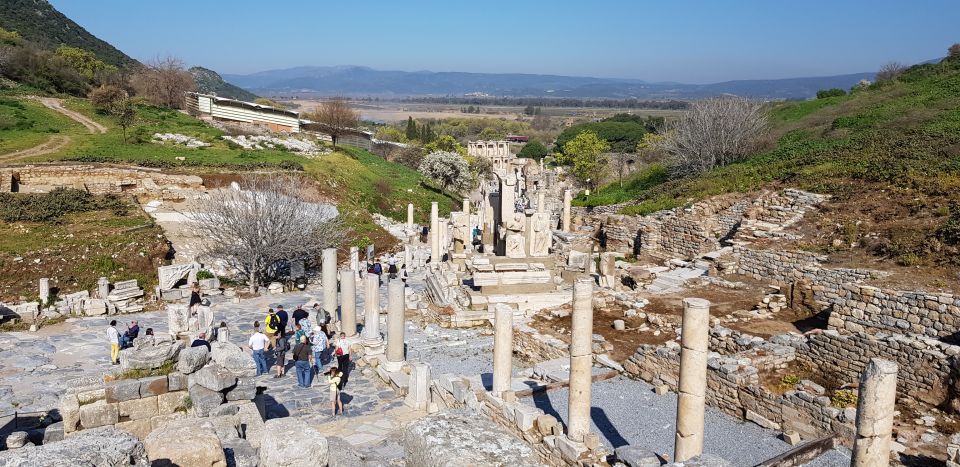
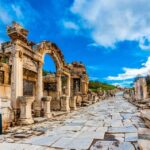
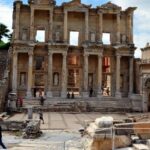
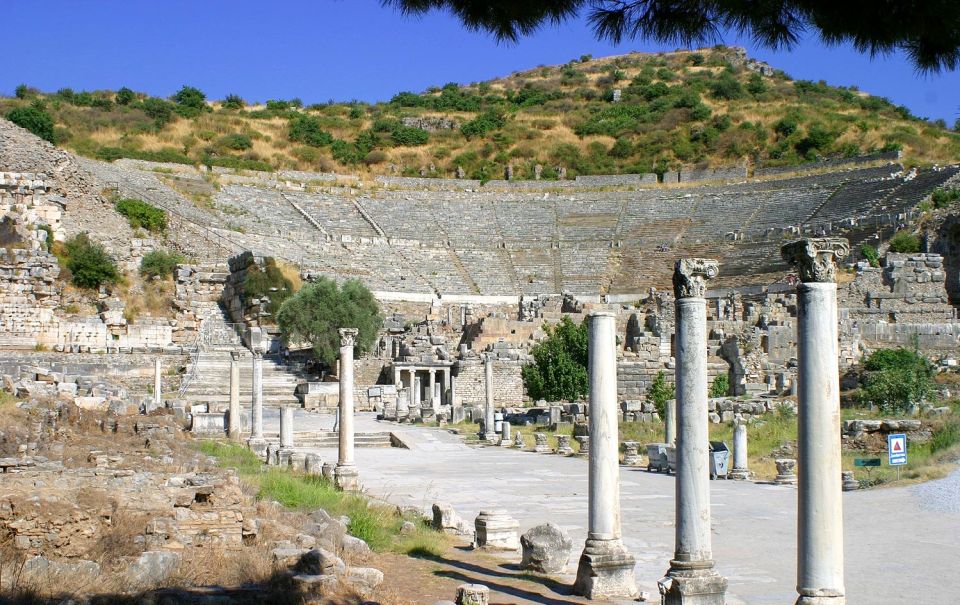
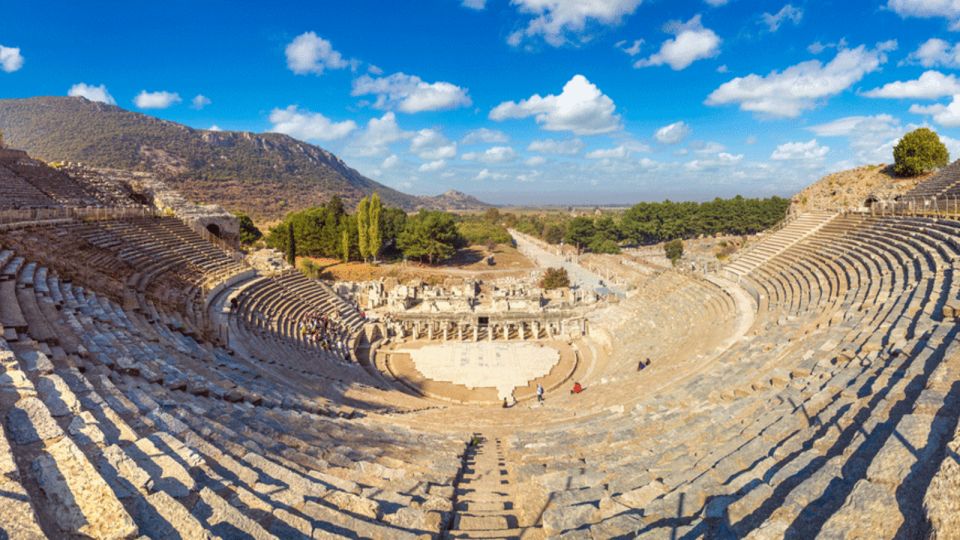
Ephesus is where the day earns its reputation, and this tour hits the best-known set pieces. After the initial sweep through older zones and monuments, you’ll reach the parts most people come to see first: the Celsus Library area, the Marble Road, the Commercial Agora, and the Great Theater.
Here’s what each stop tends to mean for your visit:
- Odeon and Agora spaces (State Agora, Prytaneion, Commercial Agora): These help you picture how people moved through civic life—where speeches, rituals, and daily commerce overlapped.
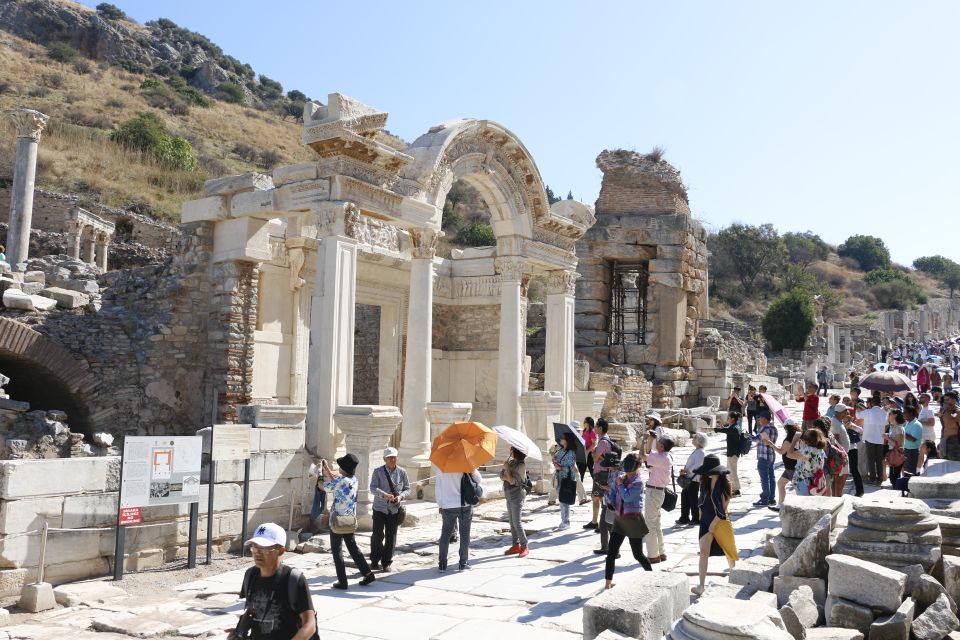
- Monuments and temples (Memmius Monument, Domitian Temple, Hadrian Temple): These are reminders that the city kept reinventing itself across Hellenistic and Roman imperial periods.
- Curetes Street and Hercules Gate: These transitions help you “read” Ephesus as a connected city, not a random set of foundations.
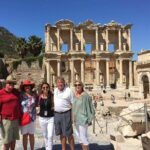
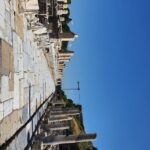
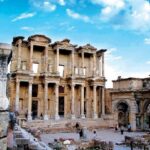
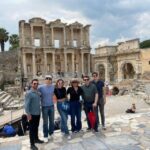
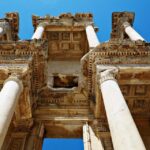
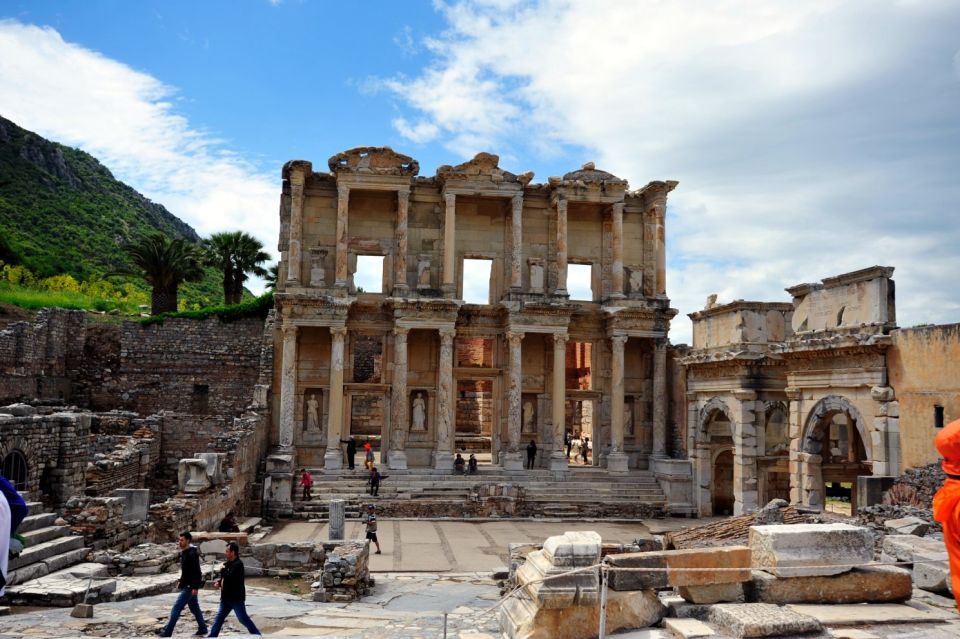
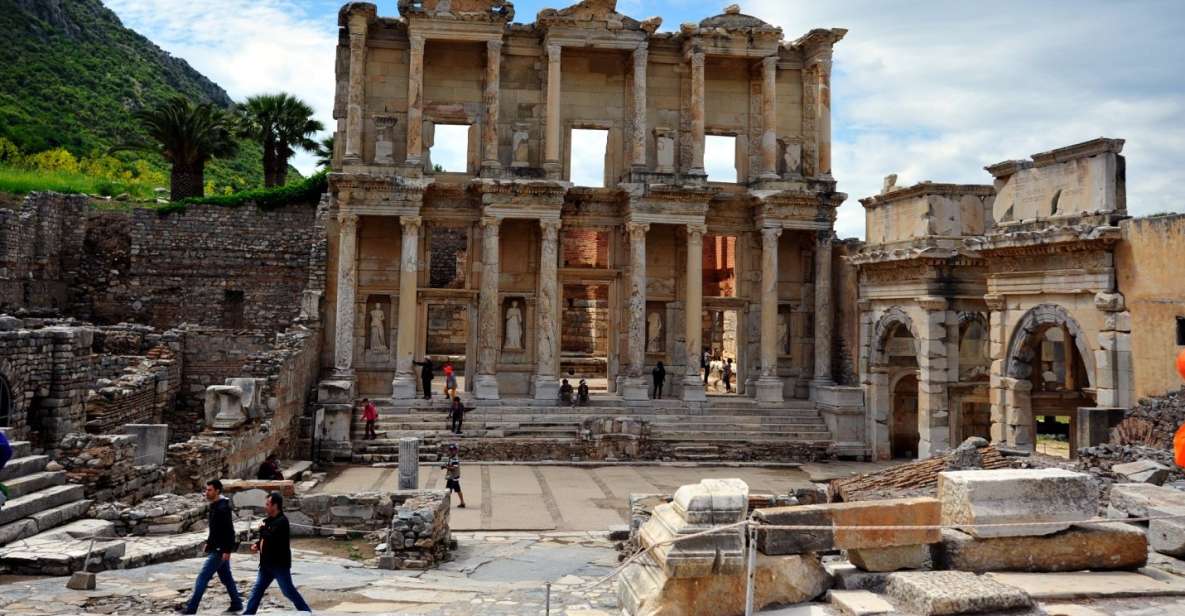
- Celsus Library and Marble Road: This is the classic photo zone, yes. But it also gives you a real sense of scale and urban planning. The library façade is especially good for understanding how grand these streets once looked.
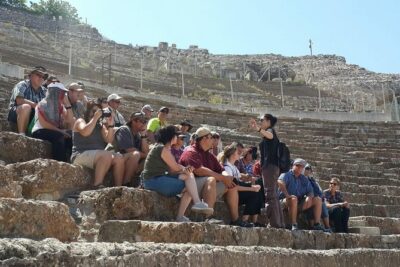
- Great Theater and Arcadiane: The theater shows how performances and public life worked. Even if you’ve seen theaters elsewhere, this one feels tied directly to a specific ancient city’s voice.
You’ll also see smaller details that matter when you want to understand daily Roman-Ephesus life—like the latrines—because they connect the “big names” to the everyday reality.
One more practical note: the tour does include a lot of stops inside Ephesus, but you should still assume time at each is limited. If you’re the type who wants to fully walk every side street (not just the main route), you might wish you had a second visit.
Lunch in a Local Restaurant: The Break That Saves the Afternoon
After the first Ephesus section, you get lunch at a local restaurant. Drinks aren’t included, so plan on paying for water, tea, or whatever you prefer.
Why lunch is such a big deal here: it prevents the common Ephesus-day problem—people skipping a real meal because they’re always traveling. With lunch included, your energy is more stable for the afternoon, when the Temple of Artemis visit becomes your final big attraction.
In past experiences, lunch has been praised as one of the better parts of the day. That makes sense because the tour could have easily offered something quick. Instead, it gives you a real reset before continuing the route.
If you’re sensitive to heat, choose light, drink-focused meals and pace your water intake.
You can also read our reviews of more tours and experiences in Selcuk


Temple of Artemis: Why This Stop Matters (Even After the Walking)
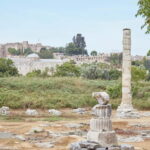
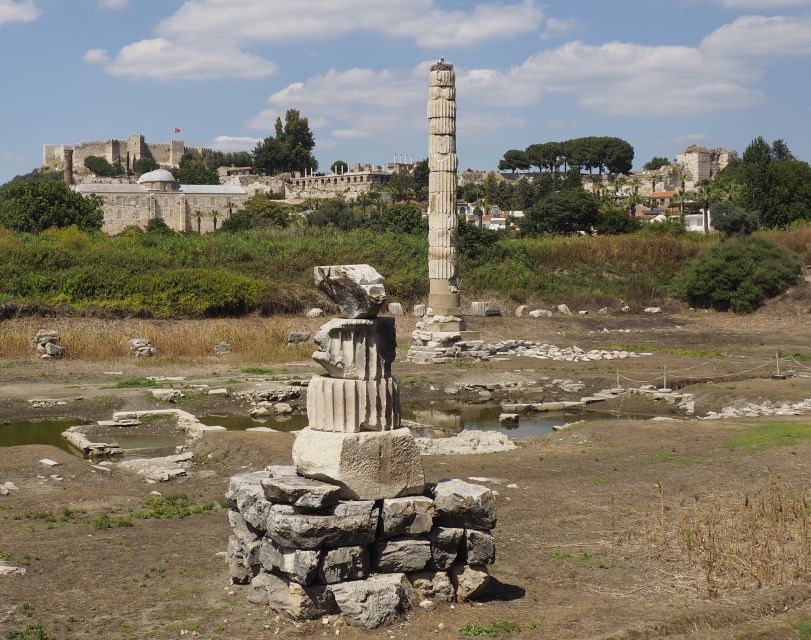
The Temple of Artemis is scheduled after lunch, and it’s a smart move. By this point, your brain is already sorting ancient names and building types. Artemis helps you tie Ephesus to a wider world-famous story: one of the wonders of the ancient world.
You’re likely to notice something instantly: you’re not just looking at one ruin. You’re looking at a symbol of how important this region was culturally and religiously.
Also, Artemis acts like a “story finish.” Once you see it, you understand the city’s significance beyond Roman administration and civic spaces. It’s a different layer of meaning.
Even with reduced structures compared to what once existed, it’s still a powerful way to close an 8-hour loop.
Shops, Rugs, and Wine Tastings: What Could Change Your Day
Here’s the part you should pay attention to before you book, even if it’s not what you want to hear: some outings can include shopping-style stops or experiences like rug displays and wine tastings.
One past guest felt this wasn’t aligned with what they expected from a ruins tour, and they were unhappy about the time trade-off. Others have said they were okay with shop stops, especially if they didn’t feel pressured to buy.
So my practical advice: if your goal is maximum archaeology time, message the operator in advance and ask whether any rug showroom, wine tasting, or similar stop is part of your specific departure. If the answer is yes, decide ahead of time if you’re fine trading 30–60 minutes for those detours.
If you do end up in a shop stop, you can still get value: you’ll learn how Turkish crafts and products are presented to visitors. Just don’t treat it like archaeology.
Skip-the-Ticket-Line and the English Guide Advantage
The tour includes entrance fees, and you skip the ticket line. That matters in Ephesus because lines and entry delays can eat your best daylight quickly.
The guide is English live, and the explanations tend to focus on making the ruins readable. Past experiences mention guides including Guray and Z—both highlighted for good communication and planning.
When the guidance works, you’re not just seeing piles of stone. You’re getting a map for what you’re looking at: which building type was civic, which was religious, and which was part of how the city functioned.
If you’re relying on the guide to connect the dots, choose this type of tour rather than trying to brute-force Ephesus with a phone map.
What to Bring for the Heat (This Tour Runs Outdoors)
Local outdoor temperatures can reach up to 40°C, so you’re walking in serious sun even if you’re only outside for blocks at a time.
Bring:
- Water
- Sports shoes
I’d also add: a hat if you tolerate one, and sunscreen. The tour data doesn’t require those, but your comfort will improve.
Shade is limited in multiple places, and marble and stone surfaces hold heat. If you’re prone to fatigue in hot weather, start drinking water before you feel thirsty.
Price and Value: Is $90 a Good Deal?
For an 8-hour guided day trip from Selcuk with hotel pickup/drop-off, entrance fees, a local lunch, and a guide in English, $90 can be fair value—especially if you’d otherwise have to pay separately for transport and tickets.
Where the price feels less great is when your expectations are strictly ruins-only. If the tour includes extra shop-style time for your departure, your effective “archaeology minutes” go down.
Still, the trade-off is that you get an ordered route, skip-the-line entry, and fewer logistics headaches. For most people, those benefits are real. For a few, pacing and detours can be the dealbreaker—so it’s smart to verify any extra stops before you lock it in.
Who This Tour Fits Best
This tour is a great match if:
- You want a guided, first-time Ephesus plan that covers the key monuments
- You’re staying in Selcuk or nearby and want pickup without car hassles
- You prefer an overview with clear explanations over a long self-guided day
- You’d like lunch handled for you
It’s less ideal if:
- You want to spend most of the day alone wandering slowly
- You strongly dislike shop stops and any non-ruins time
- You get frustrated when photos take longer than the planned pacing
Should You Book This Full-Day Ephesus Tour?
Yes—with one condition: go in knowing it’s an 8-hour guided overview. If you’re happy trading a bit of free time for a structured route, this is a solid way to see Ephesus without turning your day into a logistics project.
Book it if you care about the big sights—Celsus, Marble Road, the Great Theater—and you also want the religious and pilgrimage framing of the House of Virgin Mary and the broader Christian context. The included entrance fees, lunch, and transfers make it easier to justify.
Don’t book it blindly if your top priority is maximum ruins time only. Ask about whether your departure includes any shopping-style stops or tastings, and decide if that time works for you. If it does, you’ll likely end the day feeling like you truly covered the essentials of Ephesus.
FAQ
What’s included in the tour price?
The tour includes a local English guide, entrance fees, lunch in a local restaurant, and round-trip transfers from your hotel (in Kusadasi and Selcuk).
How long is the Ephesus tour?
It’s listed as an 8-hour experience.
Are hotel pickup and drop-off included?
Pickup is described as available from your hotel, with round-trip transfers included from Kusadasi and Selcuk.
Do I need to pay extra for any Ephesus attractions?
The entrance fee for the Terrace Houses is not included, so you may need an additional ticket if you want to visit them.
Is lunch included, and are drinks included?
Lunch is included in a local restaurant. Drinks are not included.
What should I bring for the day?
Bring water and sports shoes. The tour also notes outdoor temperatures may reach up to 40°C.